
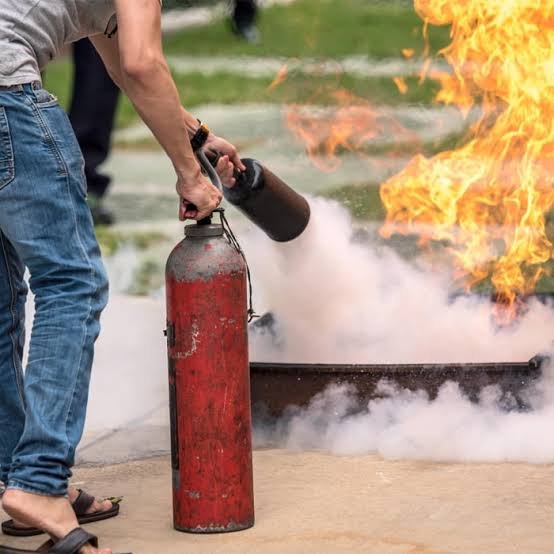
Fire can break out unexpectedly in homes, offices, shops, factories, restaurants, and other buildings. A small incident can become a serious emergency when people do not recognise the danger, escape routes are blocked, or suitable fire protection equipment is unavailable. Fire extinguishers are an important part of fire safety because the correct equipment may help control certain small fires before they spread.
However, keeping an extinguisher on a wall is not enough. People need to understand the different extinguisher types, where they are appropriate, how they should be maintained, and when it is safer to evacuate instead of attempting to fight a fire.
In Pakistan, fire protection is an important consideration for residential and commercial buildings. The Building Code of Pakistan Fire Safety Provisions 2016 provides guidance on fire protection and life safety, while relevant provincial and local authorities may enforce additional requirements. Punjab Civil Defence includes fire extinguishers and other firefighting arrangements among the measures considered during safety inspections.
A properly designed fire alarm system in Pakistan can also support fire safety by warning occupants of a potential emergency. When combined with suitable extinguishers, clear exits, emergency planning, and staff training, it contributes to a more complete approach to protecting people and property.
This guide explains the basics of fire extinguishers, their common types, suitable locations, maintenance requirements, and the role they play in a wider fire safety plan.
1. What Is a Fire Extinguisher?
A fire extinguisher is a portable device designed to release an extinguishing agent that can control or suppress certain fires. Depending on its design, the agent may be water, foam, dry chemical powder, carbon dioxide, or another specialised material.
Different fires involve different fuels and hazards. A fire involving ordinary paper is not the same as a fire involving cooking oil, flammable liquids, or electrical equipment. For this reason, selecting suitable equipment is essential.
Fire extinguishers are commonly installed in workplaces, commercial buildings, schools, warehouses, residential complexes, and other locations where fire protection measures are required.
Their purpose is to provide an appropriate first-response measure for certain small fires. They are not intended to replace fire alarms, automatic suppression systems, emergency services, or safe evacuation procedures.
An extinguisher may also be ineffective if it is unsuitable for the fire, damaged, empty, or difficult to access. Building owners should therefore consider equipment selection, placement, maintenance, and staff awareness together.
2. Why Are Fire Extinguishers Important?
Fire extinguishers can provide an important layer of protection when selected and maintained correctly.
Supporting early fire response
Some fires begin as small incidents. Where suitable equipment is available and conditions are safe, an appropriately trained person may be able to control a small fire before it develops further.
However, fires can grow quickly. No one should delay evacuation or take unnecessary risks to protect property.
Protecting people and property
Fire damage can affect buildings, furniture, stock, machinery, documents, and electrical installations. Suitable firefighting arrangements may help reduce losses, although they cannot guarantee that a fire will be controlled.
Supporting workplace safety
Businesses have a responsibility to assess fire risks and provide suitable safety measures according to applicable requirements. Extinguishers may form part of these arrangements alongside alarms, escape routes, emergency lighting, and training.
Improving emergency preparedness
Visible, accessible, and maintained equipment helps employees understand where fire protection resources are located.
Supporting business continuity
A fire may interrupt operations, damage equipment, and create financial difficulties. Preventive measures and appropriate emergency planning can help businesses manage these risks.
The value of an extinguisher depends on its suitability and condition, as well as the ability of people to recognise when it can be used safely.
3. Understanding the Main Types of Fire Extinguishers
Different extinguishers use different agents. The appropriate type depends on the materials involved, the surrounding environment, and the hazards present.
Water extinguishers
Water-based extinguishers are generally intended for suitable fires involving ordinary combustible materials, such as paper, wood, and some textiles.
They are not suitable for every type of fire. Water can create serious hazards when used on energised electrical equipment or certain burning liquids and materials.
Foam extinguishers
Foam extinguishers are commonly designed for certain fires involving solid combustible materials and flammable liquids. Their suitability depends on the specific product and its approved applications.
They should not be assumed to be appropriate for every liquid, chemical, or electrical hazard.
Dry chemical powder extinguishers
Dry chemical powder extinguishers are available in different formulations. Multipurpose varieties may be suitable for several common fire classes, including certain fires involving ordinary combustibles, flammable liquids, and gases.
The extinguisher label should always be checked because not every powder formulation is appropriate for every hazard. Powder may also reduce visibility and affect sensitive electronic equipment.
Carbon dioxide extinguishers
Carbon dioxide extinguishers are commonly used for certain flammable-liquid and electrical-equipment fire risks. They leave little residue, which can be useful in some environments.
Nevertheless, carbon dioxide presents risks in confined or poorly ventilated areas and may not be suitable for every material. The equipment should be selected and used in accordance with its instructions.
Wet chemical extinguishers
Wet chemical extinguishers are designed for particular cooking-related hazards, especially fires involving hot cooking oils and fats.
They are commonly relevant to commercial kitchens and food preparation areas. Other extinguisher types may not provide an appropriate response to these fires.
Specialised extinguishers
Some environments contain combustible metals or other unusual hazards that require specialised extinguishing agents. Ordinary multipurpose equipment may be unsuitable.
A competent fire risk assessment should determine which extinguisher types are necessary. Building managers should not select equipment solely because it is inexpensive or widely available.
4. Understanding Fire Classes
Fire classifications help identify the type of fuel involved in a fire. The classification system and terminology can vary between standards and jurisdictions, so building owners should follow the system specified by the applicable code and the equipment manufacturer.
Common categories include:
- Class A: Fires involving ordinary solid combustibles, such as wood, paper, and many textiles.
- Class B: Fires involving flammable liquids.
- Class C: In some classification systems, fires involving flammable gases; in others, Class C refers to fires involving energised electrical equipment.
- Class D: Fires involving combustible metals.
- Class F or K: Fires involving cooking oils and fats, depending on the classification system used.
Because Class C means different things in different systems, users should not rely on the letter alone. The extinguisher’s label must identify its approved applications.
Electrical equipment also requires particular care. A fire involving electrical equipment should be treated as an electrical hazard until the situation has been assessed and the equipment is safely isolated by an authorised person.
Understanding the hazard helps ensure that the selected equipment is suitable for the location.
5. Where Should Fire Extinguishers Be Installed?
Extinguisher placement should be based on the building’s layout, occupancy, fire risks, and applicable requirements. Equipment should be easy to identify and reach without placing people in unnecessary danger.
Homes and residential buildings
Homes may need suitable extinguishers depending on their layout and risk assessment. Kitchens, garages, utility areas, and spaces containing electrical equipment require particular consideration.
Residents should also maintain working smoke alarms where appropriate, keep escape routes clear, and ensure that everyone knows how to leave the building safely.
Offices and commercial buildings
Offices may contain computers, electrical equipment, furniture, paper records, and kitchen facilities. Equipment should be selected according to these risks and positioned in suitable, accessible locations.
Factories and warehouses
Industrial premises may contain machinery, stored goods, flammable liquids, combustible dust, or specialised materials. These hazards may require different fire protection arrangements and professional assessment.
Restaurants and commercial kitchens
Cooking equipment and hot oils create specific hazards. Suitable kitchen fire protection should be selected for the actual cooking processes and installed in accordance with relevant requirements.
Shopping malls and public buildings
Large buildings need a coordinated approach to fire protection. Visitors may not know the layout, so equipment should be identifiable and access routes should remain clear.
For all building types, extinguishers should not be hidden behind furniture, locked away without appropriate access arrangements, or placed where a person would have to move toward a fire to reach them.
The correct number, type, and location of extinguishers should be determined through a competent assessment and the applicable code.
6. Fire Extinguishers and Fire Alarm Systems
Fire extinguishers and fire alarm systems serve different purposes, but both can contribute to a building’s overall fire safety strategy.
An extinguisher is intended to control certain fires. An alarm system is designed to warn occupants when a fire-related emergency is detected or reported.
Early warning
A suitable alarm system can alert people to a potential fire, allowing them to follow the building’s emergency plan. Early warning is particularly important in large buildings where people may be far from the location of an incident.
Coordinated emergency response
An alarm may prompt occupants to evacuate, notify designated staff, and initiate the building’s emergency procedures. Extinguishers are a separate measure and should only be considered when the circumstances allow a safe response.
Maintenance of both systems
An extinguisher that has lost pressure or is damaged may not work as intended. Similarly, an alarm system with faulty components may fail to provide an effective warning.
Building managers should establish documented inspection and maintenance arrangements for all relevant fire protection equipment.
Choosing suitable protection
Anyone evaluating a fire alarm system in Pakistan should consider the building’s size, occupancy, hazards, escape routes, and applicable regulations. Fire extinguishers should be selected as part of the same overall assessment rather than as an isolated purchase.
The Pakistan Engineering Council publishes the Building Code of Pakistan Fire Safety Provisions 2016, and Punjab Civil Defence identifies fire detection, alarms, extinguishers, hydrants, and sprinkler systems among relevant fire safety measures.
A coordinated system provides a more complete approach than relying on a single device.
7. Fire Extinguisher Inspection and Maintenance
Fire extinguishers require regular attention to help ensure that they remain ready for use. Maintenance should follow the manufacturer’s instructions, the applicable standards, and the requirements enforced by the relevant authority.
A routine visual inspection may identify obvious issues, but it does not replace the servicing or testing required by qualified personnel.
Important checks include:
- Confirming that the extinguisher remains in its designated location.
- Ensuring it is visible and accessible.
- Checking that the pressure indicator, where fitted, is within its stated operating range.
- Looking for visible damage, corrosion, leakage, or other signs of deterioration.
- Checking that the operating instructions are readable.
- Ensuring the hose and nozzle are not visibly damaged or obstructed.
- Checking that any safety seal or tamper indicator is intact where applicable.
- Maintaining inspection and servicing records.
The Building Code of Pakistan Fire Safety Provisions 2016 addresses periodic extinguisher inspections, including checks of location, accessibility, pressure indicators, and equipment condition. The applicable inspection and servicing schedule should be confirmed for the specific premises and equipment.
If an extinguisher is damaged, has been discharged, or appears defective, it should be assessed by an appropriate service provider and replaced or serviced as necessary.
Management should also ensure that extinguishers are returned to their designated locations after inspection or servicing.
8. Common Fire Extinguisher Mistakes to Avoid
Even suitable equipment can provide little protection when it is poorly managed.
Choosing the wrong type
A fire extinguisher designed for one hazard may be unsafe or ineffective for another. Selection should be based on the actual fire risks and the product’s approved uses.
Blocking access
Placing boxes, furniture, or stock in front of an extinguisher can delay access during an emergency.
Ignoring maintenance
An extinguisher may look acceptable while having a fault that affects its operation. Inspection and servicing should never be neglected.
Failing to train employees
Employees may not know where extinguishers are located or when evacuation is the safer choice. Appropriate training helps people understand their responsibilities.
Attempting to fight a growing fire
A fire can spread rapidly, produce dangerous smoke, or cut off escape routes. No one should risk becoming trapped while trying to save property.
Treating extinguishers as a substitute for alarms
An extinguisher does not warn every occupant throughout a building. Fire detection, alarm systems, and evacuation procedures remain important parts of fire safety.
Avoiding these mistakes requires clear responsibilities, regular inspections, and a practical emergency plan.
9. What Should People Do During a Fire Emergency?
The priority during a fire is protecting people, not equipment or property. Every building should have an emergency plan that reflects its layout, occupants, and hazards.
If a fire occurs:
- Alert people nearby and activate the alarm if it is safe to do so.
- Contact the local emergency service and provide clear information about the location.
- Move away from the fire and follow the building’s evacuation instructions.
- Use a safe escape route and avoid areas filled with smoke.
- Do not use lifts during a fire unless emergency personnel specifically instruct otherwise.
- Move to the designated safe assembly area and do not re-enter until authorised.
A trained person should only consider using an extinguisher if the fire is small and contained, the equipment is appropriate, the person knows how to use it, and a clear escape route remains available. If any of these conditions are uncertain, evacuation is the safer priority.
People should never attempt to tackle a fire involving unknown chemicals, combustible metals, rapidly spreading flames, or conditions that expose them to dangerous smoke or heat.
After leaving the building, occupants should follow instructions from emergency responders.
10. Fire Extinguisher Safety in Pakistan
Fire safety requirements depend on the type of building, its location, its occupancy, and the regulations applied by the relevant authority.
The Building Code of Pakistan Fire Safety Provisions 2016 is an important national reference for building fire protection. Punjab Civil Defence also lists firefighting arrangements, including fire extinguishers, hydrants, and sprinkler systems, among the measures considered during fire safety inspections.
Commercial buildings, offices, factories, schools, hospitals, and other premises should determine which requirements apply to their particular circumstances.
A responsible fire safety programme should include:
Risk assessment: Identify likely fire hazards and determine the appropriate protective measures.
Suitable equipment: Select extinguishers that match the hazards present.
Accessible placement: Ensure equipment can be identified and reached without obstruction.
Regular maintenance: Arrange the inspections and servicing required for the equipment.
Staff training: Make sure employees understand the emergency plan and their responsibilities.
Emergency planning: Maintain clear exits, appropriate signs, working alarms, and suitable evacuation arrangements.
Record keeping: Document inspections, faults,