
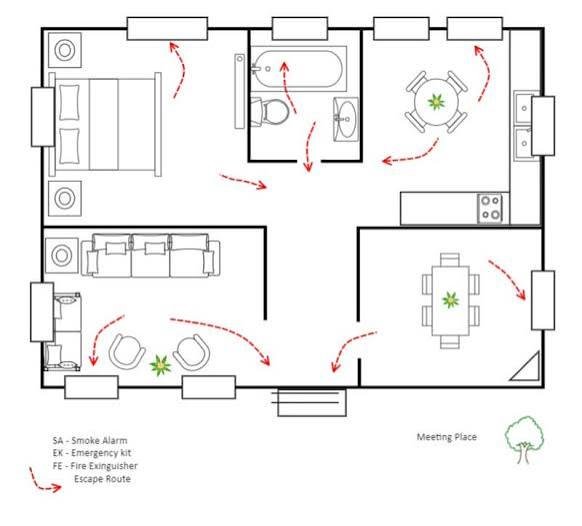
Have you ever thought about how your family would leave the house if a fire started during the night? Many homeowners focus on locks, security cameras, and electrical repairs but forget to plan how everyone would escape during a fire emergency. Knowing where to go and what to do can save valuable time when every second matters.
A home fire escape plan is a simple, organised way to help everyone leave a building safely. It identifies possible exits, alternative escape routes, an outdoor meeting place, and the actions each household member should take when an alarm sounds.
For families in Pakistan, this preparation is useful whether they live in a small house, a multi-storey home, or an apartment building. Narrow staircases, security grills, locked doors, and cluttered corridors can create additional challenges if an emergency occurs.
This guide explains how to create a practical escape plan, use fire alarms effectively, identify common hazards, and prepare every family member for an emergency.
1. What Is a Home Fire Escape Plan?
A home fire escape plan is a written or illustrated plan that explains how occupants can leave their home if a fire occurs. It helps family members understand the available exits and avoid confusion during an emergency.
The plan should be easy to understand and suitable for everyone who lives in the house, including children, older adults, and people who may need mobility assistance.
A useful plan includes:
- The main entrance and other usable exits.
- Doors and windows that could provide alternative escape routes.
- Staircases and corridors leading outside.
- The location of smoke alarms.
- An outdoor meeting point at a safe distance from the building.
- Arrangements for anyone who needs help evacuating.
- Local emergency contact information.
The National Fire Protection Association recommends identifying possible escape routes, keeping exits clear, selecting a meeting place outside, and practising the plan regularly.
The purpose is not to predict every possible emergency. Instead, it is to prepare everyone to act quickly and safely without wasting time deciding what to do.
2. Why Every Household Needs an Escape Plan
A fire can spread quickly, and smoke may make familiar rooms and hallways difficult to navigate. Family members may also be in different parts of the house when an alarm sounds.
Without preparation, people may waste time looking for keys, collecting belongings, or trying to determine which exit is safest.
A clear plan helps reduce uncertainty in several ways.
It improves emergency response
When everyone knows the nearest safe exit, they can begin leaving instead of waiting for instructions.
It prepares children
Children can learn to recognise the alarm sound, leave without stopping for toys, and move to the agreed meeting place.
It supports vulnerable household members
Older adults and people with disabilities may need additional time, accessible routes, or assistance from a designated family member.
It reduces confusion
An outdoor meeting point makes it easier to establish who has escaped and tell emergency responders if someone may still be inside.
It complements fire detection equipment
A suitable fire alarm or smoke detector can warn occupants about a possible fire. An escape plan explains what to do after that warning.
Preparation is particularly important at night, when household members may be asleep and need to respond immediately.
3. Draw a Simple Map of Your Home
The first step is to walk through your home and create a basic floor plan. You do not need professional design software. A clear hand-drawn sketch is enough for a household escape plan.
Draw each floor separately if your house has more than one level. Include bedrooms, living areas, kitchen, bathrooms, corridors, staircases, main doors, and windows that could serve as escape routes.
Next, mark the exits that can be used safely. Identify the main route from each room and an alternative route wherever practical.
For example, a bedroom may have a door leading to a hallway and a suitable window that provides another possible exit. However, not every window is a safe escape route, particularly on an upper floor. Do not assume that a window can be used without checking its accessibility and the risks involved.
Use arrows to show the planned routes. Mark smoke alarms and the outdoor meeting point as well.
Display the finished plan somewhere household members can review it, while keeping it away from areas where it could be damaged. Make sure everyone understands the drawing rather than simply looking at it.
4. Identify Two Ways Out Where Possible
A main exit may become unsafe if smoke, heat, or flames block the route. For this reason, it is useful to identify an alternative exit from each room wherever a safe option exists.
The first route is usually the normal door leading to a safe exit. The second might be another door or a suitable window, depending on the home’s layout.
When checking alternative routes, ask these questions:
- Can the door or window be opened easily from inside?
- Is the route free from stored items and obstructions?
- Does it lead to a genuinely safe area?
- Can everyone who may need to use it access it?
- Is special assistance or equipment required?
If a window has security bars, ensure that an appropriate emergency release arrangement is available where required and can be operated from inside. Household members should know how it works.
Never make an escape plan that depends on climbing down from a dangerous height or jumping from an upper floor. If a route is not safely usable, identify another option and seek professional advice about improving the property’s emergency arrangements.
For apartments, use the building’s designated escape routes and follow its fire safety instructions. Shared corridors and staircases must remain accessible to all occupants.
5. Install Suitable Smoke Alarms
An escape plan is much more useful when occupants receive an early warning. Smoke alarms detect smoke and produce an alert that tells people to respond.
When researching a Fire alarm system in Pakistan, homeowners should first consider the size and layout of their property, the number of sleeping rooms, and the level of protection required.
Residential smoke alarm guidance generally recommends placing alarms inside sleeping rooms, outside separate sleeping areas, and on every level of a home. Interconnected alarms can provide an additional benefit because several units may sound when one detects smoke.
Keep these practical points in mind:
- Choose equipment with clear specifications and manufacturer instructions.
- Install alarms according to the instructions supplied with the product.
- Test residential smoke alarms at least once a month.
- Maintain batteries and replace units according to their specified service life.
- Avoid disabling alarms because of repeated nuisance activations; address the cause instead.
A small standalone alarm may suit some homes, while larger properties may benefit from interconnected devices or a professionally designed system. The appropriate choice depends on the building and its risks.
A fire alarm does not replace an escape plan. The alarm provides a warning, while the plan helps everyone respond to it.
For more information about fire safety products and solutions, homeowners can visit Flame Defender.
6. Keep Doors, Windows, and Corridors Clear
A planned exit is useful only if people can reach it. Furniture, cartons, shoes, bicycles, and other stored items can narrow a corridor or obstruct a doorway.
Walk through the house and check every route shown on your escape map. Remove unnecessary objects from corridors, staircases, and areas around doors.
Pay special attention to:
Main entrances: Make sure occupants can unlock and open the door quickly from inside.
Windows: Check that planned escape windows are not blocked by heavy furniture, permanently fixed barriers, or stored items.
Staircases: Keep stairs free from boxes, loose rugs, and other obstacles that could cause someone to trip.
Security grills: Where grills are installed, consider how occupants can exit safely if the usual route becomes blocked.
Shared areas: In apartment buildings, do not store personal belongings in common corridors or stairwells.
Security measures should not prevent safe evacuation. If your doors or windows use complicated locks, review them with a qualified professional and ensure the arrangements remain secure while allowing emergency escape.
Make checking exits part of your regular household routine.
7. Choose a Safe Outdoor Meeting Point
Every household should agree on a meeting place outside the home. It should be far enough from the building to keep everyone away from smoke, flames, falling objects, and the movement of emergency vehicles.
A suitable location might be a neighbour’s designated meeting area, a safe point near the front of the property, or another accessible place away from the immediate danger.
Choose a location that is easy for children to remember. Avoid selecting a meeting point directly beside the building, on a busy road, or somewhere that could obstruct firefighters.
Once everyone is outside:
- Stay together at the agreed location.
- Check who has safely escaped.
- Tell emergency responders if someone is missing or may still be inside.
- Keep the entrance and access routes clear for emergency vehicles.
- Do not re-enter the building to retrieve belongings.
The meeting point helps family members account for one another without searching the building themselves.
8. Make a Plan for Children, Older Adults, and People With Disabilities
Not everyone can respond to a fire in the same way. A good plan considers each household member’s needs before an emergency occurs.
Children should know the sound of the smoke alarm and understand that they must leave immediately. Teach them how to move towards a safe exit and where to meet outside. They should not be expected to fight a fire or return inside to help someone else.
Older adults may need assistance with stairs, doors, or movement. People with mobility, hearing, or vision limitations may need additional arrangements.
Consider these steps:
- Assign a responsible adult to assist anyone who needs help.
- Name a backup helper in case the first person is not home.
- Check that planned exits are accessible.
- Consider suitable audible or visual alarm alerts for household members with hearing limitations.
- Make sure assistance plans do not depend on one person always being present.
If someone requires specialist evacuation equipment or lives in a multi-storey building, seek advice from a qualified professional. Apartment residents should also discuss relevant arrangements with building management.
9. Practise Your Fire Escape Plan
Writing down a plan is not enough. Everyone needs to understand it and know how to follow it.
The National Fire Protection Association recommends practising a home fire escape plan twice a year.
Choose a suitable time to conduct a household drill. Explain the purpose beforehand, especially to young children, so the exercise builds confidence rather than unnecessary fear.
During the practice:
- Make sure everyone recognises the alarm signal.
- Ask household members to move towards their planned exits.
- Check whether doors and windows can be opened easily.
- Follow the route to the outdoor meeting point.
- Confirm that everyone has arrived.
- Discuss any obstacles or confusion after the drill.
Practise alternative routes where they can be used safely. Do not simulate dangerous conditions or ask children to climb from heights.
If a household member has difficulty waking to an alarm or using a planned exit, revise the arrangements. Repeat the drill after making changes so that everyone understands the updated plan.
10. Know What to Do When a Fire Alarm Sounds
If the smoke alarm activates, treat it as a genuine warning. Do not spend time searching for the source of the alarm if doing so could delay your escape.
Follow your planned route if it is safe. If you encounter smoke, heat, or flames, avoid that route and use another safe exit where available.
Keep these rules in mind:
- Leave the building promptly.
- Stay low if you must move through a smoky area to reach a safe exit.
- Close doors behind you as you leave, if you can do so without delaying your escape.
- Do not use lifts during a building fire.
- Call the appropriate emergency service from a safe location.
- Never return inside for possessions or pets.
If your exit is blocked and you cannot leave safely, move away from the immediate danger, close the door between you and the fire where possible, contact emergency services, and communicate your exact location. Follow the instructions of emergency responders.
In an apartment building, follow the building’s evacuation procedures. Some buildings have specific arrangements for using protected staircases or remaining in a designated safe area when the usual route is unsafe. Do not assume that one procedure suits every building.
Your priority should always be protecting human life rather than saving property.
11. Understand Fire Safety Requirements in Pakistan
Fire safety requirements can differ according to the type of building, its size, occupancy, and the rules adopted or enforced by the relevant authority.
The Building Code of Pakistan: Fire Safety Provisions 2016 is an important national reference covering fire prevention, life safety, and fire protection in buildings. The code’s application depends on the applicable provisions and relevant authorities.
Homeowners should confirm applicable requirements with their local building control authority, development authority, housing society, or a qualified fire safety professional. This is especially important for multi-storey residences, apartment buildings, and properties undergoing construction or major renovation.
Residents of apartment buildings should ask management about designated exits, alarm procedures, shared staircases, and any building-specific emergency instructions.
A home escape plan is a sensible safety measure even where a particular arrangement is not explicitly required for an individual private residence.
12. Common Fire Escape Planning Mistakes
Several avoidable mistakes can make a household plan less effective.
Relying on one exit: If the only planned route becomes unsafe, occupants may be left without a clear alternative. Identify other safe options wherever possible.
Locking exits without considering escape: Security is important, but people must be able to leave quickly from inside during an emergency.
Ignoring alarms: An alarm should never be dismissed simply because the household has not experienced a fire before.
Storing belongings in corridors: Items can obstruct escape and create trip hazards, especially in poor visibility.
Forgetting visitors: Guests and overnight visitors may not know the layout. Explain the nearest exit and meeting point when appropriate.
Failing to update the plan: Renovations, new furniture, changed household needs, or a locked entrance can affect escape routes.
Going back inside: Returning for a phone, wallet, documents, or other belongings creates unnecessary danger. Once outside, stay outside.
Review the plan whenever the home’s layout or household circumstances change.
13. Combine Escape Planning With Everyday Fire Prevention
A good escape plan helps people respond to a fire, but prevention is also important.
Have damaged wiring and faulty electrical equipment checked by a qualified electrician. Avoid overloading electrical sockets, and use appliances according to their instructions.
Keep combustible materials away from heat sources and never leave cooking unattended when it creates a fire risk. Store flammable products safely and keep matches and lighters out of children’s reach.
Make sure smoke alarms work and that the household knows how to respond when they sound. Depending on the property’s risks, suitable fire extinguishers may provide an additional layer of protection, but they should never delay evacuation.
Review these precautions periodically rather than waiting until a problem develops.
Conclusion
A home fire escape plan is a practical way to prepare your family for an unexpected emergency. By identifying safe exits, keeping routes clear, selecting an outdoor meeting point, and practising regularly, household members can respond with greater confidence when a fire alarm sounds.
For homeowners in Pakistan, preparation should also include suitable smoke alarms, accessible exits, attention to individual household needs, and an understanding of any applicable building safety requirements.
Take a few minutes to draw your home layout, discuss the escape routes with your family, and arrange a practice drill. For additional information about fire safety solutions, visit Flame Defender.
The most important rule is simple: get everyone out safely, call for help from outside, and never re-enter a burning building.
Frequently Asked Questions (FAQs)
1. What is a home fire escape plan?
A home fire escape plan explains how household members can leave a building safely during a fire. It identifies exits, alternative routes, an outdoor meeting point, and arrangements for anyone who needs assistance.
2. How often should a family practise a fire escape plan?
A common recommendation is to practise twice a year. Review the plan whenever the home layout changes or a household member’s needs change. Make sure everyone understands the routes and meeting point.
3. Where should smoke alarms be installed in a home?
Residential guidance generally recommends installing smoke alarms inside bedrooms, outside separate sleeping areas, and on every level of the home. Follow the manufacturer’s instructions for exact placement and test the alarms regularly.
4. What should I do if smoke blocks my planned exit?
Do not use a route that is unsafe because of smoke, heat, or flames. Use another safe exit if available. If you cannot leave safely, move away from the immediate danger, close a door between yourself and the fire if possible, contact emergency services, and communicate your location.
5. Is a fire alarm system necessary for homes in Pakistan?
The requirements depend on the property type and applicable local rules. Regardless of specific requirements, suitable smoke alarms are an important part of home fire safety. Select equipment appropriate for the building, maintain it properly, and combine it with a clear escape plan.