
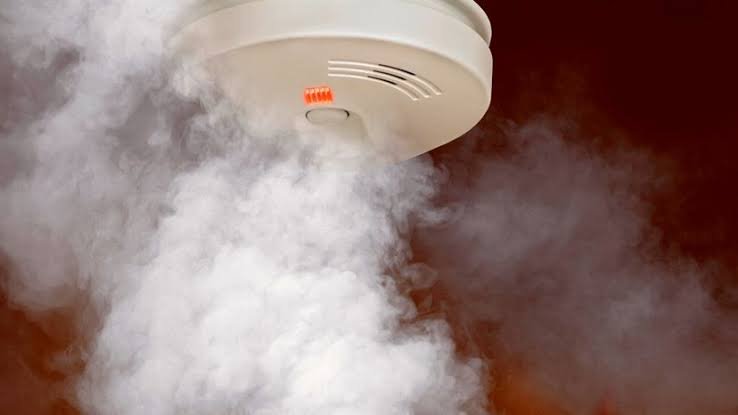
A smoke alarm is one of the simplest pieces of fire-safety equipment in a home, but its usefulness depends on one basic requirement: it must have reliable power.
Many homeowners remember to install smoke alarms but forget about the batteries inside them. A low battery can cause an annoying chirping sound, while a completely depleted battery can leave a battery-powered alarm unable to provide the warning it is designed to give.
For families in Pakistan, paying attention to smoke alarm batteries should be part of a wider home fire-safety routine. Homes may contain cooking appliances, electrical equipment, gas appliances, backup power systems, and other potential sources of fire. Early warning can give occupants valuable time to respond and leave safely.
The Building Code of Pakistan Fire Safety Provisions 2016 includes requirements concerning fire detection systems and states that inspection, testing, and maintenance of fire alarm and fire detection systems should follow the relevant applicable standard as determined by the authority having jurisdiction.
Whether a home uses a simple standalone smoke alarm or a more advanced fire alarm system in Pakistan, the lesson is the same: a safety device should be maintained rather than forgotten.
Here are five important reasons smoke alarm batteries deserve more attention.
1. Batteries Help Provide Early Warning
The biggest reason smoke alarm batteries matter is simple: they help the alarm remain powered and ready to operate.
A fire can develop unexpectedly. Smoke may spread before occupants see flames, particularly when people are asleep or are in another part of the house. A functioning smoke alarm can provide an early warning that something may be wrong.
That warning is especially important at night.
A battery-powered alarm that has a depleted battery may not provide the expected warning. This is why battery condition should never be treated as a minor household issue.
NFPA guidance recommends regularly testing smoke alarms and following the manufacturer’s instructions for testing and maintenance. It also notes that battery-powered alarms require attention to battery replacement, while some alarms use sealed batteries that are not intended to be replaced by the homeowner.
The exact battery schedule depends on the alarm design and manufacturer instructions.
2. A Low Battery Can Be Easy to Ignore
Most people recognize the familiar chirping sound of a smoke alarm with a low battery. The problem is that people sometimes become accustomed to the sound and postpone replacing the battery.
This can be risky.
A low-battery warning is not simply an annoying noise. It is the alarm telling you that its power source needs attention.
When a smoke alarm begins producing a low-battery warning:
- Do not ignore it.
- Follow the manufacturer’s instructions.
- Replace the battery when the alarm uses a replaceable battery.
- Check whether the entire unit has reached the end of its service life.
- If the alarm continues to malfunction, seek appropriate professional advice.
NFPA material states that replaceable batteries should be replaced when the alarm gives a low-battery warning and that homeowners should follow the manufacturer’s instructions. For battery-only alarms, annual battery replacement is described as a good practice, unless the manufacturer specifies another arrangement.
Some modern smoke alarms use sealed batteries designed to last for a specified period. These should not be opened simply to replace the internal battery. Instead, follow the manufacturer’s replacement instructions.
3. Battery Problems Can Affect an Otherwise Good Alarm
A common misunderstanding is that if the smoke alarm itself looks new, it must be ready to work.
Not necessarily.
A smoke alarm can appear perfectly normal from the outside while its power source is weak or depleted.
This is why maintenance needs to cover more than the appearance of the device.
For a household with several alarms, it can be useful to keep a simple record showing:
- Where each alarm is located
- The installation date
- The battery type
- When replaceable batteries were last changed
- Any warning signals
- When the alarm should be replaced
Keeping this information organized makes it less likely that an alarm will be forgotten.
The same principle applies to larger fire detection systems. NFPA 72 provides guidance for the installation, inspection, testing, and maintenance of fire alarm systems, smoke detection, carbon monoxide warning equipment, and emergency communications systems.
In Pakistan, the Pakistan Engineering Council also recognizes installation, commissioning, and maintenance of fire detection, alarm, and suppression systems as a specialized engineering service.
For complex systems, professional inspection and servicing should be used instead of attempting technical repairs at home.
4. Batteries Are Part of a Larger Fire-Safety System
It is easy to think about a smoke alarm battery as an individual household item.
In reality, it is one part of a broader safety system.
Consider how the different layers work together:
Prevention:
Safe cooking, electrical maintenance, responsible use of appliances, and good housekeeping can reduce fire risks.
Detection:
Smoke alarms and other detection devices can identify signs of fire.
Notification:
An alarm alerts people in the home that they may need to respond.
Evacuation:
A clear escape route allows occupants to leave.
Emergency response:
Adults can contact emergency services and follow the property’s emergency plan.
A battery problem can weaken the detection layer.
This does not mean a smoke alarm battery prevents a fire. Its purpose is to help keep the alarm operational so it can perform its warning function.
That distinction is important when planning home fire safety.
5. Regular Battery Checks Encourage Better Fire-Safety Habits
One unexpected benefit of paying attention to smoke alarm batteries is that it encourages homeowners to think about other areas of fire safety.
When a family checks its alarms, it may also remember to:
- Review emergency exits.
- Check that equipment remains accessible.
- Review the household evacuation plan.
- Check visible signs of electrical problems.
- Make sure everyone knows what the alarm sounds like.
- Review the condition of other fire-safety equipment.
- Replace old or damaged equipment when necessary.
NFPA recommends that people test smoke alarms regularly and ensure that everyone in the home knows what the alarm sounds like.
This is especially valuable for children. They should understand that an alarm is a signal to alert an adult and follow the household evacuation plan, not an invitation to investigate a fire.
Replace or Recharge? Understanding Smoke Alarm Batteries
Not every smoke alarm uses the same battery arrangement.
Replaceable batteries
Some alarms use replaceable batteries. These need to be changed according to the manufacturer’s instructions or when the alarm indicates that the battery is low.
Sealed long-life batteries
Some modern alarms use sealed batteries designed to operate for a long period. These batteries are not intended to be removed by the homeowner.
When the device reaches the end of its specified service life, the entire alarm may need to be replaced.
Hardwired alarms
Some smoke alarms are connected to the home’s electrical supply and may also have a backup battery. The backup battery is important because it can help maintain alarm operation if the primary power source is interrupted.
Homeowners should never assume that a hardwired alarm requires no maintenance.
The battery arrangement, testing procedure, and replacement schedule should always be checked against the manufacturer’s instructions.
How Often Should Smoke Alarm Batteries Be Checked?
There is no single schedule that applies to every smoke alarm because different products use different technologies and power arrangements.
A practical approach is to:
- Test the alarm according to the manufacturer’s instructions.
- Pay attention to low-battery warnings.
- Replace replaceable batteries according to manufacturer guidance.
- Keep track of battery changes.
- Replace alarms when they reach the manufacturer’s recommended end of service life.
- Seek professional help if a connected or advanced alarm system develops a fault.
NFPA guidance recommends monthly testing using the test button and following the manufacturer’s maintenance instructions. It also advises replacing smoke alarms when they reach 10 years of age or sooner if they do not respond properly when tested.
The manufacturer’s instructions should take priority for the specific device.
What Happens If You Ignore a Low-Battery Warning?
A low-battery warning should not be treated as something that can wait indefinitely.
The alarm is indicating that its power source requires attention. Continuing to ignore the warning may leave the household with a device that is not ready to perform as intended.
There is also a practical problem: people sometimes remove a battery to stop the chirping and then forget to replace it.
That can be more dangerous than the original warning.
If an alarm is making an unexpected sound, determine what the sound means using the manufacturer’s instructions. Do not permanently disable the alarm simply because the sound is inconvenient.
If the problem continues after appropriate user-level maintenance, the device may need replacement or professional assessment.
Smoke Alarm Placement Also Matters
A good battery cannot compensate for a badly installed or unsuitable smoke alarm.
Smoke alarms should be installed according to the manufacturer’s instructions and applicable requirements. Placement can depend on factors such as the building’s design, ceiling arrangement, airflow, and the type of detection system.
The Building Code of Pakistan Fire Safety Provisions 2016 contains detailed provisions concerning detector placement and testing for applicable fire detection systems.
Homeowners should therefore avoid moving alarms to random locations simply because they are inconvenient.
If a home is renovated, rooms are added, or the building layout changes, the fire-detection arrangement may also need to be reviewed.
Keep Smoke Alarms Clean
Battery maintenance is important, but the alarm itself also needs care.
Dust and debris can affect detection equipment. Smoke detectors should be kept in the condition recommended by the manufacturer.
During construction or renovation, detectors can be exposed to dust, dirt, and damage. The Pakistan fire-safety provisions specifically address protecting detectors from construction debris and verifying their operation before final commissioning.
Homeowners should follow the manufacturer’s approved cleaning and maintenance instructions rather than opening or modifying the device.
Don’t Remove Batteries Because of False Alarms
Sometimes a smoke alarm may sound because of cooking smoke, steam, dust, or another environmental condition.
The wrong response is to permanently remove the battery.
If an alarm is repeatedly producing unwanted alarms, investigate the reason according to the manufacturer’s guidance. The alarm may need to be repositioned, cleaned according to approved instructions, replaced, or professionally assessed.
A smoke alarm that has been intentionally disabled cannot provide reliable protection.
The goal is to solve the underlying problem without sacrificing fire detection.
Batteries and Power Outages
Power interruptions can be a concern for homes that use hardwired smoke alarms.
A backup battery can help an alarm remain operational when normal electrical power is unavailable, depending on the system design.
This is particularly relevant in locations where power interruptions occur.
However, backup batteries should not be treated as permanent solutions for an electrical problem. If a hardwired fire alarm system repeatedly experiences faults or power-related problems, qualified technical assistance may be required.
For larger buildings and more sophisticated systems, backup power arrangements can be significantly more complex.
NFPA standards address emergency and standby power systems separately from ordinary household smoke alarm batteries, illustrating why larger installations require appropriate engineering and maintenance rather than improvised solutions.
A Simple Smoke Alarm Maintenance Checklist
Homeowners can use the following checklist as a starting point:
- [ ] Smoke alarms are installed where appropriate.
- [ ] Each alarm is tested according to its manufacturer’s instructions.
- [ ] Low-battery warnings are addressed promptly.
- [ ] Replaceable batteries are changed according to manufacturer guidance.
- [ ] Sealed-battery alarms are replaced when required.
- [ ] Alarm units are not intentionally disabled.
- [ ] Alarms are kept free from obvious obstruction.
- [ ] The manufacturer’s cleaning instructions are followed.
- [ ] Old alarms are replaced at the recommended end of service life.
- [ ] Household members recognize the alarm sound.
- [ ] Escape routes remain clear.
- [ ] The family has an emergency evacuation plan.
- [ ] Complex fire alarm systems receive appropriate professional maintenance.
Choosing Batteries for a Smoke Alarm
Homeowners should not automatically assume that every battery will work with every alarm.
The correct battery type should be determined from the alarm manufacturer’s instructions.
Important information may include:
- Battery size
- Battery chemistry
- Voltage
- Recommended replacement interval
- Whether the battery is replaceable
- Whether the alarm requires a specific approved battery
Using an unsuitable battery may cause poor performance or other problems.
For sealed units, homeowners should not attempt to modify the alarm to install a different battery.
Smoke Alarm Batteries and a Fire Alarm System in Pakistan
A standalone smoke alarm and a complete building fire alarm system are not necessarily the same thing.
A simple home smoke alarm may operate independently and provide an audible warning.
A larger fire alarm system in Pakistan may include multiple detectors, manual alarm points, control panels, notification appliances, backup power, monitoring features, and other components.
Such systems require a more structured approach to inspection, testing, and maintenance.
NFPA 72 is a major reference for fire alarm and signaling systems, covering areas including installation, inspection, testing, and maintenance.
The Pakistan Engineering Council’s classification of fire detection, alarm, and suppression system installation, commissioning, and maintenance as a specialized engineering service also demonstrates why technical systems should be handled by appropriately qualified professionals.
For homeowners, the important point is simple: do not confuse a basic battery replacement with technical maintenance of a complex fire alarm installation.
Fire Safety in Pakistani Homes
Every household has different fire risks.
A home may have cooking equipment, electrical appliances, gas appliances, generators, batteries, heating equipment, or other potential hazards.
Smoke alarms can form an important layer of protection, but they should be part of a wider safety strategy.
Families should also consider:
- Safe cooking practices
- Electrical maintenance
- Appropriate fire extinguishers
- Clear escape routes
- Emergency contact arrangements
- Regular equipment maintenance
- Age-appropriate fire-safety education
The Building Code of Pakistan Fire Safety Provisions 2016 provides provisions for fire detection and fire-safety measures, while specific requirements can vary depending on the property and applicable authority.
For information about fire-safety products and solutions, homeowners and businesses can explore Flame Defender.
Final Thoughts
Smoke alarm batteries may seem like a small part of home safety, but they support one of the most important functions of an alarm: providing a warning when smoke is detected.
A beautiful home, expensive appliances, and sophisticated safety equipment cannot replace basic maintenance.
Pay attention to low-battery warnings. Test alarms according to their instructions. Replace batteries or complete units when required. Never intentionally disable an alarm because its warning sound is inconvenient. For advanced systems, arrange appropriate professional inspection and maintenance.
Most importantly, remember that smoke alarms are designed to provide an early warning. When an alarm sounds, household members should follow their emergency plan and move toward safety rather than delaying to investigate.
A small amount of attention to smoke alarm batteries can become an important part of a much larger fire-safety routine.
FAQs
1. How often should smoke alarm batteries be replaced?
The replacement schedule depends on the alarm and battery type. Follow the manufacturer’s instructions and replace a replaceable battery when the alarm gives a low-battery warning. For some battery-only alarms, annual replacement is a good practice.
2. Should I remove the battery if my smoke alarm keeps chirping?
No. A chirping alarm may be indicating a low battery or another issue. Follow the manufacturer’s instructions to identify the warning and correct the underlying problem. Do not leave the alarm without its required power source.
3. Do hardwired smoke alarms need batteries?
Many hardwired alarms use a backup battery, but the exact design varies. Check the manufacturer’s instructions for your specific alarm. A hardwired alarm should still be tested and maintained according to its instructions.
4. How long does a smoke alarm last?
Many smoke alarms are recommended for replacement after about 10 years, although the exact requirement depends on the manufacturer and model. NFPA guidance recommends replacing smoke alarms at 10 years or sooner if they do not respond properly during testing.
5. Are smoke alarms part of a fire alarm system in Pakistan?
They can be. A standalone residential smoke alarm is a simple detection device, while a larger fire alarm system can include multiple detectors, control equipment, notification devices, and backup power. More complex systems require appropriate professional installation, testing, and maintenance.