
A fire emergency can create confusion within seconds. People may not immediately know which exit to use, where to assemble, who should contact emergency services, or how to respond when an alarm sounds. This is why fire drills are an important part of fire safety.
A fire drill is a planned exercise that helps occupants become familiar with emergency procedures. It gives employees, students, residents, visitors, and responsible staff an opportunity to understand what they should do when a real fire alarm occurs.
Fire drills are not about creating fear or pretending that people are actually in danger. They are about building familiarity and identifying weaknesses in an emergency plan.
The Building Code of Pakistan Fire Safety Provisions 2016 includes specific provisions concerning emergency egress and relocation drills. It states that drills should be conducted according to the requirements applicable to the occupancy, developed in cooperation with local authorities, and recorded appropriately. It also says drills should be conducted at expected and unexpected times and under varying conditions to simulate unusual circumstances that could occur during a fire emergency.
For buildings in Pakistan, fire drills can therefore be an important part of a broader safety program involving alarms, evacuation routes, emergency communication, firefighting equipment, staff training, and regular maintenance.
What Is a Fire Drill?
A fire drill is a planned exercise designed to practice a building’s emergency response.
During a drill, occupants normally respond to an alarm or other agreed signal and follow the building’s established evacuation or relocation procedures.
A drill can help people learn:
- Where emergency exits are located
- Which routes they should use
- Where to assemble
- How to respond to an alarm
- Who has emergency responsibilities
- How information will be communicated
- What problems may occur during evacuation
The exact drill process should be appropriate for the building, occupancy, emergency plan, and applicable requirements.
Why Are Fire Drills Important?
People often understand emergency procedures better when they have practiced them.
Reading an emergency plan is useful, but knowing where an exit is located and actually following the evacuation route can provide a different level of familiarity.
Fire drills can help organizations identify problems such as:
- Blocked exit routes
- Confusing signage
- Poor communication
- Inadequate emergency lighting
- Unclear staff responsibilities
- Problems with assembly areas
- Occupants who do not recognize the alarm
- Delays during evacuation
NFPA material on emergency egress and relocation drills emphasizes establishing drills as a routine and ensuring that people subject to the drill participate, while recognizing that some occupancies may require special arrangements for people who cannot independently evacuate.
The Connection Between Fire Drills and Fire Alarms
A fire drill and a fire alarm system serve different purposes, but they work closely together.
The alarm provides the warning. The drill helps people understand how to respond to that warning.
A properly maintained Fire alarm system in Pakistan can provide early notification, while regular drills can help occupants become familiar with the actions expected after an alarm.
NFPA 72 is a major reference for fire alarm and emergency communication systems and covers installation, inspection, testing, and maintenance of fire alarm systems.
A drill should therefore not be considered a substitute for maintaining the alarm system. Both the equipment and the people using the building need appropriate attention.
1. Fire Drills Build Familiarity
One of the biggest benefits of a fire drill is familiarity.
People may know that an emergency exit exists, but they may not remember its exact location when they are under pressure.
Regular, well-planned drills can help occupants become more familiar with:
- Exit routes
- Stairways
- Assembly locations
- Alarm signals
- Emergency instructions
- Building responsibilities
The objective is not to make people memorize complicated procedures. It is to make important actions more familiar.
2. Drills Test the Emergency Plan
An emergency plan may look excellent on paper but still have practical weaknesses.
A fire drill provides an opportunity to see whether the plan actually works.
For example, management may discover that:
- A corridor becomes crowded
- A door is difficult to use
- An assembly area is too small
- Employees are unsure who should report occupants
- Visitors do not know where to go
- Communication between departments is unclear
These findings can then be used to improve the plan.
3. Fire Drills Help Identify Blocked Exits
Emergency exits must remain available when people need them.
During a drill, participants may discover that furniture, boxes, equipment, decorations, or other materials have reduced access to an escape route.
This is particularly important in offices, schools, warehouses, shopping centers, hotels, hospitals, and residential buildings where conditions can change regularly.
A fire drill can turn an overlooked obstruction into an identified maintenance issue before a real emergency occurs.
4. Drills Improve Staff Awareness
Employees often have responsibilities that ordinary occupants do not.
Depending on the organization, designated personnel may help with:
- Emergency communication
- Evacuation coordination
- Checking designated areas
- Guiding occupants
- Supporting visitors
- Reporting information to management
- Accounting for people at the assembly point
Training should remain appropriate to the person’s role.
Employees should not be expected to perform dangerous firefighting activities simply because they have participated in a drill.
5. Drills Can Help Visitors Understand Procedures
Visitors may be unfamiliar with the building.
This is particularly important in:
- Hotels
- Hospitals
- Schools
- Shopping centers
- Offices
- Apartment buildings
- Event venues
- Government facilities
Emergency signs, alarms, announcements, and staff guidance should help visitors understand what to do.
A well-designed emergency plan should consider people who do not know the building layout.
6. Fire Drills Support Safer Evacuation
The purpose of an evacuation drill is not to create a competition for speed.
A successful drill is one in which people follow the correct emergency procedure in an organized manner.
Occupants should use designated escape routes and follow the approved emergency plan.
Depending on the building and occupancy, evacuation may involve total evacuation, partial evacuation, relocation, or another approved strategy.
NFPA material recognizes several possible evacuation approaches, including total evacuation, partial evacuation, staged evacuation, and relocation strategies depending on building conditions and occupant characteristics.
The appropriate strategy should be determined by the building’s approved emergency plan and applicable requirements.
7. Drills Should Include Different Conditions
A real fire does not necessarily occur at a convenient time.
People may be working different shifts, visitors may be present, and some occupants may be unfamiliar with the building.
Pakistan’s Building Code Fire Safety Provisions states that drills should be held at expected and unexpected times and under varying conditions to simulate unusual circumstances that could occur during an actual fire emergency.
However, drills should always be carefully planned and conducted safely. They should never create unnecessary danger.
8. Fire Drills in Schools
Schools require special attention because children may need clear instructions and adult supervision during emergencies.
A school fire-drill program should consider:
- Classrooms
- Laboratories
- Libraries
- Assembly areas
- Sports facilities
- Cafeterias
- Administrative areas
- Visitors
- Students requiring additional assistance
Teachers and responsible staff should understand their roles.
The goal is to teach students that an alarm means they should follow the school’s established emergency procedure rather than panic.
9. Fire Drills in Offices
Office buildings can have multiple floors, meeting rooms, kitchens, storage areas, and large numbers of employees.
An office drill can help identify:
- Exit-route problems
- Communication weaknesses
- Unclear responsibilities
- Issues affecting visitors
- Problems with assembly areas
- Delays caused by building layout
Management should review the results after each drill and correct important weaknesses.
10. Fire Drills in Hospitals
Hospitals present unique challenges because not every occupant can independently evacuate.
Patients may be:
- Bedridden
- Receiving medical treatment
- Mobility-impaired
- Dependent on medical equipment
- Unfamiliar with the building
For this reason, hospital emergency planning requires specialized procedures.
Drills should be designed around the hospital’s approved emergency plan and the needs of patients, visitors, and staff.
The objective is to test coordination without putting patients or staff at unnecessary risk.
11. Fire Drills in High-Rise Buildings
High-rise buildings may have many floors and large numbers of occupants.
Evacuation planning can therefore be more complex than in a small building.
Drills can help residents, employees, and building staff understand:
- Stair locations
- Exit routes
- Assembly areas
- Alarm signals
- Emergency communication
- Staff responsibilities
The Building Code of Pakistan includes provisions addressing evacuation and emergency egress, including requirements concerning response when a fire alarm is activated.
High-rise drill arrangements should follow the building’s approved emergency strategy.
12. Fire Drills in Warehouses
Warehouses may contain large amounts of stock, packaging, equipment, and combustible materials.
Employees may also work across large areas.
Drills can help identify:
- Long travel routes
- Blocked aisles
- Poorly marked exits
- Communication difficulties
- Assembly-point problems
- Shift-related issues
Warehouse staff should understand that protecting themselves and evacuating safely takes priority over attempting to save property.
13. Fire Drills in Shopping Centers
Shopping centers have a unique challenge: many visitors may not know the building.
Emergency planning should therefore consider both staff and members of the public.
Staff training can include:
- Recognizing alarms
- Communicating with customers
- Directing people toward approved exits
- Keeping emergency routes clear
- Supporting people who need additional assistance
Drills should be coordinated carefully so that they do not create unnecessary confusion among the public.
14. The Role of Emergency Communication
An alarm tells people that something requires attention, but additional information may sometimes be necessary.
Depending on the building and system, emergency communication may provide instructions or information to occupants.
NFPA’s fire and life-safety material recognizes emergency communication and evacuation/relocation instructions as part of broader life-safety arrangements.
A drill can help determine whether occupants understand the messages provided by the building’s emergency communication system.
15. Practice Assembly Procedures
Leaving the building is only part of an evacuation.
Occupants also need to know where to go after exiting.
A predetermined assembly area can help management account for people and keep evacuated occupants away from emergency operations.
Pakistan’s Building Code Fire Safety Provisions states that drill participants should relocate to a predetermined location and remain there until a recall or dismissal signal is given.
The assembly location should be selected as part of the building’s emergency planning.
16. Do Not Turn Drills Into Dangerous Activities
Fire drills should teach safe evacuation, not encourage risky behavior.
Participants should not be asked to:
- Create real fires
- Enter smoke-filled areas
- Block exits
- Simulate injuries in unsafe ways
- Handle hazardous materials
- Use firefighting equipment without appropriate training
- Perform dangerous stunts
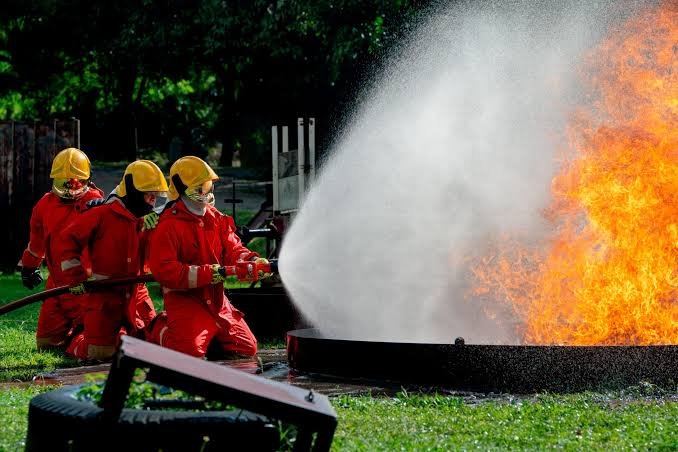
Live-fire training is a specialized activity requiring appropriate facilities, equipment, procedures, and trained personnel. It should not be confused with an ordinary building evacuation drill.
17. Include People Who May Need Additional Assistance
An effective drill should consider people who may need assistance during an emergency.
This can include:
- Older adults
- People with disabilities
- Young children
- Patients
- Visitors unfamiliar with the building
The emergency plan should identify appropriate responsibilities without placing untrained occupants in danger.
NFPA guidance recognizes that evacuation methods depend partly on the capabilities of occupants and the availability of staff who can provide assistance.
18. Evaluate the Fire Alarm During a Drill
A drill can provide useful information about the alarm system’s practical performance.
Management can observe whether:
- People recognize the alarm
- Alarm notification reaches occupied areas
- Staff understand the signal
- Emergency communication is understood
- People know what action to take
Technical testing of alarm equipment should still be performed according to the applicable inspection and testing requirements. A drill does not replace professional system testing.
19. Record Every Drill
Documentation is an important part of fire-safety management.
Pakistan’s Building Code Fire Safety Provisions states that a written record of each required drill should be completed by the responsible person and maintained appropriately.
A drill record can include:
- Date
- Time
- Building or area
- Type of drill
- Number of participants
- Major observations
- Problems identified
- Corrective actions
- Responsible person
- Follow-up date
Records help organizations track improvement over time.
20. Review What Went Wrong
The most valuable part of a fire drill may happen after everyone has returned to normal activities.
Management should ask:
- Did everyone recognize the alarm?
- Were exits accessible?
- Were people unsure where to go?
- Did visitors need additional guidance?
- Were there communication problems?
- Was the assembly area suitable?
- Were any safety hazards discovered?
- Did designated staff understand their responsibilities?
Honest answers are more valuable than simply declaring the drill successful.
21. Correct Problems After the Drill
A drill has limited value if identified problems are ignored.
For each important finding, management should determine:
- What happened?
- Why did it happen?
- What needs to change?
- Who is responsible?
- When should the correction be completed?
- How will completion be verified?
This turns a drill from a routine event into a continuous improvement process.
22. Connect Drills With Fire Safety Training
Fire drills and training should support each other.
Training can explain:
- Alarm signals
- Evacuation routes
- Assembly procedures
- Emergency communication
- Hazard reporting
- Staff responsibilities
The drill then gives people an opportunity to apply that knowledge in a controlled environment.
23. Maintain Fire Protection Equipment
Drills should not create the impression that evacuation practice is the only part of fire safety.
A complete program should also include appropriate maintenance of:
- Fire alarm systems
- Detection devices
- Fire extinguishers
- Sprinkler systems
- Fire pumps
- Emergency lighting
- Exit signs
- Fire doors
- Emergency communication systems
The Pakistan Engineering Council identifies professional work involving installation, commissioning, and maintenance of fire detection, alarm, suppression systems, and allied equipment.
Technical maintenance should be handled by appropriately qualified personnel.
24. Why a Reliable Fire Alarm System Matters
Fire drills are most effective when the building’s fire protection systems are properly maintained.
A reliable Fire alarm system in Pakistan can provide the warning that starts an emergency response. The drill then helps occupants understand what that warning means and how they should respond.
This creates a simple but important connection:
Detection → Alarm → Response → Evacuation or Relocation → Assembly → Accountability
Each stage needs appropriate planning.
A failure at one stage can affect the effectiveness of the overall emergency response.
Fire Drills and Fire Safety in Pakistan
The Building Code of Pakistan Fire Safety Provisions 2016 provides specific provisions for evacuation and fire drills. It states that required emergency egress and relocation drills should follow the applicable occupancy provisions, be designed in cooperation with local authorities, occur at the required frequency, and be documented.
Requirements can vary depending on the building type, occupancy, location, and applicable Authority Having Jurisdiction.
For this reason, property owners and facility managers should not rely on a generic drill schedule without checking the requirements applicable to their particular building.
A qualified fire-safety professional can also help organizations develop and evaluate appropriate emergency procedures.
A Simple Fire Drill Checklist
Before a drill:
- [ ] Review the emergency plan
- [ ] Confirm the evacuation strategy
- [ ] Identify responsible staff
- [ ] Confirm the assembly location
- [ ] Consider people needing additional assistance
- [ ] Check that emergency routes are available
- [ ] Coordinate with relevant authorities where required
During the drill:
- [ ] Activate or use the approved drill alarm procedure
- [ ] Observe occupant response
- [ ] Monitor evacuation routes
- [ ] Observe staff responsibilities
- [ ] Note communication issues
- [ ] Avoid creating unnecessary hazards
After the drill:
- [ ] Confirm participants reached the assembly area
- [ ] Record the drill
- [ ] Discuss problems
- [ ] Assign corrective actions
- [ ] Set follow-up dates
- [ ] Update procedures when necessary
Common Fire Drill Mistakes
Treating the Drill as a Race
Speed is not the only measure of success. Safe, organized evacuation is more important than simply producing a fast time.
Ignoring Visitors
Visitors may not know the building. Emergency planning should account for them.
Blocking Routes During the Exercise
A drill should not create hazards that could interfere with safe movement.
Failing to Record Results
Without documentation, it becomes difficult to track recurring problems.
Ignoring Problems Afterward
Identifying a blocked exit or communication problem is useful only if the issue is corrected.
Assuming Equipment Does Not Need Maintenance
A drill does not replace professional inspection and testing of fire protection equipment.
Conclusion
Fire drills are one of the simplest ways to improve emergency preparedness.
They help people become familiar with alarms, exits, assembly areas, communication procedures, and their responsibilities. They also give organizations an opportunity to discover problems before a real emergency occurs.
For buildings in Pakistan, fire drills should be developed according to the building’s occupancy, emergency plan, applicable requirements, and guidance from relevant authorities. The Building Code of Pakistan Fire Safety Provisions 2016 provides specific provisions concerning emergency egress and relocation drills, including frequency, varying conditions, assembly locations, and written records.
A well-maintained Fire alarm system in Pakistan is an important part of this process, but equipment alone cannot guarantee a safe response. People need to understand what an alarm means and how to follow the building’s emergency plan.
For fire-safety equipment, systems, and professional support, businesses and building managers can explore Flame Defender.
The most important lesson is simple: practice before an emergency happens. A small investment in regular drills, training, maintenance, and planning can help create a more prepared and confident building community.
Frequently Asked Questions
1. What is the main purpose of a fire drill?
The main purpose of a fire drill is to practice the building’s emergency response. It helps occupants understand alarm signals, evacuation or relocation procedures, emergency exits, assembly areas, and their responsibilities.
2. How often should fire drills be conducted in Pakistan?
The appropriate frequency depends on the building’s occupancy and applicable requirements. The Building Code of Pakistan Fire Safety Provisions 2016 specifies different drill requirements for different occupancies, so building management should follow the provisions applicable to its facility and consult the relevant authority when necessary.
3. Is a fire drill the same as testing a fire alarm system?
No. A fire drill practices human response to an emergency, while technical fire alarm testing checks the operation of the alarm system and its components. Both are important but serve different purposes.
4. Should everyone participate in a fire drill?
Drill participation should follow the building’s emergency plan and applicable requirements. Special arrangements may be needed for people who cannot independently evacuate, such as some hospital patients or people requiring additional assistance.
5. What should happen after a fire drill?
Management should review the results, document problems, assign corrective actions, and follow up to make sure important deficiencies are addressed. A drill is most useful when its findings lead to improvements in the emergency plan and building safety.