
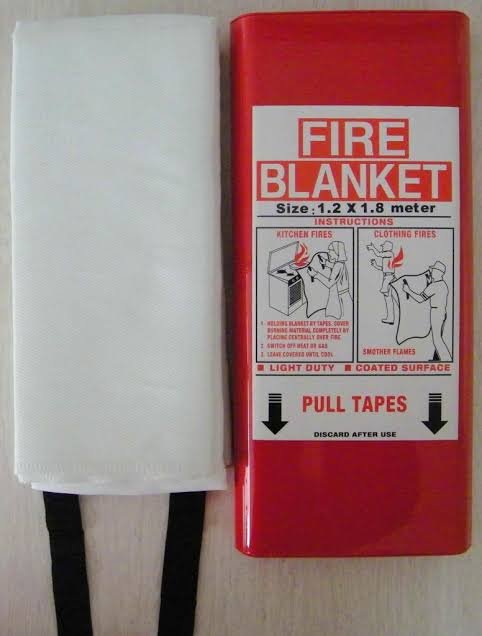
Fire safety is often associated with fire extinguishers, smoke detectors, alarms, and emergency exits. These are all important parts of a fire-protection plan, but there are other simple safety tools that can also play a useful role. One of them is the fire blanket.
A fire blanket is a specially designed piece of fire-resistant material intended for certain limited fire situations. It can also be useful as part of a wider emergency plan where its use is appropriate and safe.
For homes, restaurants, offices, schools, workshops, and other buildings in Pakistan, fire blankets can provide another layer of preparedness. However, they should never be considered a replacement for a properly designed fire-protection system, evacuation plan, or professional emergency response.
The Building Code of Pakistan Fire Safety Provisions 2016 covers fire prevention, life safety, and fire protection of buildings. Its scope includes the design, installation, maintenance, repair, servicing, and testing of fire-protection systems and equipment.
A complete safety strategy can therefore include several layers, including prevention, detection, alarms, firefighting equipment, evacuation planning, and appropriate emergency training.
What Is a Fire Blanket?
A fire blanket is a sheet of fire-resistant material designed for specific fire-emergency applications.
Unlike a portable extinguisher, a blanket does not release an extinguishing agent. Instead, when appropriately used for a suitable small fire, it can help isolate the fire from oxygen and contain the affected area.
Fire blankets may be found in locations where small fires are possible, particularly around certain cooking or laboratory environments.
However, not every fire is suitable for a fire blanket. The type of fire, size of the incident, surrounding conditions, and available escape route all matter.
The most important principle is that personal safety comes first.
If a fire is growing, producing heavy smoke, spreading rapidly, or blocking an escape route, occupants should leave the area and contact emergency services rather than attempting to control it themselves.
Why Fire Blankets Matter
Fire emergencies can develop quickly.
A small incident can become more serious if it is not controlled appropriately, especially when combustible materials are nearby.
A fire blanket can provide another safety option for certain limited situations, particularly where a suitable blanket is readily accessible and people have been properly trained.
Its value comes from being simple, accessible, and easy to store.
But a fire blanket should be viewed as one component of a broader fire-safety plan.
A building may also need:
- Smoke detection
- Fire alarms
- Fire extinguishers
- Emergency lighting
- Clearly marked exits
- Fire doors
- Emergency procedures
- Regular inspections
- Employee or household fire-safety awareness
No single piece of equipment can protect a building against every possible fire scenario.
Fire Blankets and Kitchen Safety
Kitchens are among the places where fire-safety planning deserves particular attention.
Cooking equipment can create heat and ignition sources, while cooking oils and other materials can contribute to fire hazards.
Commercial kitchens can have additional risks because they may use larger cooking appliances and have ventilation and grease-related hazards.
NFPA 96 covers fire protection and ventilation requirements for commercial cooking operations, including cooking equipment, fire-extinguishing systems, grease-removal systems, and related maintenance considerations.
A fire blanket may be part of the safety equipment available in an appropriate kitchen environment, but it should not replace a properly designed commercial kitchen fire-protection system.
For a serious kitchen fire, evacuation and professional emergency response are more important than attempting to fight the fire.
A Fire Blanket Is Not Suitable for Every Fire
One of the most important things to understand is that fire blankets have limitations.
They should not be treated as a universal solution for every type of fire.
A fire involving electrical equipment, pressurized equipment, chemicals, or a rapidly spreading fuel source may require a different response.
The correct firefighting equipment depends on the type and size of the fire and the hazards present.
For this reason, fire-safety planning should identify the types of hazards present in a building and provide appropriate equipment for them.
Portable fire extinguishers, for example, are designed for use as a first line of defense against fires of limited size, with selection and application based on the hazards involved. NFPA 10 provides requirements for portable fire extinguishers.
A fire blanket serves a different purpose and should not automatically be substituted for an extinguisher or another required protection system.
Fire Blankets Are Not a Replacement for Fire Alarms
A fire blanket can only be useful when someone knows a fire exists and can safely reach the equipment.
This is one reason early fire detection remains important.
A smoke detector or properly designed fire alarm system can provide an early warning when occupants may not immediately see a developing fire.
A fire alarm system in Pakistan can form part of a larger fire-protection arrangement that may include detectors, alarm notification devices, manual alarm points, control equipment, and other components.
Pakistan’s Building Code Fire Safety Provisions addresses fire alarm systems and other fire-protection arrangements as part of building life safety.
The relationship between these systems is straightforward:
Detection provides warning.
Alarms notify occupants.
Firefighting equipment provides appropriate response options.
Emergency exits provide a route to safety.
These layers work together rather than competing with one another.
Choosing the Right Location
Fire-safety equipment should be located where it can be accessed when needed.
A fire blanket hidden inside a locked cupboard or buried behind boxes may not be useful during an emergency.
At the same time, equipment should be stored in a location that protects it from unnecessary damage, contamination, moisture, or other environmental problems.
The location should also be clearly identifiable to the people who may need it.
Businesses can include fire blankets on their fire-equipment maps or safety checklists so employees know where relevant equipment is located.
The exact placement should be determined according to the building’s hazards, equipment instructions, and applicable fire-safety requirements.
Make Fire Equipment Easy to Find
During an emergency, people may have limited time to think.
Simple visibility can therefore be valuable.
Fire equipment should not be surrounded by unnecessary objects or stored in a confusing location.
Signs can help people identify equipment and emergency exits.
Employees should also understand the difference between fire-safety equipment and ordinary household or workplace materials.
A regular blanket, towel, sheet, or other household fabric should never automatically be assumed to provide the same protection as a purpose-designed fire blanket.
Use equipment for its intended purpose and follow its manufacturer’s information.
Training Is an Important Part of Fire Safety
Having a fire blanket available does not automatically mean that everyone knows how to respond to an emergency.
Businesses and institutions should provide appropriate fire-safety awareness and training.
Training can cover:
- Recognizing the alarm signal
- Knowing emergency exits
- Understanding evacuation procedures
- Knowing where firefighting equipment is located
- Understanding when not to attempt firefighting
- Reporting a fire quickly
- Knowing the designated emergency meeting point
Pakistan’s Building Code Fire Safety Provisions includes fire and life-safety education for employees, responsible parties, and the general public within its scope.
The objective should be to help people make safe decisions rather than encouraging them to take unnecessary risks.
When Evacuation Is the Priority
Firefighting equipment should never encourage people to remain in a dangerous building.
If a fire is spreading, smoke is increasing, visibility is becoming poor, or an escape route is threatened, leaving the area should be the priority.
People should not return to collect personal belongings.
Children should not be sent toward a fire to retrieve equipment.
Anyone who cannot safely control a fire should evacuate and allow trained emergency responders to handle the situation.
A fire blanket is an emergency tool, not permission to take risks.
Fire Blankets in Commercial Buildings
Restaurants, hotels, schools, offices, laboratories, workshops, and industrial facilities may have different fire hazards.
A commercial property should assess its specific risks before deciding which fire-protection equipment is appropriate.
For example, a restaurant may have cooking-related hazards, while an office may have greater concern around electrical equipment and furnishings.
An industrial facility may have machinery, chemicals, fuels, or other specialized hazards.
The correct combination of equipment depends on these conditions.
The Building Code of Pakistan Fire Safety Provisions is intended to address fire prevention, life safety, and property protection across different building situations.
For complex properties, fire-protection planning should involve appropriately qualified professionals.
Inspect Fire Blankets Regularly
Like other fire-safety equipment, fire blankets should not simply be installed and forgotten.
Their condition should be checked periodically according to the manufacturer’s instructions and the property’s fire-safety program.
Look for obvious signs of:
- Physical damage
- Contamination
- Deterioration
- Moisture exposure
- Missing packaging or components
- Difficult access
- Unclear identification
If equipment has been used, damaged, or is otherwise unsuitable, it should be assessed and replaced or serviced as appropriate.
The Building Code of Pakistan recognizes maintenance, repair, servicing, and testing of fire-protection equipment as part of its fire-safety scope.
Keep Fire Equipment Accessible
Accessibility is an important part of fire-safety planning.
An extinguisher, fire blanket, alarm panel, or emergency exit should not be blocked by stored materials.
In workplaces, temporary storage can gradually become permanent. Boxes may be placed in front of equipment, furniture may be moved, or supplies may accumulate around emergency equipment.
Regular inspections can identify these problems.
A simple rule is useful:
Emergency equipment should remain visible, identifiable, and accessible.
Fire Blankets and Fire Alarm Systems Work Together
It is useful to think about fire safety as a chain of protection.
A fire may begin because of an electrical fault, cooking activity, heating equipment, or another ignition source.
A smoke detector may identify smoke.
The alarm system may notify occupants.
People may then follow their evacuation plan.
If the incident is small and suitable for a trained response, appropriate firefighting equipment may be available.
If the situation is unsafe, occupants should leave and emergency responders should take over.
This layered approach is more reliable than depending on a single device.
A fire alarm system in Pakistan can therefore be an important part of the same overall safety plan that includes fire blankets and extinguishers.
Fire Prevention Should Come First
Firefighting equipment is important, but preventing fires is even better.
Homes and businesses should regularly review common hazards.
These can include:
- Damaged electrical wiring
- Overloaded electrical outlets
- Unattended cooking
- Poor housekeeping
- Unsafe storage
- Combustible materials near heat sources
- Gas-related hazards
- Poorly maintained equipment
The Building Code of Pakistan Fire Safety Provisions specifically covers hazards associated with fire prevention, combustible materials, and the storage and use of flammable and combustible substances.
Good housekeeping and preventive maintenance can reduce the chance of an emergency developing in the first place.
Fire Blankets Should Be Part of a Safety Plan
A fire blanket becomes more useful when it is included in a complete safety program.
A basic plan can include:
- Identify fire hazards.
- Install appropriate detection equipment.
- Provide suitable fire alarms.
- Keep appropriate firefighting equipment available.
- Maintain clear escape routes.
- Train occupants or employees.
- Conduct appropriate emergency drills.
- Inspect and maintain equipment.
- Keep emergency contacts available.
- Review the plan when the building or its use changes.
This approach ensures that fire blankets are treated as one layer of protection rather than the entire fire-safety strategy.
The Importance of Professional Fire Protection
Simple equipment may appear easy to manage, but larger fire-protection systems can be complex.
Fire alarm systems, suppression systems, hydrants, pumps, and other installations may require professional design, commissioning, inspection, and maintenance.
Pakistan Engineering Council lists ME02 as a specialization covering installation, commissioning, and maintenance of fire detection, alarm, and suppression systems and associated equipment.
For commercial and larger properties, professional assessment can help ensure that fire-protection arrangements match the building’s risks and applicable requirements.
For information about fire-safety equipment and solutions, property owners and businesses can explore Flame Defender.
A Simple Fire Blanket Safety Checklist
Property owners and responsible staff can use the following checklist as a starting point:
- Is the fire blanket appropriate for its intended location?
- Is it easy to identify?
- Is it accessible?
- Is it protected from unnecessary damage?
- Is its condition checked regularly?
- Do employees know where it is?
- Do occupants understand the evacuation procedure?
- Are smoke detectors maintained?
- Is the fire alarm system operational?
- Are fire extinguishers available where required?
- Are emergency exits clear?
- Are fire-safety inspections documented?
- Has the fire-safety plan been reviewed after renovations or changes in building use?
This checklist does not replace applicable codes, standards, manufacturer instructions, or professional fire-safety advice.
Why a Small Investment Can Make a Difference
Fire blankets are relatively simple pieces of fire-safety equipment, but their value comes from being available when an appropriate situation occurs.
However, the biggest benefit comes when they are part of a wider safety culture.
A building where people understand fire risks, alarms are maintained, exits are clear, and equipment is regularly inspected is better prepared than a building where equipment has simply been purchased and forgotten.
The same principle applies to every part of fire protection.
Buying equipment is only the first step.
Maintaining it, understanding it, and incorporating it into an emergency plan are equally important.
Conclusion
Fire blankets can be a useful addition to a well-planned fire-safety strategy, particularly in locations where they are appropriate for the identified hazards.
But they should never be viewed as a universal answer to fire emergencies.
A complete safety plan combines prevention, early detection, alarms, suitable firefighting equipment, emergency exits, training, and regular maintenance.
A properly designed fire alarm system in Pakistan can provide early warning, while suitable firefighting equipment can provide additional protection when conditions allow a safe response.
The most important goal is always life safety. If a fire is beyond safe control, evacuation and professional emergency response should take priority.
For homes and businesses, a small investment in appropriate fire-safety equipment, combined with regular maintenance and awareness, can make a meaningful difference in emergency preparedness.
FAQs
1. What is the purpose of a fire blanket?
A fire blanket is a fire-resistant sheet designed for certain limited fire situations. When appropriate for the specific incident, it can help isolate a small fire from oxygen. It is not a universal solution for every type of fire.
2. Can a fire blanket replace a fire extinguisher?
No. Fire blankets and fire extinguishers serve different purposes and have different limitations. The appropriate equipment depends on the hazards present. A building may require several types of fire-protection equipment.
3. Can a fire blanket be used for every type of fire?
No. Fire blankets are not suitable for every fire situation. The type, size, and location of the fire and the surrounding hazards all matter. If a fire is spreading or conditions are unsafe, occupants should evacuate and contact emergency services.
4. Where should a fire blanket be kept?
It should be kept in an appropriate, clearly identifiable, and accessible location based on the building’s hazards and the manufacturer’s guidance. It should not be hidden behind objects or stored where it cannot be reached safely.
5. Why is a fire alarm system important if a building already has fire blankets?
A fire blanket can only be useful when a person knows about a fire and can safely access the equipment. A properly designed fire alarm system can provide early warning and notify occupants, giving them an opportunity to follow their emergency plan. Fire alarms and firefighting equipment therefore serve complementary roles.