
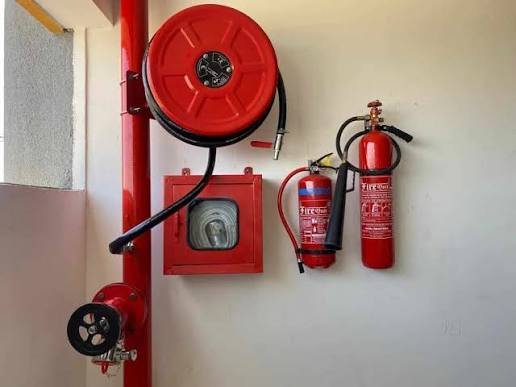
Fire safety is not only about installing equipment and placing it in a building. Fire extinguishers, fire alarms, emergency lighting, detection systems, hydrants, hose reels, and other safety equipment need regular attention to remain ready when they are needed.
A fire can develop unexpectedly, and there may be very little time to respond. Equipment that has been ignored for months or years may not perform as expected during an emergency. This is why regular inspection, testing, servicing, and maintenance should be an important part of every fire-safety plan.
In Pakistan, the Building Code of Pakistan Fire Safety Provisions includes requirements covering maintenance, inspection, and testing of fire-protection systems. It also states that fire-protection systems and safeguards should be designed and installed according to applicable codes and standards.
For homes, offices, factories, schools, shops, restaurants, and other buildings, maintenance is a relatively small investment compared with the potential consequences of a fire.
A properly maintained fire alarm system in Pakistan can provide an important layer of early warning, while maintained firefighting equipment can help provide protection against an emergency. Together, these systems form part of a broader safety strategy.
What Is Fire Equipment Maintenance?
Fire equipment maintenance means keeping fire-safety equipment in a condition where it can perform its intended function.
It can include:
- Visual inspections
- Functional testing
- Cleaning
- Servicing
- Replacement of damaged components
- Battery checks
- Pressure checks where applicable
- Recharging or replacement of extinguishing agents
- Testing alarm systems
- Checking emergency lighting
- Inspection of hoses and related equipment
- Keeping maintenance records
The exact maintenance process depends on the type of equipment, its location, its design, environmental conditions, and applicable standards.
Maintenance should not be treated as simply checking whether equipment is still physically present.
A fire extinguisher may be hanging on a wall but still have a problem. An alarm panel may have power but a fault elsewhere in the system. Emergency lighting may look normal but fail when normal power is lost.
This is why proper inspection and testing matter.
Why Regular Maintenance Matters
Fire equipment usually remains unnoticed when everything is going well. People may walk past extinguishers and alarm devices every day without thinking about them.
However, during a fire emergency, that equipment may become extremely important.
Regular maintenance helps identify problems before an emergency occurs.
For example, maintenance may identify:
- Damaged equipment
- Missing equipment
- Low battery conditions
- Fault indications
- Physical deterioration
- Blocked access
- Incorrect placement
- Expired or unsuitable components
- Problems with alarm circuits
- Equipment affected by environmental conditions
Finding these issues early gives building owners and responsible personnel an opportunity to correct them.
The goal is simple: equipment should be ready before an emergency, not repaired after one.
Fire Extinguishers Need Attention
Portable fire extinguishers are often one of the most visible pieces of fire equipment in a building.
They can provide an important first line of defense against a small fire when the situation is appropriate and occupants are trained to respond safely.
OGRA material referencing NFPA 10 explains that portable extinguishers should be selected and maintained according to the hazards they are intended to protect. It also specifically notes the importance of periodic inspection and maintenance of firefighting extinguishers.
Maintenance can involve checking the extinguisher’s condition, accessibility, identification, and other service requirements.
An extinguisher should not be hidden behind furniture, stored where people cannot reach it, or allowed to deteriorate without attention.
The correct extinguisher also matters. Different types of fires require different extinguishing agents, so equipment selection should be based on the hazards present.
Fire Alarm Systems Require Regular Testing
A fire alarm system is designed to warn occupants when a fire-related emergency is detected.
The Building Code of Pakistan Fire Safety Provisions states that fire alarm systems should be provided where necessary to warn occupants about a fire, depending on factors such as building size, arrangement, or occupancy.
But installation alone does not guarantee reliable performance.
A fire alarm system in Pakistan should be appropriately inspected, tested, and maintained according to its design and applicable requirements.
Maintenance can help identify issues such as:
- Fault signals
- Battery problems
- Damaged wiring
- Detector problems
- Notification-device issues
- Panel faults
- Communication problems
- Unwanted alarm conditions
For larger or more complex systems, professional service is particularly important.
Pakistan Engineering Council identifies installation, commissioning, and maintenance of fire detection, alarm, and suppression systems as a specialized engineering area.
Emergency Lighting Should Not Be Forgotten
Fire emergencies can affect normal electrical power or make ordinary lighting difficult to use.
Emergency lighting can help occupants identify escape routes and move toward exits when normal lighting is unavailable.
The Building Code of Pakistan Fire Safety Provisions addresses illumination of means of egress as part of safe evacuation arrangements.
Emergency lights should therefore be included in regular inspections.
Maintenance may include checking their physical condition, power source, operation, and other manufacturer or system requirements.
A light that works during normal conditions is not necessarily proof that emergency operation is reliable.
Keep Fire Equipment Accessible
One simple maintenance issue is often overlooked: access.
Fire equipment should not be blocked by boxes, furniture, stored products, vehicles, or other objects.
An extinguisher that cannot be reached quickly is less useful.
Similarly, an alarm panel hidden behind stored materials can make it difficult for responsible personnel to see warning signals or access the equipment.
Emergency exits and escape routes should also remain clear. Pakistan’s fire-safety provisions emphasize that means of egress should be arranged or marked clearly so that the route to a place of safety can be identified.
Good housekeeping is therefore part of fire equipment maintenance.
Protect Equipment From Environmental Conditions
The environment can affect fire equipment over time.
Heat, moisture, dust, chemicals, vibration, and physical impact can all create challenges depending on the equipment and location.
For example, equipment installed in industrial environments may experience conditions that are very different from equipment inside an office.
Maintenance programs should consider the environment in which equipment is installed.
If equipment appears damaged or unsuitable for its location, it should be assessed by an appropriately qualified professional.
Fire Hydrants and Hose Systems
Larger properties may use hydrants, hose reels, pumps, or other fixed firefighting systems.
These systems are more complex than portable extinguishers and can involve multiple components.
A maintenance program may need to consider:
- Valves
- Hoses
- Pumps
- Pressure-related equipment
- Water supplies
- Control equipment
- Pipework
- Associated alarms
- Accessibility
The precise inspection and testing requirements depend on the system design and applicable standards.
For complex systems, professional inspection and servicing are important because a visible component may appear normal while another part of the system has a problem.
Fire Pumps Need Special Attention
Fire pumps can be an important component of firefighting water systems in buildings that require them.
Because they may remain inactive for long periods, simply assuming that a pump will work when needed is not a good maintenance strategy.
Testing should follow the system’s design, manufacturer requirements, and applicable standards.
Problems with power supply, controls, valves, water supply, or other components can affect system performance.
Responsible building personnel should ensure that required testing and servicing are carried out by appropriately qualified people.
Keep Maintenance Records
Good fire-safety management includes documentation.
Maintenance records can show:
- What equipment was inspected
- When it was inspected
- What problems were found
- What repairs were completed
- Which components were replaced
- Who performed the service
- When the next inspection is due
Records can also help identify repeated problems.
For example, if the same alarm fault appears repeatedly, simply resetting the system may not address the underlying issue. A documented maintenance history can help professionals understand the pattern.
Pakistan’s Building Code of Pakistan Fire Safety Provisions includes provisions related to maintenance, inspection, and testing of fire-protection systems.
Do Not Ignore Alarm Faults
A common mistake is treating a fire alarm fault as a minor inconvenience.
A warning or fault signal may indicate that part of the system requires attention.
Instead of repeatedly silencing or resetting a fault without investigating it, responsible personnel should arrange appropriate inspection and servicing.
This is especially important for larger buildings where the alarm system may protect many occupants.
The purpose of maintenance is not simply to make the control panel look normal. It is to ensure that the protection system remains capable of performing its intended function.
Fire Safety Equipment Should Match the Risk
Not every building has the same fire hazards.
A small office, commercial kitchen, warehouse, school, hospital, factory, and residential building can have very different risks.
Fire equipment should therefore be selected based on the hazards present.
Factors can include:
- Building occupancy
- Electrical equipment
- Cooking activities
- Flammable materials
- Machinery
- Storage arrangements
- Building size
- Number of occupants
- Evacuation arrangements
OGRA’s published material on fire extinguishers notes that selection depends on factors including the anticipated fire type, construction, occupancy, hazard, and other conditions.
This reinforces an important principle: fire equipment should not be selected simply because it is available or inexpensive.
Employee Awareness Is Part of Maintenance
Equipment is only one part of fire safety.
Employees and building occupants should know what different alarms mean, where emergency exits are located, and how to report a fire or other emergency.
Training should be appropriate to people’s responsibilities.
For example, designated staff may need additional instruction about emergency procedures and equipment, while ordinary occupants may primarily need to understand evacuation procedures.
Fire drills can help people become familiar with emergency routes and procedures.
A well-maintained fire-safety system works better when people understand how to respond to its warnings.
Do Not Make Unauthorized Changes
Buildings sometimes change over time.
A room may become a storage area. Furniture may be rearranged. Walls may be added. Equipment may be installed.
These changes can affect fire-safety arrangements.
A detector that was appropriately located before a renovation may no longer provide suitable coverage after a change.
An emergency exit may become blocked by new equipment.
A fire extinguisher may become difficult to access.
The Building Code of Pakistan Fire Safety Provisions addresses changes in occupancy and requires applicable fire-protection considerations to be maintained.
Whenever a building changes significantly, its fire-safety arrangements should be reviewed.
Maintenance Can Reduce Long-Term Costs
It may seem cheaper to delay servicing until something stops working.
In reality, neglected equipment can become more difficult and expensive to repair.
Small issues can sometimes become larger problems when they are ignored.
Regular maintenance can help identify problems earlier, reduce unexpected failures, and extend the useful service life of equipment when appropriate.
More importantly, it helps maintain the protective purpose of the equipment.
The value of maintenance is therefore not only financial. It is also about preparedness and life safety.
A Simple Fire Equipment Maintenance Checklist
Property owners and responsible managers can use a basic checklist as a starting point:
- Check that fire equipment remains accessible.
- Look for visible damage.
- Confirm that required equipment is present.
- Check fire alarm panels for fault indications.
- Arrange required alarm testing.
- Inspect extinguishers according to applicable requirements.
- Check emergency lighting.
- Review fire doors and escape routes.
- Inspect relevant hose and hydrant equipment.
- Arrange professional servicing for complex systems.
- Keep maintenance records.
- Correct identified problems promptly.
- Review fire safety after renovations or changes in occupancy.
- Make sure employees know emergency procedures.
This checklist does not replace professional inspection or applicable legal and technical requirements. It is simply a practical way to encourage regular attention.
Fire Safety in Pakistan: Why Maintenance Matters
Pakistan has a wide range of buildings, from small homes and shops to large commercial properties and industrial facilities.
Different buildings have different fire risks and different protection requirements.
OGRA maintains technical standards and regulatory information for sectors including LPG, while the Pakistan Engineering Council publishes building and fire-safety-related material.
Building owners and managers should therefore identify the requirements that apply to their specific property rather than relying on a one-size-fits-all approach.
Where specialist fire protection is required, qualified professionals should be involved in inspection, testing, installation, and maintenance.
The Role of Professional Fire Safety Services
Some basic visual checks can be performed by responsible building personnel, but complex fire protection systems require appropriate technical knowledge.
Professional service providers can help with areas such as:
- Fire alarm system inspection
- Detector testing
- Control-panel checks
- Fire extinguisher servicing
- Emergency lighting
- Fire pump systems
- Hydrant and hose systems
- Fire suppression systems
- Maintenance documentation
For businesses, professional maintenance can also make it easier to establish a consistent fire-safety program.
The exact services required depend on the property’s hazards and installed equipment.
For information about fire-safety equipment and solutions, property owners and businesses can explore Flame Defender.
Conclusion
Fire equipment is an investment in preparedness, but installation is only the beginning.
An extinguisher needs inspection. An alarm system needs testing. Emergency lighting needs attention. Hydrants and pumps need appropriate maintenance. Fire-safety records need to be kept up to date.
Regular maintenance helps ensure that equipment is not simply present but remains ready for its intended purpose.
A properly maintained fire alarm system in Pakistan can provide valuable early warning, while other maintained fire-protection equipment can support the overall emergency response.
The key lesson is simple: small maintenance tasks can make a significant difference. Instead of waiting for an emergency to reveal a problem, identify and correct problems beforehand.
Fire safety works best when prevention, detection, equipment, maintenance, training, and evacuation planning all work together.
FAQs
1. Why is fire equipment maintenance important?
Maintenance helps identify damaged, faulty, inaccessible, or deteriorated equipment before an emergency occurs. It helps keep fire-safety systems ready for their intended purpose.
2. How often should fire extinguishers be inspected?
The appropriate inspection and maintenance schedule depends on the extinguisher type, location, environmental conditions, applicable standards, and manufacturer requirements. Periodic inspection and maintenance are important for portable extinguishers.
3. Does a fire alarm system need regular testing?
Yes. A fire alarm system should be inspected, tested, and maintained according to its design, manufacturer requirements, applicable standards, and building requirements. Pakistan’s fire-safety provisions address maintenance, inspection, and testing of fire-protection systems.
4. Who should maintain a complex fire protection system?
Complex systems should be serviced by appropriately qualified and competent professionals. Pakistan Engineering Council lists installation, commissioning, and maintenance of fire detection, alarm, and suppression systems as a specialized engineering area.
5. What should I do if I find damaged fire equipment?
Do not assume that damaged equipment will work during an emergency. Report the problem, arrange appropriate professional assessment or servicing, and make sure the building’s fire-safety arrangements remain adequate while the issue is being resolved.