
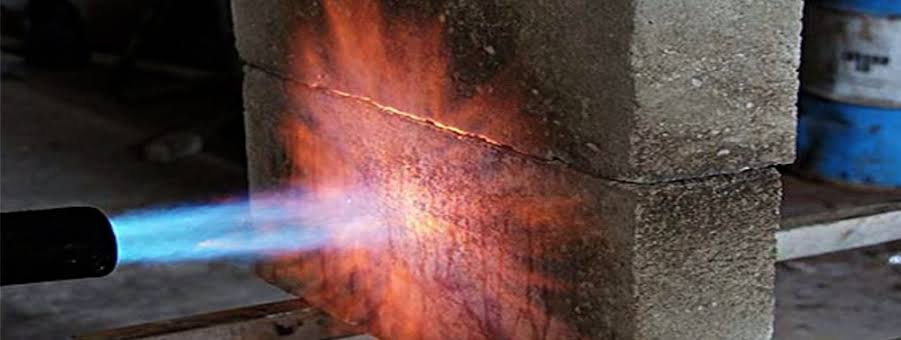
Fire safety in a building is not based on one product or one system. A well-designed approach combines safe construction, suitable materials, fire detection, alarms, firefighting equipment, emergency exits, and regular inspection. Among these measures, fire resistant materials can play an important role in limiting the effects of fire and helping protect structural elements and escape routes.
Choosing the right material, however, is only part of the process. A material must be suitable for its intended application, installed correctly, and maintained according to its specifications. Using a product simply because it is described as “fire resistant” does not automatically mean that it will provide the required level of protection.
For buildings in Pakistan, fire resistance should also be considered alongside applicable building codes and local requirements. The Pakistan Engineering Council lists the Building Code of Pakistan – Fire Safety Provisions 2016 among its building codes and standards. The provisions address fire prevention, life safety, building construction, fire protection systems, and other factors affecting fire safety.
This guide explains how fire resistant materials work, where they may be used, what buyers should consider, and how they fit into a broader fire protection strategy.
What Are Fire Resistant Materials?
Fire resistant materials are materials or assemblies designed to withstand exposure to fire for a specified period or to reduce the spread of fire and heat.
They can be used in different parts of a building, including:
- Walls
- Floors
- Ceilings
- Doors
- Structural elements
- Partitions
- Service shafts
- Cable penetrations
- Ducts
- Pipe openings
- Fire-rated enclosures
The exact performance depends on the material, construction method, thickness, installation, and tested assembly.
It is important to distinguish between a material being fire resistant and an entire building element having a specific fire-resistance rating. A product that performs well in one application may not provide the same performance when installed differently.
Why Fire Resistance Matters in Building Design
Fire can affect a building in several ways. Flames and heat can damage structural components, smoke can move through openings and shafts, and combustible materials can contribute to fire spread.
Fire-resistant construction can help slow the progression of fire and provide additional time for evacuation and emergency response.
The Building Code of Pakistan – Fire Safety Provisions 2016 states that its purpose is to establish minimum requirements for a reasonable level of fire and life safety and property protection. It also addresses construction features and materials that can contribute to fire spread, fire load, and smoke production.
This means material selection should be considered as part of the overall building fire-safety strategy rather than as an isolated purchasing decision.
Common Types of Fire Resistant Materials
Different materials are suitable for different applications.
Concrete
Concrete is widely used in structural construction and generally provides significant resistance to fire compared with many combustible materials.
Its performance depends on factors such as:
- Composition
- Thickness
- Reinforcement
- Moisture content
- Structural design
- Duration and intensity of fire exposure
Concrete should not automatically be assumed to provide a particular fire rating without considering the complete structural assembly.
Gypsum-Based Fire-Rated Boards
Specially manufactured gypsum boards can be used in fire-rated wall, ceiling, and partition assemblies.
Some products incorporate additives or reinforcement designed to improve performance during fire exposure.
The complete assembly—including boards, framing, fasteners, joints, insulation, and installation—can affect its performance.
Fire-Rated Glass
Special fire-rated glazing can be used where visibility or natural light is required while maintaining a specified level of fire protection.
Applications may include:
- Doors
- Partitions
- Internal windows
- Stair enclosures
- Commercial buildings
Fire-rated glass should be installed within an approved and compatible frame and assembly.
Fire-Resistant Doors
Fire doors are designed as complete door assemblies rather than simply ordinary doors coated with a fire-resistant product.
A fire door assembly can include:
- Door leaf
- Frame
- Hinges
- Closing device
- Latching hardware
- Glazing where applicable
- Seals
Every component needs to be compatible with the intended rating and installation.
Firestop Materials
Firestop products are used around penetrations and joints where services pass through fire-rated walls or floors.
Examples include openings for:
- Electrical cables
- Pipes
- Communication systems
- Mechanical services
Without suitable protection, these openings can compromise the performance of a fire-rated barrier.
Fire-Resistant Insulation
Certain insulation products can provide thermal protection and may be used within fire-rated assemblies.
Their suitability depends on the specific application and tested assembly.
Fire-Resistant Coatings
Special coatings can be applied to certain building components to provide additional fire protection.
Some systems are designed to protect structural steel or other substrates by insulating them from heat for a specified period.
The coating system must be compatible with the substrate and applied at the manufacturer’s specified thickness and conditions.
Understanding Fire-Resistance Ratings
One of the most important concepts when selecting fire resistant materials is the fire-resistance rating.
A rating generally indicates how long a tested building assembly can meet specified performance criteria under standardized fire exposure.
Depending on the applicable code and system, ratings may be expressed in minutes or hours.
For example, a requirement may specify that a particular building element achieve a certain fire-resistance period.
The Building Code of Pakistan 2021 draft includes construction classifications in which building elements may require fire-resistance ratings ranging from one to three hours depending on the construction type and applicable element.
The important point is that a higher rating is not automatically appropriate for every location. The required rating should be determined from the applicable building requirements and the specific design.
Material vs. Assembly: An Important Difference
One of the most common mistakes when purchasing fire resistant products is looking only at the material itself.
Consider a fire-rated wall.
Its performance can depend on:
- Wall thickness
- Framing
- Board type
- Number of layers
- Insulation
- Fasteners
- Joint treatment
- Penetrations
- Installation method
Changing one component can affect the performance of the complete assembly.
For this reason, buyers should request documentation showing how the product or assembly has been tested and what installation conditions apply.
Where Should Fire Resistant Materials Be Used?
The correct application depends on the building design and applicable requirements.
Fire-Rated Walls
Fire-rated walls can help separate areas of a building and limit fire spread.
They may be used between different occupancy areas, around protected stairways, or around other areas requiring separation.
Floors and Ceilings
Floor and ceiling assemblies may need fire resistance to limit fire spread between levels.
This is especially relevant in multistorey buildings.
Stair Enclosures
Protected stairways can provide an important evacuation route.
Materials used around these areas should be selected according to the required fire-resistance performance.
Service Shafts
Electrical, plumbing, communication, and mechanical services can create openings through floors and walls.
Appropriate firestop arrangements can help maintain the intended separation.
Doors and Openings
A fire-rated wall can lose much of its intended function if openings are not properly protected.
Fire-rated doors, glazing, dampers, and penetration protection may therefore form part of the overall design.
How to Choose the Right Material
Before buying a fire resistant product, start with the application rather than the product name.
Ask:
- Where will the material be installed?
- What fire-resistance rating is required?
- What type of substrate will be used?
- Is the product suitable for that substrate?
- Has the relevant assembly been tested?
- Are installation instructions available?
- Does the product require specialist installation?
- What maintenance is required?
- Is documentation available?
- Does the product comply with the applicable requirements?
A reputable supplier should be able to provide technical information rather than relying only on marketing claims.
Check Product Documentation
Before purchasing, request relevant documentation.
Depending on the product, this may include:
- Technical data sheets
- Installation instructions
- Test reports
- Certification documents
- Fire-resistance ratings
- Application limitations
- Maintenance instructions
- Manufacturer information
The documentation should clearly identify the product and the conditions under which its claimed performance applies.
Avoid selecting a material based solely on a general statement such as “fireproof” or “fire resistant.”
Correct Installation Is Essential
Even a high-quality material can perform poorly when installed incorrectly.
For example, a fire-rated wall can be compromised by:
- Incorrect fasteners
- Missing insulation
- Incorrect board thickness
- Poorly treated joints
- Unprotected penetrations
- Incorrect framing
- Improperly installed doors
- Unapproved modifications
Installation should follow the manufacturer’s instructions and the requirements of the applicable tested assembly.
Where the application is technically complex or safety-critical, qualified professionals should be involved.
Protecting Fire-Rated Barriers From Penetrations
Modern buildings contain large numbers of cables, pipes, ducts, and other services.
These services often pass through walls and floors.
Every penetration can create a potential weak point if it is not properly protected.
Firestop systems may include:
- Sealants
- Mortars
- Collars
- Wraps
- Boards
- Compartmentation systems
The correct product depends on the type and size of the penetration and the construction being penetrated.
A firestop product should not be substituted casually with ordinary construction sealant.
Fire Doors Require Regular Attention
Fire-rated doors are particularly important because they are moving components.
Routine checks can look for:
- Physical damage
- Door alignment
- Proper closing
- Damaged seals
- Faulty hinges
- Problems with latching
- Improper modifications
- Obstructions
A fire door should not be permanently wedged open if doing so defeats its intended function.
Maintenance procedures should follow the door manufacturer’s instructions and applicable requirements.
Fire Resistant Materials and Fire Alarm Systems
Fire-resistant construction does not replace fire detection and alarm systems.
The two serve different purposes.
Fire-resistant assemblies can help limit fire and heat transmission, while a fire alarm system can provide warning when a fire is detected or an alarm is manually activated.
A complete fire safety strategy may therefore include:
- Fire-resistant construction
- Fire detection
- Alarm notification
- Emergency lighting
- Fire extinguishers
- Sprinklers where required
- Fire hydrants
- Emergency exits
- Evacuation procedures
- Staff training
For a fire alarm system in Pakistan, the system should be selected and designed according to the building’s characteristics and applicable requirements. The Pakistan Engineering Council also recognizes specialist engineering work involving the installation, commissioning, and maintenance of fire detection, alarm, and suppression systems.
The important principle is integration: no single fire-safety measure should be expected to perform every function.
Fire Resistant Materials in Commercial Buildings
Offices, shopping centres, hotels, hospitals, schools, and other commercial properties may have complex layouts and large numbers of occupants.
Material selection should consider:
- Occupancy
- Building height
- Number of floors
- Escape routes
- Fire compartments
- Service penetrations
- Structural system
- Interior finishes
- Storage
- Electrical installations
The appropriate requirements can differ according to the building’s use and design.
Fire Resistant Materials in Industrial Facilities
Industrial buildings may contain additional hazards, including machinery, combustible products, chemicals, fuel, packaging, and high-temperature processes.
A material that is suitable for an ordinary office may not be suitable for an industrial environment.
Industrial fire safety planning should therefore begin with a hazard assessment.
Particular attention may be needed around:
- Production areas
- Storage facilities
- Electrical rooms
- Boiler rooms
- Generator rooms
- Workshops
- Chemical storage
- Loading areas
Avoid Common Purchasing Mistakes
Choosing the Cheapest Product
The lowest purchase price does not necessarily represent the lowest overall cost.
Installation, maintenance, replacement, and compatibility should also be considered.
Assuming “Fireproof” Means Unlimited Protection
Few materials should be treated as providing unlimited protection against fire.
Performance normally depends on specified test conditions and installation details.
Ignoring Installation Requirements
A product can fail to provide its intended performance when installed incorrectly.
Mixing Unapproved Components
Components within a tested assembly should not be changed without confirming compatibility.
Forgetting Maintenance
Fire-rated doors, coatings, seals, and other systems can deteriorate or become damaged.
Regular inspection is therefore important.
A Practical Fire Resistant Materials Checklist
Before approving a material for a project, consider the following:
- [ ] Intended application identified
- [ ] Required fire-resistance rating established
- [ ] Applicable building requirements reviewed
- [ ] Product documentation obtained
- [ ] Relevant test or certification information checked
- [ ] Substrate compatibility confirmed
- [ ] Installation method understood
- [ ] Complete assembly considered
- [ ] Penetrations addressed
- [ ] Fire doors and openings coordinated
- [ ] Qualified installation arranged where necessary
- [ ] Maintenance requirements understood
- [ ] Records retained
Fire Safety Requirements in Pakistan
Pakistan’s fire safety framework includes the Building Code of Pakistan – Fire Safety Provisions 2016, which is listed by the Pakistan Engineering Council as a building code. The provisions address construction, occupancy, fire protection, means of egress, hazardous materials, interior finishes, and other fire and life-safety considerations.
Building Code of Pakistan 2021 materials also classify construction types based partly on whether building elements are combustible or noncombustible and establish fire-resistance requirements for applicable building elements.
Because requirements can depend on building type, location, occupancy, and applicable authority, property owners should verify the rules relevant to their particular project instead of relying on a generic material specification.
Conclusion
Fire resistant materials can contribute significantly to building safety when they are selected, installed, and maintained correctly. However, the term “fire resistant” should never be treated as a substitute for proper technical evaluation.
The right approach begins with understanding the building’s fire risks and determining the required performance. From there, owners and project teams can select appropriate materials, review documentation, use compatible assemblies, protect penetrations, and ensure correct installation.
Fire-resistant construction should also be combined with other safety measures, including detection, alarms, emergency exits, firefighting equipment, evacuation planning, and maintenance.
For buildings using a fire alarm system in Pakistan, integrating fire detection with appropriate passive fire protection can create a more comprehensive approach to fire safety. Fire-resistant walls, doors, floors, coatings, and penetration protection can help limit fire spread, while detection and alarm systems provide occupants with an opportunity to respond and evacuate.
For additional fire safety information and solutions, visit Flame Defender.
Frequently Asked Questions
1. What are fire resistant materials?
Fire resistant materials are products or building assemblies designed to withstand fire exposure or limit the spread of fire and heat for a specified period under defined conditions.
2. Are fire resistant materials completely fireproof?
No. Fire resistance generally refers to performance under specified conditions and for a defined period. The actual performance depends on the product, assembly, installation, and exposure conditions.
3. How do I choose the right fire resistant material?
Start by identifying the intended application and required fire-resistance rating. Then check product documentation, testing or certification information, compatibility, installation requirements, and applicable building regulations.
4. Can fire resistant materials replace a fire alarm system?
No. Passive fire protection and fire alarm systems perform different functions. Fire-resistant construction can help limit fire spread, while an alarm system provides warning to occupants and supports emergency response.
5. Why is correct installation important?
Fire resistance often depends on the complete tested assembly rather than a single product. Incorrect installation, unprotected penetrations, unsuitable components, or unauthorized modifications can reduce the intended performance of the system.