
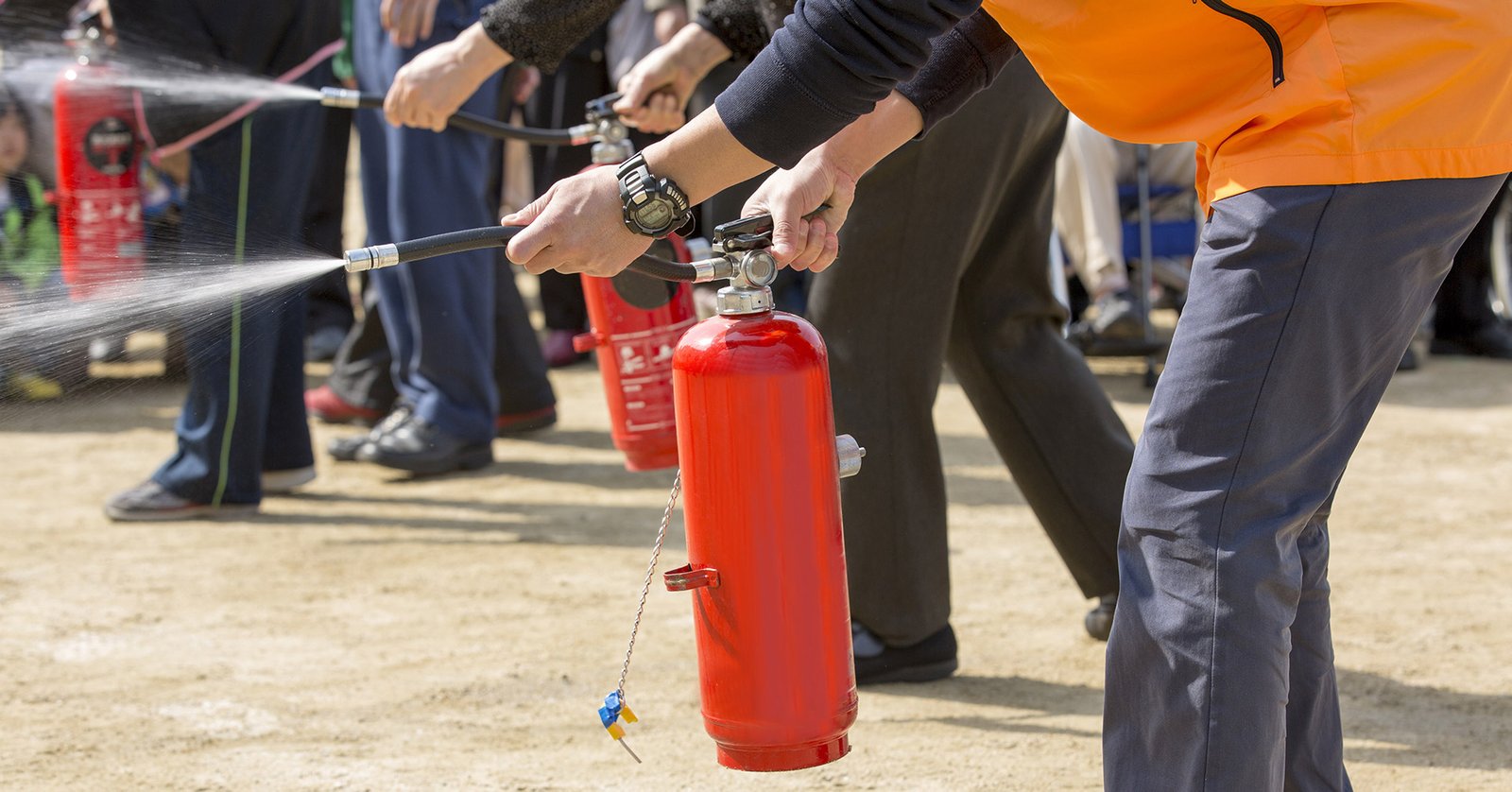
Fire safety training is often treated as a short workplace lecture, a demonstration of a fire extinguisher, or an annual reminder to employees. In reality, effective training is much broader. It is a structured process designed to help people recognize hazards, respond appropriately to alarms, evacuate safely, and understand their responsibilities before, during, and after a fire emergency.
For businesses, schools, restaurants, offices, factories, warehouses, hotels, hospitals, and other occupied buildings in Pakistan, training should be connected to the actual risks and fire-protection systems present in the premises.
The Building Code of Pakistan – Fire Safety Provisions 2016 identifies emergency action plans for a range of occupancies and states that such plans should address emergency reporting, staff and occupant response, evacuation, fire drills, fire-protection systems, and emergency response teams. Pakistan Engineering Council lists these Fire Safety Provisions among the country’s building codes and standards.
This article explains how fire safety training actually works, what employees should learn, how practical exercises are conducted, and why training should complement—not replace—a properly designed Fire alarm system in Pakistan.
What Is Fire Safety Training?
Fire safety training is an organized programme that teaches people how to prevent fires, recognize warning signs, respond to emergencies, and evacuate safely.
A good programme generally combines:
- Classroom or instructional learning
- Hazard awareness
- Demonstrations
- Emergency procedures
- Fire-alarm familiarization
- Evacuation exercises
- Fire-drill participation
- Practical equipment training
- Evaluation and feedback
- Refresher training
The exact programme depends on the type of building and the responsibilities of the people being trained.
For example, an office employee may primarily need to understand alarm procedures and evacuation routes, while a designated emergency-response team may require additional training in equipment operation, communications, shutdown procedures, and emergency coordination.
Why Fire Safety Training Matters
A fire can develop rapidly, and emergencies are rarely the right time for people to learn what they should have done.
Training helps convert written emergency procedures into actions that employees understand.
Without training, people may:
- Ignore an alarm
- Assume an alarm is false
- Use an unsuitable extinguisher
- Return to collect personal belongings
- Block evacuation routes
- Use elevators when they should not
- Forget emergency assembly locations
- Panic because they don’t understand the procedure
- Attempt to fight a fire that is already too large
Training cannot eliminate every risk, but it can reduce confusion and improve the likelihood that people respond appropriately.
NFPA guidance on emergency action planning emphasizes written procedures, drills, assigned responsibilities, training, and maintenance of fire-protection equipment.
Step 1: Identify the Building’s Fire Hazards
Effective training starts before the instructor enters the room.
A training programme should first consider the building itself.
A workplace assessment may identify:
- Electrical equipment
- Cooking facilities
- Fuel or gas supplies
- Flammable liquids
- Combustible storage
- Machinery
- Welding or hot-work activities
- Generators
- Chemical storage
- Waste areas
- Crowded spaces
- Restricted exits
- Staircases
- Fire doors
- Emergency access routes
The hazards determine what employees need to learn.
For example, employees in a restaurant may require more emphasis on cooking-oil fires and kitchen suppression systems, while workers in a warehouse may need training focused on storage practices, forklifts, electrical equipment, combustible materials, and evacuation.
Training should reflect the actual workplace rather than relying on a generic presentation.
Step 2: Explain How Fire Starts and Spreads
Employees do not need to become firefighters, but understanding basic fire behavior helps them recognize dangerous situations.
Training can introduce the basic elements required for combustion:
- Heat
- Fuel
- Oxygen
This is commonly represented as the fire triangle.
Employees should learn that removing one of these elements can sometimes stop a small fire, but attempting to extinguish a fire is only appropriate when the situation is within their training and the escape route remains safe.
Training should also explain why smoke is dangerous.
People may focus entirely on visible flames while underestimating smoke, heat, and toxic combustion products.
For this reason, evacuation should generally take priority over attempting to save property.
Step 3: Teach Employees to Recognize Fire Hazards
Prevention is an important part of fire safety training.
Employees should be taught how ordinary workplace activities can create hazards.
Examples include:
Electrical hazards
- Overloaded sockets
- Damaged cables
- Improper extension leads
- Faulty appliances
- Unauthorized electrical modifications
Housekeeping hazards
- Waste accumulation
- Combustible materials near heat sources
- Blocked exits
- Storage in electrical rooms
Kitchen hazards
- Grease accumulation
- Unattended cooking
- Improper fuel connections
- Flammable materials near cooking equipment
Workplace hazards
- Improper storage
- Hot-work activities
- Smoking in prohibited areas
- Incorrect chemical handling
Employees who understand these risks can identify problems before they become emergencies.
Step 4: Teach People What the Fire Alarm Means
One of the most important parts of training is helping employees recognize the building’s alarm signals.
A fire alarm should never automatically be treated as a false alarm.
Employees should know:
- What the alarm sounds like
- Where manual call points are located
- What visual alarm signals mean, where provided
- How to report a fire
- Who should be notified
- Which evacuation route to use
- Where to assemble
A properly installed Fire alarm system in Pakistan can provide early warning, but its effectiveness depends partly on occupants understanding how to respond when it activates.
Training should therefore include a practical orientation to the alarm system rather than simply mentioning that “the building has an alarm.”
Employees should understand that an alarm is a signal to follow the established emergency procedure.
Step 5: Explain Emergency Reporting
Employees should know how to report a fire quickly.
A workplace procedure should identify:
- How to activate the building alarm
- How to contact emergency services
- What information should be communicated
- Who has responsibility for contacting management
- How the location of the fire should be communicated
Training should emphasize providing clear information rather than delaying an emergency call while attempting to investigate.
The Building Code of Pakistan’s emergency-action-plan provisions specifically identify procedures for reporting emergencies as part of the plan.
Step 6: Teach Evacuation Procedures
Evacuation is usually one of the most important elements of fire training.
Employees should know:
- Primary exits
- Alternative exits
- Stairwell locations
- Assembly areas
- Areas to avoid
- Procedures for assisting visitors
- Procedures for reporting missing people
- Whether elevators may be used during an emergency
Training should make clear that employees should not return to the building simply because they believe the fire is under control.
The evacuation procedure should also account for people who may require assistance, including visitors and individuals with mobility or other access needs.
Step 7: Conduct a Fire Drill
A fire drill turns theoretical knowledge into practical experience.
During a drill, employees may practice:
- Recognizing the alarm
- Stopping work safely
- Moving toward exits
- Using designated stairways
- Reporting to the assembly point
- Following instructions from emergency personnel
- Accounting for staff and visitors
The purpose isn’t to frighten people.
The purpose is to identify weaknesses in the emergency procedure before a real incident occurs.
The Pakistan Building Code specifically includes the design and conduct of fire drills among emergency-action-plan requirements.
NFPA material similarly describes drills and exercises as a way to familiarize occupants with emergency procedures and evaluate preparedness.
Step 8: Train Designated Emergency Teams
Not every employee needs the same level of training.
Many organizations designate specific employees to perform emergency responsibilities.
Depending on the facility, these people may be responsible for:
- Raising the alarm
- Guiding occupants toward exits
- Checking designated areas
- Communicating with emergency responders
- Assisting with evacuation
- Operating specific fire-protection equipment
- Coordinating at assembly areas
- Supporting emergency shutdown procedures
The Building Code of Pakistan includes formation of emergency response teams among the elements that may be addressed in emergency action plans.
Responsibilities should be clearly assigned so employees aren’t trying to determine who is responsible during an actual emergency.
Step 9: Teach Fire Extinguisher Safety
Fire extinguisher training is often the most visible part of fire safety education, but it should be taught carefully.
Employees should learn:
- What different extinguishers are designed for
- Where extinguishers are located
- How to recognize their limitations
- When attempting extinguishment is appropriate
- When evacuation is the only appropriate response
A basic extinguisher demonstration may explain the PASS sequence:
P — Pull the pin
A — Aim at the base of the fire
S — Squeeze the handle
S — Sweep from side to side
However, employees should not be encouraged to fight a fire simply because an extinguisher is nearby.
A fire that is spreading rapidly, producing heavy smoke, blocking an escape route, or otherwise exceeding the employee’s training should be treated as an evacuation emergency.
Practical extinguisher training should ideally be supervised by appropriately qualified instructors and conducted in a controlled environment.
Step 10: Explain Fire Alarm System Components
For facilities with a centralized alarm system, training should introduce employees to the major components they may encounter.
These can include:
- Fire alarm control panel
- Smoke detectors
- Heat detectors
- Manual call points
- Audible sounders
- Visual notification devices
- Backup power
- Monitoring connections
- Interfaces with other fire-protection systems
Employees don’t necessarily need to understand the engineering behind each component.
Instead, they should understand what the equipment does and what action is expected when it operates.
For example, designated personnel may need additional instruction on interpreting alarm-panel indications, reporting faults, and coordinating with maintenance providers.
Step 11: Practice Emergency Communication
Communication can become difficult during an emergency.
Training should establish simple and consistent communication procedures.
Employees may need to know:
- Who leads the evacuation
- Who contacts emergency services
- Who meets responding firefighters
- Who accounts for employees
- How visitors are accounted for
- Who communicates with management
- How information is passed to emergency responders
For larger facilities, emergency roles should be documented and assigned in advance.
NFPA emergency-planning material emphasizes assigning and training personnel for designated duties and updating procedures when responsibilities or conditions change.
Step 12: Evaluate the Drill
A drill should not simply end when everyone reaches the assembly point.
The organization should review what happened.
Ask questions such as:
- Did everyone hear the alarm?
- Did employees know what it meant?
- Were exits clear?
- Did people use the correct routes?
- Were there delays?
- Did visitors understand what to do?
- Did employees gather at the correct assembly point?
- Were emergency responsibilities clear?
- Did the alarm system operate as expected?
- Were any communication problems identified?
The answers can be used to improve the emergency plan.
A drill is therefore both training and testing.
Step 13: Provide Refresher Training
Fire safety training should not happen once and then disappear.
Employees forget information, procedures change, new equipment is installed, and staff members leave or join the organization.
Refresher training helps maintain familiarity.
Additional training may be appropriate when:
- The building layout changes
- New fire-protection equipment is installed
- Employees receive new responsibilities
- Work processes change
- New hazards are introduced
- A drill identifies weaknesses
- An actual incident occurs
- Regulations or organizational procedures change
For certain specialized fire-protection roles, applicable standards may establish specific training and refresher requirements. NFPA materials, for example, include provisions addressing training personnel responsible for fire-protection equipment and periodic refresher training in particular contexts.
Fire Safety Training for Different Workplaces
There is no universal training programme.
Offices
Office training may focus on:
- Electrical hazards
- Alarm recognition
- Evacuation
- Stairway use
- Emergency exits
- Assembly points
- Visitor management
Restaurants
Restaurants may require additional instruction about:
- Cooking equipment
- Grease fires
- Kitchen suppression systems
- Gas hazards
- Exhaust systems
- Appropriate extinguishers
Factories
Industrial training may involve:
- Machinery
- Chemicals
- Hot work
- Flammable materials
- Emergency shutdown
- Specialized extinguishing equipment
Hotels
Hotel staff may require training covering:
- Guest evacuation
- Alarm procedures
- Night-shift responsibilities
- Guest communication
- Stairways
- Fire doors
- Emergency response coordination
Schools
Training can focus on:
- Student evacuation
- Teacher responsibilities
- Assembly points
- Visitor management
- Accountability
- Age-appropriate emergency procedures
The programme should always reflect the actual building and its occupants.
Common Fire Safety Training Mistakes
Even organizations that conduct training can make avoidable mistakes.
1. Treating training as a presentation
A presentation can provide information, but employees also need opportunities to practice procedures.
2. Never conducting drills
People may understand an evacuation plan on paper but struggle to follow it under pressure.
3. Training only new employees
Existing employees also need refresher training.
4. Ignoring visitors
Emergency plans should consider customers, contractors, guests, and other people who may not know the building.
5. Focusing only on extinguishers
Fire safety includes prevention, detection, alarm notification, evacuation, emergency planning, and maintenance.
6. Failing to review drills
If nobody examines what went wrong, the organization loses one of the main benefits of conducting the drill.
7. Disabling alarms because of nuisance alarms
Repeated unwanted alarms should be investigated and corrected rather than simply ignored or disabled.
How Fire Alarm Systems and Training Work Together
A fire alarm system and employee training serve different purposes.
The system provides detection and notification.
Training teaches people how to respond to that notification.
Imagine a detector identifies smoke at night in a commercial building. The alarm activates, but employees don’t know what the signal means or which exit to use. The technology has done its job, but the overall safety process may still fail.
Now consider the opposite: employees understand evacuation procedures, but the alarm system is poorly maintained and doesn’t provide timely warning.
Neither element should be viewed in isolation.
Effective fire safety combines:
Detection + Notification + Training + Evacuation + Maintenance + Emergency Planning
This is why organizations evaluating a Fire alarm system in Pakistan should consider the human response as part of the overall fire-safety strategy.
Creating a Practical Fire Training Programme
A straightforward workplace programme can follow this structure:
Stage 1: Assessment
Identify hazards, occupants, exits, fire-protection equipment, and emergency responsibilities.
Stage 2: Planning
Create or review the emergency action plan.
Stage 3: Instruction
Teach employees about fire hazards, alarms, evacuation, reporting, and their responsibilities.
Stage 4: Demonstration
Demonstrate relevant equipment and procedures.
Stage 5: Practice
Conduct drills and practical exercises.
Stage 6: Evaluation
Identify problems and record lessons learned.
Stage 7: Improvement
Update procedures and correct deficiencies.
Stage 8: Refresher
Repeat training at appropriate intervals and whenever conditions change.
This approach makes training an ongoing safety process rather than a once-a-year formality.
Fire Safety Training Checklist
Before considering a programme complete, organizations should ask:
- Have workplace fire hazards been identified?
- Do employees know what the alarm sounds like?
- Do they know how to report a fire?
- Are evacuation routes clearly understood?
- Are emergency exits accessible?
- Is an assembly point established?
- Are employees familiar with fire extinguishers?
- Are designated emergency responsibilities assigned?
- Have employees participated in drills?
- Are visitors included in the emergency plan?
- Are drills evaluated afterward?
- Is training documented?
- Is refresher training provided?
- Are fire alarm and suppression systems regularly maintained?
If several answers are “no,” the organization may have an opportunity to strengthen its fire-safety programme.
Final Thoughts
Fire safety training actually works by turning knowledge into practiced behavior.
Employees need more than instructions telling them to “evacuate in case of fire.” They need to understand the hazards around them, recognize the alarm, know how to report an emergency, understand their evacuation routes, and practice those procedures before an actual emergency occurs.
The Building Code of Pakistan – Fire Safety Provisions 2016 provides an important framework for emergency action planning, including emergency reporting, occupant response, evacuation, fire drills, fire-protection systems, and emergency response teams.
At the same time, fire safety requirements can depend on the building, occupancy, location, and authority having jurisdiction. Organizations should therefore verify the requirements applicable to their specific premises.
A reliable Fire alarm system in Pakistan is an important part of the equation, but technology alone cannot guarantee a safe outcome. Detection systems, emergency procedures, trained employees, regular drills, appropriate firefighting equipment, and proper maintenance must work together.
For organizations looking for fire-protection products and solutions, Flame Defender provides information about fire-safety systems and equipment.
Ultimately, the objective of training is simple: when an alarm sounds, people should know what to do without wasting valuable time trying to figure it out.
Frequently Asked Questions
1. How often should fire safety training be conducted?
The appropriate frequency depends on the workplace, applicable regulations, hazards, employee responsibilities, and organizational procedures. Training should also be refreshed when there are significant changes to the building, equipment, hazards, or employee responsibilities.
2. Is a fire drill the same as fire safety training?
No. Training provides knowledge and instruction, while a drill allows people to practice emergency procedures. A strong fire-safety programme uses both. Drills can also reveal weaknesses in evacuation procedures and emergency responsibilities.
3. Should every employee be trained to use a fire extinguisher?
Employees should understand where extinguishers are located and when evacuation is appropriate. Practical extinguisher training should be provided according to the organization’s risk assessment and applicable requirements. No employee should be expected to fight a fire that is beyond their training or presents an immediate danger.
4. What should employees do when a fire alarm activates?
Employees should follow the building’s established emergency procedure, normally involving immediate evacuation through the designated safe route and reporting to the assembly area. They should not ignore the alarm simply because they cannot see flames or assume it is a false alarm.
5. Why is training important if a building already has a fire alarm system?
A fire alarm system can detect and notify, but people still need to respond correctly. Training teaches occupants what the alarm means, where to go, how to report an emergency, and what responsibilities they have. The best protection combines reliable equipment with informed and practiced human response.