
Fire safety is not something any factory, warehouse, or commercial building in Pakistan can afford to ignore. A fire extinguisher that looks fine on the outside can be completely useless in an emergency if it hasn’t been refilled or serviced on time. That’s why fire extinguisher refilling in Pakistan has become such an important part of routine facility maintenance for industries of every size.
If you manage an industrial site, a warehouse, a factory floor, or even a small workshop, you’ve probably wondered what actually happens during a professional refilling service. This guide walks you through the entire process, why it matters, and what to expect when you hire a company like Flame Defender for your fire extinguisher refilling needs.
Why Industrial Fire Extinguishers Need Regular Refilling
Unlike a small office extinguisher that might sit untouched for years, industrial extinguishers are exposed to tougher conditions heat, dust, humidity, chemical fumes, and constant handling. Over time, the pressure inside the cylinder drops, the extinguishing agent can settle or clump, and seals can wear out.
A few reasons industrial units need more frequent attention:
- Heavy-duty environments — factories often deal with flammable materials, machinery heat, and electrical risks.
- Frequent inspections — safety audits and insurance requirements often demand proof of servicing.
- Legal compliance — Pakistani fire safety regulations and building codes require functional fire equipment on industrial premises.
- Employee safety — a working extinguisher can be the difference between a small incident and a major disaster.
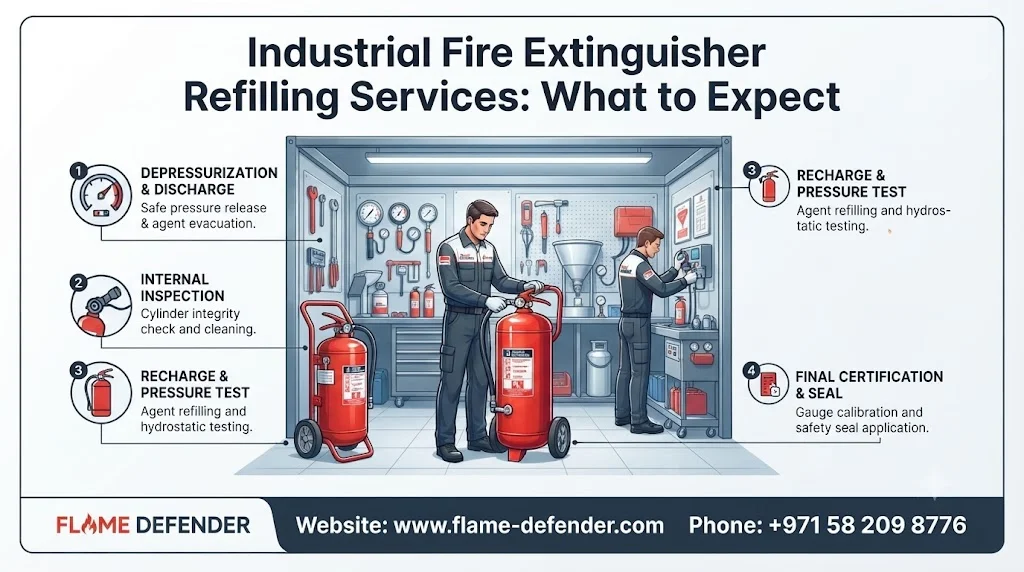
What Happens During a Professional Refilling Service
When you book an industrial fire extinguisher refilling service, here’s roughly what the process looks like from start to finish.
1. Initial Inspection
The technician first checks the extinguisher’s body, hose, nozzle, and pressure gauge for any visible damage, rust, or corrosion. Extinguishers that are too damaged to safely refill are flagged for replacement instead.
2. Discharge Testing
If the extinguisher hasn’t been used, technicians still test the pressure and mechanism to confirm it’s functioning correctly before refilling.
3. Emptying the Old Agent
Any remaining extinguishing agent — whether it’s dry powder, CO2, foam, or water-based — is safely removed from the cylinder.
4. Cylinder Cleaning and Inspection
The inside of the cylinder is cleaned and checked for internal corrosion. This step is especially important for older industrial units that have been in service for years.
5. Refilling with the Correct Agent
The extinguisher is refilled with the appropriate agent based on its class (A, B, C, D, or K) and the specific fire risks present at your facility.
6. Pressure Testing
Once refilled, the cylinder is pressurized to the correct level and tested to make sure it holds pressure without leaking.
7. Sealing and Tagging
A tamper-proof seal is applied, along with a service tag showing the date of refilling, the technician’s details, and the next due date.
8. Final Quality Check
Before handing it back, a final visual and functional check ensures the extinguisher is ready for immediate use.
Types of Industrial Extinguishers That Need Refilling
Different industries use different types of extinguishers, and each has its own refilling process:
- Dry Chemical Powder (DCP) Extinguishers — common in factories and warehouses for general fire risks.
- CO2 Extinguishers — used near electrical panels and sensitive machinery.
- Foam Extinguishers — suited for flammable liquid fires common in chemical plants.
- Water-Based Extinguishers — used where ordinary combustibles like wood, paper, or textiles are present.
- Wet Chemical Extinguishers — often used in industrial kitchens or food processing units.
Knowing which type your facility uses helps the service provider bring the right agent and equipment on-site.
How Often Should Industrial Extinguishers Be Refilled?
As a general guideline followed across Pakistan’s industrial sector:
- Annual servicing is recommended for all extinguishers, even if unused.
- Immediate refilling is required after any use, even partial discharge.
- Hydrostatic testing (a deeper pressure test of the cylinder itself) is usually needed every 5 years, depending on the extinguisher type.
Facilities with higher fire risk like chemical storage units, oil and gas sites, or textile mills — may need more frequent checks based on their internal safety policy or insurance requirements.
On-Site vs. Off-Site Refilling
Many industrial clients prefer on-site refilling services, especially when they have a large number of extinguishers spread across a big facility. A mobile refilling unit can:
- Save downtime by servicing extinguishers without removing them from the premises for long periods
- Handle bulk refilling in a single visit
- Provide immediate replacement units if any extinguisher fails inspection
Off-site refilling, where extinguishers are taken to a service center, is more common for smaller businesses or when specialized equipment is needed for certain extinguisher types.
Choosing a Reliable Refilling Service Provider
When selecting a company for fire extinguisher refilling in Pakistan, keep these points in mind:
- Certified technicians who understand different extinguisher classes and industrial standards.
- Proper equipment for pressure testing and safe handling of extinguishing agents.
- Documentation and tagging so you have proof of compliance during audits.
- Quick turnaround time to avoid leaving your facility without fire protection.
- Experience with industrial clients, not just residential or small office setups.
Flame Defender offers professional fire extinguisher refilling services tailored to industrial and commercial facilities across Pakistan, with trained technicians who follow standard safety procedures at every step.
Signs Your Extinguisher Needs Refilling Right Away
Don’t wait for the annual check if you notice any of the following:
- The pressure gauge needle is outside the green zone
- Visible dents, rust, or corrosion on the cylinder
- The pin or tamper seal is broken or missing
- It’s been used, even briefly
- The last service tag is more than a year old
Final Thoughts
Industrial fire extinguisher refilling isn’t just a box to check for compliance — it’s a core part of protecting your employees, equipment, and property. Knowing what to expect from the process helps you plan maintenance schedules better and choose a service provider you can trust. Whether you run a factory, warehouse, or large commercial facility, staying on top of refilling schedules ensures you’re never caught off guard in an emergency.
Frequently Asked Questions
1. How often should industrial fire extinguishers be refilled? Most industrial extinguishers should be refilled once a year, even if they were never used, to make sure the pressure and extinguishing agent are still effective.
2. Does fire extinguisher refilling in Pakistan require any government certification? Yes, industrial facilities are generally expected to follow local fire safety codes, and using a certified refilling service helps ensure compliance during safety audits.
3. How long does a typical refilling service take? A single extinguisher can usually be refilled within 30 to 60 minutes, though bulk industrial jobs may take longer depending on the number of units.
4. Can a fire extinguisher be refilled after it has expired? It depends on the condition of the cylinder. If the extinguisher passes inspection and pressure testing, it can often be refilled; otherwise, replacement is recommended.
5. What is the cost of industrial fire extinguisher refilling in Pakistan? Costs vary based on extinguisher size, type of agent, and quantity, so it’s best to request a quote directly from a service provider like Flame Defender.
6. What types of fire extinguishers are commonly refilled in factories? Dry chemical powder, CO2, foam, and water-based extinguishers are the most common types refilled in industrial and factory settings.
7. Is on-site refilling available for large facilities? Yes, many providers offer mobile on-site refilling for factories and warehouses to minimize downtime and avoid moving large numbers of units off-site.
8. How do I know if my extinguisher needs immediate refilling? Check the pressure gauge — if the needle isn’t in the green zone, or if the extinguisher shows visible damage or has been used, it needs refilling right away.
9. What happens during hydrostatic testing? Hydrostatic testing checks the structural strength of the extinguisher cylinder under pressure and is usually required every five years depending on the extinguisher type.
10. Why should I choose a professional service instead of refilling extinguishers myself? Professional technicians have the right equipment, training, and extinguishing agents to safely refill and pressure-test extinguishers, reducing the risk of malfunction during an actual fire.