
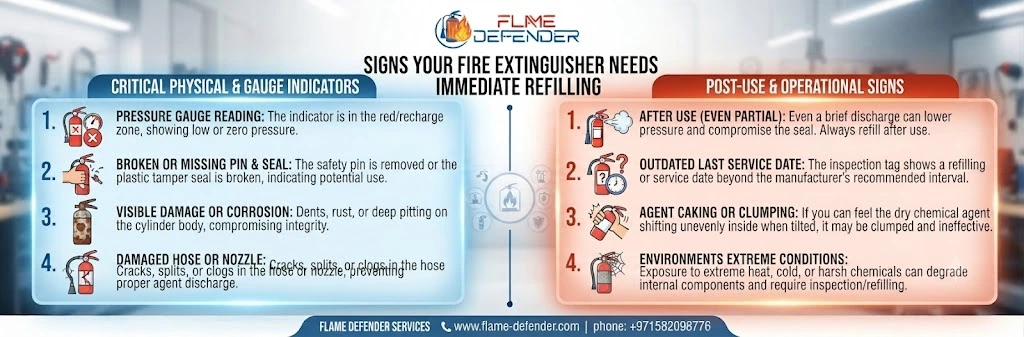
A fire extinguisher sitting quietly in the corner of your office, home, or shop feels like a promise: if something ever catches fire, help is right there. But that promise only holds if the extinguisher actually works when you need it. Thousands of extinguishers across Pakistan are hanging on walls right now, looking fine from the outside, while being completely useless on the inside. That gap between “looks fine” and “works fine” is exactly where people get hurt.
This guide walks you through the clearest warning signs that your fire extinguisher needs refilling, why these signs matter, and what to do about them before an emergency puts them to the test.
Why Fire Extinguisher Refilling Matters So Much
Fire extinguishers are not “install and forget” equipment. Pressure drops over time. Powder settles and clumps. Seals dry out. Even an extinguisher that has never been used can lose its effectiveness simply from sitting unused for months or years, especially in Pakistan’s hot summers where temperature swings put extra stress on the internal pressure.
Regular fire extinguisher refilling in Pakistan isn’t just a compliance checkbox for businesses — it’s the difference between stopping a small fire in seconds and watching it spread out of control. Fire safety regulations in most cities also require commercial buildings, factories, warehouses, and offices to keep extinguishers serviced and refilled on a set schedule, usually annually, though this can vary based on the type of extinguisher and how it’s used.
10 Signs Your Fire Extinguisher Needs Immediate Refilling
1. The Pressure Gauge Needle Is Out of the Green Zone
Almost every extinguisher has a small pressure gauge on the front. The green zone means it’s properly pressurized and ready to use. If the needle has drifted into the red zone — either too low or too high — the extinguisher needs immediate attention. A low reading means it may not discharge with enough force to put out a fire; an unusually high reading can be a sign of internal damage or overfilling.
2. Visible Damage to the Hose, Nozzle, or Handle
Cracks, splits, or brittleness in the hose are more than cosmetic. A damaged hose can leak pressure or fail completely when you try to use it. Check the nozzle for blockages too — a clogged nozzle can prevent the extinguishing agent from coming out at all, even if the tank itself is pressurized.
3. Rust or Corrosion on the Cylinder
Rust isn’t just an eyesore. It weakens the metal cylinder over time and can eventually lead to leaks or, in rare but serious cases, the cylinder failing under pressure. If you spot rust spots, especially near the base or seams, the extinguisher should be inspected and likely refilled or replaced.
4. Dents or Physical Damage to the Body
A dropped or bumped extinguisher can develop small dents that compromise its structural integrity. Even if the gauge still shows green, physical damage means the tank may not hold pressure reliably during an actual fire emergency.
5. The Locking Pin or Tamper Seal Is Missing or Broken
The pin and seal exist to confirm the extinguisher hasn’t been used or tampered with since its last service. If the seal is broken or the pin is missing, you have no way of knowing whether the extinguisher was partially discharged — meaning it might already be low on agent and pressure.
6. Powder Has Clumped or Settled (for Dry Chemical Extinguishers)
Dry powder extinguishers need to be shaken periodically to keep the powder from settling and hardening at the bottom of the tank. If you shake the extinguisher and hear or feel a solid lump rather than a loose powder movement, it likely needs to be emptied, checked, and refilled.
7. It’s Been More Than a Year Since the Last Service
Even if there are no visible problems, most fire safety standards recommend annual inspection and servicing, with refilling typically needed every 1 to 5 years depending on the extinguisher type. Check the service tag attached to the extinguisher — if the date has passed, don’t wait for a visible fault to show up before booking a refill.
8. Unusual Noise or Hissing Sound
A hissing sound coming from the extinguisher, even when it’s not in use, usually points to a slow leak. This is one of the more urgent signs, since it means pressure is escaping right now, and the extinguisher could be completely empty by the time you actually need it.
9. Discoloration or Leaking Residue Around the Base
If you notice powder residue, staining, or any liquid pooling near the base of the extinguisher, this is a strong indicator of a leak. Don’t ignore this — get it inspected immediately, since a leaking extinguisher offers little to no protection.
10. The Extinguisher Was Used, Even Partially
Any extinguisher that has been discharged — fully or partially — must be refilled before it goes back into service. A partially used extinguisher can give a dangerously false sense of security, since it may look untouched from the outside while carrying only a fraction of its original charge.
What Happens During a Professional Refill?
A proper refill service typically includes:
- Fully discharging any remaining pressure and agent
- Inspecting the cylinder, hose, and valve for damage or wear
- Cleaning the internal components
- Refilling with the correct type and quantity of extinguishing agent
- Re-pressurizing to the manufacturer’s specification
- Testing the pressure gauge and valve function
- Applying a new tamper seal and service tag with the next due date
Trying to skip steps or use unqualified vendors can leave you with an extinguisher that looks serviced but isn’t actually reliable — which defeats the entire purpose.
How Often Should You Get a Refill?
- Dry Chemical Powder (DCP) extinguishers: usually every 5 years, with annual inspections in between
- CO2 extinguishers: typically every 5 years, though pressure checks should happen more frequently
- Foam and water-based extinguishers: often need refilling every 1 to 3 years
- After any use, regardless of extinguisher type, immediate refilling is required
Local climate matters too. In warmer regions of Pakistan, extinguishers can be exposed to more heat stress, which can shorten the practical interval between services.
Choosing a Reliable Refilling Service in Pakistan
When your extinguisher shows any of the signs above, it’s worth using a service that follows proper safety standards rather than the cheapest option available. Look for a provider that inspects the full unit — not just the pressure — and gives you documentation of the service date and next due date. Flame Defender offers professional fire extinguisher refilling in Pakistan, covering inspection, refilling, and certification so your extinguishers are genuinely ready when needed, not just green on the gauge.
Final Thoughts
A fire extinguisher is only as good as its last proper service. The signs above are your early warning system — catching a low-pressure gauge, a cracked hose, or a missing pin today can be the reason a small kitchen fire or electrical spark doesn’t turn into something far worse. Make it a habit to check your extinguishers regularly, and don’t wait for a compliance deadline or an actual emergency to find out one has been silently useless for months.
Frequently Asked Questions
1. How do I know if my fire extinguisher needs refilling? Check the pressure gauge for a reading outside the green zone, look for physical damage like rust or dents, and check the service tag date. Any of these signs mean it’s time for an inspection or refill.
2. How often should fire extinguishers be refilled in Pakistan? Most extinguishers need refilling every 1 to 5 years depending on the type, with annual inspections recommended in between. Extinguishers exposed to heat or humidity may need more frequent checks.
3. Can I refill a fire extinguisher myself at home? No. Refilling requires specialized equipment to safely discharge, clean, and re-pressurize the cylinder. It should always be done by a certified fire safety service provider.
4. What happens if I use an expired fire extinguisher? An expired or unserviced extinguisher may not discharge properly, may lack sufficient pressure, or could fail to put out the fire at all, putting people and property at greater risk.
5. How much does fire extinguisher refilling cost in Pakistan? Costs vary based on extinguisher size and type, typically ranging from a few hundred to a few thousand rupees. It’s best to get a quote directly from a local provider based on your specific extinguisher.
6. Does a fire extinguisher need refilling even if it was never used? Yes. Pressure can drop and powder can settle over time even without use, so scheduled servicing is still necessary regardless of whether the extinguisher has been discharged.
7. What is the shelf life of a fire extinguisher? Most fire extinguishers last between 5 to 15 years total, depending on the type and manufacturer, but they require regular refilling and maintenance throughout that lifespan to remain effective.
8. How can I tell the difference between a CO2 and a dry powder extinguisher? CO2 extinguishers usually have a hard horn-shaped nozzle and no pressure gauge, while dry powder extinguishers have a pressure gauge and a hose with a narrower nozzle.
9. Is it mandatory for businesses in Pakistan to refill fire extinguishers regularly? Yes, fire safety regulations for commercial buildings, factories, and offices generally require regular inspection and refilling of fire extinguishers as part of building safety compliance.
10. Where can I get my fire extinguisher refilled near me in Pakistan? You can get your fire extinguisher inspected and refilled through professional providers like Flame Defender, who offer fire extinguisher refilling services in Pakistan with proper certification and documentation.