
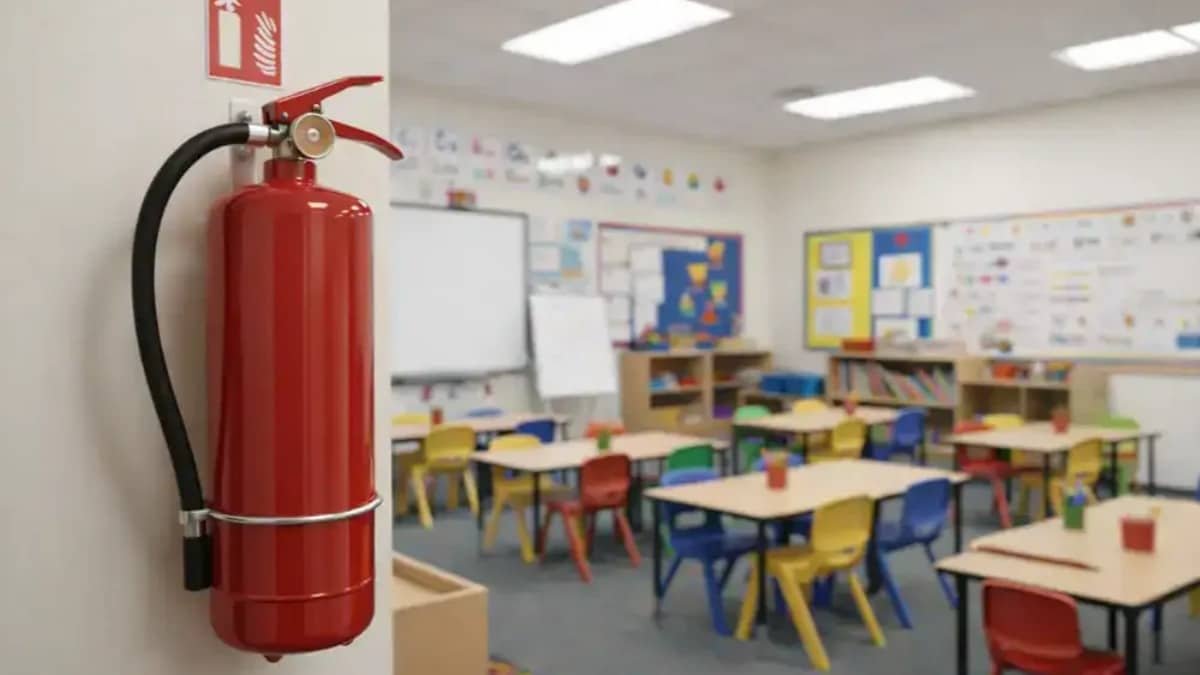
Schools are places where children, teachers, administrative staff, and visitors spend a significant part of their day. Providing a safe learning environment is therefore one of the most important responsibilities of school management. While educational institutions focus on academic performance, facilities, and student development, fire safety should receive equal attention.
A fire emergency can create serious risks in a school because many occupants may need to leave the building at the same time. Students may be unfamiliar with emergency exits, younger children may require adult assistance, and visitors may not know the building layout. Without suitable safety arrangements, confusion can make an emergency more difficult to manage.
School fire safety involves more than purchasing fire extinguishers. It includes fire detection and alarm systems, emergency lighting, exit signs, evacuation plans, employee training, suitable equipment, and regular maintenance. Every school should assess its needs according to its building design, student population, facilities, and applicable safety requirements.
In Pakistan, schools operate in different types of buildings, including purpose-built campuses, rented properties, multi-storey structures, and educational complexes. Their fire protection requirements may therefore differ. Choosing reliable equipment and professional services is essential.
For school administrators researching where to buy fire safety equipment, the first step should be understanding what the institution actually needs. A suitable fire alarm system in Pakistan can provide an important early warning, but it should form part of a complete school safety programme.
This guide explains where schools can look for fire safety products in Pakistan, what equipment may be required, and how to make informed purchasing decisions.
1. Why School Fire Safety Is Important
Schools have a responsibility to provide an environment where students and staff can learn and work safely. Fire protection is an important part of that responsibility because an emergency can affect classrooms, laboratories, libraries, kitchens, offices, storage rooms, and other facilities.
Educational buildings may contain electrical equipment, computers, science laboratory materials, furniture, paper, books, and other combustible items. Different areas may also have different fire risks.
The importance of school fire safety includes:
- Protecting students, teachers, and visitors.
- Supporting early detection and warning.
- Helping occupants evacuate safely.
- Protecting classrooms and educational equipment.
- Reducing the risk of serious property damage.
- Supporting responsible school management.
- Improving confidence among parents and staff.
Children need special consideration during emergency planning. Younger students may not understand warning signals immediately and may depend on teachers to provide clear instructions.
For this reason, school safety arrangements should be suitable for the age groups and needs of the students who use the premises.
2. Where Can Schools Buy Fire Safety Equipment in Pakistan?
Schools looking for fire safety products should begin with established fire protection suppliers and companies that provide relevant technical services.
Several purchasing channels may be available in Pakistan, depending on the equipment required and the school’s location.
Specialist Fire Safety Suppliers
Specialist suppliers focus on fire protection products and related services. They may offer equipment such as fire extinguishers, smoke detectors, alarm panels, emergency lights, exit signs, and other safety products.
A specialist supplier may also help school management understand the differences between products and identify equipment appropriate for the building.
When approaching a supplier, schools should explain their building type, approximate size, number of floors, and main facilities. This information can help the supplier understand the requirements before recommending products.
Fire Protection Companies
Some companies provide a wider range of services, including fire risk assessments, equipment supply, system installation, inspection, and maintenance.
This can be useful for schools that need a complete safety solution rather than individual products.
Before selecting a company, administrators should review its technical experience, available services, product documentation, and maintenance support.
Authorised Dealers and Distributors
Manufacturers may work with authorised dealers or distributors in different cities. Purchasing through an authorised channel can make it easier to obtain genuine products, technical documentation, warranty information, and suitable after-sales support.
Schools should confirm the seller’s relationship with the manufacturer before making important purchases.
Online Supplier Websites
Online websites can help school administrators compare available products and contact suppliers. However, online listings should be treated as an initial research tool rather than proof that a product is suitable.
Before placing an order, schools should confirm product specifications, compatibility, warranty terms, delivery arrangements, installation requirements, and maintenance availability.
For major installations, an in-person assessment by a qualified professional is preferable to selecting equipment based only on photographs or product descriptions.
3. Understand Which Fire Safety Products Schools May Need
Not every school requires exactly the same equipment. The correct selection depends on the building’s design, occupancy, facilities, and identified risks.
A professional fire safety assessment can help determine which products are appropriate.
Fire Alarm Systems
A fire alarm system helps alert occupants when connected detection devices identify specified signs of fire.
Depending on the design, it may include:
- Smoke detectors.
- Heat detectors.
- Manual call points.
- Alarm control panels.
- Audible sounders.
- Visual warning devices.
- Backup power arrangements.
The system should provide suitable coverage for the building and should be designed according to its layout and occupancy.
Schools should not select alarm equipment simply because it is inexpensive. Product compatibility, installation quality, technical support, and maintenance are equally important.
Smoke Detectors
Smoke detectors identify smoke under specified operating conditions and can provide an early warning of a possible fire.
Their selection and placement should reflect the environment. For example, a detector suitable for a classroom may not be appropriate for every kitchen, laboratory, or dusty storage area.
Qualified professionals should determine the appropriate detector types and locations.
Fire Extinguishers
Fire extinguishers are designed for different categories of fire. The correct type depends on the hazards present in a particular area.
A school may require different arrangements for offices, kitchens, laboratories, workshops, and electrical areas.
Extinguishers should be suitable, clearly identified, accessible, and professionally maintained.
Students should never be expected to operate extinguishers. Only appropriately trained and authorised adults should consider using one when conditions are safe and a clear escape route remains available. Evacuation takes priority.
Emergency Exit Signs
Exit signs help occupants identify designated escape routes. They should be visible and positioned according to the building’s approved safety arrangements.
Schools should ensure that furniture, decorations, notices, and temporary displays do not cover important signs.
Emergency Lighting
Emergency lighting can support evacuation when normal lighting is unavailable. Its selection and placement should reflect the building’s layout and applicable requirements.
Professional installation and regular testing are important to help ensure that the equipment remains suitable.
4. How to Choose a Fire Alarm System for a School
Choosing a suitable alarm system requires more than comparing prices. Schools need to consider how the system will operate within their particular building.
Important factors include:
Building size: A small school may have different detection needs from a large campus with multiple blocks.
Number of floors: Multi-storey buildings may require a carefully planned detection and warning arrangement.
Student population: The system should support clear warning and orderly evacuation for the number of people using the premises.
Room functions: Classrooms, laboratories, kitchens, libraries, server rooms, and storage areas may require different detection considerations.
Environmental conditions: Dust, steam, and other conditions can affect detector selection.
System compatibility: All components should be designed to work together.
Professional installation: Qualified personnel should install and configure the system.
Maintenance support: The supplier should explain how inspections, servicing, repairs, and replacement components will be handled.
When comparing a fire alarm system in Pakistan, school administrators should ask for technical specifications and evidence of relevant product approvals or certifications.
The final selection should be based on a professional assessment and applicable requirements rather than price alone.
5. Consider the School’s Different Areas
A school is made up of several areas, each with its own activities and potential hazards. A suitable fire safety plan should consider the entire premises.
Classrooms
Classrooms contain furniture, books, teaching materials, computers, and electrical devices. Their safety arrangements should include appropriate detection, clear exit routes, and simple evacuation instructions.
Teachers should know how to guide students calmly when an alarm sounds.
Science Laboratories
Laboratories may contain specialised equipment and materials that require additional safety controls. Their fire protection arrangements should be assessed by qualified professionals familiar with laboratory risks.
Students should follow teacher instructions and should never handle unfamiliar chemicals or attempt to manage an emergency independently.
Libraries
Libraries contain large quantities of paper-based materials and furniture. Storage arrangements, suitable detection, and clear evacuation routes are important considerations.
School Kitchens and Canteens
Kitchens may contain heating and cooking equipment. Fire safety arrangements should reflect the equipment and activities taking place.
Only trained adults should manage kitchen equipment and relevant emergency arrangements.
Computer and Server Rooms
Computer rooms and server areas contain electronic equipment that may operate for extended periods. They may require specific detection and environmental protection arrangements based on professional assessment.
Corridors and Staircases
Corridors and staircases are important evacuation routes. They should remain clear, adequately identified, and accessible.
6. Check Supplier Quality Before Purchasing
Choosing the right supplier is an important part of school fire safety. A product may appear suitable online but may not meet the building’s actual requirements.
Before purchasing, school management should check the following:
- Supplier experience in fire protection.
- Product specifications and manufacturer details.
- Relevant certifications and documentation.
- Warranty conditions.
- Installation services.
- Availability of spare parts.
- Technical support.
- Maintenance and inspection services.
- Clear quotations and payment terms.
Schools should request written product information and ask questions about installation and servicing.
For major systems, it is sensible to obtain professional recommendations before approving a purchase. This helps avoid buying equipment that is incompatible with the building or unsuitable for the intended environment.
7. Why Professional Installation Matters
Fire protection equipment must be installed correctly to perform its intended function.
For example, the location of detectors, the arrangement of warning devices, and the configuration of a control panel can affect how an alarm system operates.
Professional installation helps ensure that equipment is selected and arranged according to the building’s design and applicable technical requirements.
A qualified installer may assess:
- Building layout and floor plans.
- Room functions and environmental conditions.
- Detector locations.
- Warning device coverage.
- System compatibility.
- Backup power requirements.
- Relevant documentation.
- Testing and commissioning arrangements.
School staff should not attempt electrical installation, wiring changes, or technical repairs themselves.
After installation, management should obtain suitable documents explaining the equipment, system layout, operating arrangements, and maintenance requirements.
8. Establish Regular Maintenance and Inspection
Purchasing equipment does not complete a school’s fire safety responsibilities. Regular inspection and maintenance are necessary to identify faults and keep equipment in suitable condition.
Maintenance requirements depend on the equipment, manufacturer instructions, applicable standards, and professional recommendations.
School management should arrange appropriate checks of:
- Fire alarm control panels.
- Smoke and heat detectors.
- Manual call points.
- Audible and visual warning devices.
- Fire extinguishers.
- Emergency lighting.
- Exit signs.
- Backup power arrangements.
- Relevant inspection records.
Any faults should be reported and addressed by qualified personnel.
Schools should also keep records of installation, inspection, servicing, and corrective work. These records can help management track equipment condition and plan future maintenance.
9. Train Teachers and School Staff
Teachers and school staff play a major role in student safety during an emergency.
A school may have suitable equipment, but employees still need to understand what to do when an alarm sounds.
Staff training should cover:
- Recognising alarm signals.
- Understanding evacuation routes.
- Guiding students towards safe exits.
- Identifying assembly areas.
- Supporting students who need additional assistance.
- Reporting hazards.
- Communicating with responsible management personnel.
- Following instructions from emergency services.
Responsibilities should be assigned clearly. For example, designated staff may be responsible for checking attendance at assembly areas, supporting visitors, or communicating with emergency responders.
Training should be repeated when staff members change or when the building’s procedures are updated.
10. Teach Students Age-Appropriate Fire Safety
Children should understand basic fire safety without being frightened or encouraged to take unnecessary risks.
Schools can teach students to:
- Recognise the school’s fire alarm signal.
- Listen to their teacher’s instructions.
- Walk calmly towards the designated exit.
- Stay with their class or responsible adult.
- Go to the assigned assembly area.
- Never return to the building for belongings.
- Avoid touching fire equipment.
- Report hazards to a responsible adult.
Younger students may benefit from simple explanations, visual signs, and supervised practice.
Students should never be expected to investigate smoke, operate extinguishers, repair electrical equipment, or handle hazardous materials.
Fire safety education should focus on awareness, listening to adults, and following the school’s emergency procedure.
11. Prepare a School Fire Evacuation Plan
Every school should have a documented emergency plan that reflects its building design, student population, staff responsibilities, and applicable safety requirements.
A useful plan should explain:
Alarm arrangements: Everyone should know what the warning signals mean.
Evacuation routes: Safe exits should be clearly identified for different parts of the building.
Assembly areas: Students and staff should know where to gather outside.
Class responsibilities: Teachers should understand how to guide and account for their students.
Visitor arrangements: The plan should include parents, contractors, and other visitors.
Additional assistance: Procedures should consider students and adults who may need support during evacuation.
Emergency communication: Responsible staff should know how to contact emergency services and communicate relevant information.
Schools should conduct planned fire drills under responsible supervision. After each drill, management should review the results and address any problems.
The school’s plan should be reviewed whenever building layouts, occupancy, or other important conditions change.
12. Understand School Fire Safety Requirements in Pakistan
Schools in Pakistan should understand the fire safety requirements that apply to their buildings. Requirements may vary according to the location, building type, occupancy, and applicable regulations.
Depending on the premises, school management may need to consider relevant building requirements, local authority guidance, workplace responsibilities, and fire safety arrangements.
Administrators should consult the appropriate authorities and qualified fire safety professionals to understand what applies to their institution.
Important areas may include:
- Suitable fire detection and alarm arrangements.
- Emergency exits and escape routes.
- Appropriate fire protection equipment.
- Emergency lighting and safety signs.
- Building access for emergency services.
- Inspection and maintenance arrangements.
- Staff training and evacuation procedures.
A school should not assume that purchasing a few extinguishers or installing an alarm automatically satisfies every requirement. The entire building and its safety arrangements should be assessed.
13. Compare the Total Cost, Not Just the Purchase Price
Budget is an important consideration for schools, but the cheapest equipment is not necessarily the most suitable.
A purchasing decision should consider the full cost of owning and maintaining the equipment.
This may include:
- Initial product cost.
- Professional assessment.
- Installation charges.
- Testing and commissioning.
- Staff training.
- Regular maintenance.
- Replacement parts.
- Future system upgrades.
For example, a low-cost alarm system may become expensive if suitable technical support or compatible replacement components are unavailable.
Schools should compare quotations carefully and confirm what services are included.
A clear purchasing decision considers quality, suitability, reliability, and long-term support alongside price.
14. Create a Long-Term School Fire Safety Budget
Fire safety should be included in the school’s annual maintenance and operating budget. Treating it as an occasional expense may lead to neglected equipment and delayed repairs.
School management can plan ahead by maintaining a record of all fire protection equipment, installation dates, service requirements, and inspection schedules.
The budget should consider:
- Equipment maintenance.
- Required replacements.
- Professional inspections.
- Staff training.
- Emergency lighting checks.
- Fire drill planning.
- Improvements identified through risk assessments.
Schools should also allocate responsibility to a suitable member of management who can monitor maintenance arrangements and report outstanding concerns.
Planning for ongoing costs helps ensure that equipment remains supported throughout its useful life.
15. Build a Strong Fire Safety Culture
School fire safety becomes more effective when everyone understands that it is a shared responsibility.
Management should provide suitable equipment and procedures. Teachers should understand their emergency responsibilities. Students should receive age-appropriate guidance, while maintenance personnel should ensure that relevant systems remain in suitable condition.
A positive safety culture includes:
- Regular risk assessments.
- Clear reporting procedures.
- Proper equipment maintenance.
- Staff awareness programmes.
- Planned evacuation drills.
- Accessible emergency information.
- Continuous improvement.
Parents can also be informed about the school’s general emergency arrangements so they understand how the institution approaches student safety.
By making fire protection part of everyday school management, educational institutions can improve preparedness and support a safer learning environment.
Conclusion
Choosing school fire safety equipment in Pakistan requires careful planning and an understanding of the building’s actual needs. Schools should begin with a professional assessment and then select suitable products and services from reliable fire protection suppliers.
Important equipment may include fire alarm systems, smoke detectors, extinguishers, emergency lighting, and exit signs. However, purchasing equipment alone is not enough. Professional installation, regular maintenance, teacher training, student awareness, and a clear evacuation plan are equally important.
A suitable fire alarm system in Pakistan can provide an important early warning, but it must be part of a wider safety programme designed around the school’s occupants and facilities.
By choosing suitable suppliers, checking product quality, maintaining equipment, and reviewing emergency procedures regularly, schools can take responsible steps towards protecting students, teachers, visitors, and property.
Frequently Asked Questions (FAQs)
1. Where can schools buy fire safety equipment in Pakistan?
Schools can approach specialist fire safety suppliers, fire protection companies, authorised distributors, and established online supplier websites. Before purchasing, they should verify product documentation, supplier experience, installation services, and maintenance support.
2. What fire safety equipment does a school need?
Depending on its building and risk assessment, a school may need fire alarm systems, smoke detectors, suitable fire extinguishers, emergency lighting, exit signs, and other protective equipment. A qualified professional should determine the appropriate requirements.
3. Why is a fire alarm system important in schools?
A fire alarm system provides an early warning when connected detection devices identify specified signs of fire. It helps alert teachers, students, and other occupants so they can follow the school’s emergency evacuation procedure.
4. How often should school fire safety equipment be inspected?
Inspection schedules depend on the equipment, manufacturer instructions, applicable standards, and building requirements. Schools should arrange regular professional checks and ensure that faults are corrected promptly.
5. How can schools teach children about fire safety?
Schools can teach children to recognise alarm signals, listen to teachers, follow evacuation routes, stay with their class, and go to the designated assembly area. Children should never investigate fires or attempt to operate firefighting equipment.