
Fire safety is an essential responsibility for every home, office, school, shop, factory, and commercial building. A fire can develop unexpectedly and put people, property, equipment, and business operations at risk. However, many fire-related hazards can be identified through regular inspections, responsible maintenance, and proper emergency planning.
A fire safety checklist is a practical tool that helps people review important safety arrangements and identify areas that need attention. Instead of relying on memory, property owners and managers can use a written checklist to assess fire prevention measures, detection systems, emergency exits, electrical installations, and staff awareness.
In Pakistan, fire safety is particularly important in buildings where many people gather or work. Shopping centres, hospitals, schools, factories, restaurants, offices, and residential buildings may have different risks and safety requirements. A checklist helps ensure that important arrangements are reviewed consistently.
This guide explains the lifesaving basics of fire safety checklists, what they should include, and how to use them effectively. It also discusses the importance of fire alarms, evacuation planning, equipment maintenance, and compliance with relevant requirements in Pakistan.
1. Understand the Purpose of a Fire Safety Checklist
A fire safety checklist is a written record of important precautions that should be reviewed regularly. Its purpose is to help identify hazards, check safety equipment, and confirm that people understand what to do during an emergency.
Without a checklist, small problems may go unnoticed. An obstructed exit, damaged electrical cable, poorly maintained alarm, or missing inspection record can create unnecessary risks.
A well-prepared checklist helps property owners and managers:
- Identify potential fire hazards.
- Review fire detection and alarm arrangements.
- Check the condition of safety equipment.
- Keep emergency exits accessible.
- Assess evacuation procedures.
- Record inspection findings.
- Assign responsibility for corrective action.
- Monitor improvements over time.
A checklist should not be treated as a replacement for a professional fire risk assessment. It is a supporting tool that makes regular safety reviews more organised.
2. Identify Potential Fire Hazards
The first section of any fire safety checklist should focus on identifying possible sources of fire.
Different buildings have different hazards. A home may contain cooking appliances, electrical devices, and heating equipment. A factory may have machinery, combustible materials, storage areas, and industrial electrical systems.
Common hazards include:
Electrical problems: Damaged wiring, overloaded sockets, faulty appliances, and poorly maintained electrical equipment can increase fire risks.
Cooking activities: Unattended cooking equipment, excessive grease, and unsuitable storage near heat sources can create hazards in kitchens.
Combustible materials: Paper, cardboard, packaging, fabrics, and other easily ignited materials should be managed carefully.
Poor housekeeping: Accumulated waste and clutter can contribute to fire risks and obstruct escape routes.
Heating equipment: Appliances that generate heat require appropriate installation, maintenance, and clearance from combustible materials.
A checklist should record any visible concerns and identify who is responsible for arranging professional inspection or corrective work.
3. Review Electrical Safety
Electrical safety should be a major part of every fire prevention checklist.
In Pakistan, homes and workplaces rely on electrical appliances, cooling systems, generators, UPS equipment, and other installations. Poor maintenance or unsuitable electrical connections can increase the risk of overheating and electrical faults.
During a routine visual review, consider whether:
- Electrical cables appear damaged.
- Sockets and switches show visible signs of deterioration.
- Extension boards are being used appropriately.
- Electrical panels are accessible to authorised personnel.
- Appliances are used according to manufacturer instructions.
- Temporary wiring is properly managed.
- Electrical equipment receives professional inspection.
NEPRA’s public safety guidance recommends regular inspection of internal wiring by qualified electricians. It also advises against overloading electrical outlets and attempting electrical repairs without appropriate expertise.
A checklist should not encourage untrained people to open electrical panels or repair wiring. Any suspected defect should be reported to a qualified professional.
4. Check Fire Detection and Alarm Systems
Early warning is one of the most important parts of fire protection. A suitable detection and alarm system can alert occupants when fire-related conditions are detected, allowing them to follow the emergency plan.
A fire safety checklist should review the complete alarm arrangement rather than focusing only on whether an alarm control panel is present.
Depending on the building and its requirements, the review may include:
- Smoke detectors.
- Heat detectors.
- Manual alarm call points.
- Audible alarm devices.
- Visual warning devices where required.
- Fire alarm control panels.
- Backup power arrangements.
- System identification and monitoring.
- Inspection and maintenance records.
A fire alarm system in Pakistan should be selected and maintained according to the building’s design, occupancy, applicable requirements, and manufacturer instructions.
The system should be assessed by competent professionals. Any faults, damaged components, or maintenance concerns should be documented and addressed.
A checklist should also confirm that occupants can recognise the warning signal and understand the evacuation procedure.
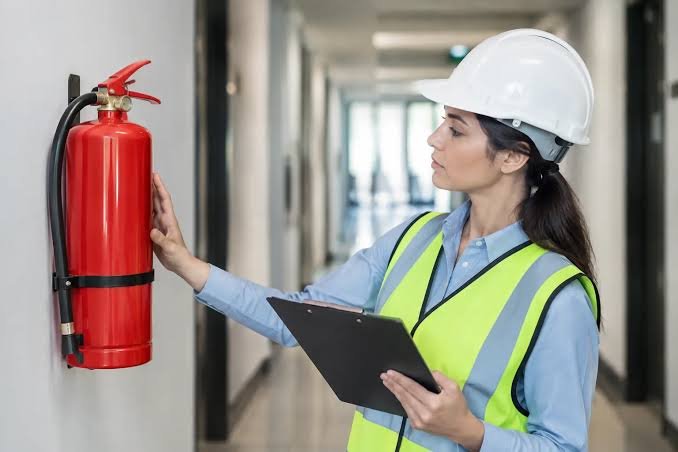
5. Inspect Fire Extinguishers and Other Safety Equipment
Fire safety equipment must be suitable for the risks present in a building. Simply having equipment on the premises does not guarantee that it will be available or functional when needed.
A checklist should review whether the equipment is appropriate, accessible, and maintained by competent personnel.
For fire extinguishers, the review may include:
- Whether the correct type is provided for the identified risks.
- Whether units are located in designated positions.
- Whether access is unobstructed.
- Whether inspection and servicing records are available.
- Whether visible damage or other concerns have been reported.
- Whether identification labels are readable.
Other equipment may include fire hydrants, hose reels, sprinkler systems, fire pumps, and emergency communication arrangements, depending on the building.
Only trained and authorised personnel should perform equipment inspections or specialist maintenance. Ordinary occupants should focus on reporting visible problems and following emergency procedures.
6. Keep Emergency Exits and Escape Routes Clear
An emergency exit is only useful when people can reach it safely.
Blocked corridors, locked exit doors, stored materials, and poorly marked stairways can create serious difficulties during an evacuation.
Every fire safety checklist should include a review of escape routes.
Check whether:
- Emergency exits are clearly identified.
- Corridors and stairways remain unobstructed.
- Exit doors are maintained and usable.
- Exit signs are visible.
- Emergency lighting is maintained where required.
- Escape routes lead towards safe areas.
- Assembly points are clearly identified.
- Occupants know which routes they should use.
The Building Code of Pakistan Fire Safety Provisions 2016 includes requirements relating to means of escape and life safety. Specific requirements depend on the building’s classification, design, and applicable approval process.
Building owners should arrange professional reviews to confirm that escape arrangements meet the relevant requirements.
7. Review Emergency Lighting and Safety Signs
Power interruptions can make evacuation more difficult, particularly in large buildings, staircases, basements, and corridors.
Emergency lighting helps occupants identify escape routes when normal lighting is unavailable. Safety signs provide important information about exits, emergency equipment, and evacuation arrangements.
A checklist should consider:
- Whether emergency lights are installed where required.
- Whether exit signs are visible.
- Whether signs are understandable to building occupants.
- Whether important routes are properly identified.
- Whether emergency lighting receives routine maintenance.
- Whether signs remain visible and are not covered by decorations or stored materials.
In buildings used by people with different language and literacy levels, clear and recognisable safety signs are particularly valuable.
8. Prepare a Written Fire Evacuation Plan
A fire evacuation plan explains how people should leave a building during an emergency.
It should be easy to understand and appropriate for the building’s layout. Occupants should know the available exits, the assembly point, and how emergency instructions will be communicated.
A suitable plan should identify:
- Primary and alternative escape routes.
- Emergency exits.
- Outdoor assembly areas.
- Emergency contact arrangements.
- Responsibilities of designated staff.
- Assistance arrangements for people who may need support.
- Procedures for confirming that occupants have reached safety.
The National Disaster Management Authority (NDMA) provides guidance on preparing a home fire escape plan. Its recommendations include identifying doors and windows, primary and alternative exits, emergency contact numbers, an outdoor meeting place, and smoke detector locations.
For workplaces and public buildings, evacuation planning should be appropriate to the number of occupants and the building’s specific risks.
Children should know how to recognise an alarm, alert a responsible adult, and leave the building using the agreed safe route. They should never be expected to investigate a fire or handle firefighting equipment.
9. Consider Children, Older Adults, and People with Disabilities
A good fire safety checklist considers everyone who may be inside the building.
Some people may need additional assistance during an emergency. These may include young children, older adults, people with mobility limitations, and individuals with hearing or visual impairments.
A checklist should ask whether:
- Emergency warnings can reach people with different needs.
- Escape routes are accessible where required.
- Assistance responsibilities are clearly assigned.
- Staff know how to support people who need help.
- Assembly arrangements account for vulnerable occupants.
- Emergency information is easy to understand.
For homes, families should discuss a simple escape plan and identify a safe meeting place outside.
For workplaces, building managers should make suitable arrangements in consultation with affected occupants and relevant professionals.
10. Check Fire Safety in Kitchens and Food Preparation Areas
Kitchens can contain several potential fire hazards, including cooking appliances, electrical equipment, heating surfaces, grease, and combustible materials.
Restaurants, hotels, cafeterias, and commercial kitchens should have fire safety arrangements suited to their operations.
A kitchen checklist may include:
- Whether cooking equipment is properly maintained.
- Whether electrical installations are in suitable condition.
- Whether grease and waste are managed appropriately.
- Whether combustible materials are kept away from heat sources.
- Whether ventilation systems receive professional maintenance.
- Whether emergency routes remain clear.
- Whether staff understand the kitchen’s emergency procedures.
Commercial kitchens may require specialised fire protection measures depending on their equipment and design.
A qualified fire safety professional should determine the appropriate protection and maintenance requirements.
11. Review Fire Safety in Warehouses and Factories
Warehouses and factories often contain large quantities of materials, machinery, electrical equipment, and storage systems. Their fire safety needs may be more complex than those of smaller buildings.
A checklist for industrial premises should consider:
Storage arrangements: Materials should be stored according to their characteristics and relevant safety requirements.
Housekeeping: Waste and unnecessary combustible materials should be managed responsibly.
Electrical installations: Machinery, panels, and wiring should receive appropriate professional inspection.
Fire detection: Detection arrangements should be suitable for the size and nature of the premises.
Emergency access: Escape routes and access for emergency services should remain available.
Staff awareness: Workers should understand alarm signals and evacuation responsibilities.
The checklist should be tailored to the factory’s activities rather than copied from a general office template.
12. Organise Fire Safety Training and Drills
Equipment and written plans are important, but people must also understand how to respond.
Fire safety training helps occupants recognise hazards, understand warning signals, and follow emergency instructions.
For workplaces, training may cover:
- Recognising fire alarms.
- Reporting hazards.
- Following evacuation routes.
- Reaching the assembly point.
- Understanding assigned emergency responsibilities.
- Reporting damaged safety equipment.
Fire drills provide an opportunity to review whether the evacuation plan is practical. They can also reveal problems such as unclear instructions, blocked routes, or confusion about responsibilities.
Drills should be organised by responsible adults and trained personnel. Children should participate only in age-appropriate, supervised safety exercises.
The Pakistan Engineering Council’s Building Code of Pakistan Fire Safety Provisions 2016 includes emergency planning and fire safety management considerations. Building owners should consult the relevant provisions and local authorities to determine applicable requirements.
13. Understand Fire Safety Requirements in Pakistan
Fire safety responsibilities in Pakistan may involve federal codes, provincial laws, local authorities, and building-specific approval conditions.
The Building Code of Pakistan Fire Safety Provisions 2016 is an important national reference for building fire protection and life safety.
In Punjab, the Civil Defence Department identifies several fire safety measures for premises it inspects, including:
- Fire detection and alarm systems.
- Firefighting arrangements.
- Fire safety plans.
- Emergency fire control rooms.
- Emergency exits and evacuation plans.
- Ventilation and air-conditioning systems.
The Punjab Emergency Service Department also provides information about the Punjab Community Safety Act 2021 and the Punjab Community Safety Buildings Regulations 2022.
These requirements should not automatically be treated as identical across every province or building category. Owners and managers should confirm which rules apply to their premises with the relevant authority.
A fire alarm system in Pakistan should be part of a coordinated safety arrangement that includes detection, warning, evacuation, maintenance, and suitable emergency planning.
14. Record Inspections and Corrective Actions
A checklist becomes more useful when inspection findings are recorded and followed up.
Simply marking a problem as identified does not make the building safer. Someone must be responsible for arranging the necessary correction.
An inspection record should include:
- Date of inspection.
- Area or equipment reviewed.
- Identified concern.
- Person responsible for follow-up.
- Action required.
- Target completion date.
- Completion status.
- Relevant supporting documents.
For example, if an inspection identifies a damaged electrical fitting, the record should state that a qualified electrician needs to assess it.
If an alarm system requires professional servicing, the record should identify the responsible maintenance provider and document when the issue is resolved.
These records help property managers monitor recurring concerns and plan future maintenance.
15. Common Fire Safety Checklist Mistakes
Even a well-designed checklist can become ineffective if it is not used properly.
Avoid these common mistakes:
Using the same checklist for every building: A house, school, warehouse, and hospital have different fire risks.
Ignoring local requirements: General advice cannot replace an assessment of applicable laws and building regulations.
Checking equipment without reviewing records: Maintenance and inspection documents are important evidence of ongoing attention.
Leaving problems unresolved: Identifying hazards is only the first step. Corrective action is essential.
Ignoring staff awareness: Occupants need to understand alarms and evacuation procedures.
Treating a checklist as a professional inspection: Complex buildings and technical systems require qualified assessment.
Failing to review the checklist: Building changes, new equipment, renovations, and changes in occupancy may create new risks.
A checklist should be updated whenever important changes affect the building’s safety arrangements.
16. A Practical Fire Safety Checklist for Homes and Workplaces
The following list provides a starting point for routine reviews. It should be adapted to the building and checked against applicable professional and legal requirements.
General fire prevention
- [ ] Potential fire hazards have been identified.
- [ ] Combustible waste is managed appropriately.
- [ ] Storage areas are organised.
- [ ] Electrical equipment is visually checked.
- [ ] Heating and cooking equipment are maintained.
Detection and alarm
- [ ] Suitable smoke or heat detectors are installed where required.
- [ ] The fire alarm system has been professionally inspected.
- [ ] Alarm faults have been reported and addressed.
- [ ] Occupants understand the warning signal.
- [ ] Maintenance records are available.
Fire safety equipment
- [ ] Appropriate fire safety equipment is available.
- [ ] Equipment is accessible.
- [ ] Inspection and servicing records are maintained.
- [ ] Identified defects are assigned for correction.
Emergency arrangements
- [ ] Escape routes are clear.
- [ ] Emergency exits are accessible.
- [ ] Exit signs are visible.
- [ ] Emergency lighting is maintained where required.
- [ ] Assembly points are identified.
- [ ] Evacuation arrangements consider people needing assistance.
Training and documentation
- [ ] Staff or household members understand emergency procedures.
- [ ] Appropriate drills are organised.
- [ ] Emergency contact information is available.
- [ ] Inspection findings are documented.
- [ ] Corrective actions are reviewed.
Conclusion
Fire safety checklists provide a simple and organised way to review the precautions that protect people and property. They help homeowners, business owners, and facility managers identify hazards, monitor equipment, review escape routes, and improve emergency preparedness.
In Pakistan, a useful checklist should consider the building’s specific risks and applicable requirements. It should include electrical safety, detection and alarm arrangements, emergency exits, fire safety equipment, staff awareness, and inspection records.
A reliable fire alarm system in Pakistan can provide an important early warning, but it is only one part of a complete fire safety approach. Regular maintenance, clear evacuation plans, professional inspections, and responsible behaviour are equally important.
The most effective checklist is one that is used consistently, updated when circumstances change, and followed by timely corrective action. Making fire safety a regular responsibility can help create safer homes, workplaces, and public buildings.
Frequently Asked Questions (FAQs)
1. What is a fire safety checklist?
A fire safety checklist is a written list of items used to review fire hazards, detection systems, safety equipment, emergency exits, evacuation arrangements, and maintenance responsibilities.
2. How often should a fire safety checklist be reviewed?
The review frequency depends on the building, its risks, and applicable requirements. Regular inspections should be planned, with additional reviews after renovations, changes in occupancy, equipment upgrades, or identified safety concerns.
3. What should a basic fire safety checklist include?
It should include hazard identification, electrical safety, fire detection and alarms, suitable safety equipment, clear escape routes, emergency lighting where required, evacuation planning, training, and inspection records.
4. Why is a fire alarm system important in Pakistan?
A suitable fire alarm system provides early warning when fire-related conditions are detected. It helps occupants recognise an emergency and follow evacuation procedures. It should be selected, installed, and maintained according to the building’s requirements.
5. Who is responsible for maintaining a building’s fire safety checklist?
Responsibility generally rests with the property owner, building manager, employer, or another designated responsible person, depending on the premises and applicable rules. Qualified professionals should handle technical inspections and specialist maintenance.