
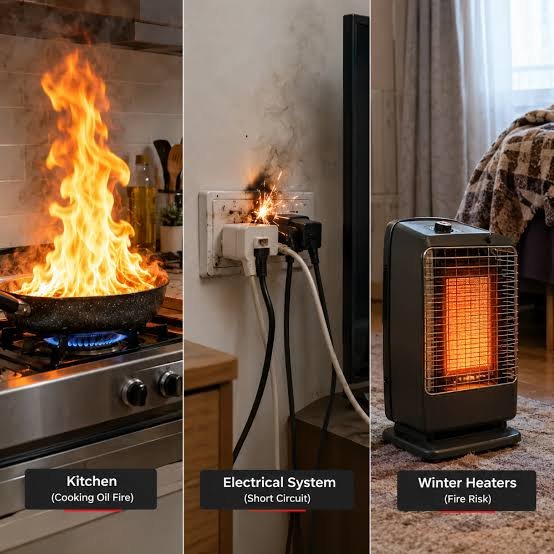
Winter brings cooler temperatures, longer nights and increased use of heaters, electric blankets, cooking appliances and other equipment designed to keep indoor spaces comfortable. However, these seasonal changes can also introduce fire hazards when equipment is damaged, electrical connections are overloaded or heating devices are used incorrectly.
In Pakistan, winter conditions vary considerably by region. Some areas experience very cold weather, while others use heating appliances only during occasional cold spells. Regardless of location, safe electrical practices, careful use of heating equipment and effective fire detection remain important throughout the season.
Although the title refers to where to buy winter fire hazards, fire hazards are not products that people should purchase. The practical concern is understanding where winter-related risks arise, how to reduce them and where to obtain suitable fire-safety equipment when needed.
This guide explains common winter fire risks, the types of safety products and services that may help address them, and what households and businesses should consider before making purchasing decisions.
1. Understand Common Winter Fire Hazards
Before buying fire safety equipment, it is important to understand the risks it is intended to address. Winter hazards often arise from heating appliances, electrical equipment, cooking activities and the storage of combustible materials.
Common examples include:
- Gas heaters and poorly maintained heating appliances.
- Damaged electrical wiring and overloaded sockets.
- Portable electric heaters used with unsuitable connections.
- Cooking equipment left unattended.
- Combustible materials placed close to heating appliances.
- Unsafe generator arrangements.
- Poorly ventilated rooms where fuel-burning appliances are used.
The Oil and Gas Regulatory Authority (OGRA) has previously warned consumers about the risks associated with gas heaters and stoves, including carbon monoxide exposure. Carbon monoxide is colourless and odourless, so people cannot reliably identify its presence using their senses.
Rescue 1122 has also issued winter safety advice concerning heaters, ventilation, gas leaks and combustible materials. These warnings show why winter preparation should involve prevention and early warning rather than relying only on firefighting equipment.
2. Where to Buy Fire Safety Equipment in Pakistan
People looking for winter fire protection products should focus on reputable suppliers and qualified service providers. The right purchasing channel depends on the equipment required and the building where it will be used.
Specialist fire safety equipment suppliers
Specialist fire safety suppliers are a useful starting point for products such as smoke detectors, fire alarm components, fire extinguishers, emergency lights and other building safety equipment.
A specialist supplier may also be able to explain product specifications, maintenance requirements and whether professional installation is needed.
Before purchasing, ask for:
- Product specifications and manufacturer information.
- Instructions for installation and maintenance.
- Warranty and after-sales support.
- Evidence that the product is suitable for its intended use.
- Information about servicing and replacement parts.
Avoid choosing equipment based only on a low price. A product that is unsuitable for the building or difficult to maintain may not provide the protection expected.
Authorised electrical equipment retailers
Electrical retailers can provide household safety products such as suitable electrical accessories, approved appliances and certain detection devices.
When purchasing electrical products, check the manufacturer’s information, ratings, warranty and compatibility with the intended installation. Have electrical work assessed or completed by a qualified professional.
Do not rely on improvised wiring or cheap, unsuitable adapters to operate high-power heating equipment.
Qualified fire alarm installation companies
Larger homes, offices, shops, hotels and industrial premises may require professionally designed detection and alarm arrangements.
A qualified fire safety company can assess the building and recommend a suitable system based on its layout, occupancy and risks. This may include smoke or heat detectors, manual call points, warning devices and a control panel.
The Pakistan Engineering Council’s Building Code of Pakistan Fire Safety Provisions 2016 is an important reference for building fire safety. The applicable requirements depend on the building and the authority responsible for it.
Local Civil Defence and emergency safety guidance
Civil Defence departments and local emergency services can provide information about fire safety expectations, inspections and preparedness.
For example, Punjab Civil Defence lists fire detection and alarm systems, firefighting arrangements, fire safety plans and emergency exits among the measures considered in inspections of relevant premises.
These departments are not necessarily retail suppliers. Their value is in helping property owners understand relevant safety responsibilities and seek appropriate professional support.
3. Choose Smoke Detectors and Fire Alarm Equipment Carefully
Smoke detection and warning systems are important because a fire may begin in a room or area where nobody is immediately present. An early warning can give occupants more time to leave.
For a home, a suitable smoke alarm may be an important part of a basic safety arrangement. Larger buildings may require a more comprehensive fire detection and alarm system.
When comparing products, consider:
- Whether the device is suitable for the intended location.
- Whether it is powered by a replaceable battery or another approved supply.
- Whether it provides an audible warning that occupants can recognise.
- Whether it has a test function and maintenance instructions.
- Whether replacement parts are available.
- Whether the manufacturer provides clear product information.
A fire alarm system in Pakistan should be selected according to the building’s requirements rather than purchased as a one-size-fits-all product. Commercial premises, multi-storey buildings and industrial facilities may need professionally designed systems with several connected components.
Smoke detectors are not a replacement for carbon monoxide detectors. They serve different purposes. Homes using fuel-burning appliances should consider the need for suitable carbon monoxide detection as well as smoke alarms, following product instructions and professional advice.
4. Understand Fire Extinguisher Requirements
Fire extinguishers are common parts of workplace and building fire safety arrangements. However, not every extinguisher is suitable for every type of fire.
Different extinguishers are designed for different fire risks. A supplier or competent fire safety professional should help identify the correct type for the premises.
Before purchasing an extinguisher, consider:
- The types of materials and equipment present.
- The location where the extinguisher will be installed.
- Whether its capacity is appropriate.
- Whether it meets applicable requirements.
- Whether servicing and inspection support is available.
- Whether people responsible for the premises understand its limitations.
For homes and workplaces, an extinguisher should never be treated as a reason to delay evacuation. People should only use firefighting equipment if they have appropriate training, the fire is small and conditions are safe. Otherwise, they should leave and contact emergency services.
5. Look for Suitable Electrical Safety Products and Services
Electric heaters, room heaters, fans, water heaters and other appliances may receive more use during winter. Electrical faults can create risks, particularly when wiring is old, damaged or unsuitable for the connected load.
Rather than buying accessories without checking compatibility, households should seek advice from a qualified electrician.
A professional can assess whether the electrical installation is suitable and identify damaged components or other concerns.
When purchasing electrical products, check that:
- The product has clear manufacturer details.
- Its electrical rating suits the intended use.
- The cable, plug and other components are undamaged.
- The product comes with instructions and warranty information.
- The retailer can explain safe operating requirements.
NEPRA’s public electrical safety awareness guidance advises against overloading sockets and plugs and recommends professional inspection of internal wiring.
A qualified electrician should handle repairs and installation work. Repeated circuit trips, damaged cables, unusual heating or burning smells should not be ignored.
6. Consider Carbon Monoxide Detection for Fuel-Burning Appliances
Winter safety is not limited to visible flames. Gas heaters and other fuel-burning appliances can produce carbon monoxide when combustion or ventilation conditions are unsuitable.
Carbon monoxide cannot be detected by smell or sight. A suitable carbon monoxide alarm can provide an additional warning, but it does not make unsafe appliance use acceptable.
When considering a carbon monoxide detector:
- Choose a product specifically designed to detect carbon monoxide.
- Check the manufacturer’s specifications and instructions.
- Confirm its recommended installation location.
- Follow the testing and replacement guidance.
- Do not confuse it with a smoke detector or ordinary gas-leak alarm.
Gas appliances should be installed and serviced by qualified professionals. Rooms using fuel-burning appliances need appropriate ventilation in line with the appliance instructions and safety guidance.
Never operate outdoor heating or cooking equipment inside an enclosed room. Do not leave fuel-burning heaters running while sleeping. If a gas leak is suspected, move everyone away from danger and contact the relevant emergency service or gas provider.
7. Buy from Suppliers That Offer After-Sales Support
Purchasing a safety product is only the beginning. Equipment may need installation, testing, inspection, servicing or replacement.
A supplier that provides reliable after-sales support can make it easier to maintain equipment over time.
Before making a purchase, ask:
- Is the product suitable for the intended building or room?
- Does the supplier provide a proper invoice?
- Is a manufacturer’s warranty available?
- Are installation and maintenance services offered?
- Can replacement batteries or parts be obtained?
- Is technical support available if the product develops a fault?
For building-wide systems, ask whether the supplier can provide documentation, commissioning information and a maintenance schedule.
Keep invoices, manuals, inspection reports and service records in a safe place. These documents can help property owners manage maintenance and demonstrate that safety arrangements receive regular attention.
8. Avoid Common Mistakes When Purchasing Fire Safety Products
A low-cost product may seem attractive, especially when several items are needed. However, buying unsuitable or poorly supported equipment can create a false sense of security.
Common purchasing mistakes include:
Choosing only by price: Cost matters, but product suitability, quality and support should also influence the decision.
Ignoring product specifications: A detector or extinguisher must be appropriate for the risk and location.
Buying without checking the seller: Look for identifiable suppliers, proper documentation and clear warranty information.
Assuming every detector does the same job: Smoke, heat, carbon monoxide and gas detectors have different purposes.
Ignoring installation requirements: Some equipment needs professional design or installation.
Forgetting maintenance: Batteries, detectors, alarm panels and extinguishers need appropriate checks and servicing.
Treating equipment as a complete safety plan: Products cannot replace safe behaviour, clear exits and an evacuation plan.
A careful purchasing decision should begin with a review of the actual risks at the property.
9. Winter Fire Safety for Homes
Households can reduce many winter hazards through sensible preparation and regular checks.
Start by reviewing the condition of heating appliances and electrical equipment. Arrange professional servicing when necessary and follow manufacturer instructions.
Keep combustible materials, including curtains, bedding, paper and clothing, away from heating appliances. Never use a heater as a place to dry clothes.
Avoid leaving heating equipment unattended. Switch appliances off as instructed before leaving a room or going to sleep.
Households should also:
- Keep escape routes clear.
- Maintain suitable smoke alarms.
- Consider appropriate carbon monoxide detection.
- Avoid overloaded sockets.
- Arrange professional checks of damaged wiring.
- Keep children away from heating appliances.
- Make sure everyone knows how to leave the property safely.
A household evacuation plan should identify safe exits and an outdoor meeting point. Children should understand that an alarm means they must leave and follow instructions from a responsible adult.
10. Winter Fire Safety for Offices and Commercial Buildings
Offices, shops, hotels, restaurants and factories may have additional hazards because of their size, electrical equipment, storage areas and number of occupants.
Building managers should review heating arrangements, electrical installations, fire detection, emergency lighting and escape routes before winter.
A commercial fire safety review may include:
- Inspection of electrical equipment and wiring.
- Checks of heating appliance arrangements.
- Review of combustible material storage.
- Maintenance of detection and alarm systems.
- Inspection of firefighting equipment.
- Confirmation that exits and corridors are clear.
- Staff awareness and evacuation arrangements.
The Building Code of Pakistan Fire Safety Provisions 2016 provides a national reference for building fire safety. Local requirements may differ depending on the location, building type and authority having jurisdiction. Owners and operators should confirm which requirements apply to their premises.
11. Create a Winter Fire Safety Purchasing Checklist
Before buying equipment, make a list of the risks that need attention. This prevents unnecessary purchases and helps ensure that important gaps are not overlooked.
Detection and warning
- Suitable smoke alarms are available where needed.
- Carbon monoxide detection needs have been considered.
- Commercial alarm systems receive professional assessment.
- Testing and maintenance instructions are available.
Electrical and heating safety
- Electrical installations have been checked when necessary.
- Heating appliances are suitable and properly maintained.
- Damaged cables and plugs are not being used.
- Electrical accessories match the appliance requirements.
Fire protection and evacuation
- Suitable fire extinguishers are provided where required.
- Emergency exits are accessible.
- Evacuation instructions are clear.
- Staff or household members know what to do in an emergency.
Purchasing and maintenance
- Suppliers provide clear product information.
- Warranty and service arrangements are understood.
- Installation requirements are followed.
- Manuals and maintenance records are retained.
The checklist should be reviewed periodically, especially when new appliances are purchased or the building’s use changes.
12. What to Do During a Winter Fire Emergency
If a fire occurs, protecting people is more important than saving property.
Raise the alarm, warn anyone nearby and leave using the nearest safe exit. Do not use lifts during a fire evacuation. Avoid entering smoke-filled areas and do not return inside to collect belongings.
Once outside, move to a safe assembly point and contact the local emergency service. In areas served by Rescue 1122, the emergency helpline is 1122.
If a gas leak is suspected, do not operate electrical switches or create an ignition source. Move people away from the affected area and contact the relevant emergency service or gas provider from a safe location.
Do not attempt repairs or investigate a dangerous situation yourself.
Conclusion
Winter fire safety in Pakistan begins with understanding seasonal risks and choosing appropriate protection. Smoke alarms, carbon monoxide detectors, suitable fire extinguishers and professionally designed alarm systems can all contribute to safer homes and workplaces when selected and maintained correctly.
People looking for these products should start with reputable fire safety suppliers, authorised electrical retailers and qualified installation professionals. Civil Defence and local emergency services can also help property owners understand relevant safety expectations.
The most important step is to avoid buying equipment without first assessing the actual risk. Safe heating practices, professional electrical maintenance, suitable detection, clear exits and a practical evacuation plan should work together.
Winter preparation is not simply about purchasing products. It is about creating an environment where hazards are reduced, warnings are noticed and everyone knows how to reach safety.
Frequently Asked Questions (FAQs)
1. Where can I buy fire safety equipment in Pakistan?
You can look for reputable specialist fire safety suppliers, authorised electrical retailers and qualified fire alarm installation companies. Check product specifications, warranty information, suitability and after-sales support before purchasing.
2. What fire safety products are useful during winter?
Depending on the property, useful products may include smoke alarms, carbon monoxide detectors, suitable fire extinguishers, emergency lights and professionally designed fire alarm systems. The correct selection depends on the building and its risks.
3. Is a smoke detector the same as a carbon monoxide detector?
No. A smoke detector identifies smoke associated with a fire, while a carbon monoxide detector is designed to detect carbon monoxide. They perform different functions and should not be treated as interchangeable.
4. Why should businesses inspect fire alarm systems before winter?
Winter can bring increased use of heating and electrical equipment. Checking the alarm system helps identify faults and maintenance needs before an emergency occurs. Inspections should follow manufacturer instructions, applicable standards and local requirements.
5. What should I check before buying a fire extinguisher?
Check whether the extinguisher is suitable for the fire risks at the property, whether it meets applicable requirements and whether the supplier provides product documentation and servicing support. Ask a competent fire safety professional for advice when unsure.