
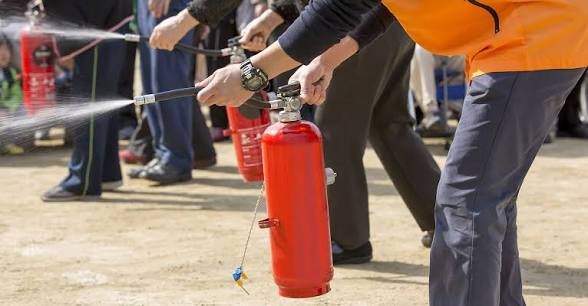
Fire safety training is an important part of protecting people, property, and business operations. Buildings may have fire alarms, extinguishers, emergency exits, and other protective equipment, but these measures are only useful when people understand their purpose and know how to respond during an emergency.
A well-organised training programme helps employees recognise potential hazards, understand warning signals, follow evacuation procedures, and communicate safety concerns. It also helps managers identify weaknesses in workplace arrangements and improve emergency preparedness.
In Pakistan, fire safety training is relevant to offices, factories, warehouses, schools, hospitals, hotels, restaurants, shopping centres, and residential buildings. Each type of property has different risks, so training should be based on the building’s activities, layout, occupancy, and emergency arrangements.
Fire safety training should not be treated as a one-time presentation. It is an ongoing process that includes awareness, practical learning, refresher sessions, and regular reviews.
This article explains why fire safety training matters, what an effective programme should include, and how organisations can make it useful for everyone.
What Is Fire Safety Training?
Fire safety training is a structured learning process that teaches people how to recognise fire hazards, understand prevention measures, respond to warnings, and follow emergency procedures.
The training should match the responsibilities of the people attending it. General employees need to understand evacuation procedures and how to report hazards. Designated safety personnel may require additional instruction related to their assigned duties.
A basic programme may cover:
- Common causes of fires
- Workplace fire prevention
- Safe housekeeping practices
- Fire alarm awareness
- Emergency exits and evacuation routes
- Assembly points and accountability
- General awareness of fire protection equipment
- Emergency communication procedures
- Reporting hazards and equipment faults
- Roles of designated safety personnel
The purpose is to help participants understand how to act responsibly. General awareness training should not encourage untrained people to attempt dangerous firefighting activities.
Why Is Fire Safety Training Important in Pakistan?
Fire safety is a concern for buildings of all sizes. A small office may have a limited number of employees, while a factory, hospital, or shopping centre may accommodate hundreds of people.
Different buildings also contain different hazards. A restaurant may have cooking equipment, a warehouse may store combustible materials, and an office may have electrical equipment and several occupied floors.
Training helps people understand the risks in their own surroundings rather than relying on general information alone.
It can help organisations:
- Improve awareness of common fire hazards
- Encourage responsible workplace behaviour
- Help employees recognise emergency warnings
- Make evacuation procedures easier to understand
- Clarify responsibilities during an emergency
- Improve communication between employees and management
- Identify weaknesses in existing safety arrangements
- Support regular review of fire protection measures
Fire safety training is also recognised by public institutions in Pakistan. Punjab Civil Defence lists fire safety, firefighting awareness, first aid, and evacuation drills among its training activities. The Directorate General of Civil Defence also publishes information about fire prevention and safety courses.
These programmes demonstrate the importance of organised learning in improving public and workplace preparedness.
1. Start by Teaching Fire Prevention
An effective training programme should begin with prevention. People need to understand how everyday activities and poor maintenance can contribute to fire risks.
Prevention is not limited to technical equipment. Housekeeping, responsible storage, safe working practices, and reporting problems are also important.
Recognising common fire hazards
Training should introduce hazards that may be present in the workplace, including:
- Damaged electrical equipment
- Poorly maintained machinery
- Accumulated waste
- Unsafe storage of combustible materials
- Unattended cooking activities
- Poor housekeeping
- Equipment used outside approved procedures
- Blocked access to safety equipment
The examples should reflect the building’s actual activities. For example, restaurant employees may need awareness of kitchen-related hazards, while warehouse employees may need information about storage arrangements and clear access routes.
Encouraging responsible daily habits
Employees should understand the importance of following workplace safety rules, reporting damaged equipment, and keeping designated emergency routes clear.
They should also know whom to contact when they notice a problem.
Management can support these habits by making safety reporting straightforward and responding to reported concerns. Employees should not be expected to repair electrical systems or other technical equipment themselves.
Making prevention everyone’s responsibility
Fire prevention should not be considered the responsibility of only one safety officer. Employees, supervisors, maintenance teams, and management all have different roles.
When people understand their responsibilities, safety becomes part of normal workplace behaviour.
2. Explain How Fire Alarm Systems Work
A fire alarm system is an important part of a building’s fire protection arrangements. It is designed to provide a warning when a possible fire emergency is detected.
However, an alarm alone does not explain what every occupant should do. People must understand the building’s emergency procedures and know how to respond when a warning occurs.
Teach employees to recognise alarm signals
Training should explain the alarm signals used in the building and what action occupants are expected to take.
Participants should know:
- What the building’s fire alarm sounds or visual signals look like
- What to do when the alarm activates
- Where emergency information is displayed
- How to report a suspected alarm fault
- Who is responsible for communicating official instructions
An unexpected alarm should be treated seriously. Occupants should follow the building’s emergency plan rather than assume that the warning is a false alarm.
The importance of a suitable fire alarm system in Pakistan
A fire alarm system in Pakistan should be selected according to the building’s size, layout, occupancy, and relevant safety requirements.
Different properties may require different detection and warning arrangements. A small office does not necessarily have the same requirements as a hospital, factory, or multi-storey commercial building.
Training should help occupants understand the system’s purpose without encouraging them to interfere with its technical components.
Installation, inspection, testing, and maintenance should be handled by qualified professionals. Any reported fault should be communicated to the responsible maintenance team.
Explain what to do when an alarm activates
The building’s emergency procedure should clearly explain how occupants are expected to respond.
In general, people should:
- Treat an unexpected fire alarm as a genuine warning.
- Follow the designated evacuation arrangements.
- Use the approved escape routes.
- Avoid delaying departure to collect personal belongings.
- Proceed to the designated assembly point.
- Follow instructions from authorised emergency personnel.
- Stay outside until permission to return is given.
Training should reinforce that personal safety comes first.
3. Make Emergency Evacuation a Key Training Topic
Evacuation training helps occupants understand how to leave a building safely when an emergency occurs.
People should not have to discover the location of emergency exits or assembly points for the first time during an incident.
Explain the building’s evacuation routes
Training should introduce the building’s approved evacuation information and identify important features, including:
- Main emergency exits
- Alternative escape routes
- Stairways
- Exit signs
- Emergency lighting
- Designated assembly areas
Employees should understand that emergency routes must remain accessible. Corridors, stairways, and exits should not be used for routine storage.
The evacuation plan should also explain what occupants should do if their usual route is unavailable.
Consider people who may need additional assistance
Not everyone can evacuate in the same way. Children, older adults, visitors, and people with disabilities or temporary mobility limitations may require additional support.
Organisations should consider these needs when preparing their emergency arrangements.
Responsibilities should be assigned in advance, and any assistance plan should be communicated to the people involved. Training should also consider visitors and contractors who may be unfamiliar with the building.
Explain assembly points
An assembly point is a designated safe location where occupants gather after leaving the building.
Employees should know where it is and understand the importance of remaining there until authorised personnel provide further instructions.
Management may use attendance lists or visitor records to help account for people who were inside the building.
Nobody should re-enter the premises until emergency personnel confirm that it is safe.
4. Provide Training According to People’s Responsibilities
A successful programme recognises that employees, managers, and designated safety personnel have different responsibilities.
Training should be relevant to each group rather than providing identical information to everyone.
General employees
All employees should receive basic information about:
- Common fire hazards
- Prevention and housekeeping
- Alarm recognition
- Emergency exits
- Evacuation arrangements
- Assembly points
- Reporting procedures
This helps employees understand what is expected of them during normal operations and emergencies.
Designated fire wardens
Some organisations appoint fire wardens to support their emergency arrangements.
Their responsibilities should be clearly documented and appropriate to their training.
Depending on the building’s plan, they may help communicate evacuation information, report blocked routes, support orderly movement towards exits, and provide relevant information to emergency personnel.
They should never be expected to perform duties beyond their training or put themselves in danger.
Managers and supervisors
Managers play an important role in maintaining workplace safety.
Their responsibilities may include arranging training, communicating procedures, keeping records, assigning responsibilities, and ensuring that reported problems receive attention.
They should also arrange qualified professional support when technical assessment or maintenance is required.
5. Introduce Fire Protection Equipment Responsibly
Training should help occupants understand the safety equipment installed in their building.
However, general awareness is different from specialist technical instruction. Employees should know the purpose of equipment and how to report problems, without being encouraged to operate equipment beyond their training.
Fire extinguishers
Training can explain that different extinguishers are designed for different fire types and that unsuitable equipment can create additional risks.
Only appropriately trained people should consider using firefighting equipment, and only when the situation is suitable and their safety is not at risk.
Evacuation and contacting emergency services should take priority. Employees should never be pressured to fight a fire.
Other fire protection equipment
Depending on the building, training may introduce:
- Fire alarm systems
- Smoke detectors
- Sprinkler systems
- Fire hydrants
- Hose reels
- Emergency lighting
- Fire doors
- Exit signs
- Smoke-control arrangements
Participants should understand the general purpose of these systems and know how to report visible damage, faults, or maintenance concerns.
Technical inspection and servicing should be assigned to qualified professionals.
How to Organise an Effective Fire Safety Training Programme
A useful programme requires planning, suitable instructors, clear learning objectives, and regular review.
Step 1: Understand the building
Start by reviewing the building’s purpose, layout, occupancy, and activities.
Identify areas that may require particular attention, such as kitchens, storage spaces, electrical rooms, workshops, and machinery areas.
Step 2: Identify training needs
Consider who will attend the programme and what they need to learn.
General employees may need basic awareness, while designated safety personnel may require additional instruction.
Step 3: Set clear learning objectives
Decide what participants should understand after training.
For example, employees should be able to identify the alarm signal, explain the evacuation procedure, locate the assembly point, and describe how to report a safety concern.
Step 4: Select suitable trainers
Training should be delivered by people with appropriate knowledge and experience.
Organisations may seek support from qualified fire safety professionals or relevant Civil Defence institutions. Specialist subjects should be taught by suitably qualified instructors.
Step 5: Use simple learning materials
Training materials should be clear and accessible. Building maps, diagrams, presentations, and straightforward examples can help participants understand the information.
Where necessary, organisations should consider the languages spoken by employees and provide accessible information for people with different communication needs.
Step 6: Review participants’ understanding
Trainers can use discussions, questions, and short knowledge checks to identify areas that need clarification.
The objective is to make sure people understand the procedures, not simply to record attendance.
Step 7: Maintain training records
Organisations should keep suitable records of:
- Training dates
- Topics covered
- Trainer or provider details
- Participants and departments
- Attendance
- Follow-up training requirements
These records help management review the programme and identify employees who need further instruction.
Why Fire Drills and Refresher Sessions Matter
People may forget information over time. New employees may join, building layouts may change, and emergency procedures may need updating.
Refresher sessions help keep important information current.
Fire drills allow organisations to review whether occupants understand the evacuation plan. They should be planned responsibly, supervised, and organised according to applicable requirements.
After a drill, management can consider:
- Whether people recognised the alarm
- Whether evacuation information was clear
- Whether routes were accessible
- Whether assembly arrangements worked
- Whether people were accounted for
- Whether additional training is needed
The purpose is to identify improvements rather than simply complete an exercise.
Training should also be reviewed when a building changes its layout, introduces new equipment, changes its operations, or identifies problems during an inspection.
Fire Safety Training for Different Types of Buildings
Training should reflect the activities and people present in each property.
Offices
Office training should cover electrical safety awareness, alarm signals, evacuation routes, assembly points, and reporting procedures.
Schools
School training should use age-appropriate information and clearly explain the responsibilities of teachers and staff. Emergency arrangements should consider children who need additional assistance.
Hospitals
Healthcare facilities must consider patients, visitors, medical staff, and people who may not be able to evacuate independently.
Factories and warehouses
Industrial training should reflect the site’s activities, machinery, storage arrangements, and emergency procedures. Designated safety personnel may require additional specialist instruction.
Hotels and shopping centres
These buildings may contain visitors who are unfamiliar with their surroundings. Employees should understand how to communicate emergency information and direct occupants towards designated exits.
Fire Safety Training and Official Guidance in Pakistan
Organisations should review the fire safety requirements that apply to their location, building type, and activities.
The Building Code of Pakistan – Fire Safety Provisions 2016 is an important national reference for building fire safety. Provincial and local authorities may also have additional rules, inspection procedures, and guidance.
Punjab Civil Defence lists fire safety, firefighting, first aid, and evacuation drills among its training and awareness activities. Its programme information identifies educational institutions, industrial units, government departments, staff, and the general public as training audiences.
The Directorate General of Civil Defence also publishes a schedule of courses that includes fire prevention and safety, workplace health and safety, and fire safety management.
In October 2026, the Pakistan Scientific and Technological Information Centre (PASTIC), working with the Directorate General of Civil Defence and the National Institute of Fire Technology, held a workplace fire safety workshop in Islamabad. The reported subjects included hazard identification, prevention, emergency response, evacuation, and general awareness of fire extinguishers.
These programmes show that fire safety education is relevant to both public institutions and workplaces.
Property owners should consult the relevant authority and qualified professionals to confirm which requirements apply to their premises. Attending a general training session does not automatically establish that a building meets every legal requirement.
Common Fire Safety Training Mistakes to Avoid
Even well-planned organisations can make mistakes when arranging training.
Treating training as a one-time activity: Information should be refreshed when procedures change and at suitable intervals.
Ignoring building-specific risks: Training should reflect the actual hazards and layout of the property.
Focusing only on equipment: Alarm awareness, communication, and evacuation procedures are equally important.
Using complicated language: Participants should be able to understand the information being presented.
Ignoring visitors and contractors: Temporary occupants may also need access to essential emergency information.
Failing to record follow-up actions: Problems identified during training or drills should be assigned to responsible people.
Expecting untrained employees to fight fires: The priority for ordinary occupants should be safe evacuation and alerting emergency services.
Avoiding these mistakes makes training more useful and helps organisations maintain a consistent approach to safety.
Conclusion
Fire safety training helps people understand how to recognise hazards, follow prevention measures, respond to alarms, and evacuate safely. It is an important responsibility for organisations operating offices, schools, factories, hospitals, warehouses, and commercial buildings throughout Pakistan.
A fire alarm system in Pakistan can provide an essential warning, but people must also understand what to do when it activates. Clear evacuation procedures, accessible exits, suitable training, regular reviews, and professional equipment maintenance all contribute to a more complete fire safety programme.
The right training approach should be practical, understandable, and suited to the building. By making safety education an ongoing responsibility, organisations can improve awareness and help protect employees, visitors, and property.
Frequently Asked Questions
1. What is the main purpose of fire safety training?
The main purpose is to teach people how to recognise fire hazards, understand warning systems, follow emergency procedures, and evacuate safely. It also helps employees understand their responsibilities.
2. Who should receive fire safety training?
Employees, managers, supervisors, and designated safety personnel should receive training appropriate to their responsibilities. Organisations should also consider visitors, contractors, and people who may need additional assistance during evacuation.
3. How often should fire safety training be conducted?
Training should be provided when people join an organisation and refreshed according to the building’s risks, applicable requirements, and changes to emergency procedures. Regular reviews and drills can help identify when further instruction is needed.
4. What topics should a basic fire safety training session include?
A basic session should cover fire prevention, common hazards, alarm recognition, emergency exits, evacuation routes, assembly points, emergency communication, and reporting procedures. General awareness of installed safety equipment should also be included.
5. Is fire safety training important for small businesses in Pakistan?
Yes. Small businesses also need to understand fire prevention, warning systems, evacuation arrangements, and applicable safety responsibilities. Training helps employees understand how to respond appropriately and supports a safer working environment.