
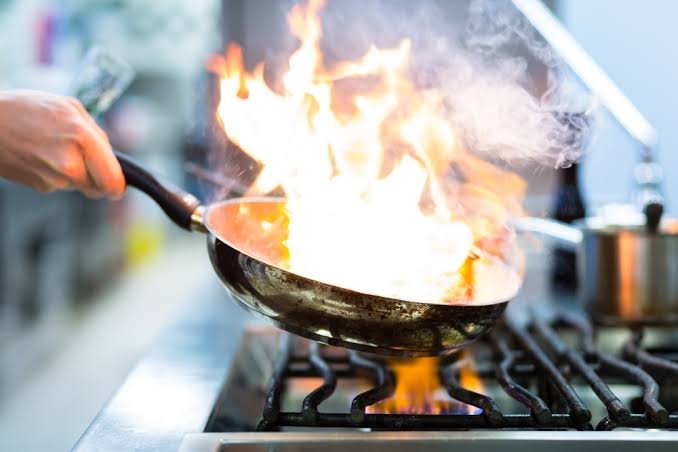
Restaurants are places where people gather to enjoy meals, celebrate special occasions, and spend time with family and friends. However, behind every restaurant’s busy dining area is a kitchen that uses cooking oil, gas appliances, electrical equipment, and high-temperature cooking surfaces. Without proper precautions, these everyday activities can create serious fire hazards.
Restaurant fire safety is essential for protecting customers, employees, property, and business operations. A small incident involving overheated cooking oil, a damaged electrical cable, or a leaking gas connection can become dangerous when safety equipment is missing or staff members do not know how to respond.
Although this article focuses on restaurants, many of the same principles also apply to homes. Residential kitchens face similar risks from cooking appliances, gas cylinders, electrical connections, and combustible materials. Learning how professional kitchens manage fire hazards can help families develop safer habits at home.
For restaurant owners in Pakistan, fire prevention should include regular equipment inspections, safe cooking practices, suitable fire detection systems, accessible emergency exits, and employee training. A properly selected and maintained fire alarm system in Pakistan can be an important part of a broader fire safety plan.
1. Understand the Common Causes of Restaurant Fires
The first step towards effective fire prevention is understanding where hazards are most likely to occur. Restaurant kitchens contain several potential ignition sources, and the combination of heat, fuel, electricity, and busy working conditions requires careful management.
Common restaurant fire hazards include:
- Unattended cooking equipment and overheated cooking oil.
- Grease accumulation in exhaust hoods and ventilation ducts.
- Damaged electrical wiring and overloaded outlets.
- Leaking LPG cylinders, hoses, valves, or gas connections.
- Combustible materials stored too close to cooking appliances.
- Poorly maintained generators and backup power equipment.
- Blocked emergency exits and overcrowded storage areas.
- Improper handling of hot equipment and flammable materials.
The U.S. Fire Administration recommends staying attentive while cooking and switching off cooking equipment when leaving the kitchen. Although its guidance is intended for homes, the principle is equally relevant to restaurant operations.
Restaurant managers should conduct a fire risk assessment to identify hazards in kitchens, dining rooms, storerooms, electrical areas, and staff facilities. The assessment should consider the building’s layout, cooking methods, occupancy, and available escape routes.
Identifying hazards early allows management to correct problems before they lead to an emergency.
2. Maintain Cooking Appliances and Kitchen Equipment
Cooking equipment is central to restaurant operations, but poorly maintained appliances can increase fire risk. Stoves, ovens, deep fryers, grills, and other equipment should be inspected and maintained according to the manufacturer’s instructions.
Staff should check for damaged controls, unusual smells, loose connections, excessive heating, and other signs of malfunction. Equipment that appears unsafe should be taken out of service until it has been assessed and repaired by a qualified technician.
Restaurant managers should establish a maintenance schedule that covers:
- Gas and electric cooking appliances.
- Deep fryers and temperature controls.
- Exhaust fans and ventilation systems.
- Electrical connections and isolation switches.
- Commercial ovens, grills, and heating equipment.
- Automatic kitchen fire suppression systems, where installed.
Cooking appliances should be operated only for their intended purpose. Staff should avoid placing packaging, towels, plastic containers, or other combustible items on or near hot surfaces.
Keep work areas organised so employees can move safely around cooking equipment. Clear access also helps staff reach emergency controls without being obstructed by boxes, utensils, or stored supplies.
Regular maintenance supports safer operations, reduces equipment failures, and helps restaurants maintain consistent food preparation standards.
3. Clean Grease from Exhaust Hoods and Ventilation Ducts
Grease management is one of the most important parts of restaurant kitchen fire prevention. Cooking releases grease particles that can accumulate inside filters, exhaust hoods, fans, and ventilation ducts.
If grease deposits are allowed to build up, they can provide additional fuel for a fire. A fire that enters an exhaust system may spread beyond the immediate cooking area and affect other parts of the building.
Restaurant operators should establish a documented cleaning programme based on the cooking equipment, volume of use, and manufacturer’s guidance. High-volume kitchens may need more frequent cleaning than facilities that prepare fewer meals.
Essential maintenance tasks include:
- Cleaning removable grease filters at suitable intervals.
- Inspecting accessible hood surfaces for grease accumulation.
- Arranging professional cleaning of exhaust ducts when required.
- Checking exhaust fans for damage and excessive grease deposits.
- Keeping records of cleaning and maintenance.
- Inspecting the kitchen suppression system after relevant maintenance or equipment changes.
The National Fire Protection Association’s NFPA 96 standard addresses ventilation control and fire protection for commercial cooking operations, including exhaust systems, grease removal, and suppression equipment.
Cleaning should be thorough enough to address concealed grease deposits, not just the visible surfaces. Restaurant operators should use competent service providers when specialist cleaning or inspection is necessary.
4. Handle LPG Cylinders and Gas Connections Safely
Gas appliances are widely used in food preparation, and LPG may be used in restaurants where the installation and local requirements permit it. However, leaks, faulty regulators, damaged hoses, and unsuitable ventilation can create serious hazards.
Restaurant owners should ensure that gas systems are installed and maintained by qualified personnel. Cylinders, regulators, valves, and connecting pipes should be appropriate for the equipment and maintained according to applicable requirements.
Important precautions include:
- Keep gas cylinders in approved, suitably ventilated locations.
- Protect cylinders and connections from physical damage.
- Arrange regular inspection of hoses, regulators, valves, and fittings.
- Keep combustible materials away from gas appliances.
- Never allow untrained staff to modify gas installations.
- Ensure workers know the emergency procedure for suspected gas leaks.
If a gas leak is suspected, do not operate electrical switches or use flames in the affected area. Move people away, avoid ignition sources, and contact the appropriate emergency service or qualified gas professional from a safe location. Follow emergency instructions rather than attempting an improvised repair.
In 2023, Dawn reported on an Oil and Gas Regulatory Authority investigation into a restaurant incident in Narowal. The report highlighted shortcomings involving gas safety, detection and warning equipment, ventilation, firefighting provisions, and evacuation communication. The incident illustrates why restaurants must treat gas safety as an essential operational responsibility.
Homes using gas cooking appliances should follow the same basic principles: use approved equipment, arrange professional maintenance, maintain suitable ventilation, and respond promptly to suspected leaks.
5. Install a Suitable Fire Alarm System
Early warning can make a major difference when a fire develops in a restaurant. Staff may be working in the kitchen, serving customers, or managing deliveries, and a fire may not be immediately visible to everyone in the building.
A suitable fire alarm system in Pakistan can help notify occupants when a fire is detected. Depending on the premises, a system may include compatible detectors, a control panel, manual call points, sounders, visual warning devices, and backup power.
The appropriate system depends on the building’s size, layout, occupancy, cooking environment, and applicable regulations. Restaurant operators should seek advice from qualified fire safety professionals to ensure the system is designed for the premises.
Key considerations include:
Appropriate detection equipment: Heat detectors may be suitable in some kitchen environments where smoke detectors could be affected by cooking fumes or steam. Detector selection and placement should be determined by the system designer and applicable standards.
Effective warning coverage: Audible and, where needed, visual alarms should alert people in relevant occupied areas, including dining rooms, kitchens, and other designated spaces.
Reliable power: Required backup supplies should be maintained so that the system can operate as designed during a power interruption.
Accessible manual call points: Where required, these should be positioned so occupants can raise an alarm without unnecessary delay.
Routine testing and servicing: Inspections, testing, fault repairs, and maintenance should follow manufacturer instructions and applicable requirements.
Punjab Civil Defence identifies fire detection and alarm systems, firefighting arrangements, emergency exits, and evacuation plans among the fire safety measures considered for relevant premises. Requirements should be confirmed with the authority responsible for the restaurant’s location.
An alarm is not a substitute for prevention or evacuation planning. Its purpose is to provide warning, allowing occupants to take appropriate action when a fire is detected.
6. Provide Suitable Fire Extinguishers and Kitchen Suppression Equipment
Fire extinguishers are useful only when they are suitable for the particular hazard and maintained in working condition. Restaurants should assess the risks associated with cooking oil, ordinary combustible materials, gas equipment, and electrical installations before selecting fire protection equipment.
Different types of fires require different extinguishing agents. A water-based extinguisher, for example, must not be used on a burning deep-fat fryer because it can cause burning oil to spread violently.
Commercial kitchens using deep fryers and similar equipment may require a suitable wet-chemical extinguisher and a compatible fixed kitchen suppression system, depending on the design and applicable requirements.
A fixed suppression system may be designed to protect cooking appliances and the exhaust hood area. Some systems can also activate controls that shut off the fuel or power supply to protected appliances.
Restaurant managers should ensure that:
- Extinguishers are appropriate for the hazards present.
- Equipment is visible and accessible.
- Inspection and servicing are completed on schedule.
- Staff know the location and intended use of equipment.
- Kitchen suppression systems are professionally inspected.
- Changes to cooking appliances are assessed for their effect on system coverage.
Employees should not be expected to fight a fire that is spreading, producing heavy smoke, or threatening their escape route. Evacuation and emergency-service instructions must take priority.
7. Keep Emergency Exits Clear and Accessible
Even a well-equipped restaurant can become dangerous if occupants cannot leave the building quickly. Emergency exits, corridors, stairways, and escape routes must remain accessible whenever the premises are occupied.
Boxes, furniture, delivery stock, cleaning equipment, and spare cooking supplies should never be stored where they obstruct an escape route. Exit signs should remain visible, and emergency lighting should be maintained where required.
Restaurant managers should check that doors operate properly and that the evacuation route does not depend on passing through a hazardous kitchen area wherever an alternative safe route is required by the building design.
A suitable emergency plan should identify:
- Primary and alternative escape routes.
- Exit locations and assembly points.
- Staff responsibilities during evacuation.
- Procedures for warning customers.
- Arrangements for people who may need assistance.
- Methods of contacting emergency services.
Staff should know how to direct customers towards safety without causing panic. Designated employees may help guide people to exits, provided doing so does not expose them to unnecessary danger.
Never lock or obstruct required exits while customers or employees are inside. Any security arrangements must be compatible with safe emergency escape and applicable regulations.
8. Train Restaurant Employees in Fire Safety
Equipment alone cannot ensure an effective emergency response. Employees need to understand how to prevent fires, recognise warning signs, raise the alarm, and evacuate safely.
Fire safety training should be provided during staff induction and refreshed periodically. New employees should understand the restaurant’s procedures before working independently in hazardous areas.
Training should cover:
- Safe operation of cooking appliances.
- Recognition of gas leaks and electrical hazards.
- Reporting damaged or malfunctioning equipment.
- Raising the alarm and contacting emergency services.
- Understanding evacuation routes and assembly points.
- Knowing when firefighting equipment may be used safely.
- Assisting customers without delaying evacuation.
Restaurant managers should arrange evacuation drills as appropriate for the premises and applicable requirements. Drills can help reveal practical problems, such as unclear instructions, blocked routes, or employees who do not know where to assemble.
Employees must understand that protecting people is more important than saving food, equipment, cash, or personal belongings.
Training should also make clear that no one should attempt to control a large or rapidly spreading fire. Staff should leave the danger area and follow the emergency plan.
9. Maintain Electrical Systems and Prevent Overloading
Restaurants rely on refrigeration units, ovens, lighting, ventilation fans, dishwashers, point-of-sale systems, and other electrical equipment. The combined demand can put pressure on electrical installations if they are poorly designed or maintained.
Damaged cables, loose connections, overloaded outlets, and unsuitable extension leads can increase the risk of overheating or electrical fires.
Arrange periodic inspections by qualified electricians. Repairs and upgrades should comply with applicable electrical safety requirements and the equipment manufacturer’s instructions.
Restaurant managers should check that:
- Electrical equipment is suitable for its working environment.
- Cables are not frayed, crushed, or exposed to excessive heat.
- Outlets and circuits are not overloaded.
- Ventilation openings around equipment are not blocked.
- Faulty equipment is removed from service.
- Electrical panels remain accessible to authorised personnel.
Water and grease should be kept away from electrical components. Staff should never attempt electrical repairs without the required qualifications and authorisation.
Backup generators also need proper installation, maintenance, ventilation, and safe fuel storage. They should not be operated in enclosed or inadequately ventilated spaces because exhaust gases can be dangerous.
Electrical maintenance should be recorded so that recurring faults can be identified and addressed.
10. Manage Fire Risks in Dining Areas and Storage Rooms
Restaurant fire safety extends beyond the kitchen. Dining areas, storerooms, staff rooms, and service counters may contain combustible materials or equipment that can contribute to a fire.
Keep paper products, packaging, cleaning materials, and other combustible supplies in designated storage areas away from heat sources. Follow product instructions for storing cleaning chemicals and keep them separated from incompatible materials.
Avoid placing decorative fabrics, paper decorations, or other combustible items close to lighting fixtures and cooking equipment. Ensure that candles or other open flames, where permitted, are controlled and kept away from materials that could ignite.
Do not allow storage to obstruct electrical panels, extinguishers, fire alarm equipment, or emergency exits.
Restaurant operators should also manage customer capacity appropriately. Overcrowding can make evacuation more difficult, particularly in buildings with narrow corridors or limited exits.
Regular housekeeping inspections help ensure that fire hazards do not gradually develop as the business becomes busier.
11. Create a Written Fire Safety and Maintenance Plan
A written fire safety plan helps turn general safety advice into consistent daily practice. It should explain how hazards are identified, who is responsible for inspections, how equipment is maintained, and what everyone must do during an emergency.
For restaurants in Pakistan, the plan should reflect the building’s design, type of operation, local conditions, and applicable fire safety requirements.
A practical maintenance schedule may include:
Daily checks
- Keep exits and escape routes clear.
- Check that cooking areas are tidy.
- Report unusual equipment behaviour or suspected gas leaks.
- Ensure fire safety equipment is not blocked.
Weekly or scheduled checks
- Review housekeeping and combustible storage.
- Inspect accessible areas for grease accumulation.
- Check that staff understand current safety procedures.
- Confirm that reported hazards have been addressed.
Periodic professional checks
- Inspect electrical and gas installations as required.
- Service fire extinguishers and kitchen suppression equipment.
- Test and maintain the fire alarm system according to applicable requirements.
- Inspect emergency lighting and other installed safety systems.
- Review the evacuation plan and conduct drills as appropriate.
The exact frequency of each activity should be established by competent professionals, manufacturers’ instructions, and relevant authorities. Keep records of inspections, servicing, training, and corrective work.
Pakistan’s Building Code of Pakistan (Fire Safety Provisions) 2016 is an important national reference for building fire safety. Restaurant owners should consult qualified professionals and the relevant local authority to determine which provisions apply to their premises.
12. Why Restaurant Fire Safety Matters at Home Too
The title’s reference to homes reflects an important point: the fire prevention habits used in commercial kitchens are also valuable in residential kitchens.
Homes may have fewer cooking appliances than restaurants, but unattended cooking, grease buildup, faulty electrical equipment, and unsafe gas connections can still create serious risks.
Families can improve kitchen safety by keeping cooking areas clean, remaining attentive while using the stove, maintaining appliances, and avoiding combustible storage near heat sources.
Smoke alarms should be installed in suitable locations and tested according to manufacturer instructions. Their placement should account for cooking-related nuisance alarms, and alarms should never be disabled simply because they activate during ordinary cooking.
Where appropriate, a residential fire alarm or smoke detection arrangement can provide early warning. Larger residential buildings may also require shared fire alarm systems and other protective measures according to their design and applicable regulations.
Every household should know how to leave the home safely and contact emergency services. Children should be taught to recognise alarms and leave the building rather than attempt to fight a fire.
The essential lesson is the same for homes and restaurants: prevention, early warning, and a clear escape plan work together to improve safety.
Conclusion
Restaurant fire safety is a responsibility that requires regular attention from owners, managers, chefs, and every member of staff. Cooking equipment, grease deposits, LPG installations, electrical systems, and combustible storage can all contribute to fire hazards when they are not properly managed.
A strong safety programme combines preventive maintenance, suitable fire extinguishers, kitchen suppression equipment where required, accessible emergency exits, employee training, and a clear evacuation plan.
A properly designed and maintained fire alarm system in Pakistan can support early warning, but it must be part of a complete fire protection strategy rather than the only safety measure.
The same principles apply at home. Safe cooking habits, working smoke alarms, maintained appliances, and a family escape plan can help reduce risks in residential kitchens.
Restaurant operators should review their fire safety arrangements regularly and confirm compliance with the relevant building code and local authority requirements. Making safety part of everyday operations helps protect customers, employees, families, and property.
Frequently Asked Questions (FAQs)
1. What are the most common causes of restaurant fires?
Common causes include unattended cooking, overheated oil, grease buildup in exhaust systems, faulty electrical equipment, and problems involving gas appliances or connections. Regular inspections, proper cleaning, safe cooking practices, and employee training can help reduce these risks.
2. Does every restaurant in Pakistan need a fire alarm system?
The requirements depend on factors such as the building’s size, occupancy, use, design, and applicable regulations. Restaurant owners should consult the relevant local authority and a qualified fire safety professional to determine the required detection and alarm arrangements.
3. What type of fire extinguisher is suitable for a restaurant kitchen?
The correct extinguisher depends on the hazards present. Commercial kitchens with deep fryers may need suitable wet-chemical protection, while other areas may require different types. Equipment should be selected by a competent professional, and staff should receive appropriate training.
4. How can restaurant owners improve fire safety without major renovations?
Start by keeping exits clear, cleaning grease deposits, inspecting cooking equipment, reporting electrical faults, maintaining gas connections, training staff, and documenting routine checks. These measures improve everyday safety, although some premises may also require professional upgrades to meet applicable standards.
5. Why is fire safety important for homes as well as restaurants?
Both homes and restaurants use heat, electricity, cooking oil, and sometimes gas appliances. Safe cooking practices, clean kitchens, working smoke alarms, maintained equipment, and a rehearsed escape plan can help protect occupants in either setting.