
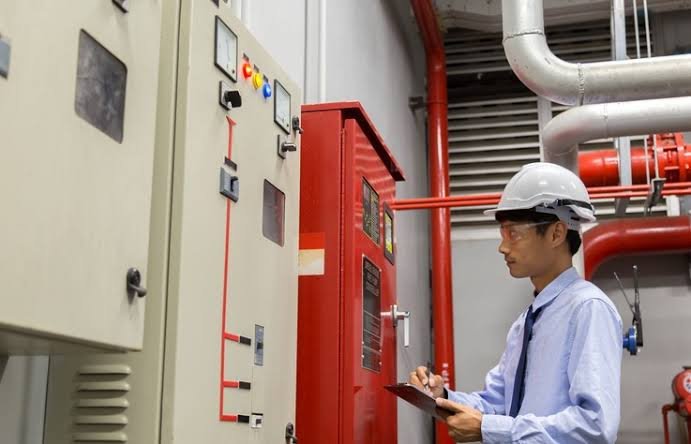
Factories play an important role in Pakistan’s economy, providing employment and producing goods for local and international markets. From textile mills and garment factories to food processing units, warehouses, and manufacturing plants, industrial workplaces often contain machinery, electrical equipment, packaging materials, chemicals, and other potential fire hazards.
A fire in a factory can put workers at risk, damage expensive equipment, interrupt production, and affect nearby businesses and communities. In busy industrial environments, flames and smoke may spread quickly if combustible materials are poorly stored or safety measures are inadequate.
This is why factory fire safety should be a priority for every business owner, factory manager, supervisor, and worker. Effective prevention begins with identifying hazards, maintaining equipment, providing appropriate fire detection systems, and ensuring that everyone understands the emergency procedures.
A suitable Fire alarm system in Pakistan can help industrial facilities provide early warning of a potential fire. However, an alarm alone cannot prevent every incident. It must be supported by safe working practices, suitable firefighting equipment, clear escape routes, regular inspections, and employee training.
This guide explains the main principles of factory fire safety, common industrial fire hazards, practical prevention measures, and the steps businesses can take to improve workplace preparedness.
1. Why Is Factory Fire Safety Important?
Factory fire safety is about protecting people first while also reducing damage to buildings, machinery, raw materials, and finished products.
Industrial facilities may operate for long hours and use equipment that produces heat, friction, sparks, or electrical loads. Some factories also handle flammable materials or generate combustible dust. Without suitable controls, these conditions can increase the likelihood or severity of a fire.
A structured fire safety programme helps businesses:
- Protect workers, contractors, visitors, and other occupants.
- Identify fire hazards before they cause an emergency.
- Reduce avoidable damage to machinery and stock.
- Support business continuity and reduce operational disruption.
- Improve employee awareness and emergency response.
- Address applicable building, workplace, and fire safety requirements.
Fire safety is not only the responsibility of management. Supervisors must enforce safe procedures, maintenance teams must address technical defects, and workers should report hazards promptly.
Every factory should have clear procedures for reporting unsafe conditions and ensuring that identified problems receive timely attention.
2. Identify Common Fire Hazards in Factories
The first step toward a safer factory is understanding where a fire could start and what might cause it to spread.
Different industries face different hazards. A textile factory may store fabric and packaging, while a metalworking facility may use hot-work equipment. A food processing plant may operate ovens, boilers, refrigeration equipment, and electrical machinery.
Common hazards include the following.
Electrical faults
Damaged wiring, loose connections, overloaded circuits, and poorly maintained electrical equipment can create fire risks. Electrical installations should be inspected and repaired by qualified personnel.
Overheated machinery
Machines that operate continuously may develop excessive heat because of poor maintenance, friction, blocked ventilation, or mechanical faults. Follow manufacturer maintenance schedules and investigate unusual smells, noise, or temperatures.
Combustible materials
Paper, cardboard, fabric, wood, plastics, and certain packaging materials can contribute to fire growth. Store them appropriately and keep them away from ignition sources.
Flammable liquids and gases
Some industrial processes involve fuels, solvents, paints, or gases. These materials require suitable storage, handling procedures, ventilation, and controls based on their specific hazards.
Hot work
Welding, cutting, grinding, and other work that produces heat or sparks may ignite nearby combustible materials. Such activities require appropriate controls and supervision.
Poor housekeeping
Accumulated waste, oily materials, dust, and blocked access routes can increase risk or make an emergency more difficult to manage.
A formal risk assessment should consider the factory’s actual operations rather than relying on a generic checklist alone.
3. Conduct Regular Factory Fire Safety Inspections
Routine inspections help identify problems before they become serious. A factory should have a documented inspection schedule that reflects its processes, building layout, equipment, and applicable requirements.
A fire safety inspection may include:
- Electrical installations and visible cable damage.
- Machinery condition and maintenance records.
- Storage of raw materials and finished products.
- Access to extinguishers and other safety equipment.
- Fire alarm indicators and maintenance records.
- Emergency doors, corridors, and stairways.
- Exit signs and emergency lighting where applicable.
- Waste handling and housekeeping practices.
- Storage and handling of hazardous materials.
The inspection should identify the problem, assign responsibility for corrective action, and set a reasonable completion date based on the level of risk.
Immediate hazards should not be left unresolved until the next scheduled inspection. If a dangerous condition is found, management should take appropriate steps to protect workers and obtain qualified assistance.
Factories can use a written checklist or digital record to track findings. Keeping these records also helps managers recognise recurring issues, such as repeated electrical faults or frequent obstruction of escape routes.
4. Install a Suitable Fire Alarm System
A fire alarm system is an important part of industrial emergency preparedness. It helps notify occupants when a fire is detected or an alarm is manually activated, allowing people to begin evacuation and follow established procedures.
Factories vary considerably in size, layout, noise levels, and fire hazards. Therefore, the alarm system should be selected according to the facility’s needs and applicable requirements.
Businesses researching a Fire alarm system in Pakistan should understand the main components and their functions.
Fire detection devices
Smoke detectors, heat detectors, and other approved detection devices identify different signs of a possible fire. The correct selection depends on the environment, the industrial process, and the system design.
For example, dust, steam, and normal industrial emissions may affect the suitability of certain detectors. A qualified designer should consider these conditions when selecting equipment.
Manual alarm points
Manual call points allow workers to raise an alarm when they discover a fire. Their locations should be easy to identify and consistent with the approved system design.
Audible and visual notification
Factories may contain loud machinery, hearing protection requirements, or large open production areas. Alarm notification must be suitable for the environment so that workers receive an effective warning.
Visual notification may be appropriate in certain areas, depending on the facility’s needs and applicable standards.
Control panels and backup power
Larger systems may use a control panel to monitor detection devices, indicate faults, and manage alarm signals. Appropriate backup power should be provided where required by the system design and relevant requirements.
Inspection and maintenance
A fire alarm is useful only if it operates as intended. Regular testing, maintenance, fault reporting, and suitable records help keep the system dependable.
The Building Code of Pakistan: Fire Safety Provisions 2016 includes requirements for fire detection and alarm systems according to the relevant occupancy provisions. Industrial facilities should obtain professional advice and confirm the applicable requirements with the relevant authority.
5. Keep Fire Extinguishers and Fire Protection Equipment Ready
Factories may require different types of fire protection equipment depending on the materials, processes, building design, and hazards present.
Fire extinguishers are designed for particular fire classes. Choosing the wrong type can be ineffective or dangerous, so equipment selection should be based on a professional assessment.
During routine checks, confirm that:
- Equipment is easy to locate and access.
- Labels and instructions are readable.
- Inspection and servicing requirements are up to date.
- Units show no obvious signs of damage.
- Workers know the purpose and limitations of the equipment.
- Equipment is not blocked by stock, machinery, or waste.
Some industrial buildings may also require additional protection, such as automatic sprinkler systems, hose reels, hydrants, or specialised suppression systems. The appropriate arrangement depends on the facility’s hazards and applicable requirements.
Fire protection equipment should be installed and maintained by qualified personnel.
Workers should never be expected to fight a fire that is spreading, producing heavy smoke, or threatening their escape route. Evacuation and emergency notification take priority when conditions are unsafe.
6. Maintain Clear Emergency Exits and Escape Routes
During a fire, workers need to leave the affected area quickly and safely. Blocked exits, locked doors, poorly marked routes, and cluttered staircases can delay evacuation.
Factories should maintain clear escape routes throughout every shift, including during deliveries, maintenance, and periods of high production.
Management should confirm that:
- Emergency exits are clearly identified where required.
- Escape routes remain free from stored goods and equipment.
- Exit doors can be opened as intended.
- Emergency lighting is maintained where installed or required.
- Workers know the available routes from their work areas.
- Assembly points are identified outside the building.
- Changes to the factory layout are reviewed for their effect on evacuation.
The required number, location, and capacity of exits depend on factors such as occupancy, travel distances, building design, and applicable codes.
Factories should not use escape routes as storage areas. Doors and safety features must not be altered in ways that prevent safe evacuation.
Workers should generally use designated stairs rather than lifts during a fire unless emergency personnel specifically direct otherwise.
If an exit becomes unusable, the emergency plan should provide clear guidance for reaching another safe route.
7. Train Workers in Fire Prevention and Emergency Response
Safety equipment cannot replace employee awareness. Workers need to understand how to recognise hazards, raise an alarm, and evacuate without unnecessary delay.
Fire safety training should be suitable for the factory’s activities and the responsibilities of different employees.
Training topics may include:
- Recognising common fire hazards.
- Reporting damaged equipment or unsafe storage.
- Understanding alarm signals.
- Identifying the nearest safe exits.
- Following evacuation instructions.
- Knowing the designated assembly point.
- Understanding when not to attempt firefighting.
- Reporting hazardous material incidents through the approved procedure.
New employees should receive appropriate safety orientation before undertaking relevant work. Refresher training should take place at suitable intervals and whenever processes or emergency arrangements change.
Factories should also conduct evacuation drills when appropriate and in line with applicable requirements. Drills help identify problems such as confusing routes, poor communication, or delays in accounting for workers.
Training should account for language and literacy needs. Instructions should be communicated in ways workers can understand, using suitable signs, demonstrations, and practical explanations.
8. Store Raw Materials and Chemicals Safely
The storage of materials has a major influence on factory fire risk. Poorly organised stock can expose combustible items to ignition sources and obstruct access to emergency equipment.
Factories should establish storage arrangements based on the properties of the materials they handle.
Combustible stock should be kept away from unsuitable heat sources and electrical equipment. Waste packaging should be removed regularly, and aisles should remain clear.
Where chemicals, fuels, solvents, or gases are used, management should follow the relevant safety data, manufacturer instructions, and applicable storage requirements. Incompatible substances should not be stored together where this could create a dangerous reaction.
Containers should be appropriately labelled and kept in suitable condition. Workers should receive relevant handling instructions and know how to report spills, leaks, or damaged containers.
Dust-producing processes may require specific controls because some combustible dusts can create serious fire or explosion hazards under certain conditions. These risks should be assessed by competent professionals rather than managed through general housekeeping alone.
Factories should never assume that a material is safe to store simply because it is commonly used in production.
9. Control Hot Work and Smoking Risks
Activities involving heat or sparks require careful management, especially in areas containing combustible materials.
Hot work may include welding, cutting, soldering, and grinding. Before such work begins, the responsible team should assess the area, remove or appropriately protect combustible materials, and apply the site’s approved hot-work procedures.
A permit-to-work process may be appropriate or required for certain operations. The process should define authorisation, precautions, supervision, and any required monitoring after the work finishes.
Workers should use suitable equipment and follow the manufacturer’s instructions. Damaged tools or equipment should be removed from service until properly assessed.
Smoking should be restricted to designated areas where permitted. Cigarettes, matches, and other ignition sources should not be used near flammable materials, fuel storage, or other hazardous locations.
Supervisors should make sure production targets never take priority over established safety procedures.
10. Prepare a Practical Factory Emergency Plan
Every factory should have an emergency plan suited to its layout, workforce, and hazards. The plan should explain what workers must do when they discover a fire or hear the alarm.
A practical plan identifies who raises the alarm, who contacts emergency services, which routes workers should use, where they assemble, and how the factory confirms that people have evacuated.
It should also cover visitors, contractors, delivery personnel, and workers who may need assistance.
Management should make the plan available to employees and display suitable emergency information in relevant areas. Supervisors need to understand their roles, but workers should not have to wait for a supervisor before leaving an unsafe area.
The plan should be reviewed after significant changes to the building, production process, staffing, or storage arrangements.
Emergency contacts should be kept accessible, and workers should know how to communicate the factory’s location and the nature of the incident.
If a fire occurs, workers should raise the alarm, follow the evacuation procedure, move to a safe place, and contact the appropriate emergency service. No one should re-enter the building until authorised by the responsible emergency personnel.
11. Follow Applicable Fire Safety Requirements in Pakistan
Factory owners and managers should understand the fire safety rules that apply to their particular facility.
The Building Code of Pakistan: Fire Safety Provisions 2016 provides technical guidance on building fire safety, including fire detection, alarm systems, and means of egress. Workplace and factory requirements may also arise under applicable provincial laws, rules, and local authority arrangements.
The details can vary according to the province, building type, industrial process, and nature of the hazards. A factory should not assume that the requirements for a small workshop are identical to those for a large manufacturing plant.
Management should consult the relevant authorities and qualified fire safety professionals to determine which requirements apply. Any necessary approvals, inspections, or records should be maintained according to the applicable rules.
A workplace inspection checklist can help organise safety reviews, but it does not replace a formal inspection or professional assessment where one is required.
Businesses should also review their insurance conditions and ensure that safety equipment is maintained as required by the relevant policy and technical guidance.
12. Build a Culture of Continuous Fire Safety
Factory fire safety works best when it becomes part of everyday operations rather than an activity carried out only before an inspection.
Managers can encourage a safety-focused workplace by asking workers to report hazards, responding promptly to concerns, and reviewing the reasons behind repeated problems.
A simple daily or weekly checklist may cover clear exits, tidy work areas, visible equipment faults, and safe storage. More technical inspections should be conducted at appropriate intervals by competent personnel.
Management should document significant findings, corrective actions, maintenance activities, and training. Responsibilities should be clearly assigned so that important tasks are not overlooked.
Workers should feel able to report unsafe conditions without being discouraged by production pressure. When hazards are identified, management should prioritise corrective action according to the level of risk.
Regular reviews help a factory adapt as machinery, production volumes, materials, and staffing change.
Conclusion
Factory fire safety begins with identifying hazards and taking practical steps to protect workers, equipment, and property. Electrical inspections, safe material storage, maintained firefighting equipment, clear escape routes, and employee training all contribute to a safer industrial environment.
A suitable fire alarm system can provide early warning, but it must be supported by an effective emergency plan, routine testing, and safe working practices.
For businesses considering a Fire alarm system in Pakistan, the right solution depends on the factory’s layout, industrial processes, occupancy, and applicable requirements. Professional assessment helps ensure that detection and notification equipment is suitable for the risks present.
The most effective approach is continuous improvement: inspect the workplace, correct identified hazards, train workers, and review safety arrangements regularly. A safer factory protects lives while supporting responsible and reliable business operations.
Frequently Asked Questions (FAQs)
1. Why is fire safety important in factories?
Fire safety helps protect workers, visitors, machinery, raw materials, and buildings. It also supports emergency preparedness, reduces avoidable hazards, and can limit disruption to production after an incident.
2. What are the common causes of factory fires?
Common risks include electrical faults, overheated machinery, combustible materials, unsafe chemical storage, hot-work activities, and poor housekeeping. The specific hazards depend on the factory’s industry and processes.
3. Is a fire alarm system required in factories in Pakistan?
The applicable requirements depend on the building’s occupancy, size, design, and relevant rules. Pakistan’s Building Code of Pakistan: Fire Safety Provisions 2016 includes provisions for industrial occupancies. Factory management should confirm the requirements for its premises with the relevant authority and a qualified professional.
4. How often should factory fire safety equipment be inspected?
Inspection and maintenance schedules depend on the equipment, manufacturer instructions, applicable standards, and local requirements. Factories should maintain records, report faults promptly, and arrange professional testing and servicing at appropriate intervals.
5. What should workers do when a factory fire alarm sounds?
Workers should follow the factory’s emergency plan, leave using a safe designated route, and go to the assigned assembly point. They should not delay evacuation to collect belongings or attempt to fight a fire that is unsafe to approach. Re-entry should occur only when authorised by the responsible emergency personnel.