
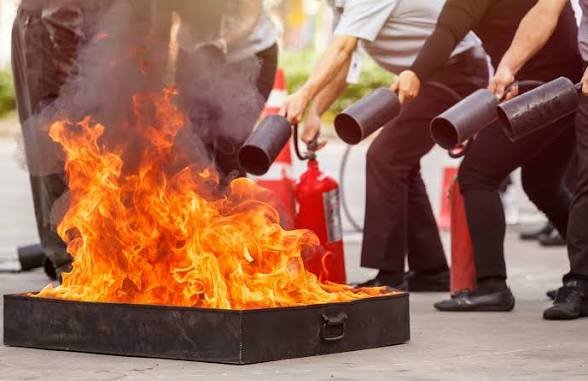
Fire can develop unexpectedly in workplaces, schools, hospitals, factories, warehouses, offices, and residential buildings. A small electrical fault, an unattended cooking appliance, or the unsafe storage of flammable materials can quickly create a dangerous situation. When people do not know how to respond, confusion and delays can make the emergency more difficult to manage.
Fire safety training helps people recognise hazards, prevent common incidents, understand warning systems, and respond appropriately when an emergency occurs. It is not simply about learning to operate a fire extinguisher. Effective training also covers evacuation routes, emergency communication, alarm procedures, reporting hazards, and knowing when to leave an area rather than attempt to control a fire.
In Pakistan, buildings and workplaces differ significantly in size, occupancy, equipment, and fire risks. A factory may need training focused on industrial processes and hazardous materials, while an office may prioritise evacuation procedures, electrical safety, and emergency communication.
This guide explains the purpose of fire safety training, the topics a good programme should cover, and how organisations can build a safer environment for employees, visitors, and the wider community.
1. What Is Fire Safety Training?
Fire safety training is an organised process that teaches people how to identify fire hazards, reduce risks, and respond safely to a fire or related emergency.
The content should reflect the building, the activities taking place, and the people who use the premises. Training for a warehouse, for example, may address material storage and vehicle charging areas, while a school programme may focus on clear evacuation instructions and helping children reach a safe assembly point.
A well-planned programme generally includes:
- Identifying common fire hazards.
- Understanding fire prevention procedures.
- Recognising alarms and warning signals.
- Learning emergency reporting procedures.
- Knowing designated exits and escape routes.
- Understanding the location and purpose of firefighting equipment.
- Practising evacuation procedures.
- Learning how to report unsafe conditions.
- Understanding personal responsibilities during an emergency.
Training should be clear, practical, and repeated when necessary. New employees need an introduction before they begin work, while existing staff may require refresher sessions when equipment, work processes, building layouts, or emergency procedures change.
2. Why Is Fire Safety Training Important?
Fire protection equipment can only contribute to safety when people understand its purpose and limitations. An alarm may sound, but occupants still need to know what it means and where to go. An extinguisher may be available, but using the wrong type or attempting to fight a spreading fire can increase danger.
Fire safety training helps organisations prepare for these situations before they occur.
Faster recognition of hazards
Trained employees are more likely to recognise damaged electrical equipment, blocked exits, unsafe material storage, and other hazards. Early reporting gives responsible personnel an opportunity to correct problems.
Better emergency response
People who understand the emergency plan are less likely to waste time deciding what to do when an alarm sounds. They can follow established procedures and move towards safety.
Improved communication
Training clarifies who should raise an alarm, contact emergency services, guide visitors, and report missing people after evacuation.
Safer use of equipment
Staff can learn the purpose of fire extinguishers, alarm points, emergency lighting, and other protective equipment without assuming that every item is suitable for every situation.
Greater organisational preparedness
Regular training helps management identify weaknesses in emergency procedures and make improvements before a real incident exposes them.
Training cannot eliminate every fire risk, but it can improve awareness and help people make safer decisions under pressure.
3. Identify Fire Hazards Before Training Begins
Training is most useful when it addresses the hazards people may actually encounter. Organisations should assess their premises and activities before deciding which topics to include.
Common hazards include:
Electrical equipment: Damaged cables, overloaded outlets, faulty appliances, and unsuitable temporary wiring may create ignition risks.
Flammable materials: Fuels, solvents, paints, gases, and certain chemicals require appropriate handling and storage.
Hot work: Welding, grinding, and cutting can produce sparks and heat that ignite nearby combustible materials.
Poor housekeeping: Cardboard, packaging, waste, and other combustible materials can contribute to fire growth or obstruct escape routes.
Cooking and heating equipment: Kitchens, heaters, boilers, and similar equipment require appropriate installation, operation, and maintenance.
Blocked exits: Stored goods, furniture, or locked emergency exits can interfere with evacuation.
After identifying the hazards, the organisation should explain relevant controls to workers. For example, employees should know how to report damaged electrical equipment and why combustible materials must be kept away from ignition sources.
A general presentation may introduce basic principles, but it should not replace a site-specific risk assessment or technical instruction where specialised hazards exist.
4. Essential Topics Every Fire Safety Training Programme Should Cover
A comprehensive programme should include the subjects employees need to understand their environment and respond safely.
Fire prevention
Teach employees how everyday actions can reduce fire risks. These may include switching off equipment according to approved procedures, keeping work areas tidy, storing materials correctly, and reporting faults.
Workers should understand that unsafe conditions must be reported rather than ignored to save time.
Alarm and emergency reporting
Employees should recognise the site’s alarm signals and know how to report a fire. The training should identify the appropriate internal contact, emergency communication method, and process for contacting local emergency services.
The procedures should be easy to understand and available to workers in languages they can follow.
Evacuation procedures
People should know which exits to use, where the assembly point is located, and how attendance will be checked after evacuation.
Training should explain why employees must not return inside to retrieve personal belongings or investigate an alarm themselves.
Fire protection equipment
Employees should learn where equipment is located, what it is intended to do, and when it should not be used. Only appropriately trained people should attempt to use an extinguisher, and only when the fire is small, the correct equipment is available, the escape route remains clear, and conditions are safe.
Special workplace hazards
Training should address risks specific to the organisation, such as gas cylinders, chemical storage, machinery, electrical rooms, or industrial processes. Technical procedures should be delivered by suitably qualified personnel.
5. The Role of Fire Alarm Systems in Emergency Training
A fire alarm system helps warn occupants that a possible fire or other designated emergency has been detected. However, installing equipment is only part of an effective safety arrangement. People must know how to respond when an alarm sounds.
A suitable fire alarm system in Pakistan should be selected, installed, inspected, and maintained according to the building’s needs, relevant standards, and applicable local requirements.
Depending on the premises, a system may include automatic detectors, manual call points, audible or visual warning devices, and a control panel. Some buildings may also have systems that communicate alarm information to designated staff or monitoring arrangements.
Fire safety training should explain:
- What the alarm sounds or signals mean.
- Which actions employees should take immediately.
- How to report a fire or suspected malfunction.
- Where designated evacuation routes are located.
- How to assist visitors without placing themselves at risk.
- Who is responsible for coordinating the evacuation.
- How to report faults or repeated false alarms.
Employees should never assume that an alarm is a drill or a false alert without following the established procedure. Treat warning signals seriously and follow the site’s emergency instructions.
Only authorised, competent personnel should inspect, test, repair, or reset technical fire alarm equipment. Training for general staff should focus on safe response rather than encouraging unqualified workers to modify the system.
6. How to Conduct Effective Fire Evacuation Drills
An evacuation drill allows people to practise the emergency plan under controlled conditions. It can reveal problems that may not be obvious during a meeting or classroom presentation.
Before organising a drill, management should establish its objectives, identify the people responsible for coordination, and ensure the exercise can be conducted safely. Participants should understand the procedures, and relevant arrangements should be made for visitors or people who need evacuation assistance.
A typical drill may involve the following steps:
- Review the plan: Confirm that routes, exits, assembly points, and communication arrangements are appropriate.
- Brief responsible staff: Make sure coordinators understand their roles and the limits of the exercise.
- Communicate appropriately: Ensure participants know how to recognise the drill signal and follow instructions.
- Practise evacuation: Participants move through designated safe routes without running or pushing.
- Account for occupants: Supervisors or designated staff check attendance at the assembly point.
- Review the outcome: Record problems and identify improvements.
A drill should never create a real hazard or obstruct emergency services. Any simulation involving smoke, specialised equipment, or other potentially hazardous conditions requires appropriate professional planning.
After the exercise, management should discuss what went well and what needs improvement. The aim is to strengthen preparedness, not to blame participants for reasonable mistakes.
7. Fire Extinguishers: Training People to Understand Their Limits
Fire extinguishers are designed for particular fire classifications. An extinguisher suitable for one type of fire may be ineffective or dangerous for another.
Training should explain the differences between available extinguisher types and how to identify their approved uses from the label. Employees should also know where equipment is located and how to report missing, damaged, or discharged units.
The PASS method is commonly used to explain the operation of many portable extinguishers:
- Pull the pin.
- Aim at the base of the fire.
- Squeeze the operating handle.
- Sweep from side to side.
However, operating procedures vary by model, and workers should follow the manufacturer’s instructions and practical training.
More importantly, employees must know when not to use an extinguisher. They should evacuate if a fire is spreading, smoke is increasing, the correct equipment is unavailable, or their exit could be threatened.
Water must not be used on live electrical equipment or burning cooking oil. Employees should never be expected to fight a fire unless their role, training, equipment, and workplace procedures specifically support that activity.
8. Who Needs Fire Safety Training?
Fire safety training is relevant to people across many types of premises, although the depth and content should reflect their responsibilities.
Office employees
Office staff may need instruction on electrical hazards, kitchenettes, alarm signals, exit routes, and reporting procedures.
Factory and warehouse workers
These employees may face additional hazards involving machinery, combustible stock, charging equipment, hot work, or hazardous substances. Their training should address the specific risks of the workplace.
School and educational staff
Teachers and support staff should understand evacuation procedures, assembly arrangements, and how to guide students without creating congestion.
Hospital and care facility staff
Healthcare environments may have occupants who cannot evacuate independently. Training must reflect approved emergency plans, patient needs, compartmentation arrangements, and the responsibilities of trained personnel.
Security staff and designated fire wardens
These staff members may have additional duties, such as raising an alarm, communicating with emergency services, or helping coordinate evacuation. Their responsibilities and limits must be clearly defined.
Visitors and contractors should also receive appropriate information about alarms, exits, restricted areas, and emergency procedures.
9. Fire Safety Training in Pakistan: Understanding Regulations
Pakistan’s Building Code of Pakistan—Fire Safety Provisions 2016 is an important national reference for fire prevention, building protection, and life safety. It addresses areas such as building use, fire protection systems, construction features, and means of escape. <Cite refs={[“turn450797search25″,”turn450797search24”]} />
The code’s application and enforcement depend on the relevant authority, local adoption, building type, and applicable rules. Organisations should therefore verify which requirements apply to their premises instead of assuming that a single checklist covers every situation.
Workplaces may also be subject to occupational safety obligations, fire service requirements, local building regulations, and industry-specific rules. The exact training, documentation, inspection, and drill requirements can differ according to the premises and the authority having jurisdiction.
Employers and building managers should consult qualified fire safety professionals and the relevant authorities to determine their obligations. They should also retain appropriate records of training sessions, attendance, drills, inspections, and corrective actions where required.
The objective is not simply to complete paperwork. The objective is to ensure that employees understand the risks and can follow the procedures intended to protect them.
10. How to Build a Fire Safety Training Plan
A useful training plan should be practical, consistent, and easy to update. It should reflect the hazards and responsibilities identified in the site’s risk assessment.
Step 1: Assess the workplace
Identify ignition sources, combustible materials, vulnerable occupants, escape routes, and existing protection systems.
Step 2: Set clear learning objectives
Decide what participants should know or be able to do after the session. Objectives might include recognising the alarm, reporting a fire, locating exits, or identifying unsafe storage.
Step 3: Select suitable training methods
Use a combination of short presentations, site walkthroughs, demonstrations, written instructions, and evacuation drills as appropriate. Practical activities should be supervised by competent personnel.
Step 4: Assign responsibilities
Identify who delivers the training, maintains records, coordinates drills, and follows up on reported hazards.
Step 5: Evaluate understanding
Ask participants to explain emergency procedures or identify routes and equipment. Attendance alone does not prove that people understand the plan.
Step 6: Review and improve
Update the programme when new hazards appear, the building layout changes, equipment is modified, or a drill reveals weaknesses.
Training should be repeated at suitable intervals and when employees take on new responsibilities. Refresher sessions help keep essential information familiar.
11. Common Fire Safety Training Mistakes to Avoid
Even organisations that provide training can overlook important details.
Using generic information only: A presentation that does not reflect the actual workplace may leave employees unsure about local procedures.
Ignoring new employees: Workers should receive suitable induction before being exposed to relevant hazards.
Treating drills as a formality: A drill is valuable only when its results are reviewed and problems corrected.
Overlooking visitors and contractors: Temporary occupants may not know the alarm signals or exit locations.
Failing to maintain equipment: Training cannot compensate for defective alarms, inaccessible extinguishers, or blocked exits.
Assuming everyone can hear or understand an alarm: Warning and communication arrangements should consider accessibility and language needs.
Expecting untrained staff to fight fires: Evacuation and personal safety must take priority over protecting property.
Avoiding these mistakes helps turn training from a routine task into a meaningful part of workplace safety.
12. A Practical Fire Safety Training Checklist
Organisations can use the following checklist to review their programmes:
- [ ] Workplace fire hazards have been assessed.
- [ ] Employees understand how to report a fire.
- [ ] Alarm signals and response procedures have been explained.
- [ ] Evacuation routes and assembly points are known.
- [ ] Emergency responsibilities are clearly assigned.
- [ ] Staff understand the purpose and limitations of fire extinguishers.
- [ ] Visitors and contractors receive appropriate safety information.
- [ ] Evacuation drills are conducted when appropriate.
- [ ] Training and drill outcomes are recorded where required.
- [ ] Problems identified during exercises are corrected.
- [ ] Alarm and firefighting equipment are inspected and maintained.
- [ ] Training is reviewed after significant changes or incidents.
This checklist is a starting point, not a substitute for a site-specific risk assessment or applicable legal requirements.
Conclusion
Fire safety training helps people understand how fires start, how hazards can be reduced, and what actions to take when an emergency occurs. It supports safer decisions, improves familiarity with alarms and evacuation routes, and helps organisations identify weaknesses in their emergency plans.
In Pakistan, employers and building managers should design training around their premises, workforce, and applicable regulations. Training should be practical, reviewed regularly, and supported by properly maintained alarms, clear exits, and suitable firefighting equipment.
The most effective fire safety programme is one in which people understand their responsibilities before an emergency happens. When employees recognise hazards, report problems, and respond according to a clear plan, they help protect themselves, their colleagues, and the wider community.
Frequently Asked Questions (FAQs)
1. What is the purpose of fire safety training?
Fire safety training teaches people to recognise fire hazards, prevent common incidents, raise alarms, follow evacuation procedures, and understand the safe use and limitations of fire protection equipment.
2. Who should receive fire safety training?
Employees, supervisors, security staff, designated fire wardens, contractors, and other people who use a workplace may need suitable training. The content should reflect their roles, the hazards present, and the site’s emergency plan.
3. How often should fire safety training be conducted?
The appropriate frequency depends on applicable requirements, workplace risks, and organisational procedures. Training should also be reviewed when hazards, equipment, responsibilities, or building layouts change. Drills and refresher sessions help reinforce understanding.
4. Why is a fire alarm system important in fire safety training?
An alarm provides a warning that helps people recognise an emergency and begin the appropriate response. Training ensures that occupants understand the signal, know where to evacuate, and follow the site’s emergency procedures.
5. Is fire extinguisher training enough to prepare for a fire?
No. Extinguisher training is only one part of fire preparedness. People also need to understand alarm procedures, evacuation routes, emergency reporting, hazard prevention, and when to leave rather than attempt to fight a fire.