
Fire safety is an essential part of protecting people, buildings, and businesses. Fires can start because of faulty electrical wiring, unsafe cooking practices, gas leaks, poor maintenance, or the improper storage of combustible materials. Without suitable precautions, a small incident can quickly become a serious emergency.
In Pakistan, fire safety is particularly important in residential apartments, commercial buildings, factories, hospitals, schools, shopping centres, and high-rise towers. These properties may contain large numbers of people and equipment, making effective fire prevention and emergency planning essential.
But how do fire safety laws actually work? Who is responsible for enforcing them? Which safety measures may be required, and what happens when a building fails to meet the applicable requirements?
Pakistan’s fire safety framework includes the Building Code of Pakistan (Fire Safety Provisions) 2016, along with relevant provincial laws, building regulations, and requirements enforced by local authorities. These provisions establish a framework for reducing fire risks, protecting occupants, and improving emergency preparedness.
Understanding these rules helps property owners and businesses make informed decisions. A suitable Fire alarm system in Pakistan, for example, may be an important component of a building’s fire protection arrangements, depending on its occupancy, design, and applicable requirements.
This guide explains how fire safety regulations work, how compliance is assessed, and what property owners can do to improve safety.
1. What Are Fire Safety Laws?
Fire safety laws are legal requirements and regulations intended to reduce fire hazards and protect people and property.
They establish standards for matters such as building design, fire detection, firefighting equipment, emergency exits, evacuation arrangements, and the maintenance of safety systems.
The precise requirements depend on the building and the jurisdiction in which it is located.
For example, a small residential property may have different obligations from a multistorey commercial building, a hospital, or a factory that stores flammable materials.
Fire safety laws generally serve four important purposes:
- Preventing fires: Reducing hazards through safe construction, electrical installations, and responsible building management.
- Providing early warning: Requiring suitable detection and alarm arrangements where applicable.
- Supporting evacuation: Ensuring occupants have appropriate means of escape.
- Improving emergency response: Providing suitable firefighting equipment, emergency plans, and maintenance procedures.
These objectives work together. Installing equipment without maintaining it, or preparing an evacuation plan while leaving exits blocked, can undermine the building’s overall safety.
2. Understanding the Building Code of Pakistan
The Building Code of Pakistan (Fire Safety Provisions) 2016 is an important national reference for fire prevention, life safety, and fire protection in buildings and structures.
Developed through the Pakistan Engineering Council (PEC) in collaboration with the National Disaster Management Authority (NDMA), the provisions were introduced to provide a more consistent framework for fire safety across different types of properties. <Cite refs={[“turn147509search18″,”turn147509search4”]} />
The code addresses several areas, including:
- Building occupancy and fire risk.
- Fire detection and alarm systems.
- Fire extinguishers and other firefighting provisions.
- Emergency exits and means of escape.
- Fire protection features and building services.
- Inspection, maintenance, and emergency preparedness.
The code is an important starting point, but understanding its legal application requires care. Its adoption and enforcement depend on the applicable notifications, relevant laws, and the authority having jurisdiction over a particular building.
Property owners should therefore confirm the requirements that apply to their location and property rather than assuming that every provision is enforced identically in every city.
3. Who Enforces Fire Safety Laws in Pakistan?
Fire safety enforcement involves authorities whose responsibilities may differ by jurisdiction and type of building.
Building Control and Development Authorities
Building control agencies and development authorities may assess fire safety during building approvals, construction, alterations, and other regulatory processes.
Their responsibilities can include reviewing building plans, checking compliance with applicable regulations, and requiring corrective measures where deficiencies are identified.
The relevant authority depends on the building’s location. Property owners should confirm the appropriate office before beginning construction or making significant changes to an existing property.
Civil Defence Authorities
Civil Defence authorities may inspect fire safety arrangements in relevant industrial, commercial, and high-rise premises.
In Punjab, Civil Defence identifies measures such as fire detection and alarm systems, firefighting equipment, emergency fire control rooms, fire safety plans, and evacuation arrangements among the areas considered during inspections. <Cite refs={[“turn147509search6″,”turn147509search0”]} />
The scope of an inspection and the consequences of non-compliance depend on the applicable legal provisions and the authority’s powers.
Emergency Services
Emergency services play an important role in responding to fires, rescuing people, and supporting emergency preparedness.
Their operational role is different from the building approval and regulatory functions performed by relevant authorities. Owners should identify the appropriate local emergency contact and follow official guidance when preparing an emergency plan.
Other Relevant Authorities
Additional agencies may be involved depending on the building’s location, use, or industry. These can include municipal administrations and other bodies responsible for particular approvals or safety requirements.
The most effective approach is to establish which authorities have jurisdiction over the property and maintain contact with them throughout the building’s operation.
4. How Fire Safety Compliance Works
Fire safety compliance is not simply a matter of purchasing equipment. It involves understanding the applicable requirements, installing appropriate systems, maintaining them, and addressing problems identified through inspections.
Although the exact process varies, property owners can generally approach compliance in the following way.
Step 1: Identify Applicable Requirements
Determine which building codes, provincial regulations, local bylaws, and approval conditions apply to the property.
Relevant factors include the building’s occupancy, height, layout, number of occupants, and the activities conducted inside it.
Step 2: Assess Fire Risks
A fire risk assessment helps identify potential ignition sources, combustible materials, evacuation difficulties, and weaknesses in existing protection measures.
It should consider electrical equipment, kitchens, storage areas, generators, escape routes, and other hazards relevant to the property.
Step 3: Develop a Safety Plan
Use the assessment to determine which protective measures are needed.
These may include fire detection, alarms, firefighting equipment, emergency lighting, protected escape routes, and evacuation procedures, depending on the applicable requirements.
Step 4: Install Suitable Equipment
Required equipment should be selected and installed according to the building’s design, relevant standards, and manufacturer instructions.
Qualified professionals should handle technical work such as fire alarm installation, electrical modifications, and other specialist systems.
Step 5: Arrange Testing and Maintenance
Equipment must remain operational after installation. Testing, servicing, inspections, and repairs should follow the applicable requirements and manufacturer’s guidance.
Step 6: Keep Records and Address Deficiencies
Maintain relevant approvals, inspection reports, test records, maintenance documents, and corrective-action records.
If an inspection identifies a problem, establish who will resolve it and when. Serious hazards should receive immediate attention.
5. Why Fire Alarm Systems Matter
Fire detection and alarm systems help warn occupants when connected devices identify conditions indicating a possible fire.
Depending on the design, a system may include smoke detectors, heat detectors, manual call points, a control panel, audible sounders, visual indicators, and backup power.
When a detector identifies a potential fire, it sends a signal to the control panel. The system then activates the relevant warning devices according to its configuration.
In buildings where alarms are required, the system must be appropriate for the building’s use, size, layout, and risks.
When evaluating a Fire alarm system in Pakistan, building owners should consider:
- Whether the proposed system satisfies applicable requirements.
- Whether detection coverage is suitable for the building.
- Whether occupants can hear or see warnings where necessary.
- Whether backup power and fault monitoring are provided as required.
- Whether the equipment is compatible with other installed systems.
- Whether professional installation, testing, and maintenance are available.
An alarm system cannot prevent every fire or replace safe building design. Its primary role is to provide warning so that occupants can respond promptly.
Owners should also ensure that staff and residents know what the alarm means and how to follow the building’s evacuation procedure.
6. What Other Fire Safety Measures May Be Required?
A complete fire safety strategy often involves several systems and building features working together.
Fire Extinguishers
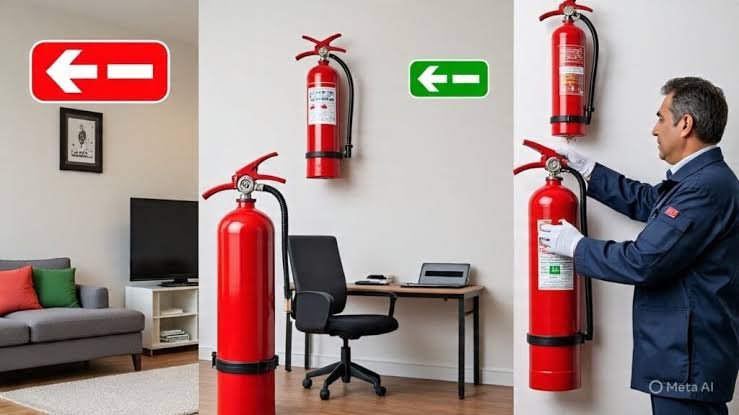
Extinguishers must be suitable for the types of fire hazards present. They should be correctly positioned, accessible, and maintained according to applicable requirements.
People should receive appropriate instruction before attempting to use them. Evacuation takes priority whenever firefighting would create a risk.
Sprinklers and Firefighting Systems
Depending on the building, required provisions may include automatic sprinklers, fire pumps, hydrants, hose reels, or other suppression equipment.
These systems must be designed for the property and maintained in working condition.
Emergency Exits
Escape routes should be suitable for the building’s occupancy and design. Corridors, stairways, and designated exits must remain accessible and free from obstructions.
Emergency Lighting and Signs
Where required, emergency lighting and exit signs help occupants identify escape routes if normal lighting fails or visibility is reduced.
Fire Safety Plans and Drills
Buildings may need written emergency arrangements, staff training, and evacuation drills according to the applicable rules.
The exact combination of measures depends on the property. Owners should obtain a building-specific assessment rather than relying on a generic equipment list.
7. What Responsibilities Do Building Owners and Businesses Have?
The legal duties of an owner, tenant, employer, or building manager depend on the relevant law, lease arrangements, and the person’s role in operating the property.
Nevertheless, responsible building management includes several important practices.
Maintain Safety Equipment
Fire alarms, extinguishers, and other installed systems should be inspected and maintained according to the relevant schedule.
Faults should be reported and corrected promptly. Equipment should never be disabled simply to avoid unwanted alarms.
Keep Escape Routes Clear
Stored goods, furniture, waste, and other obstructions can delay evacuation. Designated routes should remain usable.
Address Electrical Hazards
Damaged cables, overloaded circuits, loose connections, and faulty appliances can increase fire risk. Arrange inspections and repairs through qualified professionals.
Train Relevant Staff
Employees should understand how to raise the alarm, report hazards, follow evacuation instructions, and assist with emergency procedures within their assigned responsibilities.
Maintain Documentation
Keep records of relevant inspections, maintenance work, equipment tests, training, approvals, and identified safety deficiencies.
These records help building management monitor safety and demonstrate the steps taken to address problems.
8. What Happens if a Building Does Not Comply?
The consequences of non-compliance depend on the applicable legal provisions, the type of deficiency, the authority involved, and the circumstances of the case.
Possible consequences under relevant laws may include instructions to correct deficiencies, additional inspections, restrictions on certain activities, difficulties obtaining required approvals, or other enforcement action where authorized.
Serious hazards can also expose occupants to avoidable danger and create significant property and business losses.
It is important not to assume that every violation results in the same penalty across Pakistan. The responsible authority and the specific law determine what action is available.
If a building receives an inspection report or notice, management should review it carefully, obtain professional advice where necessary, and meet the applicable deadlines.
Correcting the underlying safety problem is more important than treating the inspection as a paperwork exercise.
9. Do Fire Safety Rules Apply to Existing Buildings?
Existing buildings should not automatically be assumed to be exempt from fire safety requirements.
The Building Code of Pakistan (Fire Safety Provisions) 2016 includes provisions concerning the application of fire safety measures to buildings and structures. However, the precise obligations for an existing property depend on the applicable rules, adoption arrangements, building history, alterations, and decisions of the relevant authority. <Cite refs={[“turn147509search18″,”turn147509search0”]} />
Owners of older properties should consider whether changes in occupancy, renovations, additional floors, or increased electrical demand have introduced new hazards.
A professional assessment can identify weaknesses in escape routes, electrical installations, fire detection, and firefighting provisions.
Where improvements are required, prioritize immediate life safety concerns and mandatory measures. Seek clarification from the relevant authority if the property’s legal obligations are uncertain.
10. How Can Businesses Prepare for Fire Safety Inspections?
Preparation should begin well before an inspection date.
First, review the building’s existing safety arrangements and confirm the requirements that apply. Next, check the condition of installed equipment and make sure the relevant records are available.
A useful preparation checklist includes:
- Confirm applicable approvals and compliance requirements.
- Review fire alarm and detection system condition.
- Check extinguishers and other firefighting equipment.
- Inspect designated exits, corridors, and stairways.
- Review emergency lighting and signage where required.
- Check evacuation plans and staff instructions.
- Arrange outstanding maintenance and repairs.
- Keep inspection and testing records organized.
- Assign responsibility for correcting identified deficiencies.
A checklist is helpful for internal preparation, but it does not guarantee compliance. The applicable code and the responsible authority determine whether the building meets the requirements.
11. Common Mistakes to Avoid
Several misunderstandings can weaken fire safety compliance.
Assuming one rule applies to every building: Requirements vary by building type, occupancy, design, and jurisdiction.
Buying equipment before assessing the risks: A product may be unsuitable for the property or fail to satisfy the relevant requirements.
Ignoring maintenance: Equipment that is installed but defective may not provide the intended protection.
Blocking emergency exits: An otherwise well-equipped building can remain dangerous if occupants cannot escape.
Treating documentation as a substitute for safety: Records are important, but they do not compensate for defective equipment or unsafe conditions.
Waiting until an inspection to act: Routine reviews and prompt repairs are more effective than last-minute preparation.
Avoiding these mistakes helps building owners develop a more reliable safety programme.
12. A Practical Fire Safety Compliance Checklist
Use this checklist as a starting point for reviewing a property:
- [ ] Identify the relevant building codes and local regulations.
- [ ] Confirm which authority has jurisdiction over the building.
- [ ] Arrange a suitable fire risk assessment.
- [ ] Verify the required fire detection and alarm arrangements.
- [ ] Check extinguishers and other required firefighting systems.
- [ ] Keep emergency exits and escape routes clear.
- [ ] Review emergency lighting and exit signs where applicable.
- [ ] Prepare and communicate an evacuation plan.
- [ ] Arrange equipment testing and maintenance.
- [ ] Train relevant staff and conduct drills where required.
- [ ] Retain approvals, inspection reports, and maintenance records.
- [ ] Correct identified deficiencies promptly.
The checklist should be adapted to the building and used alongside professional advice and official requirements.
Conclusion
Fire safety laws in Pakistan work through a combination of building-code provisions, relevant provincial and local regulations, inspections, and responsibilities assigned to building owners and operators.
The Building Code of Pakistan (Fire Safety Provisions) 2016 provides an important national reference, while the applicable authority determines how requirements are implemented for a particular property.
Compliance involves more than buying extinguishers or installing alarms. It requires appropriate detection, firefighting arrangements, safe escape routes, regular maintenance, emergency planning, and accurate records.
For homes, offices, factories, and high-rise buildings, a properly selected fire alarm system can form an important part of a wider safety strategy. Its effectiveness depends on correct design, installation, testing, and occupant preparedness.
The most responsible approach is to understand the rules that apply, identify risks early, and maintain the building’s safety arrangements throughout its use. Fire safety is both a regulatory concern and a practical commitment to protecting lives and property.
Frequently Asked Questions (FAQs)
1. What is the main fire safety code in Pakistan?
The Building Code of Pakistan (Fire Safety Provisions) 2016 is an important national reference for fire prevention, life safety, and fire protection in buildings. Other provincial laws and local authority requirements may also apply.
2. Who is responsible for enforcing fire safety laws in Pakistan?
Depending on the location and building, enforcement may involve building control authorities, development authorities, municipal administrations, Civil Defence, and other legally authorized bodies. The responsible authority should be confirmed for the specific property.
3. Is a fire alarm system mandatory for every building in Pakistan?
Requirements depend on the applicable code, building use, occupancy, design, and local regulations. Owners should confirm which detection and alarm arrangements are required for their particular building.
4. Can an existing building be required to improve its fire safety?
Yes, existing buildings may be subject to applicable fire safety requirements and directions from the responsible authority. The specific obligations depend on the relevant laws, building circumstances, and local enforcement arrangements.
5. How can a business check whether it meets fire safety requirements?
A business should identify the applicable regulations, arrange a fire risk assessment, inspect required equipment and escape routes, maintain relevant records, and correct deficiencies. The responsible authority or a qualified fire safety professional can help clarify building-specific obligations.