
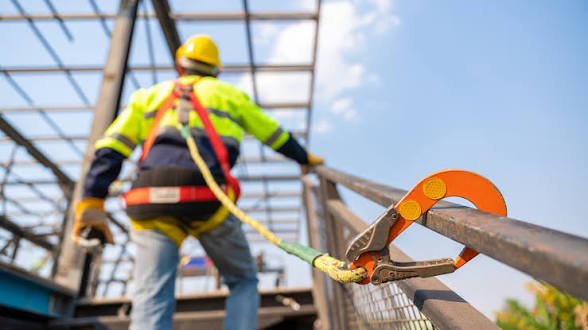
Construction sites are busy environments where workers use electrical equipment, operate machinery, store building materials, and perform tasks that may generate heat or sparks. Although these activities are necessary to complete a project, they can also create fire hazards if proper precautions are not taken.
A small fire can disrupt construction work, damage expensive equipment, destroy materials, and put workers and nearby communities at risk. The danger may increase when a building is incomplete, temporary electrical systems are in use, or permanent fire protection equipment has not yet been installed.
This is why fire safety for construction sites should be an essential part of every construction project’s safety plan. It should cover fire prevention, safe material storage, emergency communication, evacuation routes, worker training, and suitable firefighting equipment.
In Pakistan, contractors, developers, site managers, and building owners should consider the fire risks associated with each stage of construction. They should also identify applicable building codes, local requirements, and project-specific safety obligations.
This article explains how to develop a practical construction site fire safety plan, what precautions to prioritise, and how a suitable fire alarm system in Pakistan can support a safer working environment.
1. Understand the Importance of Construction Site Fire Safety
Construction sites change constantly. Walls, floors, staircases, electrical installations, and access routes may be incomplete one week and different the next. These changes can make fire prevention and emergency planning more challenging than in a finished building.
Common fire hazards include temporary electrical wiring, welding operations, combustible packaging, flammable liquids, fuel storage, heating equipment, and careless smoking. Poor housekeeping can allow these hazards to combine and increase the likelihood of a fire.
A construction site fire safety plan helps identify these risks before they cause an emergency. It also explains who is responsible for preventing fires and what workers should do if a fire occurs.
An effective plan can help organisations:
- Reduce the likelihood of accidental fires.
- Protect workers, contractors, and visitors.
- Keep emergency exits and access routes clear.
- Reduce damage to construction materials and equipment.
- Improve communication during emergencies.
- Support compliance with applicable safety requirements.
- Reduce avoidable project delays and financial losses.
Fire safety should be considered from the beginning of a project and reviewed throughout construction, renovation, and demolition.
2. Identify Potential Fire Hazards Before Work Begins
The first step towards better fire safety is understanding what could cause a fire at the site.
A risk assessment should consider the activities being performed, the materials present, the condition of temporary installations, and the number of people working in each area.
For example, a site carrying out welding work may have different immediate risks from one storing large quantities of packaging or installing temporary electrical equipment.
Site managers should inspect the workplace and identify:
- Electrical cables, temporary distribution boards, and power tools.
- Welding, cutting, grinding, and other spark-producing activities.
- Fuel, gas cylinders, paints, solvents, and other combustible or flammable materials.
- Timber, cardboard, plastic packaging, and construction waste.
- Temporary offices, storage rooms, and worker facilities.
- Incomplete staircases, blocked corridors, and restricted exits.
- Areas where several hazardous activities take place close together.
The assessment should be recorded and shared with the people responsible for the relevant work.
Whenever a new construction phase begins, managers should review whether existing precautions remain suitable. A plan prepared during excavation may not be sufficient once electrical installations, interior finishing, or hot work begins.
3. Develop a Clear Fire Prevention Plan
A fire prevention plan explains how the site will reduce ignition risks and control combustible materials.
It should assign responsibilities rather than simply list general safety rules. Workers need to know who checks equipment, who authorises high-risk activities, who reports hazards, and who coordinates an evacuation.
A practical plan should cover housekeeping, electrical safety, storage arrangements, smoking restrictions, hot work, emergency communication, and routine inspections.
Site managers should also make sure contractors understand the site’s fire safety rules before starting work. Different teams may use different equipment and materials, so communication between contractors is important.
Keep the plan accessible to relevant staff and review it when working conditions change. Written procedures are useful only when they reflect actual site conditions and are followed consistently.
4. Control Hot Work and Spark-Producing Activities
Welding, metal cutting, grinding, and similar activities can produce sparks or heat capable of igniting nearby combustible materials.
These activities deserve special attention because they may take place near insulation, timber, packaging, paint, temporary partitions, or other materials that can catch fire.
Before hot work begins, a competent person should assess the area and ensure that appropriate precautions are in place. Depending on the work and site requirements, these precautions may include a formal hot-work permit, removal or protection of combustible materials, suitable firefighting equipment, and a designated fire watch.
Important precautions include:
- Authorising hot work through the site’s approved procedure.
- Checking the work area and nearby spaces for fire hazards.
- Keeping combustible waste away from sparks and hot surfaces.
- Using suitable barriers or protective coverings where necessary.
- Ensuring that required firefighting equipment is available.
- Assigning trained personnel to monitor the area when required.
- Inspecting the area after the work ends, for the period specified by the site’s procedure.
A fire watch should not be treated as a substitute for removing hazards or following the permit process. Work should stop if the required safety conditions cannot be maintained.
5. Maintain Electrical Safety on the Construction Site
Temporary electrical installations are common during construction. They provide power for lighting, tools, pumps, machinery, and other equipment. However, damaged cables, overloaded circuits, poor connections, and unsuitable equipment can create fire and electric shock hazards.
Electrical installations should be designed, installed, and maintained by competent personnel. Site workers should not attempt repairs beyond their training or authority.
Good electrical safety practices include:
- Inspecting cables and equipment regularly.
- Removing damaged electrical equipment from service.
- Using appropriate protection against overloads and faults.
- Keeping electrical equipment suitable for the working environment.
- Protecting cables from vehicles, sharp edges, water, and physical damage.
- Avoiding improvised connections and unsafe extensions.
- Keeping combustible materials away from electrical equipment that may become hot.
Generators and other powered equipment should be installed and operated according to manufacturer instructions and applicable safety requirements. Fuel storage and refuelling should be managed separately from ignition sources.
If a worker notices burning smells, unusual heating, visible damage, or repeated electrical faults, the problem should be reported immediately and the affected equipment isolated by an authorised person.
6. Store Flammable and Combustible Materials Properly
Construction projects often require paints, adhesives, solvents, fuels, gas cylinders, timber, plastic products, and packaging materials. Poor storage can increase the likelihood of a fire spreading.
Storage arrangements should reflect the properties of the materials involved and the applicable safety requirements.
Flammable liquids should be kept in suitable, properly labelled containers and designated storage areas. Keep them away from ignition sources and use appropriate ventilation and spill-control arrangements where required.
Combustible materials should be organised so that they do not obstruct exits, staircases, access routes, electrical installations, or firefighting equipment.
Managers should also:
- Separate incompatible materials where necessary.
- Follow supplier instructions for handling and storage.
- Keep gas cylinders secured and managed by trained personnel.
- Remove unnecessary packaging and waste promptly.
- Prevent unauthorised access to hazardous storage areas.
- Maintain access for emergency responders.
Do not allow storage arrangements to develop informally as work progresses. Regular inspections help ensure that materials remain in their designated locations.
7. Keep Escape Routes and Emergency Access Clear
An emergency plan is only useful if people can leave the site safely. Construction work can create temporary obstructions, so escape routes must be reviewed regularly.
Identify appropriate evacuation routes from occupied work areas, temporary offices, basements, upper floors, and other relevant locations. Consider the fact that routes may change as the structure develops.
Where required, provide suitable signs, emergency lighting, protected stairways, and alternative escape routes. The arrangements should be assessed by competent professionals in accordance with the building’s design and applicable requirements.
Check that:
- Corridors and access routes are free from stored materials.
- Exit doors can be used as intended.
- Temporary barriers do not obstruct evacuation.
- Escape routes are communicated to workers and visitors.
- Emergency exits remain suitable for current site conditions.
- Emergency vehicle access is maintained.
Workers should know where to assemble after evacuation. The assembly point should be in a designated safe location away from immediate hazards and should not obstruct emergency responders.
Because construction sites change, evacuation arrangements must be updated whenever work affects exits, access routes, or the location of occupied areas.
8. Choose Suitable Fire Detection and Alarm Arrangements
Early warning can give people more time to respond to a fire. However, construction sites present special challenges because dust, noise, temporary partitions, changing layouts, and incomplete building systems may affect detection and communication.
A fire alarm arrangement should be selected according to the site’s risk assessment, size, layout, occupancy, and stage of construction. Depending on the circumstances, suitable arrangements may involve temporary alarm devices, manual call points, sounders, or a more comprehensive detection and alarm system.
When evaluating a fire alarm system in Pakistan, construction managers should consider the following:
Suitability: The equipment should be appropriate for the site environment and expected hazards.
Coverage: Workers in relevant areas should be able to receive the warning, including areas where machinery creates background noise.
Reliability: Equipment should be installed, inspected, and maintained by competent personnel.
Accessibility: Workers should know how to raise the alarm and report an emergency.
Changing conditions: The system and its coverage should be reviewed as the building layout and work activities change.
Emergency coordination: Alarm signals and instructions should be understood by employees, contractors, and visitors.
A fire alarm system does not replace fire prevention or safe evacuation arrangements. It should be part of a wider strategy that includes training, inspections, firefighting equipment, and emergency procedures.
9. Provide Suitable Firefighting Equipment
Appropriate firefighting equipment should be available in locations determined by the site’s risk assessment and applicable requirements.
Portable fire extinguishers may be suitable for certain early-stage fires, but the correct type depends on the materials involved and the potential hazards. For example, electrical equipment, flammable liquids, and ordinary combustible materials may require different approaches.
Equipment should be selected and positioned by competent personnel. It should remain accessible, clearly identified, inspected, and maintained according to the manufacturer’s instructions and applicable requirements.
Workers should understand that their priority during a fire is personal safety. Only people who have received appropriate training should consider using an extinguisher, and only when the fire is small, an appropriate extinguisher is available, and a safe escape route remains open.
Workers should evacuate immediately if the fire grows, smoke spreads, the correct equipment is unavailable, or there is any doubt about safety.
Do not attempt to fight a fire involving hazardous materials or significant electrical or fuel hazards without appropriate training and emergency arrangements. Raise the alarm, move to safety, and contact the relevant emergency services.
10. Train Workers and Contractors
Even a well-designed safety plan can fail if workers do not understand it. Training should therefore be provided before people begin work and whenever a significant change affects site safety.
Training should cover the site’s fire hazards, reporting procedures, alarm signals, escape routes, assembly point, and responsibilities during an emergency.
Workers should know:
- How to report a fire or suspected fire.
- How to activate the site’s alarm arrangement.
- Which routes to use during evacuation.
- Where to assemble after leaving the site.
- How supervisors account for workers and visitors.
- Why lifts, restricted areas, and unauthorised routes must not be used contrary to the evacuation procedure.
- Why returning to collect belongings is unsafe.
Training should be delivered in language and formats workers can understand. On diverse construction sites in Pakistan, it may be useful to provide explanations in Urdu or other languages used by the workforce.
Contractors, temporary workers, delivery personnel, and visitors should also receive appropriate safety information. Regular drills can help identify weaknesses in communication, evacuation arrangements, and accountability procedures.
11. Inspect the Site and Keep Records
Routine inspections help identify hazards before they develop into emergencies.
A site supervisor or other competent person should inspect relevant areas according to a planned schedule and whenever circumstances require an additional check.
Inspections may cover electrical installations, hot-work activities, storage areas, escape routes, alarm equipment, extinguishers, temporary buildings, and emergency vehicle access.
Record significant findings and assign responsibility for corrective action. A problem should not be considered resolved until the required action has been completed and, where necessary, verified.
Useful records may include:
- Fire risk assessments.
- Hot-work permits and related checks.
- Equipment inspection and maintenance records.
- Worker training attendance.
- Emergency drill findings.
- Reports of fire hazards and corrective actions.
- Updated evacuation plans.
Documentation helps managers track recurring problems and demonstrate that safety measures are being managed. It should reflect real inspections and actions rather than becoming a paperwork exercise.
12. Consider Fire Safety Requirements in Pakistan
Construction projects in Pakistan should be assessed against applicable building regulations, fire safety provisions, local authority requirements, and other relevant legal obligations.
The Building Code of Pakistan (Fire Safety Provisions—2016) is an important reference for fire and life safety considerations. Its relevance to a particular project depends on the building, the stage of work, and the applicable approval and enforcement arrangements.
Developers and contractors should consult the relevant authority and competent professionals to determine which requirements apply. International guidance can help explain general safety practices, but foreign regulations should not automatically be treated as Pakistani legal requirements.
Before work begins, confirm that the project has appropriate safety responsibilities, risk assessments, emergency arrangements, and inspection procedures. Where required, coordinate with the relevant building control and fire authorities.
Fire safety planning should continue throughout construction. Temporary arrangements may be necessary before permanent systems and escape routes are fully operational.
13. Review the Plan as Construction Progresses
A construction site’s hazards are not static. Excavation, structural work, electrical installation, finishing, and final occupancy each create different safety considerations.
A fire safety plan should therefore be reviewed at key project milestones and whenever a change affects hazards or emergency arrangements.
For example, the installation of temporary partitions may alter escape routes. New electrical equipment may introduce additional ignition risks. Increased storage may require changes to housekeeping and material management.
The review should ask whether existing alarms can still be heard, escape routes remain usable, firefighting equipment is accessible, and workers understand the current arrangements.
The person responsible for site safety should communicate updates promptly to contractors and workers. Outdated instructions should be removed or replaced to prevent confusion.
Before a building is occupied, the project team should also ensure that permanent fire protection systems and evacuation arrangements have been appropriately completed, inspected, tested, and approved where required.
Conclusion
A complete construction safety plan must address fire prevention as well as emergency response. Electrical safety, controlled hot work, proper storage, clear escape routes, suitable alarm arrangements, maintained firefighting equipment, and effective worker training all contribute to reducing risk.
In Pakistan, contractors and developers should assess their projects against applicable fire safety requirements and review arrangements as the construction site changes. A suitable fire alarm system in Pakistan can support early warning, but it must work alongside practical evacuation procedures and consistent site management.
Fire safety is a shared responsibility. When managers, contractors, and workers understand their roles and take hazards seriously, they can create a safer working environment, protect valuable resources, and improve emergency preparedness throughout the construction process.
Frequently Asked Questions (FAQs)
1. Why is fire safety important at construction sites?
Construction sites often contain temporary electrical systems, combustible materials, fuel, and activities that produce heat or sparks. Fire safety measures help reduce ignition risks, protect workers, limit property damage, and support an organised emergency response.
2. What should a construction site fire safety plan include?
A plan should cover fire risk assessments, hot-work controls, electrical safety, material storage, emergency communication, evacuation routes, assembly points, firefighting equipment, worker training, inspections, and assigned responsibilities.
3. Is a fire alarm system necessary at a construction site?
The appropriate alarm arrangements depend on the site’s risk assessment, size, occupancy, construction stage, and applicable requirements. Effective warning and communication arrangements should be established so workers can recognise an emergency and respond promptly.
4. How often should construction site fire safety inspections take place?
Inspections should follow a planned schedule based on site risks and applicable requirements. Additional checks may be necessary after changes in work activities, storage arrangements, electrical installations, or evacuation routes, and whenever a hazard is reported.
5. Who is responsible for fire safety on a construction site?
Responsibility should be clearly assigned within the project’s management and contractor arrangements. Site managers, safety personnel, supervisors, contractors, and workers each have roles in following procedures, reporting hazards, maintaining equipment, and responding appropriately to emergencies.