
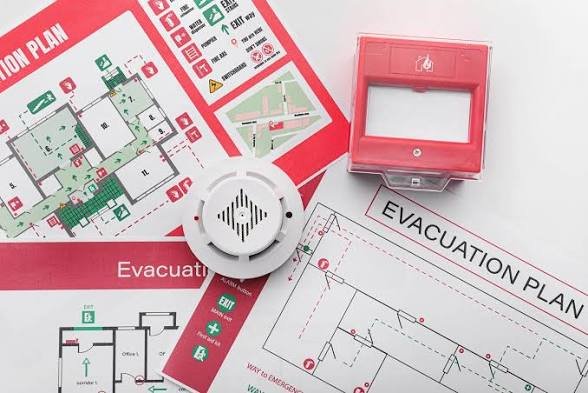
Renting a home can make life easier. Tenants can move into an apartment, house, portion, or other residential property without having to manage every part of the building themselves. However, renting does not mean fire safety can be ignored.
A renter may not own the building, but they still live with its fire risks every day.
Blocked exits, faulty electrical equipment, missing smoke alarms, poorly maintained fire doors, unsafe cooking practices, cluttered corridors, and unclear emergency arrangements can all create concerns. Some problems may be the responsibility of the property owner or building management, while others depend on the tenant’s own habits.
The important point is that fire safety is a shared responsibility.
In Pakistan, the Building Code of Pakistan Fire Safety Provisions 2016 addresses fire safety in new and existing buildings and includes provisions concerning construction, means of egress, fire protection, and life safety.
For renters, understanding basic fire safety can help them recognize problems, report hazards, prepare for emergencies, and make safer decisions in their homes.
Why Fire Safety Matters for Renters
One of the biggest mistakes renters can make is assuming that fire safety is entirely the landlord’s responsibility.
A landlord or building manager may be responsible for building systems and maintenance, but tenants also influence fire risk through their daily activities.
For example, a tenant can:
- Keep escape routes clear.
- Avoid damaging or blocking fire doors.
- Report electrical problems.
- Avoid unsafe storage.
- Keep children away from hazardous equipment.
- Learn the building’s emergency exits.
- Take alarms seriously.
- Report missing or damaged safety equipment.
- Follow the building’s emergency procedures.
At the same time, renters should not attempt technical repairs to fire alarms, electrical systems, gas equipment, or other specialized systems themselves.
When a problem requires technical work, it should be reported to the landlord, building management, or an appropriately qualified professional.
The Real Cost of Ignoring Fire Safety
The cost of ignoring fire safety is much greater than the inconvenience of reporting a faulty alarm or clearing an obstructed doorway.
A fire can cause injuries, property damage, loss of belongings, temporary displacement, and disruption to daily life.
For renters, the consequences can be particularly difficult because they may lose access to a home containing personal documents, clothing, electronics, furniture, school materials, and other important belongings.
There can also be emotional and financial consequences.
Preventing every possible fire is impossible, but reducing avoidable risks and preparing for emergencies can make a meaningful difference.
Renters Should Check Their Escape Routes
One of the simplest things a renter can do is learn how to leave the building safely.
When moving into a new rental property, occupants should become familiar with:
- The main exit
- Alternative exits where provided
- Stairways
- Emergency exit signs
- Assembly arrangements
- Fire alarm sounds
- The location of fire equipment
- Any building-specific emergency instructions
The Building Code of Pakistan Fire Safety Provisions 2016 includes requirements concerning means of egress and the arrangement of buildings for safe movement toward an exit.
A renter should not wait until an emergency to discover that a normally familiar route is blocked or unavailable.
Never Block an Emergency Exit
Tenants sometimes use corridors, stairways, balconies, or other areas for temporary storage.
This can create a serious problem if those areas form part of an escape route.
Items such as boxes, furniture, bicycles, luggage, household materials, or other objects can make movement more difficult.
If a renter notices an obstruction in a shared emergency route, it should be reported to the landlord or building management rather than simply ignored.
Tenants should also avoid creating their own obstructions.
A small amount of storage may seem harmless during normal conditions, but an emergency can change the situation completely.
Understand the Building’s Fire Alarm
A renter should know what the building’s fire alarm sounds or looks like.
This is particularly important in apartments and multi-unit buildings where an alarm may be activated somewhere else in the building.
Residents should treat a genuine alarm seriously and follow the property’s emergency procedures.
Modern fire alarm systems can include control panels, detectors, manual initiating devices, notification appliances, power supplies, and other components. NFPA 72 covers fire alarm and signaling systems and addresses installation, inspection, testing, and maintenance.
A fire alarm system in Pakistan should therefore be considered part of a larger fire and life-safety arrangement rather than simply a device mounted on a wall.
Renters should not disconnect, cover, tamper with, or modify alarm equipment.
If an alarm repeatedly produces faults or nuisance signals, the issue should be reported to the responsible building management or qualified service provider.
Do Not Ignore Missing Smoke Alarms
Smoke alarms can provide early warning of a fire.
If a rental property is supposed to have smoke alarms but a device is missing, damaged, disconnected, or producing an unexplained warning, the renter should report it promptly.
Tenants should not remove batteries or disable alarms simply because the alarm is inconvenient.
If an alarm repeatedly activates without an obvious reason, the appropriate response is to have the problem investigated rather than permanently disabling the device.
The exact alarm requirements depend on the building type and applicable regulations.
Electrical Safety Is Also a Renter’s Concern
Electrical equipment is an important part of everyday life, but damaged or poorly maintained electrical equipment can contribute to fire risk.
Renters should pay attention to obvious warning signs such as:
- Damaged power cords
- Broken electrical outlets
- Unusual overheating
- Sparks
- Burning smells
- Damaged plugs
- Unusual electrical behavior
A tenant should report suspected electrical problems instead of attempting repairs.
NFPA 70, the National Electrical Code, provides requirements for electrical design and installation intended to protect people and property from electrical hazards.
Pakistan has its own applicable requirements and electrical practices, so renters should not assume that an international standard alone determines what is legally required in their particular property.
The practical lesson is simple: visible electrical problems should not be ignored.
Cooking Requires Extra Attention
Cooking is a normal household activity, but it can introduce additional fire hazards.
Renters should keep cooking areas organized and avoid leaving cooking activities unattended.
Kitchen areas should also be kept clear of unnecessary combustible materials.
If a cooking-related fire occurs, occupants should prioritize getting themselves and others to safety and following appropriate emergency procedures rather than taking unnecessary risks.
Children should not be expected to manage a kitchen fire or operate fire protection equipment without appropriate adult supervision and training.
Be Careful With Heating Equipment
During colder months, portable heaters and other heating equipment may become more common.
Renters should follow manufacturer instructions and building rules for any heating appliance.
Potential warning signs such as damaged equipment, unusual smells, overheating, or electrical problems should be taken seriously.
A renter should not improvise repairs or modify an appliance.
If a heating appliance appears unsafe, stop using it when safe to do so and report the problem to the appropriate responsible person.
Fire Doors Are Important
Fire doors are not ordinary doors.
They can form part of a building’s fire protection strategy by helping separate areas and protect escape routes.
Tenants should avoid:
- Propping fire doors open when they are intended to remain closed
- Damaging door closers
- Blocking doors
- Removing safety hardware
- Making unauthorized alterations
If a fire door does not close properly or appears damaged, the problem should be reported.
The Building Code of Pakistan Fire Safety Provisions 2016 includes fire-resistance and construction provisions intended to support fire and life safety in buildings.
Never Tamper With Fire Equipment
Fire extinguishers, alarms, hose equipment, sprinkler components, and other fire protection systems should remain accessible and protected from misuse.
A renter should not use fire equipment for non-emergency purposes or move it without authorization.
NFPA 10 provides requirements intended to ensure portable fire extinguishers are available as a first line of defense against limited-size fires.
If an extinguisher is missing, damaged, inaccessible, or appears to require servicing, the appropriate action is to report it to building management or a qualified professional.
Technical servicing should not be attempted by an untrained tenant.
Renter Responsibilities vs. Landlord Responsibilities
One reason fire safety can be neglected in rental properties is uncertainty about who is responsible for what.
Responsibilities vary according to the rental agreement, building type, local requirements, and applicable law.
Generally, tenants can help by:
- Keeping their living area reasonably safe.
- Keeping escape routes clear.
- Reporting hazards.
- Not damaging fire protection equipment.
- Following building safety rules.
- Learning evacuation arrangements.
- Taking alarms seriously.
Building owners or managers may have responsibilities involving building systems, maintenance, inspections, and required fire protection features.
However, renters should not assume that every problem will automatically be noticed by management.
If something appears unsafe, reporting it promptly is one of the most useful things a tenant can do.
What Renters Should Look for When Moving In
Fire safety should be part of a renter’s initial inspection.
Before settling into a new property, residents can become familiar with:
Exits
Identify the normal exit and any alternative routes provided by the building.
Alarm Systems
Find out what the fire alarm sounds like and where relevant alarm devices are located.
Escape Routes
Check that routes are reasonably clear and understandable.
Fire Equipment
Know where visible extinguishers or other emergency equipment are located, without attempting to operate or modify them unnecessarily.
Emergency Information
Read any emergency instructions provided by the landlord or building management.
Contact Information
Know how to contact the landlord, property manager, or building management when a safety problem needs to be reported.
This simple review can help a new tenant understand the property before an emergency occurs.
Renters in Apartment Buildings
Apartment residents face some unique challenges because they share a building with other occupants.
A fire originating in another apartment or common area can affect multiple households.
Residents should therefore understand the building’s evacuation arrangements and avoid assuming that what happens inside another unit has nothing to do with them.
Shared areas such as corridors and stairways should remain usable.
If residents notice repeated problems with alarms, emergency lighting, exit access, fire doors, or other shared safety features, they should report those concerns through the appropriate management channel.
Renters in Older Buildings
Older rental properties may have different construction features, layouts, and fire protection arrangements from newer buildings.
This does not automatically mean an older building is unsafe.
However, existing buildings may require evaluation and appropriate measures to address fire-safety concerns.
The Building Code of Pakistan Fire Safety Provisions 2016 states that its fire-safety construction chapter applies to new and existing buildings and provides for evaluation of existing buildings.
A renter who has concerns about an older property should raise them with the landlord or relevant building authority rather than attempting structural modifications themselves.
Don’t Assume Renters Have No Control
Renters sometimes think:
“This isn’t my building, so fire safety isn’t my problem.”
That is a dangerous mindset.
Tenants influence the safety of their immediate living environment every day.
They control whether exits are blocked by their belongings, whether smoke alarms are tampered with, whether unsafe electrical equipment is ignored, and whether emergency instructions are understood.
They can also report problems before they become more serious.
At the same time, renters should not take responsibility for technical work that requires qualified professionals.
Knowing the difference between reporting a problem and trying to repair a problem is important.
What to Do When a Fire Alarm Sounds
When a fire alarm sounds, residents should follow the building’s emergency procedures.
The general priority is to protect people rather than belongings.
Occupants should leave using an appropriate safe route when evacuation is required and follow instructions from responsible authorities or emergency personnel.
They should not delay unnecessarily to collect possessions.
People should also avoid returning to a building until authorities indicate that it is safe.
The exact emergency procedure can vary between buildings, so renters should familiarize themselves with their property’s instructions in advance.
Keep Important Emergency Information Accessible
Renters can prepare a small amount of information in advance.
This may include:
- Emergency contact numbers
- Landlord or property manager contact information
- Building management contact information
- The property’s address
- Information about household members who may need assistance
- A basic evacuation plan
The goal is not to create complicated paperwork.
It is simply to make important information easier to access when stress and confusion are high.
Special Considerations for Children
Children should receive simple, age-appropriate fire safety education.
They should know:
- What a fire alarm sounds like
- That they should tell an adult about a fire or smoke
- Where the family should go during an emergency
- That they should never hide during a fire
- That they should not play with extinguishers, alarms, electrical outlets, or other safety equipment
Adults should be responsible for technical decisions and emergency management.
Children should not be expected to inspect equipment, fight fires, or investigate smoke.
Don’t Ignore Small Problems
A renter may notice something that appears minor:
- A damaged exit sign
- A blocked hallway
- A faulty alarm
- A damaged electrical outlet
- A fire door that does not close correctly
- A missing extinguisher
It can be tempting to think that somebody else will report it.
That is how small problems can remain unresolved.
A better approach is to report the issue promptly through the appropriate channel.
A written record, where practical, can also help demonstrate that the concern was communicated.
Fire Safety During Renovation or Repairs
Renters should be especially alert when building work is taking place.
Renovations can temporarily affect:
- Escape routes
- Doors
- Electrical systems
- Fire alarms
- Emergency lighting
- Building access
- Storage arrangements
The Building Code of Pakistan Fire Safety Provisions 2016 addresses fire-safety considerations for existing buildings, alterations, additions, and related work.
Tenants should follow temporary safety instructions provided by building management and report any obvious concern about emergency access.
Building a Simple Renter Fire Safety Checklist
A renter can use the following basic checklist:
Before Moving In
- Learn the available exits.
- Identify the building’s fire alarm.
- Read emergency instructions.
- Check whether smoke alarms are present where appropriate.
- Learn how to report maintenance problems.
During the Tenancy
- Keep escape routes clear.
- Do not tamper with alarms.
- Report electrical problems.
- Keep combustible clutter under control.
- Avoid blocking fire doors.
- Keep fire equipment accessible.
- Follow building safety rules.
If a Problem Appears
- Do not attempt specialized repairs.
- Report the issue promptly.
- Keep people away from dangerous equipment.
- Follow professional or emergency instructions.
- Treat active alarms and serious hazards seriously.
Why Fire Safety Is a Shared Responsibility
The best rental-property fire safety approach involves cooperation between tenants, landlords, property managers, maintenance personnel, and emergency services.
Landlords and managers need to maintain the building’s required safety features.
Qualified professionals need to inspect, test, install, and maintain specialized systems where appropriate.
Tenants need to use the property responsibly and report problems.
This shared approach is much more effective than expecting one person to handle everything.
A properly designed fire alarm system in Pakistan can provide an important warning, but an alarm is only one part of a larger fire safety strategy. NFPA 72 addresses fire alarm and signaling system installation, inspection, testing, maintenance, and emergency communications.
The Real Cost of Ignoring Fire Safety
For renters, ignoring fire safety can mean much more than losing a few belongings.
A serious incident can disrupt housing, education, work, finances, and family life.
The good news is that many basic safety actions are straightforward.
Learn the exits. Keep routes clear. Report hazards. Respect fire protection equipment. Understand alarms. Follow building procedures. Do not attempt technical repairs without appropriate qualifications.
These actions may seem small, but together they contribute to a safer living environment.
For additional fire protection information and professional services in Pakistan, renters and property managers can explore Flame Defender.
Conclusion
Renting a home does not remove the need to think about fire safety.
Tenants may not own the building, but they are the people living inside it. They have an important role in recognizing hazards, keeping their own spaces reasonably safe, reporting maintenance problems, understanding evacuation arrangements, and responding appropriately during emergencies.
At the same time, renters should never attempt specialized repairs to fire alarms, electrical systems, fire protection equipment, or other technical systems. Those responsibilities should be handled through the landlord, building management, or qualified professionals as appropriate.
Fire safety works best when everyone understands their role.
A safe rental home is not simply a property with a fire alarm. It is a place where safety equipment is maintained, escape routes remain usable, hazards are reported, residents understand emergency procedures, and building management takes necessary corrective action.
For renters in Pakistan, paying attention to fire safety today can help reduce the consequences of an emergency tomorrow.
FAQs
1. Are renters responsible for fire safety?
Renters have an important role in maintaining safe everyday conditions, keeping exits clear, reporting hazards, following building rules, and not tampering with safety equipment. Building-system maintenance and technical work may be the responsibility of owners, managers, or qualified professionals depending on the property and applicable requirements.
2. What should a renter do if a fire alarm appears faulty?
The renter should report the issue to the landlord, property manager, or building management as soon as possible. They should not disconnect, repair, or modify the alarm themselves.
3. Should renters inspect fire extinguishers themselves?
Renters can notice whether an extinguisher appears missing, blocked, damaged, or inaccessible and report the problem. Technical inspection, servicing, or maintenance should be performed by appropriately qualified personnel.
4. Why is a fire alarm system in Pakistan important for rental properties?
A properly designed and maintained alarm system can provide an important warning during a fire emergency. However, it should work as part of a wider life-safety strategy that includes usable exits, appropriate fire protection equipment, emergency planning, maintenance, and occupant awareness.
5. What should renters do if they discover a blocked emergency exit?
They should report the obstruction promptly to the landlord or building management and avoid adding anything else to the route. Emergency exits and escape routes should remain usable and clearly accessible.