
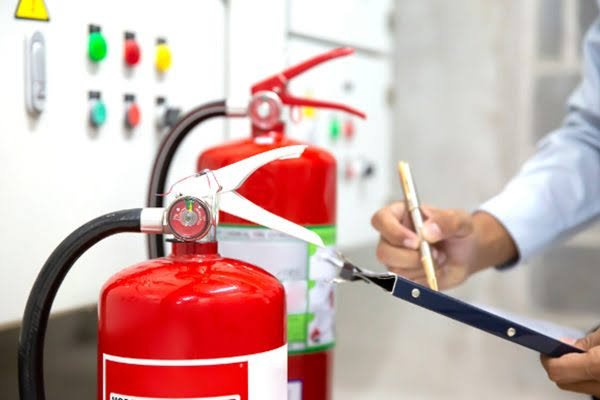
Fire safety is often treated as something that can be checked later. A business may know that it needs fire extinguishers, alarms, emergency exits, electrical safety measures, and evacuation plans, but these systems are only useful when they are properly maintained and ready to work.
This is why a fire safety checklist is more than a simple piece of paperwork. It provides a structured way to identify hazards, check important equipment, record deficiencies, and make sure corrective action is not forgotten.
In Pakistan, buildings can have very different fire risks depending on their use. Homes, offices, factories, warehouses, schools, hospitals, restaurants, shopping centers, and high-rise buildings all require different levels of attention. The Building Code of Pakistan Fire Safety Provisions 2016 addresses fire prevention and life-safety matters, while applicable local requirements and authorities also need to be considered.
Ignoring a checklist may appear to save time or money today, but the consequences can be much greater later.
What Is a Fire Safety Checklist?
A fire safety checklist is a structured list of items that should be inspected or reviewed to identify possible fire hazards and weaknesses in a building’s fire protection arrangements.
Depending on the type of property, a checklist may cover:
- Fire alarm systems
- Smoke and heat detection
- Fire extinguishers
- Emergency exits
- Exit signs
- Emergency lighting
- Fire doors
- Sprinkler systems
- Fire pumps and water supplies
- Electrical equipment
- Kitchens and cooking areas
- Storage arrangements
- Housekeeping
- Emergency procedures
- Staff training
- Inspection and maintenance records
The checklist should not be treated as a one-time document. Fire risks can change when a building is renovated, equipment is added, storage arrangements change, or the occupancy of a space changes.
A good inspection process identifies problems and also records what needs to happen next.
Why Fire Safety Checklists Matter
The main purpose of a checklist is to prevent important details from being overlooked.
During a busy working day, a small problem can easily go unnoticed. An emergency exit may become blocked by stored materials. An extinguisher may become difficult to access. A fire alarm panel may show a fault that nobody has investigated. Electrical equipment may be overloaded or poorly maintained.
A checklist creates a repeatable process for looking at these areas.
NFPA inspection guidance emphasizes documenting observed conditions, identifying deficiencies, reviewing maintenance records, and determining whether fire alarm systems are operational.
This approach is valuable because fire safety is not based on one piece of equipment. It depends on several systems and human actions working together.
The Real Cost of Ignoring Fire Safety
The cost of poor fire safety is not limited to replacing damaged equipment after an incident. The potential consequences can affect people, property, operations, and an organization’s reputation.
1. Greater Risk to People
The most important reason for maintaining fire safety is protecting people.
A fire can create smoke, heat, panic, and rapidly changing conditions. If alarms do not provide timely warning or exits are difficult to use, occupants may have less time to respond safely.
A checklist helps identify conditions that could delay warning or evacuation.
For example, checking emergency exits may reveal blocked pathways, damaged doors, poor signage, or other problems. Identifying these issues before an emergency gives responsible persons an opportunity to correct them.
2. More Property Damage
Fire protection equipment is intended to help detect, control, or respond to a fire. If equipment is neglected, its reliability can be affected.
A fire alarm system that has unresolved faults may not provide the expected warning. A sprinkler system that has not received appropriate inspection and maintenance may not perform as intended. Fire doors that are damaged or improperly maintained may not provide the protection expected from them.
NFPA’s fire protection guidance places strong emphasis on inspection, testing, and maintenance of systems rather than simply installing them and assuming they will always work.
3. Business Interruption
A fire can interrupt normal operations long after the immediate emergency has ended.
A damaged office, factory, warehouse, shop, restaurant, or other facility may require cleaning, repairs, equipment replacement, electrical work, structural assessment, and other recovery activities.
Even a smaller incident can disrupt employees, customers, deliveries, production schedules, and services.
Regular inspections cannot eliminate every possible fire risk, but they can help organizations identify preventable weaknesses before they contribute to a serious incident.
4. Higher Repair and Replacement Costs
Preventive maintenance is generally easier to manage than emergency replacement.
Consider a fire protection component that shows a minor problem during an inspection. If the issue is documented and corrected promptly, the repair may be relatively straightforward.
If the same problem remains unresolved until an emergency occurs, the consequences may involve multiple systems and areas of a building.
This is one reason fire safety checklists should include a corrective-action section rather than simply marking items as “checked.”
Fire Alarm Systems Should Not Be Overlooked
One of the most important parts of a modern fire protection strategy is the fire alarm system.
A fire alarm system may include control panels, detectors, manual initiating devices, notification appliances, power supplies, monitoring arrangements, and other components depending on the building and system design.
NFPA 72 provides guidance covering the installation, inspection, testing, and maintenance of fire alarm and signaling systems.
In Pakistan, professional services related to the installation, commissioning, and maintenance of fire detection, alarm, and suppression systems are also recognized within Pakistan Engineering Council’s registration classifications.
This is where the phrase fire alarm system in Pakistan becomes relevant to broader fire safety planning. An alarm should not be considered an isolated device. Its effectiveness depends on appropriate design, installation, maintenance, testing, power supply, notification, and building procedures.
A checklist can help responsible personnel identify visible issues and confirm that required professional inspections and maintenance have been addressed.
Checking Fire Extinguishers
Fire extinguishers are another important checklist item.
A basic inspection should consider whether extinguishers are:
- Located where they are expected to be
- Clearly accessible
- Appropriate for the hazards present
- Free from obvious damage
- Properly identified
- Within their required service arrangements
- Not blocked by furniture, stock, or other objects
NFPA checklist guidance similarly highlights extinguisher type, condition, location, access, service status, and identification as important inspection considerations.
A checklist should not encourage untrained people to perform technical servicing. Where inspection reveals a maintenance or servicing issue, qualified personnel should handle the work according to applicable requirements and manufacturer instructions.
Emergency Exits and Escape Routes
An excellent fire protection system cannot compensate for an unusable escape route.
Emergency exits should therefore receive regular attention.
A checklist can ask:
- Are escape routes clear?
- Are exit doors accessible?
- Are exit signs visible?
- Is emergency lighting functioning as required?
- Are stairways free from unnecessary obstructions?
- Are fire doors maintained appropriately?
- Are occupants familiar with the evacuation arrangements?
NFPA safety checklist material identifies unobstructed means of egress, functioning fire doors, and accessible fire protection equipment among important safety considerations.
Escape routes should also be reviewed after renovations or changes to room layouts because construction work can unintentionally affect the way people move toward exits.
Electrical Safety Should Be Part of the Checklist
Electrical faults are an important area of fire prevention.
A fire safety checklist should encourage organizations to look for obvious warning signs such as damaged equipment, unsuitable temporary arrangements, overloaded electrical points, poor housekeeping around electrical equipment, or maintenance issues that require professional attention.
Electrical preventive maintenance is a recognized area of fire and equipment safety. NFPA 70B, for example, addresses preventive maintenance for electrical, electronic, and communication systems and equipment.
Employees should not attempt technical electrical repairs simply because a checklist identifies a problem. Electrical defects should be referred to appropriately qualified personnel.
Housekeeping Can Make a Major Difference
Good housekeeping is one of the simplest parts of fire prevention.
Combustible rubbish, unnecessary packaging, poorly arranged storage, and accumulated waste can increase the available fuel during a fire.
A checklist can help identify:
- Accumulated rubbish
- Poorly arranged storage
- Combustible materials near heat sources
- Blocked access to fire equipment
- Waste around electrical equipment
- Improper storage of flammable or combustible materials
NFPA fire-safety checklist material specifically includes housekeeping, combustible materials, waste, storage, cooking areas, fire protection equipment, and unobstructed escape facilities.
Small housekeeping improvements can therefore form an important part of a larger fire prevention program.
Fire Safety in Pakistani Buildings
Fire safety planning in Pakistan needs to consider the type, size, occupancy, construction, and hazards of each building.
An office does not have exactly the same risks as a factory. A hospital has different evacuation challenges from a warehouse, while a restaurant may have significant cooking-related hazards.
The Building Code of Pakistan framework references the Building Code of Pakistan Fire Safety Provisions 2016 for matters involving fire prevention and hazards, including fire protection systems and alarm systems, subject to the applicable authority and requirements.
For this reason, a generic checklist should be treated as a starting point rather than a substitute for a professional fire safety assessment.
Where a building requires specialized fire protection design, inspection, testing, or maintenance, competent professionals should be involved.
A Practical Fire Safety Checklist
A basic checklist can be organized into the following sections.
Fire Detection and Alarm
- Is the fire alarm control panel showing normal status?
- Are visible faults or warning signals investigated?
- Are detectors and manual initiating devices accessible?
- Are notification devices unobstructed?
- Are required inspection and testing records available?
- Have identified deficiencies been corrected?
Fire alarm inspection should be performed according to the applicable system requirements and by appropriately qualified personnel where technical work is involved.
Fire Extinguishers
- Are extinguishers accessible?
- Are they in suitable locations?
- Are they visibly identified?
- Do they show signs of damage?
- Is required servicing current?
- Are access areas clear?
Emergency Exits
- Are escape routes clear?
- Are exit doors accessible?
- Are exit signs visible?
- Is emergency lighting maintained?
- Are fire doors free from obvious damage or obstruction?
Water-Based Fire Protection
Where sprinkler, standpipe, hose, or other water-based systems are installed, their inspection and maintenance should follow the applicable design, code, standard, and professional requirements. NFPA 25 is specifically focused on inspection, testing, and maintenance of water-based fire protection systems.
Electrical Areas
- Is electrical equipment maintained?
- Are damaged components reported?
- Is combustible material kept away from relevant equipment?
- Are maintenance concerns documented?
Housekeeping and Storage
- Are waste materials removed regularly?
- Are storage areas organized?
- Are combustible materials controlled?
- Are fire protection systems and exits kept accessible?
Emergency Planning
- Do occupants know what to do when the alarm sounds?
- Is there a documented evacuation plan?
- Are assembly arrangements understood?
- Are staff members familiar with their responsibilities?
- Are drills or training conducted where appropriate?
Why Documentation Matters
A checklist has limited value if nobody records what was found.
Good documentation can show:
- Date of inspection
- Area inspected
- Person responsible
- Condition observed
- Deficiency identified
- Recommended corrective action
- Person responsible for correction
- Date the issue was resolved
NFPA inspection guidance emphasizes documenting deficiencies and corrective action as part of determining operational readiness.
Records also make it easier to identify recurring problems. If the same issue appears repeatedly, management may need to investigate the underlying cause instead of repeatedly treating the symptom.
What Happens When Problems Are Found?
Finding a problem is only the first step.
A useful checklist should lead to action.
For example, if an emergency exit is blocked, the responsible person should ensure that the obstruction is removed. If a fire alarm system has a technical fault, it should be referred to the appropriate qualified service provider. If an extinguisher requires servicing, the required professional service should be arranged.
The exact corrective action depends on the problem.
Serious deficiencies should not simply be marked “pending” indefinitely. Organizations should establish reasonable priorities and follow up until important issues are resolved.
Common Mistakes When Using Fire Safety Checklists
Treating the checklist as paperwork
The purpose of a checklist is to improve safety, not simply create a completed form.
Checking boxes without inspecting
A completed checklist that does not reflect actual conditions provides false confidence.
Ignoring repeated deficiencies
Recurring problems may indicate inadequate maintenance, poor housekeeping, unsuitable equipment, or insufficient training.
Failing to update the checklist
Building layouts, equipment, occupancy, and hazards can change. The checklist should remain relevant to the property.
Assuming installed equipment is automatically reliable
Fire protection equipment requires appropriate inspection, testing, and maintenance. Installation alone does not guarantee continued readiness.
How to Build a Better Fire Safety Routine
A strong fire safety program can combine regular visual checks, scheduled professional inspection and maintenance, employee awareness, emergency planning, and documentation.
Start by identifying the major hazards in the building.
Next, identify the fire protection systems available and determine who is responsible for maintaining each one.
Then create inspection records that clearly distinguish between routine observations and technical work requiring qualified professionals.
Finally, review the results regularly. If several inspections identify the same weakness, management should consider a more permanent solution.
For businesses looking for professional fire safety support, Flame Defender can be considered as one source of fire protection information and services in Pakistan.
The Bottom Line
The real cost of ignoring fire safety checklists is not the price of a missed inspection. It is the increased uncertainty about whether important fire protection measures will work when people need them.
A checklist helps turn fire safety from an occasional concern into an ongoing process.
It can help identify blocked exits, damaged equipment, maintenance problems, electrical concerns, housekeeping issues, training gaps, and other deficiencies before they become more serious.
For Pakistani homes and businesses, the best approach is to combine routine checks with appropriate professional inspection, testing, maintenance, and compliance with applicable requirements.
Fire safety is not achieved by buying equipment once. It is achieved by keeping people, procedures, buildings, and protection systems prepared over time.
FAQs
1. What is the purpose of a fire safety checklist?
A fire safety checklist provides a structured way to identify fire hazards, review protection systems, check escape routes, record deficiencies, and follow up on corrective actions.
2. How often should a fire safety checklist be completed?
The appropriate frequency depends on the building, occupancy, hazards, equipment, applicable requirements, and risk assessment. Routine visual checks may be more frequent than formal professional inspections. The relevant standards, manufacturer instructions, and local authority requirements should be followed.
3. What should a fire safety checklist include?
It can include fire alarms, detectors, extinguishers, emergency exits, fire doors, emergency lighting, sprinklers, fire pumps, electrical safety, housekeeping, storage, emergency procedures, staff training, and maintenance records.
4. Why is maintenance important for a fire alarm system in Pakistan?
A fire alarm system depends on properly functioning components and appropriate inspection, testing, and maintenance. NFPA 72 addresses these areas, while applicable Pakistani requirements and competent professionals should also be considered for a specific building.
5. Can a checklist replace a professional fire safety inspection?
No. A routine checklist is useful for identifying conditions that need attention, but it does not replace specialized inspection, testing, engineering assessment, servicing, or compliance review where those are required.