
Fire safety is often associated with fire alarms, smoke detectors, extinguishers, and emergency exits. These systems are all important, but water-based firefighting equipment can also play an important role in protecting buildings from fire.
Fire hose reels are designed to provide a readily available water supply for firefighting in buildings where such systems are required. They can form part of a wider fire-protection arrangement alongside detection, alarms, sprinklers, hydrants, extinguishers, emergency lighting, and safe escape routes.
In Pakistan, the Building Code of Pakistan Fire Safety Provisions 2016 recognizes hose stations in its fire-protection provisions and states that where hose stations are provided, they are to conform to NFPA 14 or another approved code or standard. The code also addresses the relationship between hose stations and portable fire extinguishers.
This article explains five important reasons fire hose reels matter, how they fit into a wider fire-safety strategy, and why proper design, installation, inspection, and maintenance are essential.
What Is a Fire Hose Reel?
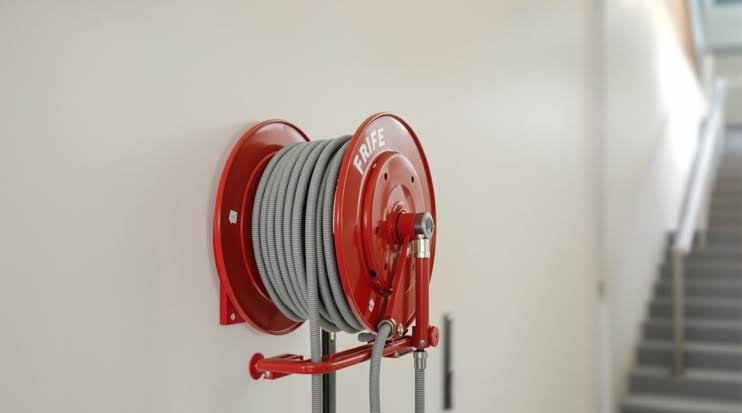
A fire hose reel is a fixed firefighting installation consisting of a hose stored on a reel or similar arrangement and connected to an appropriate water supply.
Unlike a portable extinguisher, which contains a limited quantity of extinguishing agent, a properly designed water-based system can be connected to a building’s dedicated fire-protection water supply.
The exact configuration can vary depending on the building and applicable requirements. Hose stations may be part of standpipe and hose systems designed for use by trained personnel or for connection by responding fire departments. NFPA 14 materials describe Class II hose systems as providing hose stations for trained personnel or hose connections for fire-department use during initial response.
Because of this, fire hose reels should not be treated as ordinary household equipment. Their design and installation should be based on the building’s fire-protection requirements and handled by appropriately qualified professionals.
Fire Hose Reels and the Wider Fire-Protection System
A hose reel is only one component of a complete fire-safety strategy.
A modern building may require several layers of protection, including:
- Fire detection
- Fire alarm systems
- Portable extinguishers
- Hose stations
- Hydrants
- Automatic sprinklers where required
- Emergency lighting
- Protected escape routes
- Fire doors
- Emergency communication
- Fire-safety training
Each component has a different purpose.
A Fire alarm system in Pakistan, for example, can provide early warning and alert occupants to a fire condition. A hose system is intended to provide firefighting water where the applicable design calls for it. Emergency exits provide routes for occupants to leave safely.
These systems should work together rather than being considered separate solutions.
5 Reasons Fire Hose Reels Matter
1. They Can Provide a Readily Available Water Supply
One of the main advantages of a properly designed hose system is the availability of water at a designated location.
During a fire emergency, the availability of appropriate firefighting resources can be important. A fixed hose station can be positioned as part of the building’s overall fire-protection design so that it is available where required.
The Building Code of Pakistan Fire Safety Provisions 2016 includes hose stations among its fire-protection provisions and refers to NFPA 14 or another approved code or standard for hose-station requirements.
The important word is properly designed.
Simply installing a hose reel does not automatically make a building adequately protected. Water supply, pressure, flow, location, piping, hose type, valves, and other technical factors need to be considered by qualified professionals.
The system must also remain accessible and operational.
2. They Add Another Layer of Fire Protection
Fire safety works best when several protective measures support one another.
Consider a simple sequence.
A detector may identify smoke or heat. The fire alarm may then notify occupants. People begin evacuation according to the emergency plan. At the same time, appropriate firefighting systems may provide additional protection.
This layered approach is important because no single piece of equipment can address every fire-safety need.
A Fire alarm system in Pakistan is primarily associated with detection and warning. A hose system serves a different function by providing firefighting water where designed and required.
Portable extinguishers, sprinklers, hydrants, alarms, and hose stations can therefore complement one another.
The Building Code’s fire-safety provisions address multiple aspects of fire protection rather than relying on one type of equipment.
3. They Can Be Valuable in Larger Buildings
Larger buildings can have more complicated fire-safety requirements.
Factories, warehouses, commercial buildings, hotels, hospitals, educational facilities, shopping centres, and other large properties may have extensive floor areas, multiple levels, higher occupant loads, or increased fire hazards.
In these environments, fixed fire-protection systems can form an important part of the overall strategy.
NFPA 14 materials distinguish different classes of standpipe and hose systems and describe Class II hose systems as hose stations intended for trained personnel or fire-department use during initial response.
The appropriate system depends on the building’s design and hazard classification.
This is why property owners should avoid choosing hose-reel arrangements based only on the size or appearance of a product. The system should be designed around the actual fire-protection requirements of the building.
4. They Complement Portable Fire Extinguishers
Fire hose reels do not necessarily replace portable extinguishers.
The Building Code of Pakistan specifically addresses the relationship between hose stations and portable extinguishers. It states that the location of hose stations and fire extinguishers should be arranged so that hose stations do not replace more than every other extinguisher.
This illustrates the importance of using different forms of fire protection together.
Portable extinguishers are designed for specific types and sizes of fires. Hose systems provide a different form of protection.
The correct combination depends on factors such as:
- Building occupancy
- Fire hazards
- Floor area
- Building height
- Available water supply
- Applicable code requirements
- Fire department access
- Occupant characteristics
A professional fire-protection assessment can determine which systems are appropriate.
5. They Encourage a More Complete Fire-Safety Strategy
The presence of fixed firefighting equipment can encourage organizations to think about fire safety as a complete system rather than a collection of individual products.
For example, a building with a hose system should also have an appropriate maintenance program.
Management should know:
- Where hose stations are located
- Who is responsible for inspections
- How faults are reported
- How maintenance is documented
- Which personnel are trained
- How the hose system connects to the wider emergency plan
This approach is especially important for commercial and institutional buildings.
A fire-protection system that is ignored for years may not perform as intended when an emergency occurs.
Where Are Fire Hose Reels Commonly Used?
The need for hose systems varies according to building type and applicable regulations.
They may be relevant in environments such as:
Commercial Buildings
Offices, shopping facilities, and other commercial properties can have significant occupant loads and electrical equipment.
Industrial Facilities
Factories can contain machinery, combustible materials, electrical equipment, and specialized hazards. Fire-protection requirements should be based on the actual activities taking place.
Warehouses
Warehouses can contain large quantities of combustible products and packaging.
NFPA research on warehouse fires has identified electrical distribution or lighting equipment among ignition-related categories and has highlighted the importance of considering the materials and equipment present in warehouse environments.
Hotels
Hotels need to consider sleeping occupants, visitors unfamiliar with the building, multiple floors, kitchens, electrical systems, and other hazards.
Hospitals
Hospitals require careful planning because some occupants may have limited mobility or require assistance during an evacuation.
Educational Buildings
Schools and universities need fire protection that considers students, staff, visitors, laboratories, kitchens, and other facilities.
The exact requirements for each property should be confirmed through applicable regulations and professional fire-safety design.
Fire Hose Reels Are Not a Substitute for Fire Alarms
It is important to understand the different purposes of firefighting systems.
A hose reel does not provide the same function as a fire alarm.
A fire alarm system is designed to detect or receive signals associated with a fire condition and warn occupants. NFPA 72 covers fire alarm and signaling systems, including installation, inspection, testing, and maintenance.
A hose system, on the other hand, provides water for firefighting where the applicable system is designed for that purpose.
This means a building should not choose between an alarm and a hose system simply because both relate to fire.
They address different parts of the emergency.
Early warning helps people respond. Firefighting systems provide another layer of protection. Emergency exits allow people to escape.
Together, these systems form a stronger safety strategy.
The Importance of Proper Installation
A fire hose reel should not be installed casually.
Professional design should consider the building’s layout and the requirements applicable to the system.
Important considerations can include:
- Water supply
- Required pressure
- Flow requirements
- Pipe sizing
- Hose length
- Hose location
- Accessibility
- Protection from damage
- Valve arrangements
- Compatibility with other fire-protection systems
- Fire department requirements
NFPA 14 provides technical requirements for standpipe and hose systems, including different classes of systems.
The Building Code of Pakistan also refers to NFPA 14 or an approved code or standard for hose stations where they are provided.
For this reason, professional engineering input is particularly important for larger or more complex buildings.
Accessibility Matters
Fire equipment is useful only when people can access it.
A hose station should not be hidden behind:
- Storage
- Furniture
- Decorations
- Machinery
- Temporary structures
- Locked areas without appropriate emergency access
The location should be clearly identified and kept accessible according to the approved fire-safety design.
Regular inspections can help identify problems before an emergency occurs.
Maintenance Is Just as Important as Installation
Installing a fire hose system is only the beginning.
Water-based fire-protection systems require inspection, testing, and maintenance to help ensure that they remain ready for service.
NFPA 25 is a major reference for inspection, testing, and maintenance of water-based fire-protection systems. Its current handbook covers inspection and maintenance requirements and emphasizes maintaining water-based systems in a condition that supports fire protection.
Maintenance programs can identify issues such as:
- Damaged hoses
- Corrosion
- Leaking components
- Blocked access
- Faulty valves
- Problems with water supply
- Damaged cabinets
- Missing components
- Physical deterioration
The exact inspection and testing schedule should follow the applicable standard, system design, manufacturer instructions, and local requirements.
Training and Fire Hose Systems
Not everyone should be expected to operate firefighting equipment.
NFPA 14 materials describe Class II hose stations in terms of use by trained personnel or connection for fire-department use.
This is an important safety principle.
Employees should receive appropriate training if their responsibilities include using fire-protection equipment.
Other occupants should focus on raising the alarm, following the evacuation plan, and reaching safety.
Training should never encourage someone to remain in a dangerous area simply to use firefighting equipment.
If a fire is spreading, producing significant smoke, or creating unsafe conditions, evacuation and emergency assistance should take priority.
Fire Hose Reels and Fire Safety in Pakistan
Fire protection in Pakistan involves national building-code provisions as well as requirements that can vary by jurisdiction, building type, and authority.
The Building Code of Pakistan Fire Safety Provisions 2016 is an important technical reference. It includes provisions covering fire prevention, life safety, fire protection, and related systems. Its hose-station provisions refer to NFPA 14 or another approved code or standard.
Pakistan Engineering Council’s professional information also lists ME02 for installation, commissioning, and maintenance of fire detection, alarm, and suppression systems and allied equipment.
This reinforces the importance of using appropriately qualified professionals for specialized fire-protection work.
Building owners should also check requirements imposed by the relevant local authority, development authority, civil-defence organization, or other authority having jurisdiction.
Fire Hose Reels and Commercial Fire Safety
For businesses, fire hose systems should be considered as part of a broader fire-safety management program.
A commercial property should ideally have a documented approach covering:
- Fire-risk assessment
- Fire detection
- Alarm systems
- Firefighting equipment
- Emergency exits
- Emergency lighting
- Staff training
- Fire drills
- Inspection
- Maintenance
- Emergency communication
- Record keeping
This approach helps ensure that fire protection is not forgotten after equipment has been installed.
Common Problems With Fire Hose Systems
Several problems can reduce the effectiveness of a hose system.
Blocked Equipment
Storage or furniture can prevent access to the hose station.
Poor Maintenance
A damaged or deteriorated component may not perform as intended.
Unclear Responsibilities
If nobody knows who is responsible for inspection and maintenance, problems may remain unresolved.
Untrained Personnel
People may not understand when equipment is intended for trained users and when evacuation should take priority.
Changes to the Building
Renovations, new partitions, additional storage, or changes in occupancy can affect the original fire-protection design.
Any significant building modification should therefore be reviewed for its impact on fire safety.
How Fire Hose Reels Work With Other Systems
A strong fire-safety design uses multiple layers.
Consider the following example:
Detection: A detector identifies a developing fire condition.
Alarm: The fire alarm system warns occupants.
Evacuation: Occupants follow designated escape routes.
Fire Protection: Appropriate firefighting systems provide protection according to the building’s design.
Emergency Response: Fire services respond and take control of the incident.
Each layer has a different function.
This is why a Fire alarm system in Pakistan should not be viewed as a replacement for other fire-protection measures, and a hose reel should not be viewed as a replacement for an alarm.
Fire Hose Reel Inspection Checklist
A basic management review can consider whether:
- Hose stations remain accessible.
- Cabinets are not damaged.
- Hoses appear to be in suitable condition.
- Equipment has not been removed or tampered with.
- Valves and associated components are maintained according to the system requirements.
- Water-supply arrangements are maintained.
- Required inspection records are available.
- Any identified defects have been addressed.
This is only a general management checklist. Formal inspection and testing should be performed according to the applicable standard and by competent personnel.
Why Professional Advice Matters
Fire-protection systems involve technical requirements that cannot always be determined by looking at a building from the outside.
Professionals can assess the building’s:
- Occupancy
- Fire hazards
- Floor area
- Height
- Water supply
- Existing fire-protection systems
- Evacuation arrangements
- Applicable requirements
This helps prevent a common mistake: installing equipment simply because it appears useful without determining whether it is suitable for the building.
For organizations seeking professional fire-safety solutions in Pakistan, Flame Defender can provide information about fire-protection products and services.
Conclusion
Fire hose reels may not receive as much attention as fire alarms or extinguishers, but they can be an important part of a properly designed fire-protection system.
Their value comes from providing another layer of firefighting capability, particularly in buildings where fixed hose systems are required or appropriate.
The five main reasons they matter are simple:
- They can provide a readily available firefighting water supply.
- They add another layer of fire protection.
- They can be valuable in larger and more complex buildings.
- They complement other firefighting equipment.
- They encourage a complete approach to fire-safety management.
However, a hose reel is not a standalone solution.
It needs appropriate design, installation, water supply, accessibility, inspection, testing, maintenance, and trained personnel where applicable. The Building Code of Pakistan Fire Safety Provisions 2016 specifically addresses hose stations and refers to NFPA 14 or another approved code or standard.
Likewise, other fire-protection systems remain important. A Fire alarm system in Pakistan can provide early warning, while emergency exits support evacuation and other firefighting systems provide additional layers of protection.
The safest approach is to consider the entire building rather than focusing on one product.
With appropriate professional planning and regular maintenance, fire hose systems can become a useful part of a comprehensive fire-safety strategy.
FAQs
1. What is the purpose of a fire hose reel?
A fire hose reel or hose station provides access to firefighting water as part of a fixed fire-protection system where such a system is required or appropriate. The exact design and intended users depend on the applicable standard and building.
2. Are fire hose reels required in every building in Pakistan?
No single answer applies to every building. Requirements depend on factors such as occupancy, building design, size, hazards, location, applicable codes, and the authority having jurisdiction. The Building Code of Pakistan includes provisions for hose stations where they are provided.
3. Can a fire hose reel replace a fire extinguisher?
Generally, they should not simply be treated as interchangeable equipment. The Building Code of Pakistan specifically addresses both hose stations and portable extinguishers and provides requirements concerning their placement.
4. Who should use a fire hose system?
The intended users depend on the type of system. NFPA 14 materials describe Class II hose stations as systems for trained personnel or for fire-department use during initial response. People without appropriate training should prioritize raising the alarm and evacuating safely.
5. How often should fire hose reels be inspected?
Inspection, testing, and maintenance should follow the applicable standard, system design, manufacturer requirements, and local regulations. Water-based fire-protection systems are covered by inspection, testing, and maintenance guidance such as NFPA 25.