
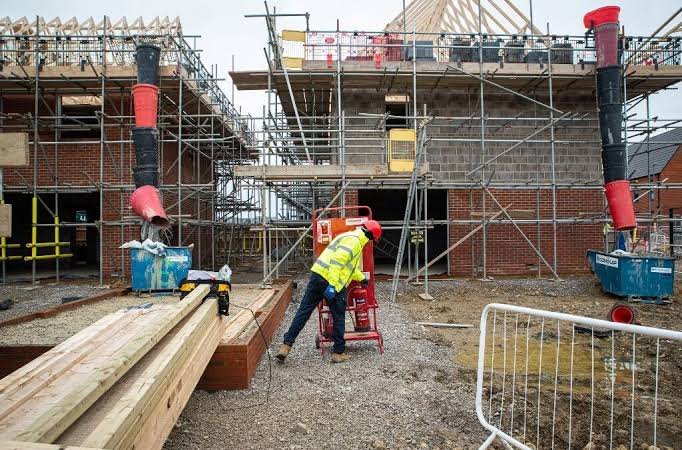
Construction sites are constantly changing. Buildings are being extended, electrical systems are being installed, walls are being removed, materials are being stored, and different teams may be working in the same area. These activities can create fire hazards that are different from those found in a completed building.
Fire safety on a construction site is therefore not something that should be considered only after a building is finished. It needs to be planned from the beginning and updated as construction progresses.
A construction site may contain combustible materials, temporary electrical systems, generators, fuel, packaging, equipment, and areas where heat-producing work is being carried out. At the same time, permanent fire-protection systems may not yet be fully operational.
Pakistan’s Building Code of Pakistan Fire Safety Provisions 2016, published by the Pakistan Engineering Council in collaboration with the National Disaster Management Authority, provides national fire-safety provisions addressing fire prevention, life safety, and fire protection. The later Building Code of Pakistan material also identifies fire-prevention provisions in relation to construction, extension, repair, alteration, and changes to fire-protection and alarm systems.
This article explains the main principles of construction-site fire safety and why proper planning matters throughout every stage of a project.
Why Construction Sites Have Special Fire Risks
A completed building normally has established walls, exits, fire-protection systems, permanent electrical installations, and defined occupancy arrangements.
A construction site may have none of these in their final form.
Temporary conditions can include:
- Temporary electrical connections
- Construction materials
- Packaging and waste
- Welding and cutting activities
- Fuel-powered equipment
- Temporary heating
- Flammable or combustible materials
- Incomplete fire-protection systems
- Open areas between floors
- Temporary structures
- Changing access routes
These conditions can change from one week to the next.
For this reason, fire-safety planning should be treated as an ongoing process rather than a one-time inspection.
1. Create a Construction-Site Fire Prevention Plan
The first step is to establish a clear fire-prevention program.
A good plan should identify major fire hazards, ignition sources, combustible materials, fire-protection equipment, emergency communication arrangements, evacuation procedures, and the people responsible for fire safety.
OSHA’s construction requirements similarly call for a fire-protection program throughout all phases of construction and demolition, with firefighting equipment provided as hazards arise.
For a project in Pakistan, the plan should be adapted to the specific site, project design, applicable requirements, contractor arrangements, and local authority expectations.
The plan should be reviewed whenever site conditions change significantly.
2. Identify Combustible Materials
Construction sites can contain large quantities of materials that may contribute to fire growth.
Examples include:
- Timber
- Cardboard
- Packaging
- Plastic products
- Insulation materials
- Furniture awaiting installation
- Paint-related materials
- Construction debris
- Temporary coverings
Materials should be stored in an organized manner and should not block exits, access routes, firefighting equipment, or emergency response areas.
OSHA construction provisions emphasize that storage should not obstruct exits and that materials should be handled and piled with consideration for their fire characteristics.
Good housekeeping is therefore an important part of fire prevention.
3. Control Construction Waste
Waste can accumulate quickly on an active construction site.
Cardboard, packaging, offcuts, discarded materials, and other waste should not be allowed to build up unnecessarily.
A regular waste-removal process can help reduce the amount of combustible material available if an ignition occurs.
Waste should also be kept away from equipment and areas where ignition sources may be present.
A clean site is easier to inspect and generally easier for workers and emergency responders to navigate.
4. Manage Electrical Fire Hazards
Temporary electrical systems are common during construction.
Poorly maintained cables, unsuitable connections, damaged equipment, overloading, and improper temporary installations can create hazards.
Electrical installations should be designed, installed, inspected, and maintained by appropriately qualified personnel.
Workers should report signs such as:
- Damaged cables
- Exposed conductors
- Burning smells
- Unusual heating
- Sparks
- Damaged plugs or connections
- Repeated electrical faults
Temporary electrical arrangements should also be reviewed as the project develops.
A system that was appropriate during an early construction phase may need to change as more equipment and building services are added.
5. Pay Attention to Hot Work
Welding, cutting, grinding, and other heat-producing construction activities can create ignition hazards.
Hot work should be controlled through the project’s established safety procedures and applicable requirements.
The work area should be evaluated before work begins, particularly for nearby combustible materials and other hazards.
NFPA construction guidance identifies cutting, welding, and other hot work as specific construction fire hazards and addresses hot-work controls within construction fire-prevention programs.
For projects using a formal hot-work permit system, the responsible person should ensure the required authorization and site controls are in place.
The important principle is that hot work should never be treated as an ordinary task simply because it is routine.
6. Keep Fire Extinguishers Accessible
Fire extinguishers should be available at construction sites in locations appropriate for the hazards.
They should be:
- Clearly identifiable
- Accessible
- Appropriate for the expected fire hazards
- Maintained in working condition
- Protected from damage
- Inspected according to the applicable maintenance program
OSHA construction requirements state that firefighting equipment should remain accessible, be conspicuously located, and be periodically inspected and maintained.
As the building develops, extinguisher locations may need to be reviewed.
An extinguisher that was accessible at the start of construction may become difficult to reach after materials, partitions, equipment, or temporary structures are introduced.
7. Maintain Emergency Access
Fire trucks and emergency responders need a clear way to reach the site.
Construction materials, vehicles, temporary structures, waste containers, and equipment should not unnecessarily obstruct emergency access.
The site should also have clear identification and appropriate arrangements for communicating its location to emergency responders.
NFPA construction guidance identifies emergency contacts, site emergency communication procedures, building identification, emergency evacuation procedures, and fire-protection systems as elements of construction fire-prevention planning.
8. Protect Escape Routes
Workers need to be able to leave the construction site quickly if an emergency occurs.
As construction progresses, routes may change. Stairways may be temporarily affected, walls may be incomplete, and normal exits may not yet be available.
Management should therefore establish suitable temporary evacuation routes and communicate them to workers.
Escape routes should remain as clear as reasonably possible, with appropriate signs where needed.
Whenever the building layout changes significantly, the evacuation plan should be reviewed.
9. Establish a Reliable Emergency Alarm
Workers need a reliable way to learn about a fire emergency.
The type of alarm may depend on the size and complexity of the construction site.
It could involve a permanent or temporary fire alarm arrangement, along with an established communication method appropriate for the project.
OSHA construction provisions require an alarm system capable of alerting site employees and the local fire department for an emergency, with alarm and reporting instructions posted where appropriate.
For larger projects, a Fire alarm system in Pakistan may form part of a more comprehensive temporary or progressively installed fire-protection strategy.
The system should be reviewed as construction progresses instead of waiting until the final building is completed.
10. Install Permanent Fire Protection as Construction Progresses
One common challenge during construction is that the final fire-protection system may not yet be complete.
Where applicable, fire-protection systems should be brought into service progressively as the building reaches the relevant stages of construction.
NFPA construction guidance addresses the installation of new fire-protection systems as construction progresses and the preservation of existing systems during alteration or demolition.
The exact approach depends on the project design, construction sequence, applicable requirements, and authority having jurisdiction.
The key principle is to avoid leaving the site unnecessarily dependent on incomplete protection.
11. Protect Existing Fire-Protection Systems During Renovation
Renovation projects create a different challenge.
A building may already have fire alarms, sprinklers, fire doors, standpipes, or other protective systems. Construction work can accidentally damage, disconnect, obstruct, or disable them.
When work is being carried out in an occupied or partially occupied building, management should understand how construction activities affect existing protection.
Any planned impairment should be controlled through an appropriate procedure, with responsible personnel informed and temporary precautions considered where necessary.
12. Keep Fire Doors and Fire Separations Effective
As a building takes shape, fire-rated walls, doors, shafts, and other fire-separation features may be installed progressively.
These features should not be unnecessarily damaged or compromised during subsequent construction.
Materials should not be stored in ways that obstruct fire doors or access routes.
NFPA construction material also emphasizes maintaining access and avoiding storage arrangements that interfere with egress or fire-service access.
If a fire door or fire separation is damaged, it should be reported and appropriately repaired.
13. Manage Generators and Fuel-Using Equipment
Construction sites may use generators, engines, compressors, and other fuel-powered equipment.
These systems should be positioned and operated according to their safety requirements.
Combustible materials should not be unnecessarily accumulated around heat-producing equipment.
OSHA construction fire-prevention requirements address ignition hazards associated with internal-combustion equipment and require appropriate consideration of exhausts and combustible materials.
Fuel arrangements should also be managed carefully by trained personnel in accordance with applicable requirements.
14. Control Smoking and Other Ignition Sources
Smoking can create an unnecessary ignition source around combustible construction materials.
Construction management should establish clear site rules concerning smoking and other ignition sources.
OSHA construction fire-prevention provisions specifically address smoking in or near operations that create fire hazards.
Signs and site procedures should clearly communicate restricted areas.
Workers and contractors should understand that temporary site conditions can make ordinary ignition sources more hazardous than they might be in a completed building.
15. Pay Attention to Temporary Heating
Construction projects may sometimes require temporary heating.
Temporary heating equipment should be suitable for the application and managed carefully.
NFPA construction guidance identifies temporary heating as a construction fire hazard and addresses appropriate equipment, placement, and protection.
Heating equipment should not be placed where it can easily come into contact with combustible materials or be knocked over.
Any temporary heating arrangement should be reviewed as site conditions change.
16. Manage Flammable and Combustible Materials
Construction projects can involve paints, coatings, fuels, solvents, adhesives, gases, and other materials with specific fire-safety requirements.
These materials should be stored, handled, and used according to their safety information, applicable requirements, and the project’s established procedures.
Workers should know where hazardous materials are kept and who is responsible for managing them.
The quantity of combustible or flammable material kept in active work areas should also be controlled rather than allowing unnecessary accumulation.
17. Protect Temporary Structures
Construction sites may contain temporary offices, storage units, worker facilities, shelters, or other structures.
These areas should also be included in the fire-safety assessment.
They may contain:
- Electrical equipment
- Paper
- Furniture
- Cooking appliances
- Heating equipment
- Batteries
- Other combustible materials
Temporary buildings should not be forgotten simply because they are not part of the finished project.
18. Train Workers and Contractors
Fire safety depends heavily on worker awareness.
Every worker should know the site’s basic emergency arrangements, including:
- How a fire is reported
- What the alarm means
- Where to evacuate
- Where assembly areas are located
- How to report hazards
- Which routes to use
- Who has specific emergency responsibilities
Contractors and subcontractors should also receive relevant site safety information.
New workers should not be expected to learn emergency arrangements by observing others.
19. Conduct Appropriate Emergency Drills
Where appropriate for the project, emergency exercises can help workers become familiar with site procedures.
A drill or exercise may identify:
- Confusing evacuation routes
- Poor communication
- Blocked access
- Inadequate signage
- Problems accounting for workers
- Unclear responsibilities
The purpose should be to identify and correct weaknesses.
The site’s emergency plan should be reviewed after significant changes in the construction sequence.
20. Keep Fire-Safety Records
Documentation is an important part of construction-site fire management.
Records can include:
- Fire-equipment inspections
- Alarm testing
- Hot-work permits
- Training records
- Emergency exercises
- Identified hazards
- Corrective actions
- Fire-protection-system changes
- Contractor safety briefings
These records help management track whether problems are being corrected.
They can also be useful when several contractors are working on the same project.
21. Review Fire Safety at Every Construction Stage
A construction site does not have one permanent risk profile.
The fire risks during excavation and early structural work can be different from those during electrical installation, interior finishing, equipment installation, and final commissioning.
The fire-safety plan should therefore evolve with the project.
The Pakistan Engineering Council’s Building Code of Pakistan material recognizes fire-prevention considerations associated with construction, extension, repair, alteration, and changes to fire-protection and alarm systems.
A stage-by-stage review can help identify hazards before they become difficult to manage.
22. Do Not Treat Fire Safety as a Final Inspection
One of the biggest mistakes on a construction project is waiting until the building is nearly finished to think seriously about fire safety.
By that stage, temporary hazards may already have existed for months.
Fire safety should instead be considered during:
- Project planning
- Site preparation
- Structural construction
- Electrical installation
- Interior work
- Equipment installation
- Commissioning
- Final handover
This approach makes it easier to adapt fire protection to the building as it develops.
Fire Alarm System in Pakistan for Construction Projects
A Fire alarm system in Pakistan can become an important part of fire protection as a construction project progresses.
However, the system should be selected and installed according to the building’s design, construction stage, occupancy, hazards, applicable requirements, and professional assessment.
A construction site may require temporary arrangements before the permanent system is operational. As permanent fire-protection systems are installed, they should be incorporated into the project’s overall safety strategy according to the approved design and applicable requirements.
Pakistan Engineering Council’s professional framework recognizes installation, commissioning, and maintenance of fire detection, alarm, and suppression systems as a specialized area of professional engineering work.
For projects requiring professional fire-safety support and solutions in Pakistan, Flame Defender provides fire-safety-related services and information.
A Simple Construction-Site Fire-Safety Checklist
Project managers can use this checklist as a starting point:
- [ ] Develop a written fire-prevention plan.
- [ ] Identify major fire hazards.
- [ ] Control combustible materials.
- [ ] Remove construction waste regularly.
- [ ] Maintain temporary electrical systems properly.
- [ ] Control hot-work activities.
- [ ] Keep appropriate fire extinguishers accessible.
- [ ] Maintain emergency access routes.
- [ ] Keep evacuation paths clear.
- [ ] Provide a reliable emergency alarm.
- [ ] Install permanent fire protection as appropriate during construction.
- [ ] Protect existing fire-protection systems during alterations.
- [ ] Maintain fire doors and fire separations.
- [ ] Manage generators and fuel-using equipment.
- [ ] Control smoking and other ignition sources.
- [ ] Manage temporary heating safely.
- [ ] Store hazardous materials appropriately.
- [ ] Inspect temporary structures.
- [ ] Train workers and contractors.
- [ ] Conduct appropriate emergency exercises.
- [ ] Maintain inspection and training records.
- [ ] Review fire safety whenever site conditions change.
Conclusion
Construction-site fire safety requires planning, supervision, maintenance, and continuous review.
Unlike a completed building, a construction site changes every day. New materials arrive, temporary systems are installed, work areas move, contractors change, and permanent fire-protection systems gradually become operational.
That is why fire safety must develop alongside the project.
A reliable emergency alarm, accessible extinguishers, controlled hot work, organized storage, clear escape routes, proper electrical management, worker training, and progressive installation of permanent fire-protection systems can all contribute to a safer construction environment.
For construction projects in Pakistan, fire-safety arrangements should be based on the specific project, applicable building and fire requirements, site conditions, and guidance from appropriately qualified professionals.
A Fire alarm system in Pakistan can be an important part of the overall strategy, but no single piece of equipment replaces proper fire prevention and emergency planning.
The most effective approach is to treat fire safety as a continuous responsibility—from the first stage of construction through final completion and occupancy.
For more information about fire-safety solutions in Pakistan, visit Flame Defender.
Frequently Asked Questions
1. Why is fire safety especially important on construction sites?
Construction sites contain changing hazards, including temporary electrical systems, combustible materials, equipment, waste, and heat-producing work. Permanent fire-protection systems may also be incomplete, making continuous fire-safety planning particularly important.
2. What should a construction-site fire prevention plan include?
It should identify major fire hazards, ignition sources, combustible materials, fire-protection equipment, emergency communication arrangements, evacuation procedures, responsible personnel, and measures for controlling changing site conditions.
3. Is a fire alarm system necessary during construction?
The appropriate alarm arrangement depends on the project’s size, construction stage, hazards, building design, and applicable requirements. Construction projects should have a reliable method of alerting workers to emergencies, while permanent alarm systems can be installed and brought into service progressively where appropriate.
4. How should hot-work activities be managed?
Welding, cutting, grinding, and similar activities should be controlled through the project’s approved safety procedures and applicable requirements. The work area should be assessed for fire hazards, and any required hot-work authorization or permit process should be followed.
5. Who should handle specialized fire-alarm installation and maintenance?
Specialized installation, commissioning, inspection, testing, and maintenance should be handled by appropriately qualified professionals. Pakistan Engineering Council’s professional framework recognizes fire detection, alarm, and suppression system installation, commissioning, and maintenance as a professional specialization.