
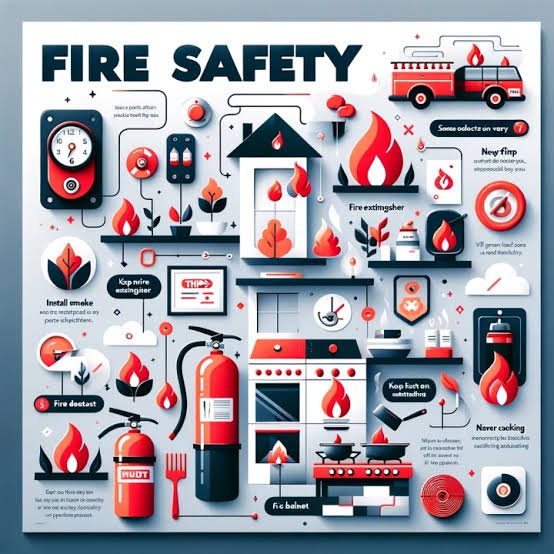
School fire safety is an important subject for every family. Although schools have their own management teams and safety responsibilities, parents and homeowners also benefit from understanding how fire protection works in educational buildings. This knowledge can help families discuss emergency procedures with children and recognize the importance of alarms, evacuation plans, maintenance, and safe building practices.
Schools can contain classrooms, laboratories, libraries, kitchens, computer rooms, offices, storage areas, electrical equipment, and sometimes hostels. These different spaces can create different fire risks. Large numbers of students may also need to leave the building quickly if an emergency occurs.
Pakistan’s Building Code of Pakistan Fire Safety Provisions 2016 addresses fire prevention, life safety, and fire protection for buildings and structures. The Pakistan Engineering Council lists these provisions among its published building codes and standards.
This guide explains the main principles of school fire safety in simple language and highlights what homeowners and parents should understand.
Why School Fire Safety Matters
A school is different from a typical residential building because many people may occupy the same space at the same time.
Students may be in classrooms, laboratories, assembly halls, cafeterias, libraries, sports areas, or other parts of the campus. Younger children may also require additional assistance during an emergency.
Fire safety therefore needs several layers of protection rather than depending on one piece of equipment.
A school fire-safety plan can involve:
- Fire detection and alarm systems
- Smoke and heat detection
- Manual alarm points
- Fire extinguishers
- Emergency lighting
- Exit signs
- Clear escape routes
- Fire-resistant construction where applicable
- Emergency evacuation plans
- Staff training
- Fire drills
- Regular equipment inspection
- Communication procedures
The Building Code of Pakistan Fire Safety Provisions includes requirements and guidance relating to fire protection, means of egress, alarm systems, and construction features.
Understanding Common School Fire Risks
The first step in fire safety is understanding where risks may exist.
Electrical Equipment
Schools depend heavily on electrical equipment. Computers, projectors, laboratory equipment, air conditioners, lighting, printers, kitchen appliances, and other devices can all require electricity.
Damaged cables, inappropriate connections, overloaded circuits, or poorly maintained equipment can increase fire risk.
Schools should have appropriate electrical systems and maintenance arrangements, while staff should report visible damage or unusual electrical behavior rather than ignoring it.
Laboratories
Science laboratories may contain heating equipment, electrical devices, chemicals, and other materials that require controlled handling.
Laboratories should have appropriate safety procedures, trained staff, suitable storage, and emergency arrangements.
Students should follow teacher instructions and should never experiment with electrical or laboratory equipment without proper supervision.
Kitchens and Cafeterias
Cooking areas combine heat, electricity, cooking equipment, and combustible materials.
Schools with cafeterias or kitchens should pay particular attention to cooking equipment, electrical systems, ventilation, storage, and suitable fire-protection arrangements.
Storage Areas
Paper, cardboard, furniture, books, cleaning materials, and other combustible items can accumulate in storage areas.
Good housekeeping is therefore an important part of prevention. Storage should not block corridors, doors, stairways, electrical equipment, or emergency exits.
Construction and Renovation
School buildings may occasionally undergo repairs or renovation. Temporary electrical systems, construction materials, hot-work activities, and accumulated waste can create additional hazards.
Pakistan’s Fire Safety Provisions include requirements for new and existing buildings and address fire-safety construction features.
Schools undergoing major work should therefore consider fire safety throughout the project rather than waiting until construction is complete.
The Role of a Fire Alarm System in Pakistan
A fire alarm system in Pakistan can be an important part of a school’s overall fire-protection strategy.
A fire alarm system is designed to detect or receive notification of a fire-related condition and alert people in the building.
Depending on the building and system design, it may include:
- Smoke detectors
- Heat detectors
- Manual call points
- Alarm sounders
- Visual notification devices
- Fire alarm control panels
- Backup power
- Monitoring and supervisory functions
The Building Code of Pakistan Fire Safety Provisions addresses detection, alarm, and communication systems and includes provisions for notifying occupants when a fire emergency occurs.
Flame Defender also describes conventional, addressable, wireless, intelligent, smoke-detection, heat-detection, and emergency notification systems for different types of buildings, including schools.
The correct system should depend on the school’s size, layout, occupancy, risk profile, and applicable requirements.
Why Early Warning Is Important
A fire may start in an area that is not immediately occupied.
For example, a problem could begin in a storage room, electrical area, kitchen, or another location away from classrooms.
If people do not know about a developing fire, they may continue normal activities while smoke or heat spreads.
A functioning detection and alarm system can provide an early warning and allow staff to begin the school’s emergency procedures.
However, an alarm is not a substitute for evacuation planning.
Everyone needs to know what the alarm means and what action should follow.
Flame Defender’s guidance for children emphasizes a simple response: hear the alarm, leave the building, and tell an adult.
School Evacuation Plans
Every school should have an appropriate evacuation plan.
The plan should consider:
- Classroom locations
- Available exits
- Stairways
- Assembly areas
- Students who may need additional assistance
- Staff responsibilities
- Visitors
- Alternative routes
- Emergency communication
- Procedures for accounting for students
Students should not have to figure out the entire evacuation process during an emergency.
Teachers and other responsible staff should know their roles, while students should receive age-appropriate instructions.
The Building Code addresses means of egress as an important part of fire and life safety.
Keep Emergency Exits Clear
An emergency exit is useful only when people can reach it.
Schools should not allow classrooms, corridors, stairways, or exit paths to become storage areas.
Boxes, furniture, sports equipment, school supplies, or other materials should not obstruct designated escape routes.
Exit signs should remain visible, and emergency lighting should be maintained where applicable.
Regular inspections can help identify problems before an emergency occurs.
This is particularly important because school buildings change over time. Furniture may be rearranged, new equipment may be installed, and temporary materials may be placed in corridors.
Fire Drills and Student Awareness
A fire drill helps students and staff become familiar with emergency procedures.
The purpose is not simply to get everyone outside as quickly as possible. A useful drill can also reveal problems with communication, routes, assembly arrangements, supervision, or accountability.
Students should learn basic principles such as:
- Take the alarm seriously.
- Follow teacher or staff instructions.
- Walk calmly toward the designated exit.
- Do not stop to collect personal belongings.
- Do not hide.
- Do not return to the building unless authorized by responsible emergency personnel.
- Go to the designated assembly area.
The exact procedure should be based on the school’s emergency plan.
Teaching Younger Children About Fire Safety
Younger children may react differently from older students during emergencies.
They need simple explanations and repeated practice.
Parents can reinforce what schools teach by discussing basic fire-safety principles at home.
For example, children can be taught that an alarm means they need to follow the adults responsible for their safety.
They should understand that smoke or fire is not something to investigate.
Children should also know that they should never hide during an emergency.
Flame Defender recommends age-appropriate fire-safety education and explains that children should recognize alarms and understand that an alarm is a signal to leave and tell an adult.
The Role of Teachers and Staff
Teachers and school staff have important responsibilities during an evacuation.
They may need to:
- Recognize the alarm.
- Direct students toward appropriate exits.
- Follow the school’s emergency procedures.
- Assist students who require additional support.
- Proceed to the designated assembly area.
- Help account for students.
- Communicate relevant information to school management or emergency responders.
Training should be specific to the school’s layout and emergency plan.
Staff should also know how to report fire-safety equipment problems.
A detector showing a fault, an inaccessible extinguisher, a blocked exit, or a damaged alarm device should not be ignored.
Maintaining Fire Alarm and Detection Equipment
Installing a fire alarm system is only the beginning.
The system needs appropriate inspection, testing, and maintenance.
A school fire-alarm checklist can include:
- Control panel status
- Detector condition
- Manual call points
- Alarm sounders
- Visual warning devices
- Backup power
- Fault indicators
- Testing records
- Maintenance records
- Accessibility of equipment
Flame Defender’s fire-safety checklist similarly identifies control panels, manual call points, detectors, notification devices, backup power, faults, and maintenance records as useful areas for review.
The exact maintenance schedule should follow the system design, manufacturer instructions, applicable standards, and local requirements.
Fire Extinguishers in Schools
Fire extinguishers can provide an additional layer of protection when the correct type is available and the situation is appropriate.
However, not every fire should be approached with an extinguisher.
School staff should receive appropriate training if they are expected to use firefighting equipment.
Students generally should not be expected to fight a fire.
The primary response for students should be to follow the school’s evacuation procedures and move to a safe location.
Fire extinguishers should also be regularly inspected and maintained.
Flame Defender has highlighted extinguisher maintenance as an important issue for educational institutions because equipment that has not been properly serviced may not perform as expected when needed.
Emergency Lighting and Exit Signs
Smoke, power failure, or other emergency conditions can make normal lighting less effective.
Emergency lighting and illuminated exit signs can help occupants identify routes where such systems are required by the building’s design or applicable requirements.
Schools should ensure that emergency lighting and signs are not blocked by decorations, furniture, posters, or stored materials.
Exit signs should also be understandable to students, staff, and visitors.
Electrical Safety in Schools
Electrical safety deserves special attention because schools can contain large numbers of electrical devices.
A school safety program should consider:
- Damaged electrical cables
- Overloaded outlets
- Poor-quality connections
- Unapproved electrical modifications
- Faulty appliances
- Electrical panels
- Temporary wiring
- Laboratory equipment
- Computer equipment
- Kitchen appliances
Electrical faults should be investigated by appropriately qualified personnel.
Teachers and students should not attempt unsafe repairs.
A simple reporting system can help staff identify problems early.
School Transport and Fire Safety
School buses and other transportation vehicles have their own safety considerations.
Students should follow the instructions of the driver or responsible adult during an emergency.
Schools should have appropriate emergency procedures for transport operations and ensure that drivers and relevant staff understand those procedures.
Families can also encourage children to listen carefully to adults during emergencies rather than attempting to solve the situation themselves.
Fire Safety During School Construction
Renovation and construction can temporarily change a school’s normal safety conditions.
Construction areas may contain:
- Timber
- Packaging
- Electrical equipment
- Paints
- Solvents
- Insulation
- Temporary wiring
- Welding or other hot-work equipment
Flame Defender’s guidance for residential construction identifies construction materials, electrical systems, gas cylinders, hot work, and temporary arrangements as areas requiring additional fire-safety attention.
Schools should therefore coordinate fire-safety arrangements with contractors when construction or renovation takes place.
What Parents and Homeowners Should Look For
Parents may not be responsible for designing a school’s fire-protection system, but they can ask sensible questions.
For example:
- Does the school have an emergency evacuation plan?
- Are fire drills conducted appropriately?
- Do teachers understand emergency procedures?
- Are emergency exits kept clear?
- Are fire alarms and detection systems maintained?
- Are fire extinguishers accessible and maintained?
- Is there an assembly area?
- Are students taught what to do when an alarm sounds?
- Are additional arrangements available for students who need assistance?
These questions are more useful than focusing on a single piece of equipment.
Fire safety is a system of connected measures.
What Families Should Teach Children at Home
School fire safety becomes easier when children receive consistent messages at home.
Parents can teach children:
Take alarms seriously
An alarm should never be ignored simply because there is no visible smoke.
Follow adults
Children should listen to teachers, parents, and responsible emergency personnel.
Do not hide
Hiding can make it harder for adults or emergency responders to locate someone.
Leave belongings behind
Children should not stop to collect bags, phones, books, toys, or other possessions.
Know the meeting point
Children should understand that the assembly area is where everyone gathers after leaving.
Never return without permission
Once outside, children should not go back into the building.
These simple principles can help make emergency procedures easier to remember.
School Fire Safety Checklist
Schools and families can use the following checklist as a basic discussion tool:
- [ ] Fire alarm arrangements reviewed
- [ ] Smoke and heat detectors maintained
- [ ] Manual alarm points accessible
- [ ] Alarm sounders and visual devices unobstructed
- [ ] Fire extinguishers accessible
- [ ] Emergency exits clear
- [ ] Exit signs visible
- [ ] Emergency lighting checked where applicable
- [ ] Evacuation plan available
- [ ] Assembly area identified
- [ ] Staff responsibilities defined
- [ ] Students receive appropriate fire-safety education
- [ ] Fire drills conducted appropriately
- [ ] Maintenance records kept
- [ ] Fire-safety faults followed up
This checklist is only a starting point. A school’s actual requirements should be determined according to its building, occupancy, applicable codes, local authority requirements, and professional fire-safety assessment.
Why Maintenance Matters
Fire-safety equipment can deteriorate if it is neglected.
A detector may become dirty. An alarm panel may develop a fault. An extinguisher may require servicing. An emergency light may stop working.
For this reason, fire safety should be treated as an ongoing responsibility.
Pakistan’s Fire Safety Provisions cover the design, installation, maintenance, repair, servicing, and testing of fire-protection systems and equipment.
Regular maintenance also gives school management an opportunity to identify problems before an emergency occurs.
How Fire Safety Systems Work Together
The strongest approach combines multiple layers.
For example:
Detection → Alarm → Evacuation → Assembly → Emergency Response
Detection may identify a fire.
The alarm warns occupants.
The evacuation plan tells people where to go.
The assembly area provides a location for people after leaving.
Emergency responders can then manage the incident.
Fire extinguishers, sprinklers, emergency lighting, fire-resistant construction, and other measures can provide additional layers depending on the building.
A fire alarm system should therefore never be considered the entire fire-safety plan.
Choosing Professional Fire Safety Support
Schools have different layouts and risk profiles, so their fire-protection systems should be designed accordingly.
A small school building may have different requirements from a large multi-storey campus containing laboratories, kitchens, offices, libraries, and assembly areas.
Professional fire-safety services can help assess the property, select suitable equipment, install systems, and establish maintenance arrangements.
Flame Defender provides fire-alarm installation services in Pakistan and describes conventional, addressable, wireless, intelligent, smoke-detection, heat-detection, and emergency notification systems.
For information about fire-protection solutions, visit Flame Defender.
Conclusion
School fire safety is about much more than fire extinguishers.
A safe school needs a coordinated approach involving prevention, detection, alarms, clear exits, evacuation planning, staff training, student education, maintenance, and appropriate firefighting equipment.
For parents and homeowners, understanding these principles can make it easier to discuss emergency preparedness with children and ask useful questions about school safety.
A suitable fire alarm system in Pakistan can provide an important early-warning layer, but an alarm alone cannot protect everyone. It needs to work alongside clear escape routes, trained staff, maintained equipment, and a practical emergency plan.
The Building Code of Pakistan Fire Safety Provisions recognizes fire prevention, life safety, fire protection, means of egress, and fire-protection systems as interconnected elements of building safety.
The most important lesson for students is simple: take the alarm seriously, follow responsible adults, leave safely, and never return to the building until authorized.
Good fire safety starts before an emergency happens. When schools, staff, parents, and students understand their roles, emergency procedures can become clearer and more effective.
Frequently Asked Questions
1. Why is fire safety especially important in schools?
Schools can have large numbers of students and staff in classrooms, laboratories, libraries, kitchens, and other areas at the same time. A coordinated fire-safety plan helps provide early warning, organized evacuation, and appropriate emergency response.
2. What does a fire alarm system do in a school?
A fire alarm system can detect or receive notification of a fire-related condition and alert occupants. Depending on the design, it may include detectors, manual call points, control panels, sounders, visual notification devices, and backup power.
3. Should students use fire extinguishers during a school fire?
Students should generally follow the school’s evacuation procedures rather than attempting to fight a fire. Firefighting equipment should be used by appropriately trained personnel when conditions and procedures permit.
4. How can parents teach children about school fire safety?
Parents can teach children to take alarms seriously, follow teachers and responsible adults, avoid hiding, leave belongings behind, use designated exits, go to the assembly area, and never return to the building without authorization.
5. How often should school fire-safety equipment be maintained?
Fire-safety equipment should be inspected, tested, and maintained according to its design, manufacturer instructions, applicable standards, and local requirements. Schools should keep appropriate maintenance and testing records and address faults promptly.