
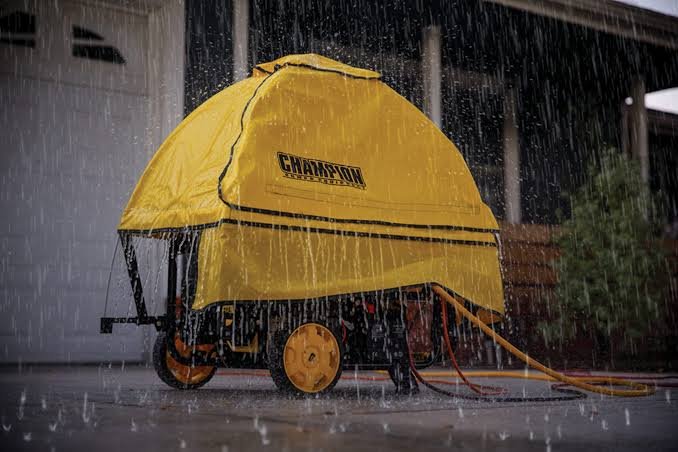
Generators can provide valuable backup power when the electricity supply is interrupted. In Pakistan, they are commonly used in homes, offices, shops, schools, factories, hospitals, and other buildings. However, a generator is also a machine that involves electricity, fuel, heat, exhaust gases, and moving components.
Because of these risks, generator safety should be treated as an important part of any complete fire and emergency-safety plan.
A generator that is incorrectly installed, poorly maintained, or operated in an unsuitable location can create fire, electrical, and exhaust-related hazards. Good planning can reduce these risks and help protect people and property.
Pakistan’s Building Code of Pakistan Fire Safety Provisions 2016 includes requirements relating to electrical fire safety, while the Building Code of Pakistan 2021 contains provisions addressing standby and emergency power systems and generator installations in certain buildings.
Why Generator Safety Matters
A generator combines several potential hazards in one piece of equipment.
It may involve:
- Fuel
- Electrical connections
- Hot surfaces
- Exhaust gases
- Batteries
- Cables
- Fuel lines
- Mechanical components
- Combustible materials
A problem with any one of these areas can create a safety concern.
For example, damaged wiring can create an electrical hazard, while a fuel leak can increase the risk of fire. Poor ventilation can allow dangerous exhaust gases to accumulate.
Generator safety therefore should not be considered separately from the property’s overall fire-safety plan.
Generators and Fire Risk
Generators can become a source of fire when fuel, electrical faults, heat, or poor maintenance are involved.
Common concerns include:
- Fuel leaks
- Damaged fuel lines
- Loose electrical connections
- Overheated components
- Improper wiring
- Combustible materials stored nearby
- Poor ventilation
- Incorrect installation
- Lack of maintenance
A generator should be installed and operated according to the manufacturer’s instructions and applicable requirements.
If a generator develops a fuel leak, electrical fault, unusual smell, smoke, or another serious problem, it should not simply be ignored.
Professional assistance may be necessary.
Never Use a Fuel-Burning Generator in an Enclosed Space
One of the most important generator-safety rules is ventilation.
Fuel-burning generators produce exhaust gases, including carbon monoxide. Carbon monoxide is dangerous because it is colorless and odorless, meaning people may not realize that it is accumulating.
A generator should never be operated inside a home, bedroom, garage, basement, enclosed balcony, or other poorly ventilated area.
The fact that a space has a door or window does not automatically make it suitable for generator operation.
The generator’s exhaust must be kept away from areas where people may be exposed to it.
Keep Generators Away From Combustible Materials
The area around a generator should be kept clear.
Combustible materials can include:
- Cardboard
- Paper
- Fabric
- Wood
- Plastic
- Packaging
- Paints
- Fuel containers
- Other flammable materials
Keeping these materials away from heat and ignition sources reduces the chance of an accidental fire spreading.
Generator areas should also remain accessible for inspection and maintenance.
Fuel Storage Requires Care
Fuel is an important part of generator safety.
Fuel should be handled and stored according to applicable safety requirements and the equipment manufacturer’s instructions.
Containers should be appropriate for the fuel and kept away from ignition sources and unsuitable heat.
People should never treat fuel storage as an ordinary household-storage task.
Children should also be kept away from fuel containers and generator areas.
Fuel leaks should never be ignored.
If a leak is suspected, the equipment should be made safe without creating additional ignition hazards, and qualified assistance should be obtained when necessary.
Refueling Requires Extra Attention
Refueling a generator introduces an additional fire risk because fuel can come into contact with hot surfaces or ignition sources.
The manufacturer’s instructions should always be followed.
A generator should be handled safely during refueling, and people should avoid creating sparks or flames around fuel.
Do not treat refueling as a routine activity that can be performed carelessly.
A responsible adult should manage fuel-related tasks, and children should stay away from the generator and fuel.
Electrical Connections Matter
Generator safety is also electrical safety.
Improper connections can create risks for people and property.
Generators should be connected according to the manufacturer’s requirements and applicable electrical standards. Where a generator is intended to supply a building’s electrical system, the installation should be designed and completed by appropriately qualified professionals.
Improvised wiring can create serious hazards.
Pakistan’s Building Code of Pakistan Fire Safety Provisions 2016 contains a dedicated section on electrical fire safety and states that electrical wiring, fixtures, appliances, and equipment should be installed in accordance with applicable standards or approved codes.
Avoid Improvised Electrical Connections
One common mistake is trying to connect a generator to a building’s electrical system using unsuitable or improvised wiring.
This can create electrical shock, fire, and equipment-damage risks.
A proper generator installation should account for the building’s electrical system and the way standby power is intended to operate.
For systems that automatically transfer between utility power and generator power, suitable transfer equipment is important.
Electrical work should be carried out by appropriately qualified personnel.
Generator Rooms Need Proper Planning
Larger buildings may have dedicated generator rooms.
The Building Code of Pakistan 2021 includes specific provisions for standby and emergency power systems in certain buildings. Where a generator set is located inside a building under those provisions, the generator system is addressed in relation to a separate room with fire-rated construction and other requirements.
The exact requirements depend on the building’s occupancy, design, size, and applicable code provisions.
This is one reason generator installations in larger buildings should be planned by qualified professionals rather than treated like a simple household appliance.
Keep the Exhaust System in Good Condition
Generator exhaust systems should be inspected and maintained.
A damaged or poorly positioned exhaust system can create serious problems.
The exhaust should be directed safely away from occupied spaces, air intakes, windows, doors, and other areas where gases could enter.
If the generator produces unusual exhaust, smoke, or other signs of malfunction, it should be inspected by an appropriately qualified technician.
Never ignore an exhaust-related problem.
Carbon Monoxide and Fire Safety
Generator safety is not limited to preventing fires.
Carbon monoxide exposure is another major concern associated with fuel-burning generators.
Because carbon monoxide cannot be reliably detected by human senses, prevention is especially important.
Homes and other occupied buildings can benefit from appropriate carbon-monoxide detection where relevant to their equipment and risk profile.
A carbon-monoxide alarm is different from a smoke alarm, and each serves a different purpose.
Families should understand this distinction rather than assuming that one type of alarm detects every possible hazard.
Generator Maintenance Should Be Regular
A generator should not be used repeatedly without maintenance.
Maintenance requirements depend on the generator model and manufacturer, but important areas may include:
- Fuel system
- Fuel lines
- Electrical connections
- Cables
- Battery
- Cooling system
- Exhaust system
- Engine components
- Control systems
- Protective devices
Flame Defender’s recent fire-equipment maintenance guidance specifically highlights fuel lines, fuel tanks, electrical connections, exhaust systems, cooling systems, batteries, cables, and ventilation when reviewing generator safety.
The manufacturer’s maintenance schedule should be followed.
Specialized repairs should be performed by appropriately qualified technicians.
Inspect Cables and Electrical Components
Electrical cables can deteriorate over time.
Look for obvious signs such as:
- Damaged insulation
- Exposed conductors
- Burn marks
- Loose connections
- Signs of overheating
- Unusual smells
- Repeated electrical faults
Damaged cables should not simply be wrapped temporarily and returned to service without proper assessment.
Electrical repairs should be handled by suitably qualified personnel.
Do Not Overlook Generator Batteries
Some generators use batteries as part of their starting or control systems.
Battery connections should be maintained according to the manufacturer’s instructions.
Signs of corrosion, physical damage, leakage, or other abnormalities should be addressed appropriately.
People should avoid improvising battery repairs or connections.
A qualified technician can determine whether a component needs cleaning, repair, replacement, or further inspection.
Generator Safety During Power Outages
Power outages can create unusual conditions.
People may be tired, in a hurry, or focused on restoring electricity as quickly as possible. This can lead to shortcuts.
Safety should remain the priority.
Before using backup power, responsible adults should make sure:
- The generator is located appropriately.
- Ventilation is adequate.
- Exhaust gases cannot enter occupied spaces.
- Fuel is handled safely.
- Electrical connections are appropriate.
- Combustible materials are kept away.
- The generator is operating according to its instructions.
A power outage should never become a reason to ignore basic safety precautions.
Generator Safety for Homes
Homeowners should consider the generator’s location carefully.
A residential generator should not be placed where exhaust can enter bedrooms, living spaces, garages, or other enclosed areas.
Families should also keep children away from the generator.
Children may be attracted by the machine’s sound or appearance, but they should never be allowed to play near it or touch fuel, cables, hot components, or controls without appropriate adult supervision.
A simple family rule is:
The generator is an adult-only safety zone.
Generator Safety for Businesses
Businesses may use larger generators to keep essential operations running during power failures.
These installations can be more complex because they may supply:
- Lighting
- Computers
- Security systems
- Refrigeration
- Pumps
- Medical equipment
- Industrial equipment
- Fire-protection systems
The generator should therefore be integrated into the property’s overall electrical and emergency-power design.
For larger properties, professional engineering and inspection are particularly important.
Generator Safety in Hospitals and Critical Buildings
Some buildings cannot simply lose power during an outage.
Hospitals, healthcare facilities, data centers, high-rise buildings, and other critical properties may require standby or emergency power systems for designated loads.
The Building Code of Pakistan 2021 addresses standby and emergency power requirements for specified buildings and systems.
These systems require careful design because the generator may be supporting important safety or building functions.
The exact requirements depend on the property’s classification and applicable provisions.
How Fire Alarms Fit Into Generator Safety
A generator should not be considered separately from the building’s fire-protection system.
A properly designed fire alarm system in Pakistan can provide early warning if smoke or heat associated with a fire is detected.
Flame Defender describes fire alarm solutions using smoke detectors, heat sensors, control panels, and notification equipment for residential, commercial, and industrial properties. It also describes installation, testing, maintenance, and system-upgrade services.
The relationship between generators and fire alarms can be especially important in larger buildings where backup power may be connected to safety systems.
However, the exact electrical arrangement should be designed according to the building, equipment, applicable requirements, and manufacturer’s instructions.
Backup Power for Fire-Safety Systems
Some buildings have fire-protection equipment that needs to remain operational during a power failure.
Depending on the building and system, this may include:
- Fire alarm systems
- Emergency lighting
- Fire pumps
- Emergency communication systems
- Other designated life-safety equipment
The Building Code of Pakistan 2021 contains provisions for standby and emergency power systems and identifies certain standby and emergency power loads.
This demonstrates why backup power planning should be integrated with the building’s broader safety design.
Fire Alarm Maintenance Still Matters
Having backup electricity does not guarantee that a fire alarm system will work.
The alarm system itself needs appropriate inspection and maintenance.
Maintenance can include checking:
- Smoke detectors
- Heat detectors
- Control panels
- Manual call points
- Sounders
- Visual notification devices
- Batteries
- Wiring
- Fault indicators
Flame Defender describes regular testing and maintenance as important for keeping fire alarm systems operational and identifying faults before an emergency.
The appropriate maintenance schedule should be established according to the installed system, manufacturer instructions, and applicable requirements.
Never Disable a Fire Alarm Because of Generator Noise
Generators can produce significant noise and vibration.
However, a noisy generator should not be a reason to disable or disconnect a fire alarm system.
If the generator affects alarm audibility, system operation, or the building’s safety arrangements, the issue should be investigated professionally.
Fire alarms need to remain available when people need them most.
Emergency Planning Should Include Generator Failure
A complete safety plan should consider what happens if the generator itself stops working.
For example, the plan may need to address:
- Loss of backup lighting
- Loss of certain electrical services
- Fire-alarm power arrangements
- Emergency communication
- Evacuation
- Access for emergency responders
Businesses should know which systems are supported by backup power and what happens if the generator fails.
This type of planning is particularly important in buildings where occupants depend on electrically powered safety systems.
Generator Safety and Fire Prevention
The best generator safety plan is based on prevention.
A useful checklist includes:
Location
- Keep the generator in an appropriate location.
- Provide adequate ventilation.
- Keep exhaust away from occupied spaces.
- Follow the manufacturer’s location requirements.
Fuel
- Inspect fuel lines and connections.
- Store fuel appropriately.
- Keep fuel away from ignition sources.
- Address leaks immediately.
Electrical Safety
- Use appropriate electrical connections.
- Avoid improvised wiring.
- Inspect cables and connections.
- Use qualified electrical personnel for building connections.
Maintenance
- Follow the manufacturer’s service schedule.
- Inspect exhaust and cooling systems.
- Check batteries and electrical components.
- Keep maintenance records where appropriate.
Fire Protection
- Keep suitable fire-safety equipment accessible.
- Keep combustible materials away from the generator.
- Maintain smoke and fire detection systems.
- Keep escape routes clear.
What to Do If a Generator Shows Signs of a Problem
Warning signs should not be ignored.
These can include:
- Fuel leakage
- Smoke
- Burning smells
- Sparks
- Unusual overheating
- Damaged cables
- Unusual exhaust
- Repeated electrical faults
- Abnormal sounds
If a generator appears unsafe, people should move away from the hazard and avoid attempting repairs unless they are properly qualified to do so.
For serious emergencies, appropriate emergency services should be contacted.
Generator Safety During Construction
Construction and renovation sites can have additional generator risks.
Temporary electrical installations, fuel storage, construction materials, dust, and other combustible materials may be present.
Flame Defender’s construction fire-safety guidance recommends safe generator operation, adequate ventilation, safe fuel handling, and keeping generators away from combustible materials.
Construction workers should also ensure that generator cables do not create trip hazards or become damaged by vehicles, equipment, or construction activities.
A Simple Generator Safety Checklist
Property owners can use the following checklist as a general reminder:
- [ ] Generator is located in an appropriate area.
- [ ] Exhaust cannot enter occupied spaces.
- [ ] Ventilation is adequate.
- [ ] Fuel lines are checked.
- [ ] There are no obvious fuel leaks.
- [ ] Electrical connections are appropriate.
- [ ] Cables are free from visible damage.
- [ ] Combustible materials are kept away.
- [ ] The generator receives scheduled maintenance.
- [ ] Children cannot access the equipment.
- [ ] Fire-safety equipment remains accessible.
- [ ] Fire alarms remain operational.
- [ ] Emergency routes remain clear.
- [ ] Qualified professionals handle specialized repairs.
This checklist is a general safety aid and does not replace the generator manufacturer’s instructions or applicable regulations.
Why a Complete Safety Plan Matters
Generator safety should be connected with the rest of the property’s emergency plan.
A well-rounded plan can include:
Prevention: Reduce electrical, fuel, and fire hazards.
Detection: Use appropriate smoke and fire detection.
Warning: Ensure occupants can hear or see emergency notifications.
Evacuation: Keep escape routes clear and establish emergency procedures.
Backup power: Make sure critical systems have appropriate backup arrangements where required.
Maintenance: Inspect and maintain equipment regularly.
This layered approach is more reliable than depending on one piece of equipment.
Choosing Professional Fire-Safety Support
For larger homes, businesses, factories, offices, schools, hospitals, and other complex buildings, professional fire-safety advice can help coordinate different systems.
A properly designed fire alarm system in Pakistan should consider the property’s layout, occupancy, fire risks, and applicable requirements.
Flame Defender provides fire alarm installation services across Pakistan and describes site surveys, system design, installation, commissioning, testing, maintenance, and upgrades as part of its services.
More information about fire-safety solutions is available through the official Flame Defender website.
Conclusion
A generator can provide valuable backup power, but it should never be treated as an ordinary appliance.
Fuel, electricity, exhaust gases, heat, batteries, and mechanical components all require proper attention. Safe installation, appropriate ventilation, careful fuel management, suitable electrical connections, regular inspection, and professional maintenance can help reduce unnecessary risks.
Generator safety should also be connected to the property’s broader fire-safety plan. Smoke detection, fire alarms, emergency lighting, clear escape routes, and appropriate emergency procedures can provide additional layers of protection.
For buildings where backup power supports safety systems, careful coordination is especially important. Pakistan’s Building Code provisions address standby and emergency power systems for applicable buildings, while fire-safety provisions address electrical safety and fire-protection systems.
A reliable fire alarm system in Pakistan can provide an important early-warning layer, but it works best as part of a complete safety strategy that includes prevention, maintenance, evacuation planning, and appropriate backup power.
The goal is simple: use generators safely, maintain them properly, and make sure backup power supports—not undermines—the overall safety of the building.
FAQs
1. Why is generator safety important?
Generators involve fuel, electricity, heat, and exhaust gases. Poor installation, inadequate ventilation, fuel leaks, or damaged electrical connections can create fire, electrical, or exhaust-related hazards.
2. Can a generator be operated inside a garage?
Fuel-burning generators should not be operated in enclosed or poorly ventilated areas such as garages because their exhaust can allow dangerous gases, including carbon monoxide, to accumulate.
3. How often should a generator be maintained?
The maintenance schedule depends on the generator model, operating conditions, and manufacturer’s instructions. Fuel systems, electrical connections, batteries, cooling systems, exhaust systems, and other components should be inspected as required.
4. Does a generator need to be connected to a fire alarm system?
The relationship between a generator and a fire alarm system depends on the building and system design. In larger or critical buildings, backup power may be required for designated life-safety systems. The Building Code of Pakistan contains provisions for standby and emergency power in applicable buildings.
5. How does a fire alarm system help with generator-related fire risks?
A properly designed fire alarm system can provide early warning when smoke or heat is detected. Flame Defender describes systems using smoke detectors, heat sensors, control panels, and notification devices, along with installation, testing, and maintenance services.