
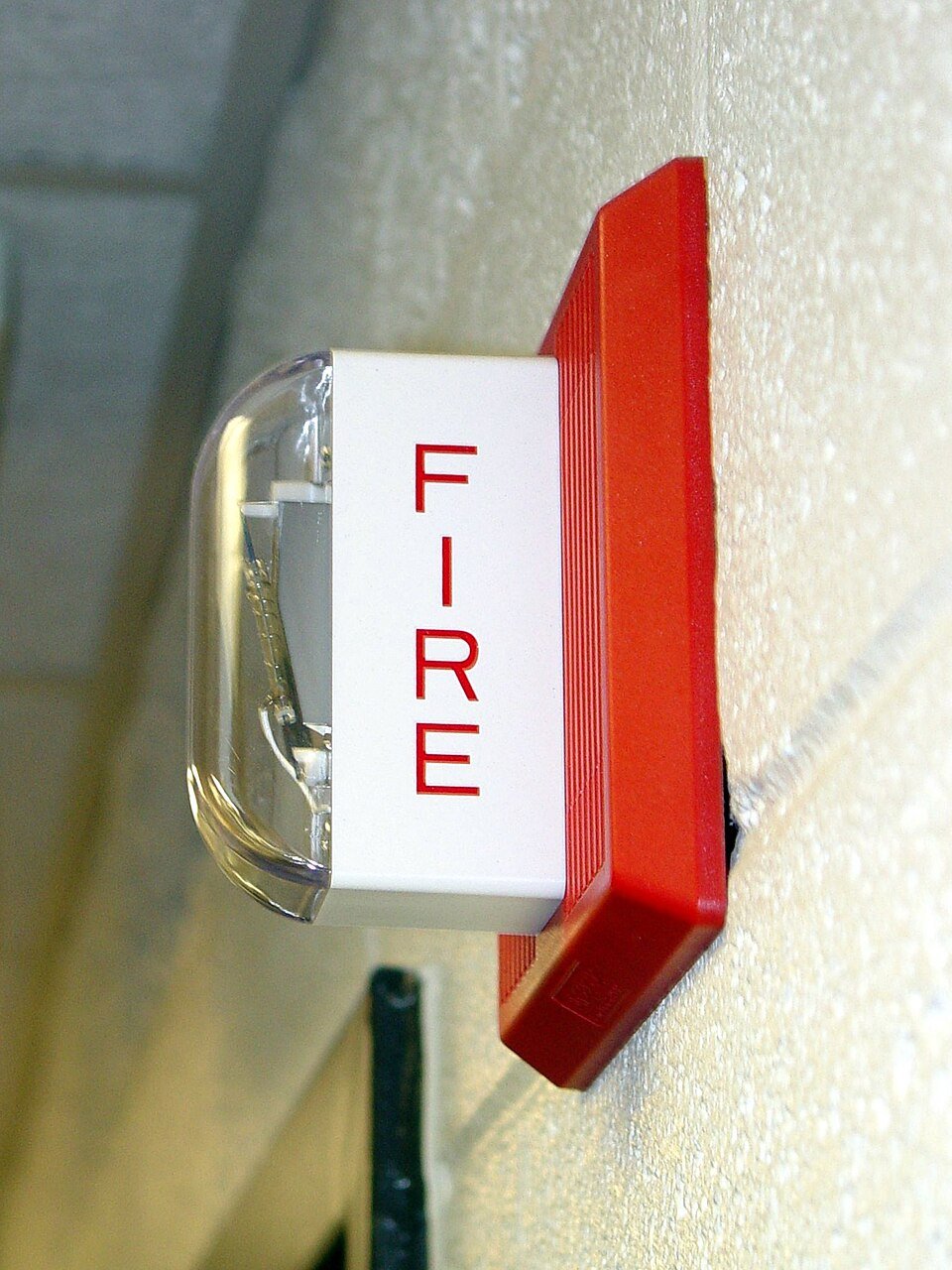
Fire can develop quickly, and the first few moments of an emergency can be extremely important. A fire alarm system is designed to provide early warning, helping people recognize a potential fire and begin an appropriate emergency response. In homes, offices, schools, hospitals, factories, hotels, warehouses, and commercial buildings, fire detection is an important part of a wider life-safety strategy.
A fire alarm system does not physically extinguish a fire. Instead, its primary role is detection, notification, and communication. By detecting smoke, heat, or another indication of fire and then activating alarms, the system can help reduce the time between the beginning of an incident and people’s awareness of it.
In Pakistan, fire-safety planning is supported by national building-code provisions. The Pakistan Engineering Council lists the Building Code of Pakistan – Fire Safety Provisions 2016 among its published building codes and standards.
The Building Code of Pakistan 2021 also states that fire alarm systems are to be provided where required by the applicable fire-safety provisions.
What Is a Fire Alarm System?
A fire alarm system is a coordinated collection of devices designed to detect indications of fire and warn occupants.
Depending on the type of installation, a system can contain:
- Smoke detectors
- Heat detectors
- Manual call points
- Fire alarm control panels
- Audible sounders
- Visual alarm indicators
- Input and output modules
- Backup power supplies
- Monitoring equipment
- Other specialized detection devices
When a detector identifies a condition that meets its alarm criteria, it communicates with the fire alarm control panel or another part of the system. The system can then activate notification devices so occupants are alerted.
The exact operation depends on the system design, equipment, building type, and applicable requirements.
Why Early Detection Matters
One of the most important functions of a fire alarm system is reducing the time it takes to discover a fire.
A fire may begin in a room where nobody is present. It could also start outside normal working hours, during the night, or in an area separated from most occupants.
Without detection equipment, people may only become aware of the incident after seeing flames or smelling smoke. By that point, the fire may already have developed.
A properly designed detection system can provide an earlier warning.
This early warning can give occupants time to:
- Recognize the emergency
- Alert other people
- Leave the affected area
- Follow the building’s evacuation procedure
- Contact emergency services
- Assist with an organized emergency response
A fire alarm does not guarantee that a fire will be detected immediately, but a properly selected, installed, and maintained system is an important layer of protection.
The Main Components of a Fire Alarm System
Smoke Detectors
Smoke detectors are designed to identify smoke particles associated with a developing fire.
Different detector technologies are available, and the appropriate type depends on the environment and system design.
For example, areas with steam, dust, cooking fumes, or other environmental conditions may require careful detector selection to reduce unwanted alarms.
Heat Detectors
Heat detectors respond to temperature conditions or changes in temperature according to their design.
They can be useful in environments where smoke detectors may not be appropriate because of normal environmental conditions.
The choice between smoke, heat, or other detection technologies should be based on the building and fire-risk assessment.
Manual Call Points
A manual call point allows a person to manually activate the fire alarm.
These devices provide an important additional method of raising an alarm when someone discovers a fire before an automatic detector activates.
Fire Alarm Control Panel
The control panel is the central part of many fire alarm systems.
It receives information from detectors and other initiating devices and controls notification equipment.
Depending on the system, the panel may identify a zone, individual detector, fault condition, or other system information.
Sounders and Visual Indicators
Audible alarms provide sound-based notification, while visual indicators can provide warning through flashing lights.
Visual notification can be especially useful in areas where people may have difficulty hearing an audible alarm or where background noise is significant.
Conventional Fire Alarm Systems
A conventional fire alarm system divides a building into zones.
Multiple detection devices may be connected to a particular circuit or zone, and the control panel identifies the affected zone when an alarm condition occurs.
Conventional systems can be suitable for certain smaller or less complex buildings where identifying the general area of an alarm is sufficient.
The suitability of a conventional system depends on the building’s size, layout, occupancy, risk profile, and applicable requirements.
Addressable Fire Alarm Systems
Addressable systems provide more detailed information about individual devices.
Instead of simply identifying a general zone, an addressable control panel can often identify the particular detector or device that has entered an alarm condition.
This can be useful in larger buildings because personnel can identify the approximate location of the alarm more quickly.
Flame Defender states that it installs both conventional and addressable fire alarm systems for residential, commercial, and industrial properties in Pakistan.
Wireless Fire Alarm Systems
Wireless fire alarm systems use wireless communication between suitable system components instead of relying entirely on conventional cabling.
They can be useful in certain existing buildings where installing new cables would be difficult or disruptive.
However, wireless systems still require professional design, appropriate equipment, testing, and maintenance.
The best solution depends on the building’s structure, environment, coverage requirements, and applicable fire-safety standards.
Intelligent and Specialized Detection
Some buildings require more advanced detection than basic smoke or heat sensors.
Specialized systems may be used in environments such as:
- Data centers
- Server rooms
- Industrial facilities
- Warehouses
- High-value storage areas
- Large commercial properties
For example, Flame Defender lists aspirating smoke detection among the systems it installs for high-sensitivity environments such as server and clean-room applications.
The important principle is that detection technology should match the risk and environment rather than being selected solely on price.
How a Fire Alarm System Responds to Smoke or Heat
A simplified sequence may look like this:
1. Fire begins
A fire develops somewhere within the protected area.
2. Detection occurs
A smoke detector, heat detector, or another initiating device identifies a condition that meets its alarm criteria.
3. Signal reaches the control panel
The fire alarm control panel receives the signal.
4. Alarm activates
Sounders, visual indicators, or other notification devices operate according to the system design.
5. Occupants respond
People follow the building’s emergency and evacuation procedures.
6. Emergency response begins
Appropriate emergency services are contacted and responders manage the incident.
This process demonstrates why detection and notification are important components of life safety.
Fire Alarm Systems and Evacuation
An alarm only becomes useful when people know how to respond to it.
Every building with a fire alarm should have appropriate emergency procedures. Occupants should understand the meaning of the alarm and know the designated evacuation routes.
Important considerations include:
- Clear exit routes
- Accessible emergency doors
- Emergency lighting where required
- Assembly areas
- Evacuation procedures
- Staff responsibilities
- Emergency communication
- Procedures for assisting people who need additional support
The Building Code of Pakistan 2021 includes requirements concerning means of egress and identifies fire alarm systems and automatic fire detection equipment among emergency-power loads in applicable situations.
Fire Alarms Are Not Fire Extinguishing Systems
A common misunderstanding is that a fire alarm system itself puts out a fire.
It does not.
A fire alarm system detects and communicates. Fire suppression systems perform a different function.
Depending on the building, fire suppression may involve:
- Automatic sprinklers
- Water-based systems
- Water mist
- Dry chemical systems
- Clean-agent systems
- Other specialized suppression arrangements
Some buildings may use integrated systems in which fire detection initiates or interacts with other safety equipment.
Flame Defender, for example, describes fire suppression solutions for environments including server rooms, industrial kitchens, and manufacturing facilities.
The detection and suppression systems should be designed to work together where required.
Fire Alarm Systems and Smoke Control
Smoke can be one of the most dangerous aspects of a building fire. It can reduce visibility, affect breathing, and make evacuation more difficult.
Some buildings therefore require smoke-control measures in addition to fire detection.
The Building Code of Pakistan 2021 contains provisions concerning smoke-control systems and explains that smoke control can help restrict the movement of smoke and maintain usable means of egress in applicable buildings.
This illustrates an important point: fire safety is a system of interconnected measures rather than one piece of equipment.
Why Installation Quality Matters
A fire alarm system is only useful if it is appropriately designed and installed.
Poor detector placement, incompatible components, damaged wiring, inadequate coverage, or incorrect programming can affect system performance.
A professional installation normally involves assessing:
- Building layout
- Occupancy
- Fire hazards
- Ceiling arrangements
- Environmental conditions
- Detector locations
- Alarm notification coverage
- Control-panel requirements
- Backup power
- Applicable standards and codes
Flame Defender describes a process that includes site surveys, system design, installation, programming, commissioning, and testing.
For larger buildings, professional system design is particularly important.
Maintenance Is Essential
Installing a fire alarm system is not the end of fire-safety planning.
Dust, humidity, component aging, wiring problems, power failures, and other conditions can affect system reliability.
Regular inspection and maintenance can identify problems before an emergency occurs.
Maintenance may involve checking:
- Smoke detectors
- Heat detectors
- Manual call points
- Control panels
- Batteries
- Sounders
- Visual indicators
- Wiring
- Communication equipment
- Fault indications
The Pakistan Engineering Council’s fire-safety framework includes maintenance, testing, inspection, and servicing of fire-protection systems and equipment.
Flame Defender also describes preventive maintenance, system testing, repairs, upgrades, and technical support as part of its fire alarm services.
Testing a Fire Alarm System
Testing confirms whether the system is functioning as intended.
A suitable testing program may verify that:
- Detectors respond appropriately.
- Manual call points operate.
- Sounders produce the required warning.
- Visual notification devices work where provided.
- The control panel receives signals correctly.
- Backup power is available where required.
- Fault conditions are reported.
- System interfaces operate correctly.
Testing should follow the applicable standards, manufacturer’s instructions, and building requirements.
Commercial and industrial systems should be maintained by appropriately qualified personnel.
Common Causes of Fire That Detection Can Help Address
Fire alarm systems can provide warning for fires caused by many different hazards.
Examples include:
Electrical Faults
Short circuits, damaged wiring, overloaded circuits, and faulty equipment can contribute to fire.
Cooking Equipment
Kitchens contain heat sources, cooking oils, gas equipment, and electrical appliances. Appropriate detection and suppression arrangements may be required depending on the facility.
Flammable Materials
Factories, warehouses, workshops, and other facilities may store or use combustible or flammable materials.
Heating Equipment
Faulty or poorly maintained heating equipment can create fire hazards.
Human Error
Unsafe practices can contribute to fires. Training, housekeeping, and appropriate supervision can help reduce these risks.
Detection does not eliminate these hazards, but it can provide an additional layer of protection if a fire occurs.
Fire Alarm Systems in Homes
Residential fire protection is important because people may be asleep when a fire starts.
A suitable smoke alarm can provide an early warning that may alert occupants before a fire becomes more developed.
Homes should also have a simple evacuation plan.
Family members should know:
- How to recognize the alarm
- Which exits are available
- Where to meet outside
- How to contact emergency services
- Why they should not return inside after evacuation unless emergency responders say it is safe
Smoke alarms should be tested and maintained according to their manufacturer’s instructions.
Fire Alarm Systems in Commercial Buildings
Commercial buildings often have more complex fire risks and larger numbers of occupants.
Offices, hotels, shopping centers, schools, hospitals, warehouses, factories, and apartment buildings may require integrated fire detection and alarm arrangements.
The exact requirements vary according to occupancy, building design, size, height, hazards, and applicable regulations.
The Building Code of Pakistan includes fire alarm requirements for applicable occupancies, while the 2021 building code contains specific provisions referencing fire alarm systems and automatic fire detection in relevant building situations.
A professional fire-risk assessment can help determine the appropriate system.
The Role of Fire Alarm Systems in Pakistan
The phrase Fire alarm system in Pakistan covers a wide range of solutions, from residential smoke alarms to sophisticated addressable systems used in large commercial and industrial buildings.
The appropriate system should not be selected solely because it is popular or inexpensive.
Important considerations include:
- Building type
- Number of occupants
- Building size
- Fire hazards
- Environmental conditions
- Required detection coverage
- Evacuation arrangements
- Applicable codes
- Maintenance requirements
- Future expansion
The Pakistan Engineering Council currently lists the Building Code of Pakistan Fire Safety Provisions 2016 among its published codes and standards.
This provides an important reference point for fire-safety planning in Pakistan.
Fire Alarm Systems and Emergency Communication
Modern fire-safety planning can involve more than sounders.
Some buildings use voice evacuation or public-address systems to provide emergency instructions.
This can be particularly useful in large buildings where people may need clear instructions about evacuation routes or specific emergency procedures.
Fire alarm systems can therefore form part of a broader emergency communication strategy.
The design should ensure that alarms and emergency messages can be heard or seen where required.
False Alarms
False alarms can occur when a detector responds to conditions that are not an actual fire.
Possible contributing factors include:
- Dust
- Steam
- Cooking fumes
- Construction activity
- Environmental conditions
- Equipment faults
- Poor detector selection
- Incorrect detector placement
False alarms should not simply be ignored.
If a system repeatedly produces unwanted alarms, the cause should be investigated. Professional assessment may determine whether cleaning, maintenance, relocation, detector-type changes, or another corrective action is appropriate.
A fire alarm system should never be disabled simply because unwanted alarms are inconvenient.
Fire Alarm Systems and Business Continuity
Fire protection is also important for protecting business operations.
A fire can damage buildings, equipment, inventory, records, and infrastructure. It can also interrupt normal operations.
Early detection may help reduce the time before an emergency response begins, potentially limiting the development of an incident.
However, fire alarms should be considered alongside other measures such as fire suppression, emergency planning, electrical safety, safe storage, housekeeping, and evacuation procedures.
Choosing a Fire Alarm Service Provider
When selecting a fire alarm service provider, property owners should consider:
- Relevant technical experience
- System design capability
- Installation quality
- Equipment documentation
- Testing and commissioning
- Maintenance support
- Availability of replacement components
- Staff training
- Appropriate certifications or qualifications
- Understanding of applicable fire-safety requirements
A supplier should be able to explain why a particular system is suitable for the property rather than simply recommending equipment without assessing the building.
For information about fire alarm installation and related fire-safety services in Pakistan, Flame Defender provides information about conventional, addressable, wireless, intelligent, smoke-detection, and heat-detection systems.
A Simple Fire Alarm Safety Checklist
Property owners and facility managers can use the following checklist as a starting point:
- Is the building protected by an appropriate detection system?
- Are detector locations suitable?
- Are manual call points accessible where required?
- Can occupants hear or see the alarm?
- Is the control panel functioning correctly?
- Is backup power available where required?
- Are emergency exits clear?
- Are evacuation procedures documented?
- Are staff trained in emergency procedures?
- Is the system regularly tested?
- Are maintenance records kept?
- Are repeated faults investigated?
- Has the system been reviewed when the building’s use or layout changes?
This checklist is not a substitute for a professional fire-safety assessment or applicable regulatory requirements.
What to Do When the Fire Alarm Sounds
When an alarm activates, occupants should treat it seriously.
They should follow the building’s emergency procedure, leave through a safe designated route, and move to the appropriate assembly area.
People should not assume that an alarm is false simply because they cannot immediately see smoke or flames.
If there is an actual emergency, people should follow instructions from emergency responders.
The priority is life safety. People should not delay evacuation to collect personal belongings or investigate an unsafe area.
Conclusion
Fire alarm systems play an important role in protecting people and property by providing early warning when a potential fire is detected. They do not replace fire prevention, extinguishing systems, emergency exits, or trained personnel, but they form an important part of a layered fire-safety strategy.
The effectiveness of a system depends on appropriate design, correct installation, suitable equipment, proper testing, and regular maintenance.
In Pakistan, the Building Code framework includes provisions concerning fire alarm systems, automatic fire detection, emergency notification, means of egress, and related fire-safety measures.
For anyone researching a Fire alarm system in Pakistan, the key consideration should be the specific safety needs of the building rather than simply selecting a particular device. A home, hotel, factory, warehouse, hospital, school, and high-rise building can have very different fire risks and protection requirements.
A reliable fire alarm system provides an early warning, but its greatest value comes when it operates as part of a complete safety plan that includes prevention, evacuation, fire protection, emergency communication, inspection, and maintenance.
FAQs
1. What is the main purpose of a fire alarm system?
The main purpose is to detect indications of fire and provide an early warning to occupants and, where applicable, other parts of the building’s emergency system. This warning can support timely evacuation and emergency response.
2. What are the main types of fire alarm systems?
Common types include conventional, addressable, wireless, and specialized detection systems. The appropriate option depends on the building’s size, layout, occupancy, hazards, and applicable requirements.
3. Does a fire alarm system put out a fire?
No. A fire alarm system primarily detects and communicates a fire condition. Fire suppression systems, such as sprinklers or specialized suppression equipment, perform the function of controlling or extinguishing fires.
4. Do fire alarm systems require regular maintenance?
Yes. Regular inspection, testing, and maintenance help ensure that detectors, control panels, notification devices, batteries, wiring, and other components remain operational. The maintenance schedule should follow applicable requirements and manufacturer guidance.
5. How do I choose a fire alarm system for a building in Pakistan?
The system should be selected