
Teaching children about fire safety is an important part of creating a safer home. Children should understand what a fire alarm sounds like, why they should never play with ignition sources, how to leave a building during an emergency, and when to ask an adult for help.
Fire blankets can also be introduced as part of basic fire-safety education. However, children should understand an important distinction: learning what a fire blanket is does not mean children should use one to fight a fire. Any fire involving an immediate danger should be reported to an adult, and children should leave the area rather than attempting to control the fire.
A fire blanket is a piece of fire-safety equipment designed for certain limited fire situations. In a household, it may form one part of a wider safety plan that also includes smoke alarms, fire extinguishers, emergency exits, and a properly maintained fire alarm system.
For homeowners in Pakistan, fire-safety education can be especially useful because the Pakistan Engineering Council’s Building Code of Pakistan – Fire Safety Provisions 2016 addresses fire prevention, life safety, fire protection, detection and alarm systems, and other aspects of building fire safety.
1. Start With the Basic Question: What Is a Fire Blanket?
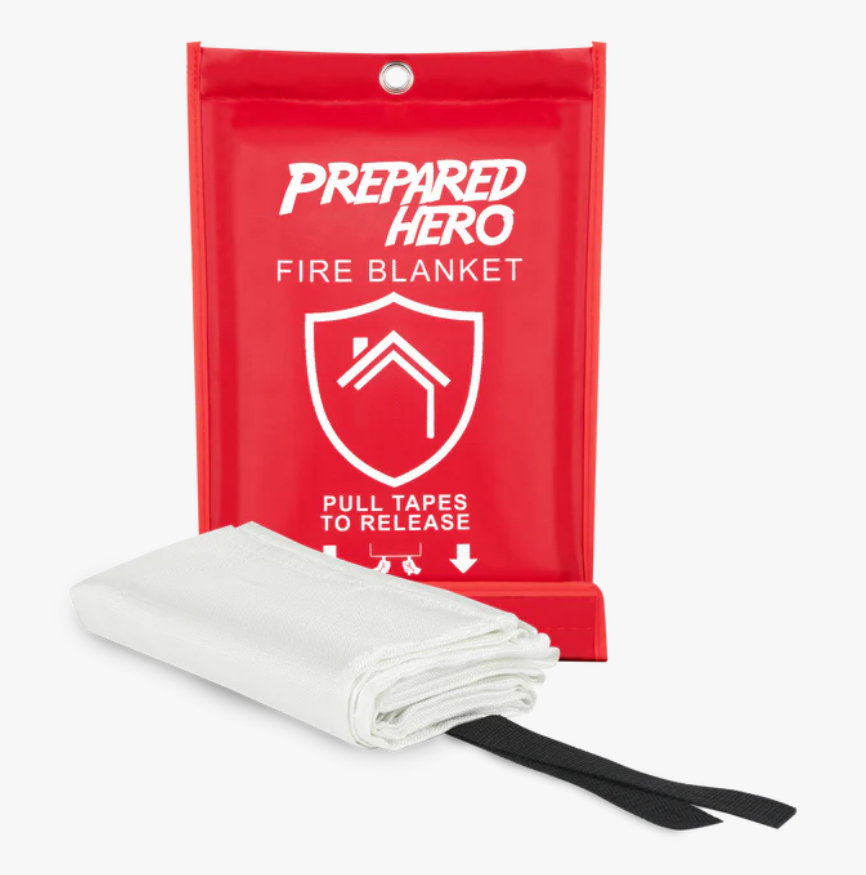
A fire blanket is a specially manufactured sheet of fire-resistant material intended for certain small fire situations.
Its purpose is to cover an appropriate fire and help separate the flames from the oxygen that supports combustion. Fire blankets are generally associated with specific small-scale applications rather than large or spreading fires.
When teaching children, the explanation should remain simple:
“A fire blanket is safety equipment that adults may use for certain small fires. Children should never try to use it themselves.”
This distinction is important.
Children can learn the name, appearance, purpose, and location of the equipment without being encouraged to approach a fire.
Fire blankets should also be kept accessible, clearly identified, and maintained according to the manufacturer’s instructions.
2. Children Should Learn That Fire Is Dangerous
Before explaining fire blankets, children should understand the basic danger of fire.
Fire can produce:
- Heat
- Smoke
- Flames
- Toxic gases
- Rapidly changing conditions
- Reduced visibility
A fire that appears small can become more dangerous quickly.
Children should therefore learn that they should never investigate a fire closely, touch flames, or remain nearby to watch what happens.
A simple rule is:
See fire → move away → tell an adult → follow the emergency plan.
This is more important than teaching a child how to operate fire-fighting equipment.
3. Explain the Difference Between a Fire Blanket and a Fire Alarm
Children may see several different pieces of fire-safety equipment around a home or school.
A fire blanket is intended for certain limited fire situations.
A smoke alarm detects smoke and produces a warning.
A larger fire alarm system can connect multiple detection and notification devices.
These devices have different purposes.
A Fire alarm system in Pakistan may include smoke detectors, heat sensors, manual call points, sounders, control panels, and other equipment depending on the building and system design. Flame Defender describes conventional and addressable fire alarm systems incorporating smoke detectors, heat sensors, and control panels for residential, commercial, and industrial properties.
Children can be taught simple differences:
| Equipment | Basic purpose |
|---|---|
| Smoke alarm | Warns people when smoke is detected |
| Fire alarm system | Detects and communicates fire conditions throughout a building |
| Fire blanket | Provides protection for certain limited fire situations |
| Fire extinguisher | Designed for specific types of fires and trained users |
| Emergency exit | Provides a route away from danger |
The goal is understanding, not hands-on fire-fighting.
4. Teach Children Where Fire-Safety Equipment Is Located
Children should know where important safety equipment is located without being encouraged to operate it.
At home, parents can point out:
- Smoke alarms
- Fire alarm notification devices
- Emergency exits
- Fire blankets
- Fire extinguishers
- Emergency contact information
The exact location of equipment depends on the building.
Children should know that fire-safety equipment should remain accessible and should not be hidden behind furniture, boxes, decorations, or other household items.
For larger buildings, fire-safety equipment should be installed and maintained according to the applicable design and safety requirements.
The Pakistan Engineering Council’s fire-safety provisions include requirements concerning accessible and unobstructed manual fire alarm boxes and provisions for smoke alarms and smoke detection systems.
5. Teach Children Never to Hide a Fire
Children sometimes worry that they will get into trouble if they accidentally cause or discover something dangerous.
Fire-safety education should make one message very clear:
If you see smoke or fire, tell an adult immediately.
Children should never hide a fire or attempt to deal with it secretly.
They should also understand that telling an adult quickly is more important than worrying about whether someone will be angry.
Adults can reinforce this message through simple examples and regular safety conversations.
6. Explain That Fire Blankets Are Not Toys
A fire blanket may look like a simple piece of fabric when it is stored inside its container.
Children should understand that it is safety equipment, not a toy.
They should not:
- Pull it out unnecessarily
- Wrap themselves in it as a game
- Drag it around
- Use it as a costume
- Hide it
- Damage its packaging
- Place objects on top of it
The equipment needs to remain available for its intended safety purpose.
Parents and teachers can explain that emergency equipment should always be treated seriously.
7. Children Should Know the Difference Between Learning and Responding
Teaching children about fire blankets does not mean asking them to respond to a fire.
This is one of the most important concepts for parents and teachers.
Children can learn:
- What a fire blanket looks like
- What it is called
- Why adults keep one
- Where it is stored
- Why it must remain accessible
- When to alert an adult
But they should not be expected to approach a fire.
If there is a fire, children should follow the household or school emergency plan and move away from danger.
For younger children, the safest lesson is particularly simple:
“Never fight a fire. Get away and tell an adult.”
8. Teach Children About Smoke Alarms
Fire blankets are only one part of fire safety.
Smoke alarms are particularly important because they can warn occupants when smoke is detected.
Children should know what the household smoke alarm sounds like.
Parents can explain:
“If you hear this alarm, stop what you are doing and follow our fire-escape plan.”
The Pakistan fire-safety provisions include requirements concerning single-station and multiple-station smoke alarms where required by the applicable provisions. They also address smoke detector placement and power arrangements.
Children should never be taught to ignore an alarm because they think it is a false alarm.
Instead, adults should investigate recurring nuisance alarms and ensure the system is properly maintained.
9. Connect Fire Blanket Education With Fire Alarm Education
A strong fire-safety lesson connects different pieces of equipment.
For example:
Smoke detected → alarm sounds → people respond → occupants evacuate if necessary → emergency services are contacted.
A fire blanket does not replace a smoke alarm.
Likewise, a smoke alarm does not physically extinguish a fire.
Each piece of equipment has a different role.
This is particularly important when explaining a Fire alarm system in Pakistan to older children or teenagers. They can learn that modern fire alarm systems can use detectors and control panels to identify and communicate fire conditions. Flame Defender describes systems ranging from conventional and addressable arrangements to other specialized detection solutions.
10. Make Fire-Escape Planning Part of the Lesson
Children should know what to do if a fire alarm sounds.
A household fire-escape plan can include:
- Recognizing the alarm.
- Leaving the building promptly.
- Using the planned exit.
- Staying away from smoke.
- Going to the family meeting point.
- Telling an adult if someone is missing.
- Never returning inside without authorization from emergency personnel.
Families should consider more than one possible escape route where appropriate.
Parents should also consider children who are very young or who may need assistance during an evacuation.
11. Teach Children to Stay Low When Smoke Is Present
Smoke can make visibility difficult and can contain harmful substances.
Children should know that if smoke is present, they should avoid moving through thick smoke and follow their emergency escape plan.
The exact response can depend on the circumstances and the building’s evacuation plan.
The most important rule remains:
Get away from the fire and smoke and reach a safe location.
Children should not stop to collect toys, phones, school bags, or other belongings.
12. Teach Children How to Raise the Alarm
Children should know how to get help.
Depending on their age, parents can teach them:
- How to tell an adult about a fire
- How to respond when a smoke alarm sounds
- Where the household meeting point is
- How to identify emergency exits
- How to contact emergency services when appropriate
Very young children may only need to know how to alert a nearby responsible adult.
Older children can receive more detailed emergency education that is appropriate for their age.
13. Fire Blankets Should Be Kept Accessible
A fire blanket cannot help if nobody can reach it when required.
Adults should select a suitable location according to the product’s instructions and the property’s fire-safety plan.
The storage location should not be blocked by:
- Boxes
- Furniture
- Appliances
- Household clutter
- Decorations
Children should know where it is without being given responsibility for using it.
The same principle applies to other fire-safety equipment.
Flame Defender’s maintenance guidance emphasizes that fire-safety equipment should not simply be purchased and forgotten. Regular inspection and maintenance are important for keeping equipment ready for an emergency.
14. Teach Children That Not Every Fire Is the Same
Children do not need to learn technical fire classifications in detail, but older students can be introduced to the idea that different fires require different responses.
For example, a fire involving ordinary combustible materials is different from one involving electrical equipment or cooking substances.
This is one reason people should not assume that any fire-safety device is appropriate for every situation.
A fire blanket is intended for particular limited applications. It should not be treated as a universal solution for every type of fire.
The safest decision for a child is not to determine the fire type or select fire-fighting equipment. The child should move away and alert a responsible adult.
15. Use Simple Fire-Safety Rules
Children remember short rules more easily than complicated instructions.
Parents and teachers can use five basic rules:
Rule 1: Don’t play with fire
Fire is not a toy.
Rule 2: Know the alarm
Learn what the household or school fire alarm sounds like.
Rule 3: Tell an adult
Report smoke, flames, or a burning smell immediately.
Rule 4: Get outside
Follow the emergency escape plan when evacuation is required.
Rule 5: Stay outside
Never return to a building because you forgot a personal item.
These simple messages can be repeated regularly.
Fire Safety Lessons at Home
Parents do not need a complicated lesson plan.
A short family discussion can cover:
- What a smoke alarm sounds like
- Where the exits are
- Where the family meets outside
- Where the fire blanket is stored
- What children should do if they see smoke
- Why they must never hide a fire
- Why they should never return to a burning building
Parents can walk through the home and point out safety equipment.
However, children should not be asked to create real fires or practice extinguishing fires.
Fire-safety demonstrations involving actual flames should only be conducted by appropriately trained adults in controlled educational environments.
Fire Safety Education in Schools
Schools can teach children about fire blankets as part of a wider fire-safety program.
A school lesson may cover:
- Fire prevention
- Smoke alarms
- Fire alarm systems
- Emergency exits
- Evacuation drills
- Fire blankets
- Fire extinguishers
- Emergency communication
- Assembly areas
Schools should ensure that children understand that fire-fighting equipment is not something to experiment with.
The focus should be on prevention, recognition, alarm, evacuation, and obtaining help.
For larger educational buildings, a properly designed fire alarm system can provide detection and warning throughout the premises.
Fire Blankets and Kitchen Safety
Kitchens are one area where fire-safety education is particularly relevant.
Cooking involves heat, electrical equipment, and combustible materials.
A fire blanket may be included among the safety equipment available in some kitchens, depending on the design and risk assessment.
Children should not be responsible for dealing with cooking fires.
Instead, children should know:
- Never play around cooking equipment.
- Do not touch hot appliances without permission.
- Tell an adult if something appears unsafe.
- Leave the area if smoke or fire develops.
- Follow the home’s emergency plan.
Adults should manage cooking equipment and any emergency involving a fire.
Fire Alarm Systems and Children’s Safety
A properly maintained alarm system can provide an important warning layer.
The Pakistan Engineering Council’s Fire Safety Provisions include requirements concerning automatic smoke detection, smoke alarms, manual fire alarm boxes, and other fire-alarm-related arrangements within applicable buildings.
Flame Defender provides fire alarm installation and maintenance services for residential, commercial, and industrial properties in Pakistan, including conventional and addressable systems.
For children, the most important lesson is simple: when the alarm sounds, take it seriously.
They should not assume that an alarm is a drill unless a responsible adult or school authority has clearly identified it as one.
Common Mistakes Parents Should Avoid
Parents can accidentally make fire-safety education confusing.
Avoid these mistakes:
Making Fire Safety Sound Like a Game
Fire-safety equipment should be treated seriously.
Asking Children to Fight Fires
Children should not be responsible for controlling fires.
Hiding Emergency Equipment
Safety equipment should remain accessible.
Ignoring Alarm Sounds
Children should learn that an alarm requires attention.
Giving Too Much Technical Information
Young children need simple, memorable rules.
Forgetting to Practice Evacuation
An emergency plan is more useful when household members understand it before an emergency occurs.
A Simple Fire-Safety Checklist for Families
Parents can use this checklist when teaching children:
- [ ] Children know what the smoke alarm sounds like.
- [ ] Children know the home’s main escape route.
- [ ] Children know the outdoor meeting point.
- [ ] Children know to tell an adult about smoke or fire.
- [ ] Children know not to hide a fire.
- [ ] Children understand that fire blankets are not toys.
- [ ] Fire-safety equipment remains accessible.
- [ ] Smoke alarms are tested according to manufacturer instructions.
- [ ] Fire alarms and related equipment are maintained.
- [ ] Children understand that they should never return to a burning building.
Why Fire-Safety Education Matters in Pakistan
Fire safety is not only about equipment. It is also about people’s behavior.
The Pakistan Engineering Council lists the Building Code of Pakistan – Fire Safety Provisions 2016 among its established building codes and standards. The provisions cover areas including fire prevention, life safety, fire protection, detection and alarm systems, and fire-protection equipment.
Teaching children basic safety principles helps them understand how to respond when something unexpected happens.
A child who knows the sound of a smoke alarm, understands where to go, and knows to tell an adult about smoke or fire has learned an important safety skill.
The same principle applies to fire blankets: children should understand what the equipment is for while also understanding that they should not approach a fire to use it.
The Role of a Fire Alarm System in Pakistan
Fire blankets and fire alarm systems perform very different functions.
A blanket is a physical piece of fire-safety equipment for specific limited applications.
A fire alarm system is a detection and notification arrangement designed to identify fire-related conditions and warn occupants.
A properly designed Fire alarm system in Pakistan may include smoke detectors, heat sensors, manual call points, control panels, sounders, and other components depending on the property’s needs.
For homes, schools, businesses, and other buildings, these layers can work together as part of an overall fire-safety strategy.
However, equipment alone is not enough.
Regular maintenance, appropriate installation, emergency planning, and education are also important.
Conclusion
Teaching kids about fire blankets should be about awareness rather than hands-on fire-fighting.
Children should learn that a fire blanket is a piece of emergency equipment, understand why it should remain accessible, and know that adults are responsible for deciding whether and how such equipment should be used.
More importantly, children should learn the basic rules of fire safety: do not play with fire, recognize the sound of an alarm, tell an adult immediately when smoke or fire is noticed, follow the evacuation plan, and never return to a burning building.
For homeowners in Pakistan, fire blankets can form one small part of a broader fire-safety strategy. Smoke alarms, properly designed fire alarm systems, fire extinguishers, clear escape routes, emergency planning, and regular maintenance all contribute to a more comprehensive approach.
A reliable Fire alarm system in Pakistan can provide early warning, while education helps ensure that occupants know how to respond when that warning occurs.
For information about fire alarm installation, maintenance, and other fire-safety solutions in Pakistan, visit Flame Defender.
Frequently Asked Questions
1. What is a fire blanket?
A fire blanket is a specially manufactured fire-resistant sheet designed for certain limited fire situations. It is intended to help cover an appropriate small fire and restrict its access to oxygen. Children should not be expected to use one.
2. Should children learn how to use a fire blanket?
Children can learn what a fire blanket is, where it is located, and why it is kept in the home. However, they should not be encouraged to approach or fight a fire. Their priority should be to move away from danger and alert a responsible adult.
3. Where should a fire blanket be kept?
It should be stored in an accessible location selected according to the manufacturer’s instructions and the property’s fire-safety needs. It should not be hidden behind clutter or placed somewhere that is difficult to reach during an emergency.
4. Can a fire blanket replace a fire alarm?
No. A fire blanket and fire alarm have completely different functions. A fire alarm detects and warns people about a fire-related condition, while a fire blanket is intended for certain limited fire situations. Both can be part of a broader fire-safety plan.
5. What should a child do if they see a fire?
A child should move away from the fire, alert a responsible adult, and follow the household or school’s emergency evacuation plan. Children should never be expected to fight a fire or return to a building to retrieve belongings.