
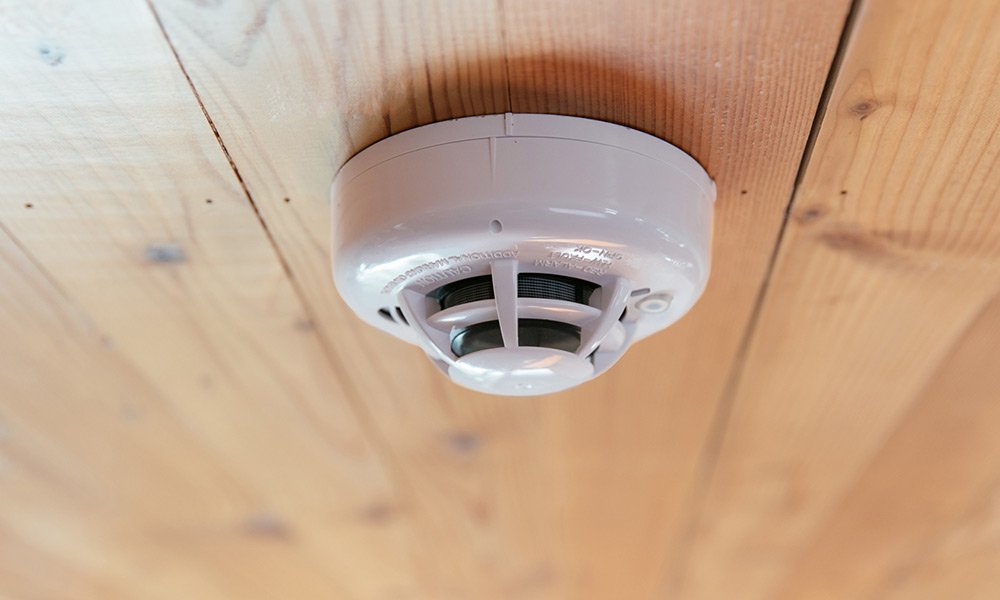
Smoke alarms are simple devices, but they play an important role in providing early warning when smoke is detected. One of the most overlooked parts of a smoke alarm is its battery. A smoke alarm can look perfectly normal from the outside, yet a weak, disconnected, or unsuitable battery can prevent it from operating properly.
For homes, offices, shops, apartments, and other buildings in Pakistan, understanding smoke alarm batteries is an important part of basic fire-safety awareness. The Pakistan Engineering Council’s Building Code of Pakistan – Fire Safety Provisions 2016 includes provisions for smoke alarms and smoke detectors, including requirements concerning their power arrangements.
Here are 10 important things everyone should know about smoke alarm batteries.
1. A Smoke Alarm Needs Reliable Power
A smoke alarm can only provide an alarm when its internal electronics have sufficient power to operate. In battery-operated models, the battery is therefore an essential part of the device.
When smoke enters the sensing chamber, the alarm needs electrical power to process the detection and activate its warning sound. If the battery is completely depleted, the alarm may not function when it is needed.
This is why simply installing a smoke alarm is not enough. Its power source also needs attention.
For larger properties, smoke detectors may be connected to a centralized fire alarm system rather than operating as independent battery-powered alarms. These systems can include detectors, control panels, sounders, manual call points, and other components. Flame Defender, for example, describes conventional and addressable fire alarm systems that use smoke detectors, heat sensors, and control panels.
2. A Low-Battery Warning Should Never Be Ignored
Many battery-powered smoke alarms produce a periodic warning sound when the battery becomes weak. This sound can be irritating, especially at night, but it is an important indication that the power source requires attention.
A common mistake is to remove the battery simply to stop the warning sound.
That should not be treated as a solution.
Removing the battery without replacing it leaves the smoke alarm without its normal power source. Instead, the battery should be replaced according to the manufacturer’s instructions.
After replacement, the alarm should be tested using its test function to confirm that it operates correctly.
3. Different Smoke Alarms Can Use Different Batteries
Not every smoke alarm uses the same battery.
Depending on the design, a unit may use a replaceable battery or a built-in long-life battery. Replaceable-battery models can use different battery types and sizes, while some modern alarms are designed with sealed batteries that are not intended to be removed by the user.
The correct battery should always be determined from:
- The manufacturer’s instructions
- The label on the smoke alarm
- The product manual
- The battery compartment markings
Using a battery simply because it physically fits may not be appropriate.
The voltage, chemistry, size, and other specifications should match the manufacturer’s requirements.
4. Battery Life Depends on the Type of Alarm
There is no single battery lifespan that applies to every smoke alarm.
Battery life can vary according to the alarm design, battery type, frequency of alarm activation, environmental conditions, and manufacturer specifications.
For this reason, homeowners should not rely on a general assumption such as “the battery always lasts for one particular number of years.”
Instead, check the product documentation and pay attention to low-battery warnings.
A sealed long-life smoke alarm is different from a model with a replaceable battery. With a sealed unit, the complete alarm may eventually need replacement according to the manufacturer’s stated service life.
5. Heat and Environmental Conditions Can Affect Batteries
Pakistan experiences significant differences in temperature between regions and seasons. Very hot environments can affect batteries and electronic equipment.
Smoke alarms should therefore be installed and maintained according to the manufacturer’s environmental requirements.
A device should not be placed in an unsuitable location simply because it is convenient.
For example, excessive heat, moisture, dust, steam, or other environmental conditions may interfere with the proper operation of a smoke alarm or contribute to unwanted alarms.
The Building Code of Pakistan – Fire Safety Provisions 2016 includes location-related provisions for smoke alarms and detectors. For example, it addresses areas near cooking appliances and bathrooms because environmental conditions in such locations can affect smoke detection.
6. Battery-Operated Smoke Alarms Are Not the Same as Complete Fire Alarm Systems
The terms “smoke alarm” and “fire alarm system” are sometimes used interchangeably, but they can refer to different types of equipment.
A single smoke alarm may contain its own sensor, battery, processor, and sounder. It can provide an audible warning when smoke is detected.
A building-wide fire alarm system is more extensive. It may include:
- Multiple smoke detectors
- Heat detectors
- Manual call points
- Fire alarm control panels
- Sounders
- Visual notification devices
- Backup power
- Monitoring or interface equipment
The appropriate arrangement depends on the building, occupancy, design, and applicable requirements.
The Pakistan Engineering Council’s fire-safety provisions specifically distinguish smoke alarms and smoke detection systems and provide requirements for applicable situations.
When researching a Fire alarm system in Pakistan, it is therefore important to determine whether the property needs individual smoke alarms or a professionally designed fire detection and alarm system.
7. Testing Is Just as Important as Battery Replacement
Replacing a battery does not automatically prove that the entire smoke alarm is working correctly.
Most smoke alarms include a test function. Users should follow the manufacturer’s instructions for testing the device.
Testing can help confirm that the alarm can produce its warning signal and that the unit is receiving power.
A useful maintenance routine includes checking:
- Battery or power status
- Test function
- Warning indicators
- Physical condition
- Dust accumulation
- Unusual damage
- Manufacturer replacement dates
Flame Defender’s fire-equipment maintenance guidance also emphasizes that smoke alarms should not simply be installed and forgotten. It recommends checking power, testing functionality, looking for faults or physical damage, and replacing batteries or complete units when required.
8. Never Treat Battery Replacement as the Only Maintenance Task
A battery is only one component of a smoke alarm.
Over time, the alarm itself can become dusty, damaged, outdated, or affected by environmental conditions.
Therefore, maintenance should involve more than changing batteries.
The device should remain:
- Properly mounted
- Accessible for testing
- Free from obvious physical damage
- Installed in a suitable location
- Maintained according to its instructions
If a smoke alarm continues to produce fault warnings after a battery has been replaced, the problem may involve the device itself rather than the battery.
In such circumstances, the manufacturer’s instructions should be consulted, and professional assistance may be appropriate.
For commercial properties and larger buildings, maintenance should be part of a broader fire-protection program.
9. Backup Power Matters in Larger Fire Alarm Systems
Large fire alarm systems generally have dedicated power arrangements rather than relying on the small replaceable battery found in a household smoke alarm.
A fire alarm control panel may use a primary electrical supply together with standby batteries so that detection and alarm functions can continue during a power interruption.
This is particularly relevant in locations where electrical outages can occur.
A recent Flame Defender guide on battery backup for fire-suppression control panels explains that standby batteries can keep a control panel operating when mains electricity is unavailable and that battery capacity needs to be considered in relation to the connected system’s electrical load.
The exact power requirements depend on the system design and applicable standards. Battery capacity should therefore be calculated and maintained by appropriately qualified personnel rather than guessed.
10. The Battery Is Only One Part of a Complete Fire-Safety Plan
It is easy to focus heavily on batteries because they are simple to replace. However, fire safety involves much more than keeping a smoke alarm powered.
A complete approach can include:
- Fire prevention
- Early smoke or fire detection
- Audible and visual notification where appropriate
- Suitable fire extinguishing equipment
- Emergency exits and escape routes
- Emergency lighting where required
- Staff or household awareness
- Fire drills where applicable
- Regular inspection and maintenance
- A clear emergency response plan
For larger buildings, these elements may be integrated into a professionally designed fire alarm and fire-protection system.
The Building Code of Pakistan – Fire Safety Provisions 2016 covers fire prevention, life safety, fire protection, means of egress, and the design, installation, maintenance, testing, and inspection of fire-protection systems within its scope.
Smoke Alarm Batteries in Pakistani Homes
Smoke alarms can be particularly useful in residential spaces because occupants may not immediately notice smoke developing in another room.
Bedrooms, corridors, living areas, and other locations may require different approaches depending on the building design and applicable requirements.
The exact placement should follow the manufacturer’s instructions and relevant fire-safety requirements.
In Pakistan, the Building Code’s provisions include specific rules concerning smoke alarms and smoke detectors, including their placement around certain cooking and bathroom areas.
Homeowners should avoid placing a smoke alarm wherever it is easiest to install without considering the environment.
For example, excessive steam or cooking activity can contribute to unwanted alarms. The solution is not necessarily to disable the alarm; instead, the location and type of detection should be considered carefully.
Smoke Alarm Batteries in Offices and Commercial Buildings
Commercial buildings usually require a more structured approach to fire detection.
A business may have offices, storage rooms, electrical rooms, kitchens, corridors, warehouses, or production areas. Each environment can have different detection requirements.
A simple battery-operated smoke alarm may be appropriate for certain small applications, but larger properties may require a connected fire alarm system.
Professional systems can allow multiple detectors to communicate with a central control panel. This can provide building-wide notification and make system monitoring and maintenance more organized.
Flame Defender states that it installs conventional and addressable fire alarm systems for residential, commercial, and industrial properties in Pakistan, with systems incorporating smoke detectors, heat sensors, and control panels.
Common Mistakes With Smoke Alarm Batteries
Several simple mistakes can reduce the reliability of a smoke alarm.
Removing a Battery Without Replacing It
If a low-battery warning becomes annoying, some people remove the battery. This leaves the alarm without its intended power source.
Installing the Wrong Battery
A battery should match the manufacturer’s specifications rather than being selected only because it fits.
Ignoring Repeated Warnings
Repeated chirping or fault indications should be investigated instead of being ignored.
Forgetting to Test the Alarm
A replacement battery should be followed by a functional test according to the manufacturer’s instructions.
Assuming the Alarm Lasts Forever
Even if batteries are replaced regularly, the complete smoke alarm has a limited service life.
Blocking or Covering the Alarm
Painting, covering, or obstructing a smoke alarm can interfere with smoke reaching its sensor.
Installing It in an Unsuitable Environment
Steam, cooking fumes, excessive dust, and unsuitable temperatures can affect detection and create nuisance alarms.
A Simple Smoke Alarm Battery Maintenance Checklist
A basic checklist can make maintenance easier:
- Check the alarm regularly.
- Listen for low-battery warnings.
- Replace replaceable batteries according to manufacturer instructions.
- Use only the specified battery type.
- Test the alarm after battery replacement.
- Keep the alarm free from excessive dust.
- Check for physical damage.
- Do not disable the alarm because of nuisance warnings.
- Check the manufacturer’s replacement or service-life information.
- Seek qualified assistance when a connected fire alarm system develops a fault.
For commercial fire alarm systems, maintenance should be documented and performed according to the system design, manufacturer’s requirements, and applicable fire-safety standards.
How Batteries Relate to a Fire Alarm System in Pakistan
A Fire alarm system in Pakistan can range from a simple smoke alarm arrangement to a sophisticated addressable system serving a large commercial or industrial building.
In every case, reliable power is important.
For an individual battery-powered smoke alarm, that may mean keeping the correct battery installed and replacing it when required.
For a larger system, power may involve a control panel, primary supply, standby batteries, charging equipment, detectors, notification appliances, and other connected devices.
The Building Code of Pakistan recognizes both smoke alarms and larger automatic detection arrangements in applicable circumstances.
This means battery maintenance should be considered as one part of the wider detection and alarm strategy rather than as an isolated task.
When Should You Seek Professional Help?
Professional assistance can be useful when:
- Multiple detectors are showing faults.
- A fire alarm control panel reports a battery or power fault.
- Backup batteries repeatedly fail.
- The system does not return to normal after maintenance.
- A commercial building needs a new fire alarm system.
- The existing system needs expansion or replacement.
- The building has unusual environmental conditions.
- You are unsure whether the current system meets applicable requirements.
Fire detection and alarm systems are safety-critical equipment. Installation, commissioning, testing, and maintenance should be handled by suitably qualified personnel where the complexity of the system requires it.
The Pakistan Engineering Council also identifies fire detection, alarm, and suppression system installation, commissioning, and maintenance as a specialized engineering area.
Final Thoughts
Smoke alarm batteries may be small, but they are an important part of maintaining a functional battery-powered smoke alarm.
The most important lessons are simple: use the correct battery, respond to low-battery warnings, test the alarm, keep the device maintained, and replace the complete unit when required by the manufacturer.
For larger properties, battery-operated smoke alarms may be only one part of a much broader fire detection and protection strategy. A properly designed system can combine smoke detection, heat detection, control panels, notification devices, standby power, and other fire-safety equipment.
In Pakistan, fire-safety planning should also take applicable building and fire-safety requirements into account. The Pakistan Engineering Council lists the Building Code of Pakistan – Fire Safety Provisions 2016 among its established building codes and standards.
For information about professional fire alarm installation and related fire-safety solutions in Pakistan, visit Flame Defender.
Frequently Asked Questions
1. How often should smoke alarm batteries be replaced?
The replacement interval depends on the battery and smoke alarm model. Follow the manufacturer’s instructions and replace the battery promptly when the alarm indicates low power.
2. Can I use any battery in a smoke alarm?
No. Use the battery type and specification recommended by the smoke alarm manufacturer. A battery that physically fits may not necessarily be suitable.
3. Why does my smoke alarm keep beeping after I replace the battery?
The alarm may still have a fault, the battery may not be installed correctly, or the unit may require resetting according to its instructions. If the warning continues, consult the manufacturer’s guidance or a qualified technician.
4. Are battery-operated smoke alarms suitable for every building?
Not necessarily. They can be suitable for certain residential or small applications, while larger or more complex buildings may require a connected fire alarm system with centralized control and backup power. The appropriate arrangement depends on the building and applicable requirements.
5. Do fire alarm systems need backup batteries?
Many larger fire alarm systems use standby power so that essential functions can continue when the normal electrical supply is interrupted. The exact backup arrangement and capacity depend on the system design and applicable standards.