
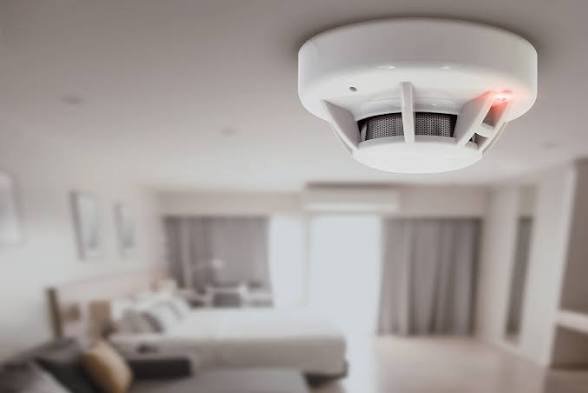
Smoke detectors are an important part of home fire safety, yet many people misunderstand how they work, where they should be installed, and how often they need maintenance. Some homeowners believe that a detector is unnecessary if they already have a fire extinguisher. Others assume that a smoke alarm will always work without testing or that one detector is enough to protect an entire house.
These misunderstandings can create gaps in fire preparedness.
A smoke detector is designed to sense smoke and provide an early warning of a possible fire. Depending on the device, it may sound an alarm itself or send a signal to a connected fire alarm system. It does not extinguish fires, prevent every fire from starting, or guarantee that everyone will escape safely.
In Pakistan, smoke detection is relevant to houses, apartments, offices, shops, schools, and other buildings. Household fire risks may include cooking accidents, electrical faults, heating equipment, gas appliances, and combustible materials. Understanding smoke detectors can help residents make informed decisions about equipment, installation, and maintenance.
A fire alarm system in Pakistan may include standalone smoke alarms or a professionally designed network of detectors, control equipment, and notification devices. The right arrangement depends on the building’s design, use, hazards, and applicable safety requirements.
This article explores common smoke detector myths, explains the facts behind them, and provides practical guidance for improving home fire safety.
1. Myth: Smoke Detectors Are Only Necessary in Large Houses
The Fact
Smoke detectors can be important in homes of many sizes. A fire can start in a small apartment just as it can in a large house.
The need for early warning is not determined only by floor area. Factors such as sleeping arrangements, the number of floors, room layout, and escape routes also matter.
A small home may contain several potential fire hazards, including cooking appliances, electrical devices, heaters, and combustible furniture. Smoke can also travel from one room to another, potentially affecting people who are not close to where the fire began.
The US Fire Administration recommends smoke alarms inside bedrooms, outside separate sleeping areas, and on every level of a home.
What Homeowners Should Do
- Identify sleeping rooms and the routes leading to them.
- Consider each floor separately.
- Follow the manufacturer’s placement instructions.
- Seek professional advice for complex layouts or shared residential buildings.
Even a small home should have a suitable early-warning plan.
2. Myth: One Smoke Detector Is Enough for the Entire House
The Fact
A single detector may not provide adequate warning throughout a home, particularly if it has several floors, multiple bedrooms, or rooms separated by closed doors.
Smoke may not reach a detector quickly enough if it is installed far from the fire. Walls, doors, ceilings, and the building’s layout can affect how smoke travels.
For this reason, detector placement matters.
The US Fire Administration recommends smoke alarms inside and outside sleeping areas and on every level of the home. It also recommends interconnected alarms so that when one sounds, the others sound as well.
Practical Example
Imagine a fire beginning in a ground-floor kitchen while family members are sleeping upstairs. A detector near the kitchen may sound, but the warning may be less noticeable in a closed bedroom.
Interconnected alarms can help distribute the warning throughout the home.
What Homeowners Should Do
Prepare a basic floor plan and identify appropriate alarm locations. For a larger property, consult a qualified fire safety professional about detector coverage and system design.
3. Myth: Smoke Detectors Never Need Testing
The Fact
Smoke detectors and smoke alarms require regular testing and maintenance. Like other electronic devices, they can fail, become dirty, lose power, or develop faults.
A detector that looks normal from the outside is not necessarily working correctly.
The US Fire Administration recommends testing smoke alarms monthly using the test button and following the manufacturer’s maintenance instructions.
How to Test a Smoke Alarm
- Read the manufacturer’s instructions.
- Press the test button as directed.
- Confirm that the alarm produces its expected sound.
- Check whether connected alarms respond, if the system is interconnected.
- Arrange service or replacement if the test fails.
The test button generally checks the alarm’s electronic and sounder functions. It does not necessarily verify every aspect of smoke entry or detector sensitivity.
For larger fire alarm systems, inspection and testing should follow the manufacturer’s instructions and applicable standards, using qualified personnel where required.
4. Myth: Smoke Detectors Last Forever
The Fact
Smoke alarms have a limited service life. Their sensors and electronic components can deteriorate, and dust or other contamination can affect operation.
The US Fire Administration recommends replacing smoke alarms when they reach ten years from their manufacture date. Homeowners should also follow the specific replacement instructions supplied with their device.
What to Check
- The manufacture date on the device
- The manufacturer’s recommended replacement period
- Any warning that the alarm has reached the end of its service life
- Whether the unit fails its functional test
- Signs of damage or contamination
Do not assume that a detector is reliable simply because it has never sounded.
When replacing an old alarm, choose a suitable device and install it according to its instructions.
5. Myth: Removing the Battery Is Fine if the Alarm Keeps Beeping
The Fact
Removing a smoke alarm’s battery or disconnecting its power can leave the household without early warning.
A repeated chirping sound may indicate a low battery, a fault, an end-of-life warning, or another issue described in the manufacturer’s instructions.
It should not be ignored.
What to Do Instead
- Identify the sound using the product manual.
- Replace the battery if the device requires a replaceable battery and the instructions indicate it is low.
- Replace the complete alarm if it has reached the end of its service life or cannot be restored to proper operation.
- Arrange service if the alarm is hardwired or part of a larger system.
Some alarms have sealed long-life batteries. If the battery cannot be replaced, the manufacturer may require replacement of the entire device when it signals a battery or service-life problem.
Never leave a smoke alarm disabled while waiting to deal with the issue. Restore protection promptly using the manufacturer’s instructions.
6. Myth: All Smoke Detectors Work in Exactly the Same Way
The Fact
Smoke alarms use different sensing technologies. Two common types are photoelectric and ionization.
They detect smoke differently and may respond at different speeds depending on the type of fire.
Photoelectric Smoke Alarms
Photoelectric alarms use a light-based sensing method. They are generally more responsive to smoke from fires that develop a prolonged smouldering stage.
Smouldering fires may occur when materials such as furniture or bedding heat and burn slowly before visible flames develop.
Ionization Smoke Alarms
Ionization alarms use an ionization chamber to detect changes caused by smoke. They tend to respond faster to smoke from many flaming fires.
Dual-Sensor Alarms
Some alarms combine photoelectric and ionization sensing technologies in one device.
The US Fire Administration explains that the two technologies can respond differently depending on the fire and recommends either using both types or a dual-sensor alarm for residential protection.
What Homeowners Should Do
Do not choose an alarm based only on its name or price. Review the product’s specifications, certification, instructions, and suitability for your home.
7. Myth: Smoke Detectors Should Be Installed Anywhere on the Wall
The Fact
Location affects how effectively a smoke alarm can detect smoke.
Smoke generally rises, so many residential smoke alarms are installed on ceilings or high on walls, following the manufacturer’s instructions.
However, the exact location matters. Corners, air movement, nearby cooking appliances, and other environmental conditions can influence performance.
The US Fire Administration advises following the manufacturer’s guidance for smoke alarm placement.
General Placement Considerations
- Install alarms in recommended sleeping areas.
- Place them on each level of the home.
- Follow ceiling or wall mounting instructions.
- Avoid locations where dust, steam, or cooking fumes may cause frequent nuisance alarms.
- Keep detectors away from unsuitable environmental conditions specified by the manufacturer.
Do not improvise installation locations if the product instructions specify clearances or restrictions.
8. Myth: Smoke Detectors Should Be Disabled When Cooking
The Fact
Cooking can produce smoke or steam that triggers an alarm, but disabling the alarm removes an important safety measure.
The safer approach is to reduce nuisance activations while keeping appropriate detection in place.
The US Fire Administration advises against removing the battery when an alarm sounds during cooking. It suggests using the hush feature where available, improving ventilation, and considering whether the alarm is positioned appropriately.
Kitchen Safety Tips
- Stay near food while cooking.
- Keep cooking surfaces clean.
- Use ventilation when appropriate.
- Keep combustible materials away from burners.
- Follow the alarm manufacturer’s placement guidance.
For certain kitchen environments, a properly selected heat alarm may be appropriate instead of a smoke alarm in the immediate cooking area. The choice depends on the setting and applicable requirements.
9. Myth: Smoke Detectors Can Put Out a Fire
The Fact
Smoke detectors provide warning; they do not extinguish fires.
A smoke alarm can alert residents to a possible fire, giving them an opportunity to evacuate and contact emergency services. It does not replace fire extinguishers, sprinklers, safe electrical installations, or evacuation planning.
How Different Fire Safety Devices Work
| Equipment | Main purpose |
|---|---|
| Smoke alarm | Detects smoke and provides a warning |
| Heat detector | Responds to a temperature condition |
| Fire extinguisher | Helps control certain small fires when safely used |
| Fire sprinkler | Automatically discharges water when activated under its design conditions |
| Fire alarm control panel | Receives and processes signals in a designed alarm system |
These devices have different functions and limitations.
A fire alarm system in Pakistan should be considered as part of a wider fire protection plan rather than as a replacement for all other safety measures.
10. Myth: A Smoke Detector Guarantees That Everyone Will Escape
The Fact
Smoke alarms provide warning, but they cannot guarantee a safe evacuation.
Escape may be affected by the location of the fire, blocked exits, heavy smoke, mobility limitations, or whether occupants hear and understand the alarm.
That is why a working detector should be combined with an evacuation plan.
Prepare a Home Escape Plan
- Identify the main exit from each room.
- Consider an alternative route where possible.
- Keep doors, corridors, and stairways clear.
- Choose an outdoor meeting point.
- Make sure everyone knows how to contact emergency services.
- Practice leaving the home.
Children, older adults, and people with disabilities may require additional planning or alerting arrangements.
If a fire starts, prioritize evacuation over attempting to save belongings or fight a spreading fire.
11. Myth: Smoke Detectors Are Only Useful at Night
The Fact
Smoke alarms provide protection throughout the day and night when properly installed, powered, and maintained.
Fires can begin while residents are cooking, working, resting, or sleeping. A detector can provide warning regardless of the time, but its effectiveness depends on proper installation and operation.
Improve Household Awareness
Make sure everyone understands:
- What the alarm sounds like
- Which exits to use
- Where to meet outside
- How to alert other household members
- Why no one should re-enter a burning building
For people who may not hear a standard alarm, such as someone with hearing loss, consider compatible visual or vibrating alert devices where appropriate.
12. Myth: Smoke Detectors Do Not Need Cleaning
The Fact
Dust and other contamination can affect a detector’s performance or contribute to unwanted alarms.
Cleaning should follow the manufacturer’s instructions. Some devices can be gently cleaned using a vacuum attachment, while others have specific maintenance procedures.
Basic Maintenance Steps
- Check the manufacturer’s cleaning instructions.
- Inspect the device for visible damage.
- Remove dust using the recommended method.
- Test the alarm afterward.
- Arrange professional service if the detector is part of a larger system and requires it.
Do not open, dismantle, or modify a detector unless the manufacturer specifically permits the procedure.
13. Myth: Smoke Detectors Are Too Expensive for Ordinary Homes
The Fact
The cost of smoke alarms varies by product type, features, certification, power supply, and installation requirements.
Some standalone battery-operated alarms are relatively simple to install, while interconnected or hardwired systems may require additional equipment and qualified installation.
The initial price is only one consideration. Reliability, correct placement, maintenance, and suitability for the property also matter.
What to Consider Before Buying
- Is the alarm designed for the intended environment?
- Does it meet an applicable safety standard?
- Is the sensing technology appropriate?
- Does it require batteries or mains power?
- Is backup power provided where needed?
- Can it be interconnected with other alarms?
- Are replacement units and batteries available?
- What is the manufacturer’s recommended service life?
Avoid choosing a detector based only on the lowest price or claims that it works in every possible situation.
14. Myth: Standalone Smoke Alarms and Full Fire Alarm Systems Are Identical
The Fact
Standalone smoke alarms and larger fire alarm systems may perform related functions, but they are not the same thing.
A standalone smoke alarm usually detects smoke and sounds its own warning. Some models can communicate with other alarms.
A larger fire alarm system may include multiple detectors, manual call points, notification devices, a control panel, and backup power. Its design and operation depend on the building and system requirements.
When a Larger System May Be Needed
A more comprehensive system may be considered for:
- Large or multi-storey residences
- Shared residential buildings
- Buildings with complicated layouts
- Properties with specific fire safety requirements
- Homes where integrated notification or monitoring is desired
A qualified professional can assess whether standalone alarms are suitable or whether a designed system is needed.
For those researching a fire alarm system in Pakistan, the important step is to match the system to the property rather than assuming that every building needs the same configuration.
15. Myth: Smoke Detectors Can Be Installed and Then Forgotten
The Fact
Smoke detection is an ongoing safety responsibility.
After installation, alarms need to remain powered, accessible, clean, and functional. Batteries may need replacement, devices may reach the end of their service life, and the home’s layout may change.
Create a Simple Maintenance Routine
| Frequency | Suggested action |
|---|---|
| Monthly | Test alarms according to the manufacturer’s instructions |
| As needed | Replace batteries or address fault warnings |
| Periodically | Check the device’s age, condition, and mounting |
| After renovations | Review detector locations and coverage |
| At end of service life | Replace the alarm as instructed |
For interconnected or professionally installed systems, maintenance should follow the system documentation and applicable requirements.
16. Smoke Detector Safety in Pakistan: Practical Considerations
Homes in Pakistan vary considerably in design, construction, electrical systems, and occupancy. Some are single-storey houses, while others are multi-storey homes or apartments with shared corridors and stairways.
This means smoke detection should be considered in the context of the actual building.
Electrical Safety
Have damaged wiring, overheating sockets, and repeated circuit problems checked by a qualified electrician.
Gas Safety
Ensure gas appliances are installed and maintained appropriately. If a gas leak is suspected, avoid flames and electrical switches in the affected area, leave safely, and contact the relevant emergency service from a safe location.
Building Layout
Consider sleeping rooms, stairways, enclosed corridors, and the number of floors when planning alarm coverage.
Local Requirements
Check applicable building and fire safety requirements with the relevant local authority or a qualified fire safety professional. Requirements may differ according to building type, location, and use.
Product Selection
Choose devices with clear instructions, appropriate ratings, and reliable service support. Confirm that the selected equipment is suitable for the intended environment.
17. A Simple Smoke Detector Checklist for Homeowners
Use this checklist to review your home’s smoke detection arrangements.
- Smoke alarms are installed in suitable locations.
- Each floor has appropriate detection coverage.
- Sleeping areas are considered in the alarm layout.
- Alarms are powered and tested regularly.
- Batteries are replaced when required.
- Devices are within their recommended service life.
- Alarms are not disabled because of nuisance activations.
- Interconnection is considered where appropriate.
- Household members recognize the alarm sound.
- Everyone knows the escape routes and outdoor meeting point.
This checklist is a general household aid, not a substitute for a professional assessment or applicable fire safety requirements.
Conclusion
Smoke detectors are simple devices, but several common myths can prevent people from using them effectively. They are not only for large houses, do not last forever, and should never be disabled simply because they sound during cooking. Their placement, power supply, testing, cleaning, and replacement all matter.
Different sensing technologies can respond differently to different fires, so homeowners should review product specifications and choose suitable equipment. Interconnected alarms can help ensure that a warning reaches people in other parts of a home.
In Pakistan, smoke detection should be considered alongside electrical and gas safety, accessible escape routes, suitable fire extinguishers, and regular household practice. Larger or more complex properties may need a professionally designed alarm arrangement.
A fire alarm system in Pakistan can be an important part of a broader fire safety plan, but no device replaces the need to evacuate promptly when a fire becomes dangerous.
For more information about fire protection products and systems, visit Flame Defender.
Frequently Asked Questions (FAQs)
1. What is the main purpose of a smoke detector?
A smoke detector senses smoke and provides an early warning of a possible fire. Depending on the device, it may sound an alarm directly or send a signal to a connected fire alarm system.
2. How often should smoke alarms be tested?
The US Fire Administration recommends testing smoke alarms monthly using the test button. Always follow the manufacturer’s instructions for testing and maintenance.
3. How long does a smoke alarm last?
The US Fire Administration recommends replacing smoke alarms ten years from their manufacture date. Check the specific product instructions, as replacement requirements may vary.
4. Can I remove the battery if my smoke alarm keeps beeping?
Do not leave the alarm disabled. Identify the reason for the beeping using the manufacturer’s instructions, replace the battery if required, or replace or service the device if it is faulty or has reached the end of its service life.
5. Are smoke detectors and fire alarm systems the same?
Not necessarily. A standalone smoke alarm typically detects smoke and sounds its own warning. A larger fire alarm system may connect multiple detectors and notification devices through a control panel. The appropriate arrangement depends on the building and its safety requirements.