
Fire safety is an important responsibility for every homeowner. A fire can start unexpectedly because of an electrical fault, a cooking accident, a gas leak, or the careless use of heating equipment. Without proper preparation, even a small incident can quickly become a serious emergency.
For families in Pakistan, fire safety deserves particular attention because homes vary widely in their construction, electrical installations, cooking arrangements, and emergency access. Whether you live in an apartment, a single-storey house, or a multi-storey property, understanding basic fire prevention and emergency response can help protect your family.
Fire safety training teaches people how to recognize hazards, prevent fires, use appropriate safety equipment, and evacuate safely. It also helps household members understand what to do when a smoke alarm sounds.
Installing a suitable fire alarm system in Pakistan is one part of residential fire protection, but equipment alone cannot replace preparation and training. Families need to know how to respond to warnings, where to go, and how to avoid dangerous mistakes during an emergency.
This guide explains the essential principles of home fire safety training, practical prevention methods, emergency planning, and equipment maintenance.
1. What Is Fire Safety Training?
Fire safety training is the process of learning how to prevent fires, identify dangerous conditions, respond to alarms, and protect people during emergencies.
For homeowners, training does not always require a formal classroom course. Many important lessons can be learned through household discussions, safety demonstrations, and regular evacuation practice.
The purpose is to make sure that everyone understands the risks inside the home and knows how to respond when something goes wrong.
Basic fire safety training includes:
- Identifying common household fire hazards.
- Understanding how fires start and spread.
- Learning how to recognize smoke and fire alarm warnings.
- Practicing safe evacuation procedures.
- Understanding the appropriate use of fire extinguishers.
- Helping children and vulnerable family members prepare for emergencies.
- Knowing when to contact emergency services.
Fire safety training focuses on prevention and personal protection rather than encouraging household members to fight fires themselves.
2. Why Is Fire Safety Training Important for Homeowners?
A home should be a safe environment for everyone who lives there. However, ordinary household activities can introduce fire hazards if appliances, electrical equipment, and cooking facilities are not used carefully.
Training helps homeowners recognize these risks before an emergency occurs.
Protecting family members
The most important purpose of fire safety training is protecting human life. Everyone should understand how to recognize an emergency and leave the property safely.
Children should know not to hide during a fire, while adults should understand how to assist family members who need additional help.
Preventing avoidable accidents
Many household fire hazards can be reduced through simple precautions. Learning to identify damaged wiring, unsafe cooking practices, and improperly stored combustible materials can help prevent dangerous situations.
Improving emergency response
People who have practiced an evacuation plan are more familiar with their exits and meeting point. This can reduce confusion when a real emergency occurs.
Protecting household property
Fire prevention, early warning, and safe evacuation can help limit the consequences of a fire. Although no system can eliminate every risk, preparation can reduce avoidable damage and help people respond appropriately.
3. Understanding Common Fire Hazards in Pakistani Homes
Before creating a fire safety plan, homeowners should understand the hazards that may exist in their own property.
Electrical faults
Electrical faults are a potential cause of residential fires. Damaged cables, loose connections, overloaded sockets, and defective appliances can create dangerous conditions.
Homeowners should avoid overloading extension boards and should not continue using damaged plugs or wires.
Electrical repairs should be carried out by a qualified electrician. Repeated circuit-breaker trips, burning smells, or unusually hot outlets should be investigated promptly.
Cooking accidents
Cooking is a routine activity, but unattended stoves and overheated cooking oil can create serious fire risks.
Keep paper, cloth, plastic packaging, and other combustible materials away from cooking surfaces. Avoid leaving cooking unattended, particularly when using oil or open flames.
Gas leaks
Some households use natural gas or LPG cylinders for cooking and heating. Poorly maintained connections, damaged hoses, and gas leaks can create fire and explosion hazards.
If you smell gas, do not light matches, operate electrical switches, or use an open flame. Leave the affected area and contact the appropriate emergency service from a safe location.
Heating equipment
Portable heaters and other heating appliances should be used according to the manufacturer’s instructions.
Keep them away from curtains, bedding, furniture, and other combustible materials. Avoid leaving heating equipment operating unattended when it could create a hazard.
Candles and open flames
Candles, incense, and similar products should be placed on stable surfaces and kept away from combustible materials.
Never leave an open flame unattended, especially in a home with children or pets.
4. Creating a Fire Safety Plan for Your Home
A fire safety plan explains how household members will respond if a fire occurs.
The plan should be simple, practical, and suitable for the building’s layout.
Identify escape routes
Walk through every room and identify the available exits.
Where possible, identify two ways out of each room. Keep doors, corridors, stairways, and other escape routes free from obstructions.
If your home has security grills or restricted windows, make sure suitable emergency escape arrangements are available and can be operated from inside.
Choose an outdoor meeting point
Select a safe meeting place away from the building.
This might be a designated spot near the property entrance or another accessible location agreed upon by the household.
Everyone should know where to gather after evacuating.
Assign responsibilities
Adults can discuss how to help young children, older relatives, or household members with mobility difficulties.
However, no assigned responsibility should delay evacuation or put someone at unnecessary risk.
Everyone should understand how to leave safely if the designated helper is unavailable.
Practice the plan
Walk through the escape routes together and practice reaching the meeting point.
Review the plan whenever the household layout changes, new family members arrive, or an existing exit becomes unavailable.
The US Fire Administration recommends identifying escape routes, choosing an outdoor meeting place, and practicing a home fire drill with everyone in the household.
5. Understanding the Role of a Fire Alarm System in Pakistan
A fire alarm system is an important part of a home’s fire protection arrangements. Its purpose is to detect signs of fire and warn occupants so they can respond promptly.
Early warning is particularly important at night, when family members may be asleep and less likely to notice a developing fire.
The right equipment depends on the home’s size, layout, occupancy, and specific risks.
Smoke alarms
Smoke alarms detect smoke and produce an audible warning.
They can help alert occupants when a fire starts in another part of the home. Appropriate placement is important because an alarm cannot provide effective warning if it is installed in an unsuitable location or cannot be heard.
Common residential recommendations include installing smoke alarms inside bedrooms, outside sleeping areas, and on every level of the home, subject to the manufacturer’s instructions and applicable requirements.
Heat detectors
Heat detectors respond to temperature changes rather than smoke.
They may be suitable for specific environments where smoke detection could produce unwanted alarms. Their use and placement should be determined according to the detector’s intended application and relevant guidance.
Interconnected alarms
Interconnected alarms communicate with one another so that activation of one device can trigger other connected alarms.
This arrangement can help notify occupants in different parts of a home, especially in larger or multi-storey properties.
Choosing suitable equipment
When researching a fire alarm system in Pakistan, homeowners should consider:
- The size and layout of the property.
- The number of bedrooms and floors.
- The type of detection required.
- Battery backup and power supply.
- Product certification and manufacturer instructions.
- Installation, testing, and maintenance requirements.
For complex properties, professional advice can help determine an appropriate system.
6. Learning How to Use a Fire Extinguisher
Fire extinguishers can help control certain small fires, but they are not suitable for every type of fire.
Homeowners should understand the extinguisher’s intended use and the circumstances in which attempting to extinguish a fire would be unsafe.
Common extinguisher types
| Type | Typical application |
|---|---|
| Water | Certain fires involving ordinary combustible materials |
| ABC dry chemical | Several common classes of fire, according to the label |
| Carbon dioxide (CO₂) | Certain flammable-liquid and electrical equipment fires |
| Wet chemical | Certain cooking-oil and fat fires |
Always check the extinguisher’s label and follow its instructions.
Never pour water onto burning cooking oil or energized electrical equipment. Water can spread burning oil and create an electrical shock hazard.
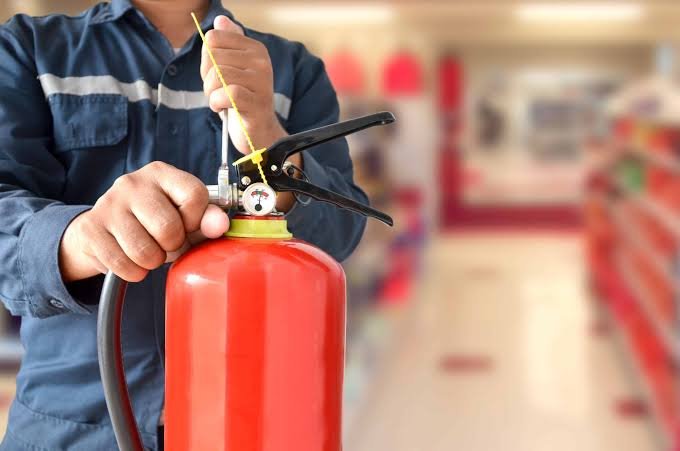
The PASS method
The PASS method is commonly used to teach the basic operation of suitable portable extinguishers.
- Pull the safety pin.
- Aim the nozzle at the base of the fire.
- Squeeze the handle.
- Sweep the nozzle from side to side.
This method should only be used when the extinguisher is appropriate, the fire is small, and a safe escape route remains behind you.
If the fire spreads, smoke becomes heavy, or you are uncertain about your safety, evacuate immediately.
7. What to Do When a Fire Starts at Home
Knowing how to respond can help prevent confusion and unnecessary delays.
Step 1: Alert everyone
Warn everyone in the house as soon as you discover a fire or receive a credible fire alarm warning.
Activate the alarm if necessary and available.
Do not assume that family members in other rooms have heard the warning.
Step 2: Evacuate immediately
Use the safest available exit and leave the building.
Do not stop to collect valuables, documents, money, or electronic devices.
If smoke is present, stay low while moving toward an exit. Avoid opening doors that feel hot or have smoke coming through them.
Step 3: Avoid elevators
In multi-storey buildings, use designated escape stairs when evacuation is appropriate.
Do not use elevators during a fire unless emergency personnel specifically direct you to do so.
Follow the building’s established procedures, particularly if the fire is in another part of the property.
Step 4: Contact emergency services
Once you are in a safe location, contact the local fire and rescue service.
In Punjab, Rescue 1122 provides emergency response services. Residents should confirm the appropriate service and emergency contact for their location.
Provide the address, explain the situation, and tell responders if someone may still be inside.
Step 5: Stay outside
Never return to a burning building to collect belongings or search for someone.
Inform emergency responders about anyone who is missing or may be trapped. Allow trained personnel to manage rescue operations.
8. Teaching Children About Fire Safety
Children need clear and simple instructions that they can remember during an emergency.
Parents should explain fire safety in an age-appropriate way and reinforce important lessons through practice.
Essential lessons for children
Teach children to:
- Recognize the sound of a smoke alarm.
- Leave the house immediately when there is a fire.
- Never hide under beds or inside cupboards.
- Avoid playing with matches, lighters, and electrical equipment.
- Never return inside to collect toys.
- Go directly to the family’s outdoor meeting point.
Children should understand that they are not responsible for fighting fires.
Make learning practical
Walk through the escape plan together.
Show children how to identify exits and where to meet outside. Explain what to do if their usual route is blocked.
Older children can also learn how to contact a trusted adult or emergency service safely.
9. Fire Safety for Older Adults and People With Disabilities
A household fire safety plan should account for the needs of every resident.
Some people may require additional time, accessible exits, or assistance during an emergency.
Consider the following measures:
- Keep escape routes clear and easy to navigate.
- Ensure alarms can be heard or otherwise detected by occupants.
- Consider visual or vibrating warning devices where appropriate.
- Keep mobility aids accessible.
- Identify suitable assistance arrangements.
- Review whether stairs or narrow exits create difficulties.
Discuss individual needs with a qualified fire safety professional when necessary.
For apartments and shared residential buildings, residents should understand the building’s emergency procedures and available evacuation arrangements.
10. Practicing a Home Fire Drill
A fire drill helps household members become familiar with their escape routes and emergency responsibilities.
It should be conducted safely and without creating actual fire or smoke.
Steps for a basic household drill
- Explain the purpose of the exercise to everyone.
- Review the main and alternative escape routes.
- Use the smoke alarm’s test function according to its instructions, where appropriate.
- Practice leaving the building using a safe route.
- Gather at the agreed outdoor meeting point.
- Confirm that everyone is accounted for.
- Discuss any problems and improve the plan.
Practice at a safe pace, particularly with children and people who need assistance.
For multi-floor buildings and buildings covered by specific fire safety requirements, follow the applicable evacuation procedures.
Pakistan’s 2023 Gazette provisions include requirements concerning fire drills for specified multi-floor buildings and buildings used for public assembly, including drills at least annually in consultation with the firefighting department. Applicability depends on the relevant rules and building circumstances.
11. Maintaining Fire Safety Equipment
Fire safety equipment must be maintained to remain functional.
Installing an alarm or extinguisher without checking it regularly can leave a household unprepared.
Smoke alarm maintenance
Test smoke alarms according to the manufacturer’s instructions.
Replace batteries when required and replace devices when they reach the end of their service life.
Keep alarms clean and avoid disabling them because of nuisance warnings. Investigate the cause and follow the manufacturer’s guidance.
Fire extinguisher maintenance
Keep extinguishers accessible and check them according to the manufacturer’s inspection instructions.
Look for visible damage, corrosion, missing safety pins, or pressure indicators outside the specified range.
Arrange professional servicing when required.
Electrical maintenance
Have electrical systems inspected by a qualified electrician when there are signs of damage or recurring problems.
Do not attempt electrical repairs without the necessary skills and qualifications.
Regular maintenance can help identify problems before they become more serious.
12. Fire Safety Requirements in Pakistan
Fire safety requirements may differ according to the building’s location, occupancy, size, and construction.
A detached family home may have different requirements from a multi-storey apartment building or a residential property with commercial activities.
The Pakistan Building Code of 2016 contains fire safety provisions, while other applicable laws and local authority requirements may also affect particular buildings.
Homeowners should:
- Check requirements with the relevant local development authority.
- Follow building management’s emergency instructions.
- Confirm whether particular detection or alarm equipment is required.
- Keep emergency exits and escape routes unobstructed.
- Seek professional advice for complex installations.
Do not assume that the same equipment requirements apply to every residential property in Pakistan.
13. Choosing Professional Fire Safety Training
Homeowners who want more structured instruction can consider training from qualified fire safety providers.
Professional courses may cover fire prevention, emergency planning, alarm response, extinguisher operation, and evacuation procedures.
When choosing a training provider, ask about:
- Instructor qualifications and practical experience.
- Whether the course includes demonstrations.
- Whether the training is suitable for residential settings.
- Whether participants learn about equipment limitations.
- Whether written guidance or completion documentation is provided.
Pakistan’s Directorate General of Civil Defence publishes training schedules that include fire prevention and safety courses at different training centres. Homeowners can consult the official schedule to explore available training opportunities.
Professional training should reinforce that protecting people and evacuating safely take priority over attempting to control a fire.
14. Common Fire Safety Mistakes to Avoid
Even homeowners who have installed safety equipment can overlook important precautions.
Ignoring alarm warnings
Never dismiss a possible fire alarm without understanding the reason for its activation.
Treat a genuine warning seriously and evacuate when necessary.
Blocking emergency exits
Furniture, shoes, storage boxes, and other objects can obstruct escape routes.
Keep doors, stairs, and corridors clear.
Overloading electrical outlets
Excessive electrical loads and damaged equipment can create avoidable hazards.
Use appliances according to their instructions and seek professional help when problems occur.
Using the wrong extinguisher
An unsuitable extinguisher can make certain fires more dangerous.
Check the equipment’s label and never attempt to fight a fire if doing so would place you at risk.
Returning to a burning building
Re-entering a building during a fire can expose occupants to smoke, heat, and other hazards.
Stay outside and tell emergency responders if someone is missing.
Skipping evacuation practice
A plan that has never been practiced may be difficult to follow during a real emergency.
Review escape routes and household responsibilities regularly.
15. Building a Long-Term Fire Safety Routine
Fire safety should be part of everyday household life rather than a one-time activity.
A simple routine can help keep safety equipment functional and ensure that family members remain familiar with emergency procedures.
Homeowners can:
- Test alarms according to manufacturer guidance.
- Check that escape routes remain clear.
- Inspect fire equipment as instructed.
- Review emergency contact information.
- Practice evacuation procedures periodically.
- Update the plan after renovations or household changes.
These small steps can help maintain awareness and improve preparedness over time.
Conclusion
Fire safety training helps homeowners recognize hazards, prevent avoidable accidents, and respond more effectively during emergencies.
For families in Pakistan, an effective approach includes understanding common household fire risks, maintaining electrical and cooking equipment, installing suitable smoke alarms, and practicing a clear evacuation plan.
A reliable fire alarm system in Pakistan can provide an important early warning, but it should be part of a broader approach that includes family training, safe escape routes, and regular equipment maintenance.
Homeowners should also consider the needs of children, older adults, and people with disabilities, as well as the requirements that apply to their specific property.
By making fire safety a regular household responsibility, families can improve their preparedness and develop habits that support a safer living environment.
For further information about fire protection and safety equipment, visit Flame Defender .
Frequently Asked Questions (FAQs)
1. What is fire safety training for homeowners?
Fire safety training teaches homeowners how to recognize fire hazards, prevent common household fires, respond to alarms, use appropriate safety equipment, and evacuate safely during emergencies.
2. Why is a fire alarm system important in Pakistan?
A fire alarm system can detect signs of smoke or fire and warn occupants, giving them an opportunity to respond and evacuate. The appropriate system depends on the building’s design, risks, and applicable requirements.
3. How often should homeowners practice a fire drill?
Homeowners should practice periodically and whenever their household circumstances or building layout change. The frequency should also reflect applicable building requirements and any professional fire safety recommendations.
4. Can a homeowner use a fire extinguisher on every type of fire?
No. Extinguishers are designed for specific fire classes. Homeowners should use one only when it is appropriate, they understand its operation, the fire is small, and they can maintain a safe escape route.
5. What should I do first if a fire starts at home?
Alert everyone in the house and evacuate immediately using a safe exit. Once outside, contact the local fire and rescue service. Do not return inside until emergency responders confirm that it is safe.