
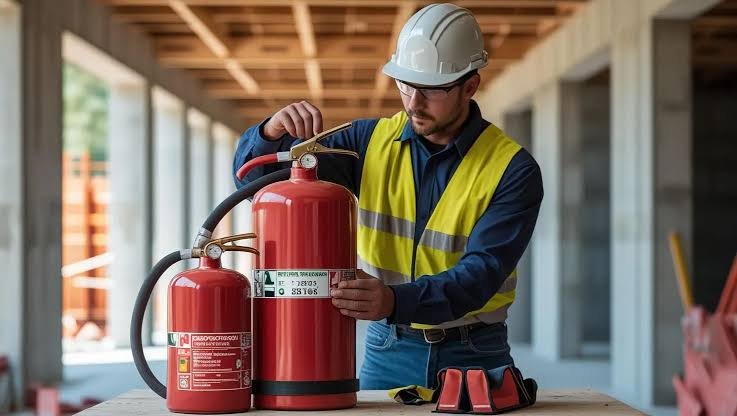
Building or renovating a home is an exciting project, but construction sites can also contain many temporary fire hazards. Electrical wiring, welding equipment, gas cylinders, paints, solvents, timber, insulation, packaging materials, and other combustible items may all be present at the same time.
For homeowners in Pakistan, fire safety should therefore be considered from the beginning of construction rather than after the house is completed. A safe site protects workers, neighbours, property, building materials, and the investment being made in the project.
Pakistan’s Building Code – Fire Safety Provisions 2016 includes requirements related to fire-safety construction features and applies to new, existing, permanent, and temporary buildings. The National Disaster Management Authority (NDMA) also publishes fire-safety and construction-related guidance, including recommendations for alarms, extinguishers, emergency training, safe storage of flammable materials, and evacuation arrangements.
This guide explains practical fire-safety measures homeowners can consider during construction and renovation projects.
Why Construction Sites Have Fire Risks
A completed home normally has fixed electrical systems, finished walls, permanent doors, and established safety equipment.
A construction site is different.
It is constantly changing. Walls may be incomplete, electrical cables may be temporary, workers may use hot-work equipment, and combustible materials can accumulate quickly.
Some common fire hazards include:
- Temporary electrical connections
- Welding and cutting
- Gas cylinders
- Petrol or diesel-powered equipment
- Paints and solvents
- Timber and plywood
- Plastic sheets and packaging
- Insulation materials
- Construction waste
- Portable cooking equipment
- Generators
- Grinding equipment
- Poorly stored chemicals
- Smoking materials
The risk becomes greater when several of these hazards exist in the same area.
1. Start Fire Safety Planning Before Construction
Fire safety should be discussed before workers arrive at the site.
Homeowners should speak with their contractor, site supervisor, electrician, and other relevant professionals about basic fire precautions.
Consider:
- Where fire extinguishers will be placed
- How workers will leave the building during an emergency
- Where flammable materials will be stored
- Where welding and cutting can safely take place
- How electrical equipment will be supplied
- Where gas cylinders will be kept
- How emergency services can access the property
- Where workers will assemble after evacuation
Planning these details early is easier than trying to solve them during an emergency.
2. Keep Fire Extinguishers Available
Construction sites should have appropriate fire extinguishers readily accessible.
The correct extinguisher depends on the type of fire risk. For example, electrical equipment and flammable liquids require different considerations from ordinary combustible materials.
Extinguishers should be:
- Suitable for the hazards present
- Clearly visible
- Easy to reach
- Properly maintained
- Protected from damage
- Located near areas where fire risks are higher
Do not place an extinguisher behind building materials, inside a locked room, or somewhere workers cannot reach quickly.
NDMA construction-related guidance specifically recommends placing fire extinguishers at construction locations and providing firefighting arrangements such as water hoses where appropriate.
3. Consider Fire Alarm Protection
A construction site may not have the same fire protection as a finished house, but early warning remains important.
As construction progresses, temporary or permanent detection and alarm arrangements should be considered according to the building’s stage, size, occupancy, and risks.
A properly planned fire alarm system in Pakistan can provide valuable early warning once the appropriate system is installed and operational.
For larger residential projects, multi-storey homes, apartment construction, or buildings where workers are present for long periods, professional advice can help determine suitable detection and alarm arrangements.
Never cover, disconnect, or remove installed detection equipment simply because construction work is taking place. If equipment must temporarily be taken out of service, appropriate alternative protection and professional procedures should be considered.
4. Control Welding and Hot Work
Welding, cutting, soldering, grinding, and other hot-work activities can produce sparks and high temperatures.
These activities are among the construction tasks that deserve particularly careful control.
Before hot work begins:
- Remove unnecessary combustible materials from the area.
- Keep suitable fire extinguishing equipment nearby.
- Check the surrounding area for hidden combustible materials.
- Keep gas cylinders secured and appropriately positioned.
- Inspect hoses, regulators, and connections.
- Ensure workers are trained for the equipment they operate.
- Monitor the area after hot work has finished.
Sparks can travel farther than expected and ignite materials that are not immediately beside the work.
A dedicated hot-work area is preferable where practical.
5. Store Flammable Materials Properly
Construction projects often use paints, thinners, adhesives, fuels, cleaning chemicals, and other flammable products.
Do not store these materials randomly around the site.
Keep them:
- In suitable containers
- Properly labelled
- Away from ignition sources
- Away from direct heat
- In a secure and ventilated location where appropriate
- Away from areas used for cooking or smoking
- Separate from incompatible materials
NDMA guidance for construction projects specifically recommends that flammable and toxic materials be marked and stored in secured locations.
Only keep the amount of flammable material reasonably required for current work in active work areas.
6. Handle Gas Cylinders Carefully
Gas cylinders can create significant hazards when they are damaged, poorly connected, exposed to heat, or improperly stored.
For construction sites:
- Keep cylinders upright and secured.
- Protect them from physical damage.
- Keep them away from unnecessary heat.
- Check hoses and connections.
- Do not use damaged cylinders or accessories.
- Keep unnecessary cylinders away from active work areas.
- Ensure workers know how to shut off the gas supply.
Gas cylinders should never be treated as ordinary building materials.
7. Be Careful With Temporary Electrical Systems
Temporary electricity is one of the most common construction-site concerns.
Power may be supplied through temporary cables, extension cords, distribution boards, generators, and portable tools.
Electrical problems can result from:
- Damaged cables
- Loose connections
- Overloaded circuits
- Improper extension leads
- Exposed conductors
- Wet electrical equipment
- Unqualified electrical work
- Poorly protected temporary installations
Homeowners should ensure electrical work is performed by suitably qualified personnel and that temporary installations are inspected regularly.
Do not allow workers to improvise electrical connections just to keep a project moving.
8. Use Generators Safely
Generators are commonly used when permanent electrical service is unavailable or insufficient.
They should be operated according to the manufacturer’s instructions and kept in an appropriate location with adequate ventilation.
Fuel should be stored safely and away from ignition sources.
Never refuel a hot generator carelessly. Allow appropriate cooling and follow the manufacturer’s procedures.
Generators also produce carbon monoxide, so they should never be operated in enclosed areas where exhaust gases can accumulate.
9. Control Smoking on the Construction Site
Smoking materials can ignite dry construction waste, cardboard, timber, insulation, packaging, or other combustible materials.
The simplest approach is to establish a clearly defined smoking policy.
If smoking is permitted, it should only take place in a designated safe location away from combustible storage, fuel, chemicals, and active construction areas.
Cigarette ends should never be thrown into rubbish piles or onto dry construction materials.
10. Keep Construction Waste Under Control
Construction waste can quickly become a fire hazard.
Wood offcuts, cardboard boxes, plastic packaging, insulation scraps, sawdust, and other debris should not be allowed to accumulate.
Make waste removal part of the daily site routine.
At the end of each working day:
- Remove unnecessary combustible waste.
- Separate waste appropriately.
- Keep access routes clear.
- Store materials neatly.
- Remove discarded packaging.
- Check areas where hot work was performed.
A cleaner construction site is generally easier to inspect and evacuate.
11. Keep Access and Escape Routes Clear
Even while a house is under construction, workers need a practical way to leave the site quickly.
Do not block stairways, doors, corridors, ramps, or other escape paths with:
- Bricks
- Cement bags
- Timber
- Pipes
- Tools
- Scaffolding materials
- Electrical cables
- Construction waste
As the building changes, escape arrangements may need to change as well.
Workers should know which routes are available from the areas where they are working.
12. Protect Fire Safety Equipment From Construction Damage
Fire extinguishers, alarm devices, emergency lighting, and other protective equipment can be damaged during construction.
Dust, paint, drilling, impact, water, and careless material storage can affect equipment.
Regularly inspect installed safety equipment for:
- Physical damage
- Obstruction
- Dust accumulation
- Unauthorised removal
- Fault indicators
- Damaged wiring
- Poor accessibility
If a fire alarm component or other safety device is damaged during construction, arrange appropriate repair rather than simply ignoring it until the building is complete.
13. Maintain a Safe Distance Between Heat and Combustibles
Construction workers may use blow torches, welding equipment, heaters, generators, grinding machines, and other heat-producing tools.
Combustible materials should be kept away from these sources.
Pay particular attention to:
- Wooden framing
- Curtains or temporary coverings
- Foam insulation
- Packaging
- Paint products
- Plastic sheets
- Sawdust
- Paper
- Fuel containers
Before starting hot work, look not only at the immediate work surface but also at nearby areas where sparks or heat could travel.
14. Train Workers on Basic Fire Response
Fire equipment is only useful when people understand how to respond.
Workers should receive basic instruction on:
- Raising the alarm
- Calling emergency services
- Identifying escape routes
- Locating fire extinguishers
- Reporting hazards
- Evacuating safely
- Gathering at a designated assembly point
- Avoiding unnecessary risks
NDMA construction guidance specifically includes fire-safety and emergency-response training among recommended measures.
Workers should never be expected to fight a fire that is too large, spreading rapidly, producing dangerous smoke, or otherwise beyond their training and available equipment.
The priority should always be life safety.
15. Make Emergency Numbers and Site Information Accessible
Workers should know how to quickly request emergency assistance.
Display relevant emergency contact information at an easily visible location.
It is also useful to ensure that someone on site can clearly provide:
- Property location
- Nearest road or landmark
- Access gate information
- Building level
- Nature of the emergency
Emergency vehicles may lose valuable time if the site is difficult to identify or access.
16. Check Fire Safety as Construction Progresses
Fire safety should not be treated as a single inspection at the beginning of a project.
Construction conditions change continuously.
For example:
Early stage:
Temporary electrical systems, excavation equipment, generators, and fuel may be the main concerns.
Middle stage:
Welding, electrical installation, timber, insulation, and construction materials may create additional hazards.
Finishing stage:
Paints, adhesives, solvents, decorative materials, electrical fixtures, and permanent equipment may become more important.
The safety plan should therefore evolve with the project.
17. Plan the Transition to the Finished Home
As construction ends, temporary arrangements should be replaced with permanent fire-protection systems and safe operating procedures.
This may include:
- Permanent fire alarm installation
- Smoke and heat detection
- Emergency lighting where required
- Fire extinguishers
- Electrical safety checks
- Gas-system inspection
- Clearly identified exits
- Appropriate signage
- Testing and commissioning of installed systems
The exact requirements depend on the building’s design, occupancy, size, applicable codes, and local authority requirements.
Pakistan Engineering Council identifies the Building Code of Pakistan – Fire Safety Provisions 2016 as one of its building codes and standards.
A Simple Construction-Site Fire Safety Checklist
Homeowners can use the following checklist when discussing safety with their contractor:
Daily Checks
- [ ] Construction waste removed
- [ ] Escape routes clear
- [ ] Fire extinguishers accessible
- [ ] Electrical cables checked
- [ ] Flammable materials stored safely
- [ ] Gas cylinders secured
- [ ] Hot-work areas inspected
- [ ] Smoking rules followed
Weekly or Scheduled Checks
- [ ] Fire equipment inspected
- [ ] Temporary electrical systems reviewed
- [ ] Alarm equipment checked where installed
- [ ] Emergency arrangements reviewed
- [ ] Workers reminded about fire procedures
- [ ] Storage areas inspected
- [ ] Damaged equipment removed from service
Before Major Work
- [ ] Hot-work area prepared
- [ ] Combustible materials removed
- [ ] Fire extinguisher available
- [ ] Gas equipment inspected
- [ ] Electrical supply checked
- [ ] Workers briefed
This simple approach can help homeowners identify problems before they become emergencies.
Common Fire Safety Mistakes Homeowners Should Avoid
Leaving everything to the contractor
Homeowners do not need to supervise every task, but they should understand whether basic fire-safety arrangements are being maintained.
Storing paint and fuel together
Flammable products should be stored appropriately rather than accumulated randomly around the property.
Ignoring temporary wiring
Temporary electrical systems deserve the same attention as permanent electrical work.
Blocking access with materials
Construction materials should never unnecessarily obstruct escape routes or emergency access.
Delaying fire protection until completion
Some fire risks exist from the first day of construction. Protection should therefore be considered throughout the project.
Final Thoughts
Fire safety during home construction is largely about planning, housekeeping, proper equipment, and responsible work practices.
A construction site changes every day, so its fire risks change as well. Homeowners should work with contractors and qualified professionals to keep electrical systems safe, control hot work, store flammable materials correctly, maintain accessible fire extinguishers, keep escape routes clear, and provide workers with basic emergency training.
A properly planned fire alarm system in Pakistan can become an important part of the home’s permanent fire-protection strategy, but it should be considered alongside other measures rather than treated as the only solution.
For additional information about fire-safety solutions and equipment, homeowners can explore Flame Defender.
FAQs
1. Is fire safety necessary during the construction of a home?
Yes. Construction sites can contain temporary electrical systems, welding equipment, gas cylinders, fuels, paints, timber, packaging, and other potential fire hazards. Fire safety should be considered throughout the project.
2. Where should fire extinguishers be placed on a construction site?
They should be positioned where they are easily accessible and near appropriate fire hazards, without being blocked by construction materials. The type and number required depend on the site’s hazards and applicable requirements.
3. Should a fire alarm be installed before a house is completed?
The appropriate timing depends on the building design, construction stage, occupancy, and applicable requirements. For larger or occupied construction projects, temporary or permanent detection and alarm arrangements may be appropriate. A qualified fire-safety professional can advise on the specific project.
4. What is the biggest fire hazard on a construction site?
There is no single hazard that applies to every site. Welding and hot work, temporary electrical systems, flammable liquids, gas cylinders, generators, and accumulated combustible waste can all create significant risks.
5. Who is responsible for fire safety during home construction?
Responsibility is shared. Homeowners, contractors, site supervisors, workers, electricians, and other relevant professionals all have roles in maintaining a safe construction environment. The exact legal and technical responsibilities depend on the project and applicable requirements.