
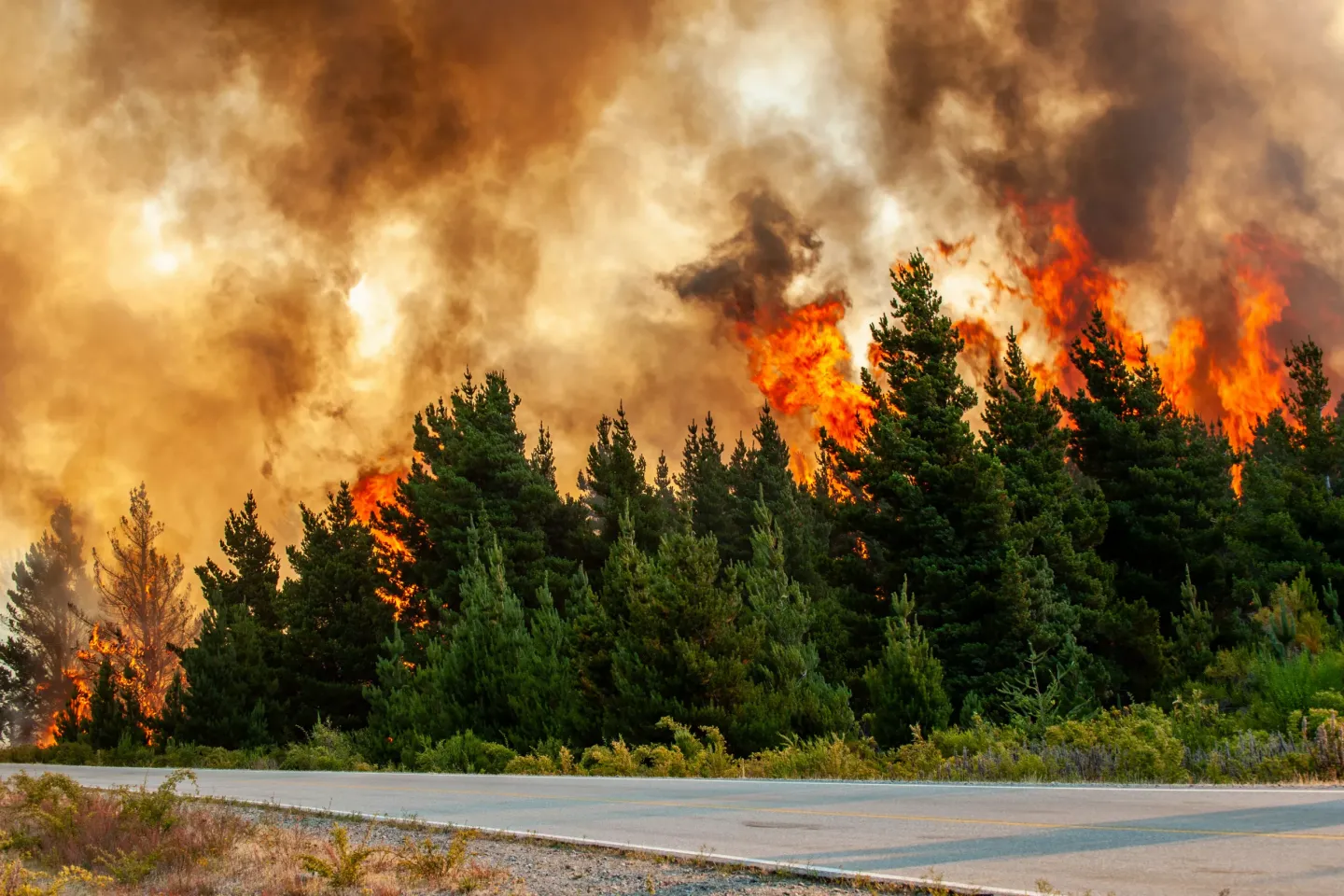
Wildfires can begin with a small flame, spark, discarded cigarette, unattended fire, electrical fault, or natural event and develop into a rapidly moving emergency when dry vegetation, high temperatures, and wind are present.
Although wildfires are often associated with forests and remote mountain areas, they can also threaten villages, farms, roads, tourist locations, utility infrastructure, and buildings located close to vegetation.
Pakistan is not immune to this risk. The National Disaster Management Authority (NDMA) identifies forest fires as a growing hazard in Pakistan and has published dedicated forest-fire guidance. Its guidance emphasizes preparedness, monitoring, risk mapping, community involvement, fire restrictions, firebreaks, vegetation management, and timely response.
Wildfire safety is therefore not just about firefighters. Property owners, communities, businesses, tourists, farmers, and residents can all play a role in reducing risk.
This guide explains wildfire safety in straightforward language, with particular attention to conditions relevant to Pakistan.
What Is a Wildfire?
A wildfire is an uncontrolled fire that spreads through vegetation or natural areas.
It can occur in:
- Forests
- Grasslands
- Shrublands
- Mountain areas
- Agricultural land
- Dry open spaces
- Areas surrounding buildings
Wildfires can spread quickly because vegetation acts as fuel. Dry grass, leaves, branches, bushes, dead trees, and other organic materials can allow flames to move from one area to another.
Wind can make the situation considerably more dangerous by carrying burning embers ahead of the main fire.
This means that a fire does not necessarily have to reach a building directly to create a threat. Embers can ignite vegetation, rooftops, outdoor materials, or other combustible objects some distance away.
Why Wildfire Risk Matters in Pakistan
Pakistan has diverse landscapes ranging from dry plains to forested mountains and other vegetation-rich areas.
The NDMA has specifically described forest fires as a growing hazard that can damage forests, ecosystems, livelihoods, and human life. Its national forest-fire guidance calls for coordinated preparedness and response involving government agencies, local communities, and other stakeholders.
The NDMA’s 2026 Summer Contingency Plan also highlights measures such as firebreaks, removal of accumulated dry vegetation, restrictions on high-risk activities, community engagement, firefighting-resource placement, fire drills, and tourist awareness programmes.
The important point is that wildfire risk is not limited to one province or one type of landscape. The level of risk can change depending on weather, vegetation, terrain, human activity, and local conditions.
What Causes Wildfires?
Wildfires can have natural or human causes.
Natural causes
Lightning is one example of a natural ignition source.
Under dry conditions, a natural ignition can spread through vegetation and become difficult to control.
Human causes
Human activity can create many preventable ignition sources, including:
- Unattended campfires
- Burning rubbish
- Agricultural burning
- Discarded cigarettes
- Outdoor cooking
- Fireworks
- Sparks from machinery
- Electrical infrastructure faults
- Deliberate fires
- Vehicle-related heat or sparks
Not every outdoor fire becomes a wildfire. However, dry and windy conditions can make even a small ignition dangerous.
The Three Things That Make Wildfires Dangerous
Wildfire behavior is influenced by several factors, but three are particularly important:
Fuel
Dry vegetation provides material for the fire to burn.
Weather
High temperatures, low humidity, and strong winds can increase the potential for rapid fire spread.
Terrain
Hills, valleys, slopes, and other terrain features can affect how flames and smoke move.
NDMA’s forest-fire guidance recommends assessing fire-prone areas using factors including past fire activity, topography, weather conditions, vegetation density, ground cover, accessibility, and nearby water sources.
Understanding these factors helps communities determine where additional preparation may be necessary.
How Wildfires Spread
A wildfire does not always move like a wall of flames.
One of the major hazards is wind-driven embers.
Burning pieces of vegetation can be carried through the air and land ahead of the main fire. If they land on dry combustible material, they can create new ignition points.
This is why a property can be threatened even when flames are not immediately nearby.
Wildfires may also spread more rapidly uphill because heat rises and preheats vegetation above the fire.
The exact behavior of every fire is different, which is why people should follow instructions from emergency authorities rather than attempting to predict a fire’s movement themselves.
Before Wildfire Season: Prepare Early
The best time to prepare for a wildfire is before one begins.
Residents and property managers in fire-prone areas should consider the surroundings of their buildings.
Look for:
- Dry grass
- Dead leaves
- Fallen branches
- Accumulated rubbish
- Dry vegetation against walls
- Combustible materials stored outdoors
- Wood piles
- Fuel containers
- Flammable landscaping materials
Removing unnecessary combustible material can reduce the amount of fuel immediately surrounding a property.
NDMA’s current wildfire-prevention guidance specifically recommends clearing accumulated debris such as dead wood, branches, and dry leaves because these materials can act as fuel.
Create a Defensible Area Around Buildings
A defensible area is space around a building where combustible vegetation and materials are reduced or managed.
The objective is not to make a property completely fireproof.
Instead, the goal is to reduce opportunities for flames or embers to ignite materials immediately around the building.
Depending on the property, practical measures may include:
- Removing dead vegetation
- Trimming overgrown plants
- Keeping dry leaves away from structures
- Clearing combustible debris
- Maintaining access for emergency vehicles
- Keeping outdoor storage organized
- Managing trees and branches near structures
- Avoiding unnecessary combustible materials near walls
Landscaping should be considered part of wildfire safety where properties are located near vegetation.
Keep Roofs and Gutters Clear
Roofs can be vulnerable to wind-blown embers.
Dry leaves, pine needles, branches, and other debris can accumulate on roofs and inside gutters.
If burning embers land in these materials, they can potentially ignite.
Regular maintenance should therefore include:
- Cleaning gutters
- Removing accumulated leaves
- Clearing roof debris
- Trimming branches where appropriate
- Checking roof penetrations and openings
- Maintaining exterior areas
The exact measures needed depend on the building design and surrounding environment.
Store Flammable Materials Carefully
Fuel, gas cylinders, chemicals, paints, and other combustible materials should be stored safely and according to applicable requirements.
Don’t leave unnecessary combustible materials outdoors near buildings.
Examples include:
- Petrol containers
- LPG cylinders
- Wood piles
- Cardboard
- Waste
- Dry packaging
- Flammable chemicals
Outdoor storage can become particularly important during a wildfire because embers can ignite exposed materials.
Be Careful With Outdoor Fires
An outdoor fire that appears small can become dangerous surprisingly quickly.
Avoid lighting fires when conditions are dry, hot, or windy, particularly when authorities have issued restrictions.
If outdoor burning is permitted, follow local requirements and maintain appropriate controls.
Never leave a fire unattended.
Before leaving an area, make sure the fire is fully extinguished according to applicable local guidance.
During periods of elevated wildfire danger, the safest choice may be not to use an outdoor flame at all.
NDMA’s 2026 contingency planning specifically identifies restrictions on activities such as open burning, campfires, smoking, and fireworks during periods of elevated fire danger.
Take Cigarette Disposal Seriously
A cigarette butt may look harmless after being discarded, but it can potentially ignite dry vegetation.
Never throw cigarette ends into:
- Dry grass
- Forest vegetation
- Bushes
- Roadside vegetation
- Agricultural waste
Use appropriate disposal methods and follow local restrictions in fire-prone areas.
Small actions matter because wildfires can begin from very small ignition sources.
Tourists and Campers Have an Important Role
Tourist areas can experience additional wildfire risk when visitors enter forested or dry areas.
Visitors should:
- Follow local fire restrictions
- Use designated camping areas where available
- Avoid unauthorized fires
- Never leave cooking fires unattended
- Dispose of cigarettes properly
- Take rubbish away
- Follow warning signs
- Respect temporary fire bans
- Report smoke or fire promptly
NDMA’s 2026 plan specifically recommends tourist-awareness programmes to educate visitors about responsible behavior and compliance with fire regulations in forest areas.
A beautiful outdoor location can become hazardous quickly when weather and vegetation conditions are unfavorable.
What to Do If You See a Wildfire
If you see smoke or flames in a forest, grassland, or other natural area, do not assume someone else has already reported it.
Notify the appropriate emergency or local authority as soon as possible.
Provide useful information such as:
- Your location
- Direction of the fire
- Visible smoke or flames
- Nearby roads
- Nearby buildings or communities
- Any immediate threats you can identify
Do not approach the fire simply to obtain a closer look.
A wildfire can change direction quickly, and smoke can reduce visibility and create respiratory hazards.
What to Do If a Wildfire Is Approaching
The most important rule is simple:
Take official evacuation instructions seriously.
If authorities instruct people to evacuate, do not wait until flames are visible outside the property.
Prepare to leave early.
A basic emergency kit may include:
- Drinking water
- Essential medicines
- Important documents
- Mobile phone
- Charger or power bank
- Basic first-aid supplies
- Necessary clothing
- Essential supplies for children or elderly family members
- Supplies for pets
Keep vehicles accessible and avoid blocking roads that emergency services may need.
If an evacuation order is issued, follow the designated route rather than creating your own route through unfamiliar areas.
Smoke Can Be Dangerous Too
People sometimes focus entirely on flames and overlook smoke.
Wildfire smoke can contain gases and fine particles that may irritate the eyes and respiratory system.
Smoke can also:
- Reduce visibility
- Make driving dangerous
- Make evacuation difficult
- Enter buildings through openings
- Create breathing difficulties
If smoke is present, follow official health and emergency guidance.
People with respiratory conditions, older adults, children, and others who may be particularly sensitive to smoke should take official warnings seriously.
Fire Safety Inside Buildings Near Wildfire Areas
A building located near vegetation still needs ordinary fire protection.
Its fire-safety measures may include:
- Smoke detection
- Fire alarms
- Appropriate extinguishers
- Emergency lighting
- Clear exits
- Emergency communication
- Electrical safety
- Fire-resistant construction where applicable
- Emergency planning
The Building Code of Pakistan – Fire Safety Provisions 2016 covers fire prevention, life safety, and fire protection for buildings and building-like structures. Its scope includes fire-protection systems, equipment, life-safety education, outside fires involving vegetation and other materials, emergency operations, and means of egress.
Pakistan Engineering Council lists these provisions among the country’s building codes and standards.
How a Fire Alarm System Fits Into Wildfire Preparedness
A building fire alarm system is primarily intended to detect and notify occupants about fire conditions within or associated with the protected premises.
It should not be viewed as a replacement for a wildfire evacuation plan.
For example, if a wildfire is approaching a residential community, residents may receive an evacuation warning from authorities before flames reach individual buildings.
A building’s detection system serves a different purpose: it can provide an alert if a fire or smoke condition is detected within the protected building.
This distinction is important when selecting a Fire alarm system in Pakistan.
The system should be designed according to the building’s use, risks, layout, applicable requirements, and professional assessment.
For properties near forest or dry vegetation, fire safety should be considered as part of a wider emergency plan rather than relying on an alarm alone.
Fire Alarm Maintenance Still Matters
A fire alarm system is useful only when it is operational.
Regular maintenance should address relevant components such as:
- Smoke detectors
- Heat detectors
- Manual call points
- Alarm sounders
- Visual notification devices
- Control panels
- Backup power
- Monitoring connections
- System wiring
The Building Code of Pakistan includes design, installation, maintenance, repair, servicing, and testing of fire-protection systems and equipment within its fire-safety scope.
For commercial or larger properties, maintenance should be carried out according to applicable requirements and manufacturer instructions by appropriately qualified personnel.
Create a Wildfire Emergency Plan
A written emergency plan can reduce confusion.
It should answer basic questions:
Who monitors wildfire warnings?
Assign responsibility where appropriate.
How will people receive warnings?
Consider official alerts, emergency communications, and local authorities.
Where will people go?
Identify evacuation destinations and routes according to local emergency planning.
What should employees do?
Define responsibilities clearly.
How will visitors be handled?
Visitors may not know local routes or procedures.
What happens to critical equipment?
Businesses should identify what can safely be shut down before evacuation and what must be left to emergency personnel.
Who contacts emergency services?
Establish the appropriate reporting procedure.
The plan should be reviewed regularly and updated when circumstances change.
Businesses Should Prepare for Disruption
Wildfires can affect businesses even when their buildings are not directly damaged.
Possible consequences include:
- Road closures
- Power interruptions
- Smoke
- Supply-chain disruptions
- Employee evacuation
- Restricted access
- Telecommunications problems
- Temporary closure
Businesses located near wildfire-prone areas should consider continuity planning.
Critical records should be backed up appropriately, emergency contacts should be current, and employees should know how the organization will communicate during an emergency.
Community Firebreaks Can Help
A firebreak is an area where vegetation or other fuel has been reduced to slow or interrupt fire spread.
Firebreaks may be used as part of larger wildfire-management strategies.
NDMA specifically identifies creating and maintaining firebreaks as a wildfire mitigation measure.
However, firebreaks are not guaranteed to stop every wildfire.
Their effectiveness depends on factors such as:
- Fire intensity
- Wind
- Terrain
- Vegetation
- Firebreak width
- Maintenance
- Availability of firefighting resources
Firebreak planning should therefore be handled by appropriate authorities and professionals.
Monitoring and Early Warning
Early awareness can make a major difference.
NDMA’s forest-fire guidance recommends monitoring weather and climatic conditions, maintaining maps of fire-prone areas, using remote sensing such as satellite and drone imagery, and maintaining vigilance teams in higher-risk areas.
At the individual level, people can monitor official government announcements and local emergency information.
Do not rely exclusively on social-media posts or unverified messages during an emergency.
Use information from recognized authorities whenever possible.
What Not to Do During a Wildfire
Avoid taking unnecessary risks.
Do not:
- Approach the fire for photographs
- Drive toward flames
- Ignore evacuation orders
- Start outdoor fires during restrictions
- Leave children unattended near fire
- Return to an evacuated area without official permission
- Assume that a fire is safe because flames are temporarily invisible
- Block emergency-access roads
- Attempt firefighting beyond your training or available equipment
Wildfire response is a professional activity when a fire becomes large or uncontrollable.
The safest decision is often to leave early and allow trained emergency personnel to respond.
A Simple Wildfire Safety Checklist
Before wildfire season
- Remove dry vegetation around buildings.
- Clean gutters and roofs.
- Store combustible materials safely.
- Review emergency contacts.
- Check fire-protection equipment.
- Inspect alarm systems.
- Prepare evacuation plans.
- Monitor official warnings.
During high-risk conditions
- Avoid unnecessary outdoor fires.
- Follow fire restrictions.
- Don’t burn rubbish or vegetation if prohibited.
- Avoid activities that create sparks.
- Keep emergency routes accessible.
- Monitor official information.
If a wildfire is reported nearby
- Follow official warnings.
- Prepare essential belongings.
- Keep vehicles ready.
- Avoid unnecessary travel.
- Prepare for possible evacuation.
- Leave immediately if instructed.
During evacuation
- Follow designated routes.
- Keep roads clear for emergency vehicles.
- Do not return until authorities say it is safe.
- Stay informed through official channels.
The Role of Fire Safety Equipment
Wildfire preparedness should never be reduced to purchasing one piece of equipment.
A comprehensive approach may involve:
- Fire detection
- Alarm notification
- Fire extinguishers
- Emergency lighting
- Emergency communication
- Safe electrical systems
- Building maintenance
- Vegetation management
- Evacuation planning
- Staff training
- Community awareness
A Fire alarm system in Pakistan can be an important component of building fire protection, but it is only one part of a broader safety strategy.
For information about fire-protection products and solutions, you can also explore Flame Defender.
Final Thoughts
Wildfire safety is easier to understand when it is reduced to a few basic principles:
Prevent ignition. Reduce fuel. Monitor conditions. Prepare early. Follow official warnings. Evacuate when instructed.
Pakistan’s NDMA has recognized forest fires as an important hazard and has issued dedicated guidance for prevention, preparedness, response, and recovery. Its more recent planning also emphasizes firebreaks, debris removal, restrictions during high-risk periods, community participation, firefighting preparedness, and tourist awareness.
For buildings, wildfire awareness should complement ordinary fire protection. Detection and alarm systems, emergency exits, fire equipment, maintenance, and evacuation procedures all remain important.
Most importantly, never underestimate a wildfire because it appears to be far away. Wind, terrain, dry vegetation, and embers can change conditions quickly.
Good wildfire safety starts before there is smoke on the horizon.
Frequently Asked Questions
1. What is the biggest cause of wildfires?
There is no single cause for every wildfire. Human activities can create many ignition sources, including unattended fires, burning vegetation or rubbish, cigarettes, fireworks, and sparks. Natural events such as lightning can also start fires. The risk of spread becomes greater when vegetation is dry and weather conditions are unfavorable.
2. How can people reduce wildfire risk around their homes?
Start by reducing combustible material around the property. Remove accumulated dry leaves, dead branches, rubbish, and other unnecessary vegetation or combustible materials. Keep roofs and gutters clean and maintain safe access for emergency vehicles. NDMA also recommends clearing accumulated debris and using vegetation-management measures as part of wildfire mitigation.
3. Does a fire alarm system protect a building from a wildfire?
A fire alarm can provide detection and warning when a fire or smoke condition occurs within the protected premises, but it does not stop a wildfire. Properties in wildfire-prone areas need a broader strategy involving prevention, building protection, emergency planning, official warnings, and evacuation procedures.
4. What should I do if a wildfire is approaching?
Monitor official emergency information and follow evacuation instructions immediately. If evacuation is advised, leave using the designated route and do not wait for the fire to become visible. Keep roads clear for emergency responders and do not return until authorities confirm that it is safe.
5. Is wildfire risk relevant to urban areas in Pakistan?
Yes. While forests and rural areas may face greater direct exposure to vegetation fires, wildfire smoke and spreading fires can affect communities, roads, agricultural areas, tourist locations, and buildings near dry vegetation. Urban and peri-urban properties should therefore consider their surrounding environment as part of their overall fire-risk assessment.