
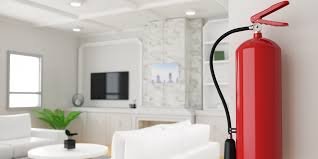
A good fire-safety plan should protect everyone in a building, including older adults who may need additional time, assistance, or accessible evacuation arrangements. Age alone does not mean that an older person cannot respond to an emergency, but mobility limitations, hearing or vision difficulties, medical equipment, or unfamiliar surroundings can affect how quickly someone notices an alarm and reaches a safe location.
Pakistan’s Building Code of Fire Safety Provisions recognizes that the capabilities of occupants should be considered when providing appropriate means of egress and other safeguards. It also states that means of egress should be accessible as necessary to provide reasonable safety for occupants with impaired mobility.
For families, care facilities, hospitals, apartment buildings, and other properties, this means fire safety should be planned around the people who actually use the building rather than relying on a one-size-fits-all approach.
Start With an Individual Fire Safety Assessment
The first step is understanding the needs of the older adults who live or spend time in the building.
Consider questions such as:
- Can the person hear a standard alarm clearly?
- Can they see exit signs in low-light conditions?
- Can they walk without assistance?
- Do they use a wheelchair, walker, cane, or other mobility aid?
- Do they sleep on an upper floor?
- Do they use medical or electrical equipment?
- Are they familiar with the building’s exits?
- Will someone be available to assist them during an emergency?
These questions can help families and building managers identify potential difficulties before an emergency occurs.
The goal is not to assume that every elderly person has the same needs. Instead, a safety plan should be adapted to the individual’s abilities and circumstances.
Early Warning Is Especially Important
Early warning gives occupants more time to respond to an emergency. This is particularly important for anyone who may require additional time to leave a building.
A properly designed and maintained fire alarm system in Pakistan can provide early notification when smoke, heat, or another fire condition is detected. Fire alarm systems may include smoke detectors, heat detectors, control panels, manual call points, and audible or visual notification devices depending on the building’s requirements.
Flame Defender describes professional fire alarm systems as early-warning solutions and provides installation, maintenance, and upgrade services for residential, commercial, and industrial properties in Pakistan.
A fire alarm is not a replacement for an evacuation plan, however. It is one part of a wider system of safeguards.
Consider Hearing Difficulties
Some older adults may have difficulty hearing alarms, particularly when sleeping or when there is significant background noise.
A safety assessment should therefore consider whether the alarm can be noticed by everyone who needs to respond.
Depending on the building and applicable requirements, visual notification devices can provide an additional way of communicating an emergency. Other notification methods may also be appropriate in larger facilities.
In homes, family members should also understand that simply installing an alarm does not guarantee that every occupant will recognize it immediately. Regularly discussing what the alarm means can reduce confusion during an emergency.
Think About Mobility
Mobility is one of the most important considerations when planning evacuation for older adults.
Someone who walks independently may be able to use an ordinary exit, while another person may require assistance or an accessible evacuation arrangement.
The Building Code of Pakistan Fire Safety Provisions specifically states that means of egress should be accessible to the extent necessary to provide reasonable safety for occupants with impaired mobility.
Exit routes should therefore be kept clear and usable. Furniture, stored items, boxes, equipment, or other obstacles should not unnecessarily restrict an escape route.
For people who use mobility aids, the plan should account for the actual route they would need to take rather than assuming that every exit is equally suitable.
Make Exits Easy to Identify
During an emergency, people may become confused or disoriented. Clear exit signs and familiar routes can make evacuation easier.
Pakistan’s fire-safety provisions state that every exit should be clearly visible or that the route to reach every exit should be conspicuously indicated.
For older adults, this can be particularly useful when vision is reduced or when an emergency occurs at night.
Families can also make the evacuation plan easier to understand by identifying the safest normal exit in advance and ensuring that the person knows where it is.
Keep Escape Routes Unobstructed
An evacuation route is only useful if it can actually be used.
The Building Code of Pakistan Fire Safety Provisions requires means of egress in occupied buildings to be maintained free and unobstructed.
At home, this means avoiding unnecessary storage in hallways, near doors, or along commonly used routes.
In residential buildings, offices, hospitals, and care facilities, building managers should also make sure that common escape routes remain accessible.
This is especially important for people using walkers or wheelchairs because even a relatively small obstruction can make movement more difficult.
Create a Personal Assistance Plan
If an older adult needs help during an emergency, identify who will provide that assistance.
For example, a family may decide which adult will check on an elderly family member, while a care facility may assign trained staff according to its emergency plan.
The plan should be realistic. It should not depend on someone who may be away from the property, asleep in another location, or unable to reach the person.
For people living alone, families can discuss how emergency information will be communicated and what arrangements are appropriate for their circumstances.
Plan for Different Times of Day
Fire emergencies can happen at any time, so a safety plan should consider both daytime and nighttime conditions.
At night, an older adult may be asleep and may take longer to wake up, identify the alarm, become oriented, and begin moving toward an exit.
A daytime plan may be different if family members, caregivers, or other occupants are normally present.
Thinking about different scenarios can reveal gaps in the safety plan.
Do Not Rely on One Safety Measure
A strong fire-safety plan should use multiple safeguards.
The Building Code of Pakistan Fire Safety Provisions states that building safety should not depend solely on a single safeguard and calls for additional safeguards when one measure becomes ineffective.
For elderly occupants, this principle is particularly important.
A building may have a fire alarm, but occupants still need clear escape routes. It may have emergency lighting, but people still need an evacuation plan. It may have fire extinguishers, but untrained occupants should not be expected to confront a dangerous fire.
The overall system should work together to provide early warning, safe evacuation, and appropriate emergency response.
Make Fire Alarms Easy to Maintain
Installing an alarm is only the beginning.
Fire detection equipment requires appropriate inspection, testing, and maintenance to remain reliable. Dust, humidity, aging components, battery problems, and other conditions can affect system performance.
Flame Defender notes that regular maintenance can include cleaning, testing, and calibration, as well as identifying faults or components that are no longer performing properly.
For households with elderly occupants, this is especially important because they may depend heavily on the alarm to provide early warning.
A system that is not properly maintained may not provide the expected protection when an emergency occurs.
Consider Visual and Audible Communication
Emergency communication should be appropriate for the occupants.
Some buildings may benefit from combining audible alarms with visual notification. Larger facilities may also use public-address systems to provide evacuation information.
Flame Defender describes public-address systems that can be integrated with fire alarm panels in settings such as hospitals, schools, commercial buildings, and industrial facilities.
The exact arrangement should depend on the building’s design, occupancy, and applicable requirements.
For elderly occupants, clear communication can reduce uncertainty about what is happening and where people should go.
Keep Important Information Accessible
Families and care facilities should keep important emergency information available to appropriate caregivers and responsible personnel.
Depending on the situation, this might include:
- Emergency contact information
- Relevant mobility requirements
- The person’s normal sleeping location
- The location of mobility equipment
- Evacuation assistance arrangements
- Important building access information
Sensitive medical information should only be handled appropriately and shared with people who legitimately need it.
The purpose is to make sure that those responsible for emergency assistance are not forced to guess what support an individual requires.
Be Careful With Medical and Electrical Equipment
Many older adults use electrical equipment in their homes or living spaces. This can make electrical safety an important part of fire prevention.
Power cords, plugs, extension arrangements, and electrical equipment should be kept in appropriate condition. Damaged equipment should be assessed and repaired or replaced by qualified professionals.
Electrical equipment should not be overloaded or used in ways contrary to manufacturer instructions.
Families should also consider whether equipment could make evacuation more complicated and discuss an appropriate emergency plan with relevant professionals when necessary.
Fire Safety in Care Homes and Healthcare Facilities
Care homes, assisted-living environments, and healthcare facilities may have larger numbers of occupants who require assistance.
These buildings need carefully planned fire-safety arrangements that consider mobility, communication, staffing, evacuation procedures, alarm systems, and emergency access.
The Building Code’s emphasis on occupant capabilities is particularly relevant in buildings where some occupants may not be able to evacuate independently.
Staff should understand their responsibilities under the facility’s approved emergency plan and receive appropriate training.
Keep Fire Equipment Accessible but Do Not Encourage Risky Action
Fire extinguishers and other equipment should be installed and maintained according to the building’s fire-safety plan and applicable requirements.
However, elderly occupants should not be expected to approach or fight a serious fire simply because an extinguisher is nearby.
The priority during a dangerous fire is to follow the emergency plan, move away from danger, evacuate when instructed, and contact the appropriate emergency services.
Fire equipment is an important component of a safety system, but it should never replace safe evacuation.
Practice the Evacuation Plan
An evacuation plan becomes more useful when occupants are familiar with it.
Families can discuss:
- What the alarm sounds like
- Which exit should normally be used
- Where to meet outside
- Who will provide assistance
- What to do if the normal route is unavailable
Drills should be conducted safely and according to the requirements applicable to the property. They should never involve real flames, smoke, or dangerous situations.
The Building Code of Pakistan Fire Safety Provisions includes requirements concerning emergency egress and relocation drills for certain occupancies.
For older adults, practice can also reveal whether the planned evacuation time and assistance arrangements are realistic.
Make the Plan Simple
A complicated emergency plan may be difficult to remember under stress.
Use clear instructions and avoid unnecessary steps.
For example, the plan might identify:
- Recognize the alarm.
- Follow the established evacuation route.
- Receive assistance if needed.
- Move to the predetermined safe location.
- Stay there until responsible authorities provide further instructions.
The exact procedure should follow the building’s emergency plan.
Simplicity is particularly helpful for older adults who may become confused during an unexpected emergency.
Review the Plan After Changes
Fire safety plans should not remain unchanged for years.
A person’s mobility may change. A family may move furniture. A building may be renovated. An elderly occupant may begin using a mobility aid or require additional assistance.
Each significant change should prompt a review of the safety plan.
Similarly, fire alarm equipment should be reviewed when building layouts or occupancy change.
A safety plan that worked several years ago may no longer be appropriate today.
Fire Safety in Apartments and Shared Buildings
Older adults living in apartment buildings may have additional considerations because evacuation can involve shared corridors, stairways, lifts, and common areas.
Residents should understand the building’s official emergency procedures rather than creating conflicting instructions.
Building management should keep common escape routes clear and maintain required fire-safety systems.
Where an elderly resident has mobility difficulties, appropriate arrangements should be discussed with building management in advance rather than waiting until an emergency occurs.
Choose Professional Fire Safety Support
Technical fire-safety systems should be installed, inspected, tested, and maintained by appropriately qualified professionals.
The Pakistan Engineering Council identifies installation, commissioning, and maintenance of fire detection, alarm, and suppression systems as a recognized engineering specialization.
When selecting a service provider, consider its technical experience, maintenance procedures, testing capabilities, documentation, and familiarity with the type of property being protected.
A professional assessment can help identify weaknesses that may not be obvious to residents or building managers.
Final Thoughts
A complete safety plan should consider the needs of every person who may need to evacuate, including older adults. Mobility limitations, hearing or vision difficulties, nighttime conditions, medical equipment, and the need for assistance can all affect how an emergency plan should be designed.
A dependable fire alarm system in Pakistan can provide important early warning, but it is only one part of a complete safety strategy. Clear exits, accessible evacuation routes, emergency communication, regular maintenance, appropriate training, and individualized assistance plans all contribute to better preparedness.
Pakistan’s Building Code of Fire Safety Provisions emphasizes multiple safeguards and consideration of occupant capabilities when designing fire-safety measures.
For properties that need professional fire alarm installation, maintenance, or upgrades, Flame Defender provides fire detection services for residential, commercial, and industrial properties across Pakistan.
The most important principle is simple: fire safety should be designed around real people and their real needs. By considering elderly occupants in advance, families and organizations can create emergency arrangements that are clearer, more accessible, and better prepared for unexpected situations.
FAQs
1. Why is fire safety especially important for elderly people?
Some older adults may need additional time or assistance because of mobility, hearing, vision, or other limitations. A safety plan should account for these needs so that everyone has a reasonable opportunity to respond and evacuate.
2. Is a fire alarm system enough to protect elderly occupants?
No. A reliable alarm provides early warning, but it should work together with accessible exits, clear evacuation procedures, emergency communication, maintenance, and appropriate assistance arrangements.
3. How can a home be made safer for an elderly person?
Keep escape routes clear, make sure alarms are properly maintained, ensure exits are easy to identify, discuss an evacuation plan, and arrange appropriate assistance if the person has mobility or sensory limitations.
4. Should elderly people use a fire extinguisher during an emergency?
They should not be expected to approach a dangerous fire. The priority is to follow the emergency plan, evacuate to safety, and contact emergency services. Fire extinguishers are only one component of a wider fire-protection strategy.
5. Does a fire alarm system require regular maintenance?
Yes. Fire alarm systems should be appropriately inspected, tested, and maintained so that detectors, control panels, batteries, notification devices, and other components remain reliable. Regular professional maintenance can help identify faults before they become serious problems.