
Shopping malls are among the busiest types of commercial buildings. Thousands of customers, employees, shop owners, restaurant workers, security personnel, and service staff may occupy the same property every day. With retail stores, food courts, kitchens, electrical rooms, storage areas, parking facilities, escalators, and entertainment spaces operating together, maintaining fire safety requires continuous attention.
Installing fire protection equipment is only the beginning. Even a professionally designed system can become less reliable if it is not inspected, tested, maintained, and repaired when necessary. Regular maintenance helps identify problems before an emergency occurs and supports the overall reliability of the building’s fire protection strategy.
A properly maintained fire alarm system in Pakistan can be an important part of this strategy. Pakistan’s Engineering Council lists the Building Code of Pakistan Fire Safety Provisions 2016 among the country’s building codes.
This guide explains important maintenance practices that mall owners, facility managers, maintenance teams, and property operators should understand.
1. Create a Regular Fire Safety Maintenance Schedule
One of the most important steps is creating a documented maintenance schedule.
Fire safety equipment should not be checked only when an inspection is approaching. Different components require different inspection and testing intervals, depending on the system design, manufacturer instructions, applicable standards, and local requirements.
A mall maintenance program can include:
- Fire alarm inspection
- Smoke and heat detector testing
- Manual call point checks
- Alarm notification testing
- Fire pump inspection
- Sprinkler system inspection
- Hydrant inspection
- Fire extinguisher inspection
- Emergency lighting checks
- Exit sign inspection
- Emergency communication testing
- Backup power checks
The exact schedule should be established by qualified professionals according to the installed systems and applicable requirements.
2. Test the Fire Alarm System Regularly
A fire alarm system can only provide reliable warning if its components remain operational.
The Building Code of Pakistan Fire Safety Provisions states that required fire alarm systems and automatic fire detectors are to be installed in accordance with applicable standards and provisions. It also addresses systems that are impaired or not fully operational.
Mall management should therefore have qualified technicians inspect and test the system at appropriate intervals.
Testing may involve checking:
- Control panels
- Smoke detectors
- Heat detectors
- Manual call points
- Sounders
- Visual notification devices
- Batteries
- Wiring
- Communication functions
- System fault indications
A professional service provider can also identify components that are approaching the end of their useful service life.
3. Keep Smoke and Heat Detectors Clean
Smoke and heat detectors are installed throughout different areas of a mall to provide early warning when conditions indicate a possible fire.
Dust, dirt, construction residue, or other environmental factors can affect detector performance. For this reason, detectors should be inspected and maintained according to the manufacturer’s requirements.
Mall management should pay particular attention to areas where dust or airborne particles are common.
Cleaning should be performed using appropriate methods and by trained personnel. Unqualified maintenance should not involve altering detector settings or system programming.
Flame Defender notes that dust, humidity, and general wear can affect fire alarm components over time and offers scheduled maintenance intended to clean, test, and calibrate systems.
4. Inspect Manual Call Points
Manual call points allow people to initiate a fire alarm when they discover a fire or other emergency condition, depending on the system design.
In a large shopping mall, these devices should remain visible, accessible, and clearly identifiable.
Maintenance personnel should check for:
- Physical damage
- Obstructions
- Loose components
- Signs of tampering
- Proper operation
- Correct system response
Merchandise, advertising displays, furniture, or temporary structures should not block access to emergency equipment.
5. Check Alarm Sounders and Visual Indicators
A mall can be extremely noisy. Music, conversations, announcements, machinery, and crowds can make emergency notification more challenging.
Alarm notification devices should therefore be tested to confirm that they operate as intended.
Depending on the approved system, notification may include audible and visual devices or emergency voice communication.
Maintenance teams should verify that devices are not damaged, disconnected, covered, or obstructed.
If a mall has undergone renovations, the notification coverage should also be reviewed because changes to walls, ceilings, partitions, or room layouts can affect the original system design.
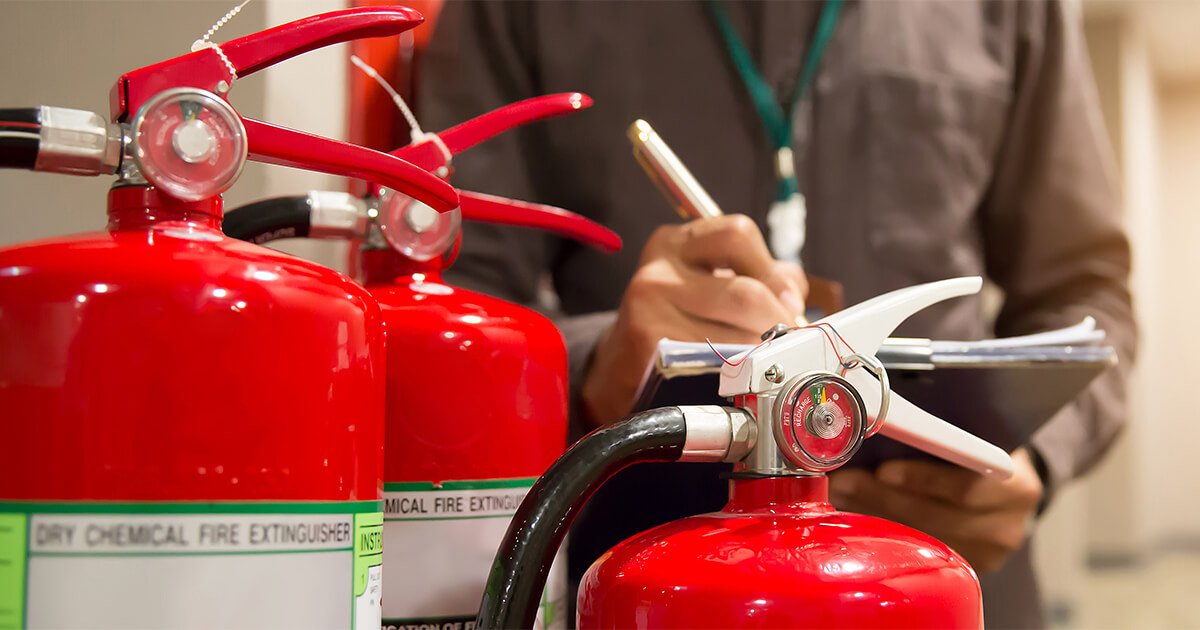
6. Inspect Fire Extinguishers
Fire extinguishers are often distributed throughout malls, including retail areas, offices, kitchens, service rooms, and other locations.
They should remain:
- Accessible
- Clearly identified
- Correctly positioned
- Free from obvious damage
- Appropriate for the identified fire hazards
- Properly maintained
Visual inspection alone is not always sufficient. Fire extinguishers require appropriate professional servicing and testing according to the equipment type and applicable requirements.
The Building Code of Pakistan includes provisions concerning inspection and hydrostatic testing of portable fire extinguishers.
Flame Defender also describes maintenance practices including visual inspection, professional servicing, refilling after use, and periodic testing.
7. Maintain Fire Sprinkler Systems
Automatic sprinklers can provide an important layer of protection by responding to heat and helping control a developing fire.
However, sprinkler systems require regular inspection and maintenance.
Maintenance teams should watch for:
- Damaged sprinkler heads
- Corrosion
- Leaking pipes
- Blocked valves
- Obstructions near sprinkler heads
- Pressure problems
- Unauthorized modifications
- Problems with water supplies
Sprinkler heads should never be used as hooks for decorations, signs, cables, or other objects.
Any work that could affect sprinkler coverage should be reviewed by qualified fire protection personnel.
Flame Defender states that water-based fire suppression systems require regular inspection, pressure testing, and servicing of pipes, valves, and sprinkler heads.
8. Inspect Fire Pumps and Water Supplies
A mall’s water-based fire protection systems depend on an adequate water supply and properly functioning pumping equipment where such equipment forms part of the system.
Fire pump maintenance may include checking the pump, associated controls, valves, pressure conditions, power supply, and other system components.
The exact testing requirements depend on the installed system and applicable standards.
Maintenance records should document inspections and identify any defects that require correction.
A fire protection system should never be assumed to work simply because the pump room looks clean or the equipment appears physically intact.
9. Keep Fire Hydrants Accessible
Fire hydrants provide firefighting water connections where included in the building’s fire protection design.
Mall management should ensure that hydrants and associated equipment are not blocked by:
- Parked vehicles
- Delivery vehicles
- Storage materials
- Waste containers
- Temporary structures
- Landscaping
- Construction equipment
Emergency responders need clear access to firefighting infrastructure.
Hydrant inspections should also identify damaged outlets, valves, hoses, signage, or other components that may affect the system.
10. Check Emergency Lighting
A fire emergency can affect normal building lighting. Emergency lighting can help people identify escape routes when normal illumination is unavailable or reduced.
Mall maintenance teams should periodically inspect emergency lighting and confirm that it operates according to the approved system requirements.
Checks can include:
- Light fittings
- Battery condition
- Emergency operation
- Exit signs
- Charging arrangements
- Physical damage
Exit signs should remain visible and should not be hidden by advertising, decorations, temporary displays, or other objects.
11. Keep Emergency Exits Clear
Mall environments change constantly. Shops move displays, events are organized, kiosks are installed, and promotional materials appear throughout public areas.
These changes should never compromise designated escape routes.
Facility managers should regularly inspect:
- Corridors
- Stairways
- Exit doors
- Exit access routes
- Emergency doors
- Assembly routes
Items stored temporarily in an exit route can become a serious problem during an emergency.
Maintenance teams should report and correct obstructions immediately.
12. Review Fire Doors
Fire doors form part of a building’s passive fire protection strategy.
They should be inspected for damage and should be able to operate as intended. Door closers, hinges, seals, frames, and other components should be reviewed according to the door’s specification and maintenance requirements.
Common problems can include:
- Doors being propped open
- Damaged seals
- Broken closers
- Damaged frames
- Unauthorized modifications
- Obstructions
Mall employees should understand that fire doors are safety components, not ordinary doors that can be modified for convenience.
13. Maintain Emergency Communication Systems
Large shopping malls may use emergency communication or voice/alarm systems as part of their fire safety arrangements.
These systems can help provide instructions to occupants during an emergency when included in the approved building design.
Maintenance should verify that communication equipment, speakers, control panels, backup power, and associated components function correctly.
Any changes to the mall’s public-address system should be carefully considered if it is integrated with the emergency communication system.
14. Check Backup Power
Fire safety equipment may depend on electrical power. A power interruption should not automatically leave essential life-safety systems unavailable.
The Building Code of Pakistan identifies fire alarm systems, automatic fire detection systems, emergency voice/alarm communication systems, and fire pumps among systems that may have emergency or standby power requirements depending on the applicable provisions.
Backup batteries, generators, transfer equipment, and other relevant components should therefore be inspected and tested as part of the building’s maintenance program.
15. Maintain Accurate Documentation
Good documentation is an often-overlooked part of fire safety maintenance.
Mall management should maintain records of:
- Inspection dates
- Testing results
- Equipment faults
- Repairs
- Replacements
- Alarm events
- Maintenance visits
- Fire drills
- System modifications
- Professional service reports
Records can help facility managers understand whether recurring problems exist.
They can also provide useful information during inspections and when planning system upgrades.
16. Investigate Every System Fault
A fault signal should never simply be ignored.
A fire alarm control panel may indicate problems involving power, batteries, wiring, detectors, communication, or other system components.
The Building Code of Pakistan specifically recognizes impaired fire alarm systems as systems that are not fully operational or are otherwise affected by renovation or repair.
If a fault occurs, qualified personnel should investigate it and restore the system as soon as reasonably possible.
Where a safety system is temporarily impaired, the property’s approved fire safety procedures should determine what additional precautions are necessary.
17. Review the System After Mall Renovations
Shopping malls frequently undergo renovations.
New stores, partitions, restaurants, ceilings, walls, storage areas, and electrical systems can change the building’s fire risks.
A fire protection system designed for the original layout may not automatically remain suitable after significant modifications.
Whenever the mall layout changes, management should have the fire protection design reviewed by qualified professionals.
This is particularly important when renovations affect:
- Detector locations
- Sprinkler coverage
- Exit routes
- Fire doors
- Alarm devices
- Emergency lighting
- Fire compartments
- Electrical rooms
- Kitchens
18. Train Maintenance and Security Staff
Fire safety maintenance is not only a technical responsibility.
Security guards, facility managers, maintenance personnel, and other designated employees should understand what different alarms and fault indications mean.
Staff training can cover:
- How to report a fire
- How to respond to an alarm
- How to contact emergency services
- Evacuation responsibilities
- Location of firefighting equipment
- Emergency communication procedures
- Assembly arrangements
- Reporting equipment faults
Training should match each employee’s actual responsibilities.
19. Conduct Appropriate Fire Drills
Fire drills provide an opportunity to evaluate the practical side of the emergency plan.
A drill can reveal:
- Confusing evacuation routes
- Congestion
- Communication problems
- Inadequate signage
- Unclear staff responsibilities
- Difficulties assisting visitors
- Problems with assembly arrangements
After each exercise, management should review what worked and what needs improvement.
Drills should be planned carefully and conducted in a way that does not create unnecessary danger or confusion.
20. Use Professional Maintenance Services
Large shopping malls have complex fire protection systems. Professional inspection and maintenance can help ensure that different components continue to work together.
Flame Defender states that it provides fire alarm installation, maintenance, testing, and upgrade services in Pakistan, including conventional and addressable systems.
You can learn more about fire safety solutions here:
The appropriate service provider should be selected based on qualifications, experience, equipment compatibility, applicable standards, and the specific requirements of the property.
A Practical Mall Fire Safety Checklist
Facility managers can use the following checklist as a general review:
- Fire alarm control panel checked
- Smoke detectors inspected
- Heat detectors inspected
- Manual call points accessible
- Alarm sounders tested
- Visual notification devices checked
- Emergency communication system checked
- Fire extinguishers inspected
- Sprinkler heads unobstructed
- Fire pumps inspected
- Hydrants accessible
- Emergency lighting tested
- Exit signs visible
- Escape routes clear
- Fire doors operating correctly
- Backup power checked
- Faults investigated
- Maintenance records updated
- Staff trained
- Fire drills reviewed
This checklist is a general management aid and does not replace professional inspection or the requirements of the applicable fire safety standards.
Conclusion
Mall fire safety cannot be treated as a one-time installation project. A building may have high-quality alarms, sprinklers, extinguishers, hydrants, emergency lighting, and other equipment, but these systems need ongoing attention to remain reliable.
Regular inspection, testing, maintenance, documentation, staff training, and professional system reviews can help identify problems before an emergency occurs.
For mall owners and facility managers in Pakistan, maintaining a reliable fire alarm system in Pakistan should be part of a wider fire protection program. The Building Code of Pakistan Fire Safety Provisions provides requirements for detection, alarm, communication, and other fire protection measures, while the exact maintenance program should reflect the installed systems, applicable standards, manufacturer instructions, and authority requirements.
The most important lesson is simple: fire safety equipment should never be installed and forgotten. Regular maintenance helps ensure that when an emergency occurs, the systems intended to protect people and property are ready to perform their intended functions.
Frequently Asked Questions
1. Why is regular fire safety maintenance important in shopping malls?
Malls contain large numbers of people and many different fire protection systems. Regular maintenance helps identify faults, damaged equipment, blocked routes, and other problems before an emergency occurs.
2. How often should a mall’s fire alarm system be maintained?
The appropriate frequency depends on the system, manufacturer requirements, applicable standards, and local regulations. A qualified fire protection professional should establish the maintenance schedule.
3. What fire safety equipment should malls regularly inspect?
Depending on the building, this can include fire alarm systems, detectors, manual call points, notification devices, extinguishers, sprinklers, fire pumps, hydrants, emergency lighting, fire doors, and emergency communication systems.
4. What should happen if a fire alarm system develops a fault?
The fault should be investigated by qualified personnel and corrected as soon as reasonably possible. If the system is temporarily impaired, the mall’s approved fire safety procedures should be followed.
5. Can mall renovations affect fire safety systems?
Yes. Changes to walls, ceilings, shops, restaurants, storage areas, electrical rooms, or escape routes can affect existing fire protection arrangements. Significant renovations should therefore be reviewed by qualified fire safety professionals before and after the work.