
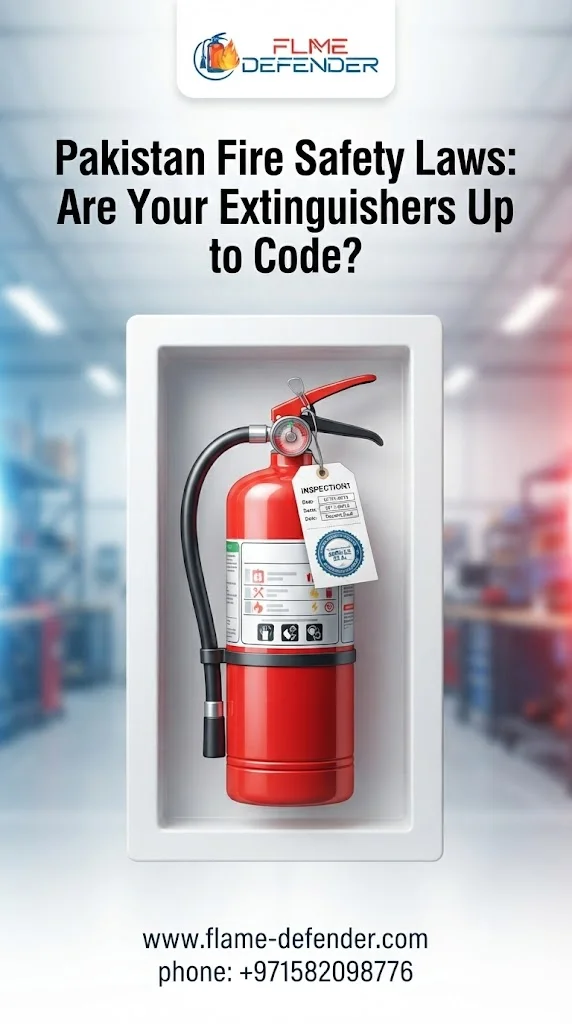
Fire safety is no longer something businesses and homeowners in Pakistan can afford to ignore. From the tragic Baldia factory fire in Karachi to smaller incidents in shopping malls, offices, and residential buildings, the country has seen firsthand what happens when fire safety equipment is missing, outdated, or simply not maintained. Yet many property owners still assume that owning a fire extinguisher is enough — without realizing that an expired or poorly maintained extinguisher can fail exactly when it’s needed most.
This raises an important question: are your fire extinguishers actually up to code? In this guide, we’ll break down Pakistan’s fire safety regulations, what “up to code” really means, and why regular fire extinguisher refilling in Pakistan is a legal and practical necessity — not just a suggestion.
Understanding Fire Safety Laws in Pakistan
Unlike some countries with a single, unified national fire code, Pakistan’s fire safety regulations are a mix of provincial building codes, labor laws, and local civil defense rules. Here’s how it generally breaks down:
1. The Pakistan Building Code
The Pakistan Building Code of Practice (Fire Safety Provisions) lays out requirements for fire detection, suppression systems, emergency exits, and fire extinguishers in commercial and high-rise buildings. It draws heavily from international standards like NFPA (National Fire Protection Association) guidelines.
2. Provincial Labor and Factory Laws
Provinces like Sindh and Punjab have their own Factories Acts and Occupational Safety and Health (OSH) rules that require workplaces — especially factories, warehouses, and industrial units to maintain functional firefighting equipment. Employers are legally responsible for ensuring extinguishers are inspected, serviced, and refilled on schedule.
3. Civil Defense and Rescue Department Guidelines
City-level Civil Defense departments and Rescue 1122 (in Punjab and other provinces) often conduct inspections of commercial buildings, plazas, and public spaces. Non-compliant fire safety equipment can result in fines, sealed premises, or denied occupancy certificates.
4. SECP and Insurance Requirements
For registered companies, SECP compliance frameworks and insurance policies frequently require documented proof of fire safety maintenance, including extinguisher servicing records, as a condition for coverage or renewal.
The common thread across all these regulations is simple: a fire extinguisher isn’t a one-time purchase it’s an ongoing responsibility.
What Does “Up to Code” Actually Mean?
A compliant fire extinguisher isn’t just one that exists in a building. To meet Pakistani fire safety standards, an extinguisher typically needs to meet these criteria:
- Correct type for the hazard — Water, foam, CO2, dry powder, or ABC-rated extinguishers each suit different fire classes (electrical, chemical, flammable liquids, etc.)
- Valid inspection tags — Showing the last service date and next due date
- Full pressure gauge reading — Needle in the green zone, not low or over-pressurized
- Intact seals and pins — No signs of tampering or prior use
- No corrosion, dents, or leaks — Physical damage can compromise the cylinder
- Proper wall-mounting and visibility — Positioned per code, with clear signage
- Regular refilling and hydrostatic testing — As per manufacturer and regulatory timelines
If even one of these elements is missing, your extinguisher — and by extension your building — is technically not compliant, regardless of how new the unit looks from the outside.
Why Refilling Is the Most Overlooked Requirement
Most property owners remember to buy an extinguisher. Very few remember to have it refilled on time. This is where most fire safety violations actually happen in Pakistan.
Fire extinguishers lose pressure over time, even without being used. Powder inside dry chemical extinguishers can also settle, clump, or degrade, reducing effectiveness. Industry standards recommend refilling:
- Every 12 months for general inspection and top-up (depending on type)
- Immediately after any use, even partial discharge
- Every 5 years for hydrostatic testing on certain cylinder types
Skipping refilling doesn’t just risk a fine during an inspection it risks the extinguisher not working during an actual emergency, which is a far more serious consequence.
Signs Your Fire Extinguisher Needs Refilling
You don’t need to wait for an annual inspection to notice problems. Watch for these warning signs:
- The pressure gauge needle is in the red zone (too low or too high)
- Visible rust, dents, or corrosion on the cylinder
- The safety pin or tamper seal is broken
- It’s been more than a year since the last service tag date
- The extinguisher was used, even briefly
- Powder is visibly caked or clumped when the cylinder is shaken
- The hose or nozzle shows cracks or blockages
If any of these apply, it’s time to have the unit professionally refilled rather than waiting for a scheduled check.
Who Is Responsible for Compliance?
In commercial and industrial settings, the property owner or business operator carries legal responsibility for fire safety compliance — this includes factories, offices, retail outlets, restaurants, schools, hospitals, and residential societies with shared facilities. For rented commercial spaces, responsibility is often defined in the lease agreement, but ultimately, whoever occupies the space is expected to demonstrate due diligence if an incident occurs.
This is why many businesses in cities like Karachi, Lahore, and Islamabad now work with professional fire safety companies to handle scheduled servicing, rather than relying on ad-hoc, in-house checks.
Where to Get Professional Fire Extinguisher Refilling in Pakistan
Given how strict inspections can be and how much is at stake in an actual fire it’s worth using a certified provider rather than attempting DIY refills or using uncertified vendors. A professional service will test pressure, replace or recharge the extinguishing agent, inspect the cylinder for damage, and issue a valid service tag that satisfies inspection and insurance requirements.
If you’re looking for a reliable option, Flame Defender’s fire extinguisher refilling service offers professional refilling, inspection, and compliance support across Pakistan, helping businesses and property owners stay on the right side of fire safety regulations without the hassle of chasing down multiple vendors.
Final Thoughts
Fire safety compliance in Pakistan isn’t just a bureaucratic checkbox — it’s a matter of protecting lives, property, and business continuity. Laws around building codes, labor safety, and civil defense inspections all point to the same conclusion: fire extinguishers must be properly maintained, and that maintenance starts with timely refilling.
Before your next inspection — or worse, before an actual emergency — take a moment to check your extinguishers’ tags, pressure gauges, and service history. If it’s been over a year, or if you’re not sure, get them professionally refilled today.
Frequently Asked Questions (FAQs)
1. Is it mandatory by law to refill fire extinguishers in Pakistan? Yes. Under provincial building codes, Factories Acts, and civil defense regulations, businesses and commercial property owners are legally required to keep fire extinguishers functional and regularly serviced, including timely refilling.
2. How often should a fire extinguisher be refilled in Pakistan? Most extinguishers should be inspected annually and refilled every 12 months, or immediately after any use. Cylinders also typically require hydrostatic testing every 5 years, depending on type.
3. What happens if my fire extinguisher fails an inspection? Failing an inspection can result in fines, a sealed premises order, denied occupancy certificates, or voided insurance coverage, since non-compliant equipment is treated as a serious safety violation.
4. How do I know if my fire extinguisher needs refilling? Check the pressure gauge, service tag date, and physical condition. A low or red-zone gauge reading, an expired tag, or visible damage all indicate it’s time for a refill.
5. Can I refill a fire extinguisher myself? No. Refilling requires specialized equipment, correct extinguishing agents, and pressure testing that only certified technicians can safely perform. DIY refilling can make the extinguisher unsafe or non-compliant.
6. What types of fire extinguishers are used in Pakistan? Common types include ABC dry powder, CO2, foam, and water-based extinguishers, each suited to different fire classes such as electrical, flammable liquid, or ordinary combustible fires.
7. Who is responsible for fire extinguisher maintenance in a rented building? Responsibility is usually outlined in the lease agreement, but in practice, whoever occupies and operates the space is expected to ensure fire safety equipment is compliant and well-maintained.
8. How much does fire extinguisher refilling cost in Pakistan? Costs vary depending on extinguisher type, size, and service provider, but professional refilling is generally an affordable, routine maintenance expense compared to the cost of non-compliance or fire damage.
9. Does insurance require proof of fire extinguisher servicing? Many insurance policies for commercial properties in Pakistan require documented proof of regular fire safety maintenance, including extinguisher refilling records, as a condition for claims or renewal.
10. Where can I get professional fire extinguisher refilling in Pakistan? Certified fire safety companies, such as Flame Defender, offer professional refilling, inspection, and compliance services for businesses and homeowners across Pakistan.